


Georgian Marrow Scoop
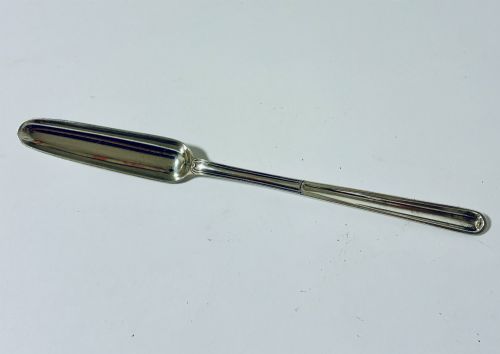
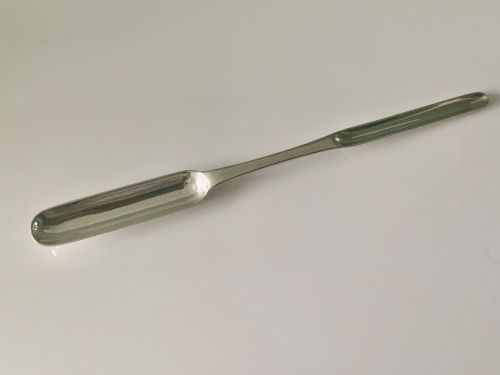
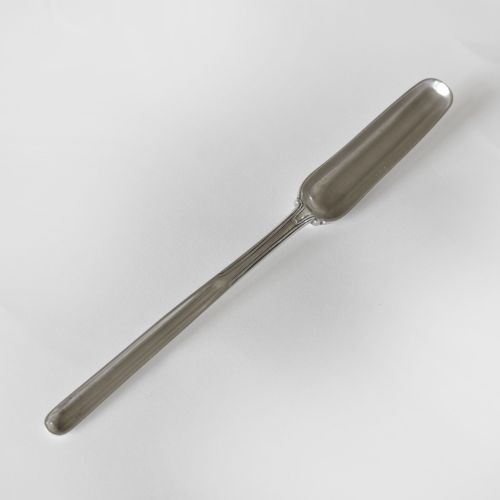
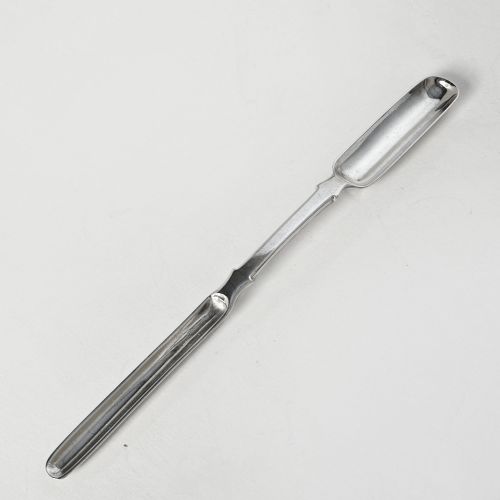
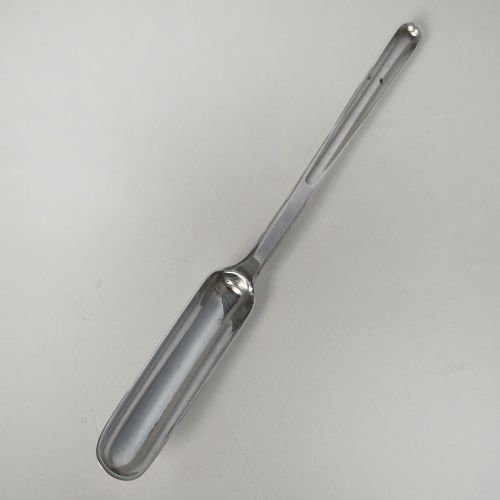
A georgian marrow scoop is a specialised piece of cutlery designed for extracting marrow, prized by collectors for its elegant dual-trough form.
Georgian Marrow Scoop
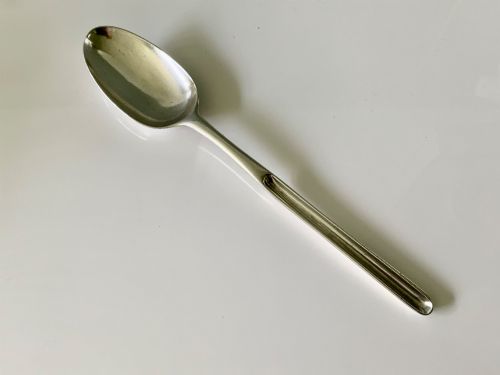
A georgian marrow scoop is a specific piece of cutlery designed to extract marrow from bones during formal dining, appearing most frequently in sterling silver alongside occasional bone examples. These items span the eighteenth and nineteenth centuries, featuring both single-ended designs with a narrow trough and double-ended variants.
The objects originate primarily from English and Irish workshops, reflecting the dining customs of the period. Collectors encounter standard single-trough utensils as well as reversed double-ended formats where different bowl sizes serve distinct culinary needs.
Materials and Technique
Silversmiths formed these utensils from sterling silver or solid silver, hammering and shaping the metal to create the distinctive double-trough profile. This construction provided the rigidity needed to scrape marrow cleanly from narrow bones without bending.
Makers also utilised bone, as seen in prisoner of war pieces, shaping the organic material with hand tools. Engraved family crests and armorial bearings frequently appear on the silver handles, added by specialist heraldic engravers.
Listings feature items in Sterling Silver, Solid Silver, and Bone, spanning the Georgian period and the nineteenth century.
Assessing Quality
The distinction between ordinary and superior pieces rests on the weight of the metal and the crispness of the maker marks. Substantial gauge silver gives the utensil a reassuring balance in the hand.
Engraved family crests add distinction, particularly when executed with fine detail. Pieces by notable silversmiths command attention due to the precision of their construction and clear hallmarks.
Edward Power·Jonathan Hayne·Thomas Johnson·Paul Storr·George Smith·William Sumner & Richard Crossley·Solomon Hougham·William Eley & William Fearn·Christopher & Thomas Barker
The Georgian Marrow Scoop Glossary
- Marrow scoop
- A dining utensil featuring a long, narrow trough designed for extracting bone marrow. Most examples date from the eighteenth and nineteenth centuries.
- Double ended
- A variation featuring troughs at both ends of the stem, sometimes in differing sizes. This design allowed a single utensil to serve multiple functions at the table.
- Sterling silver
- A silver alloy containing ninety-two point five percent pure silver by mass, forming the primary material for these items. It provided durability for daily dining use.
- Hallmark
- An official stamp applied to precious metals indicating the standard of purity, the assay office, and the date letter. These marks allow precise dating of silver items.
- Armorial
- A design displaying a coat of arms or family crest engraved onto the silver surface. Such additions often denote the original owning family.
Georgian Marrow Scoop: Frequently Asked Questions
How were marrow scoops used at the table?
These utensils were employed during formal meals to extract marrow from roasted bones. Diners used the narrow trough to reach inside the bone and transfer the rich delicacy to toast or plates.
The larger end typically served initial scoops, while the smaller terminal accessed tighter sections. Their presence on the table indicated wealthy households with specialised dining habits.
How do I identify a Georgian marrow scoop?
Identification relies on examining the hallmarks stamped into the silver, which reveal the assay office and date letter. Stylistic markers such as narrow proportions and engraved family crests also point to the period.
Most items from this era exhibit clean lines without excessive decoration, prioritising functional elegance. Weight and gauge provide further clues to age.
Are bone marrow scoops authentic?
Bone examples do exist, often associated with specific contexts such as prisoner of war work from the late eighteenth century. These pieces were carved by hand from available animal bone.
While silver dominates the surviving record, bone versions offer a different material history. Careful inspection reveals the carved grain and tool marks unique to organic media.