


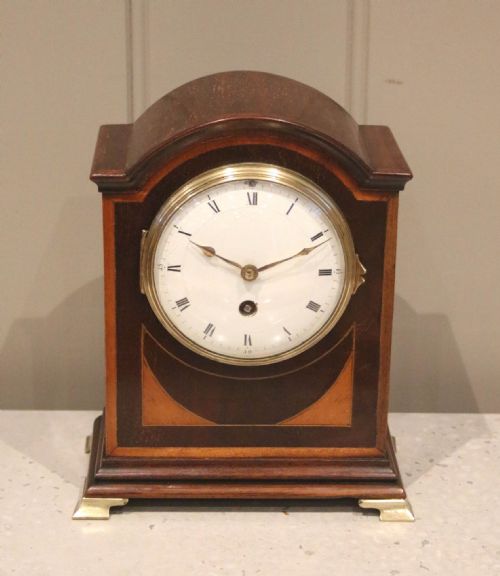


Georgian Mantelpiece Clock
A georgian mantelpiece clock brings quiet mechanical rhythm and rich timber grain to a room, offering both reliable timekeeping and centuries-old cabinetmaking.
Georgian Mantelpiece Clock
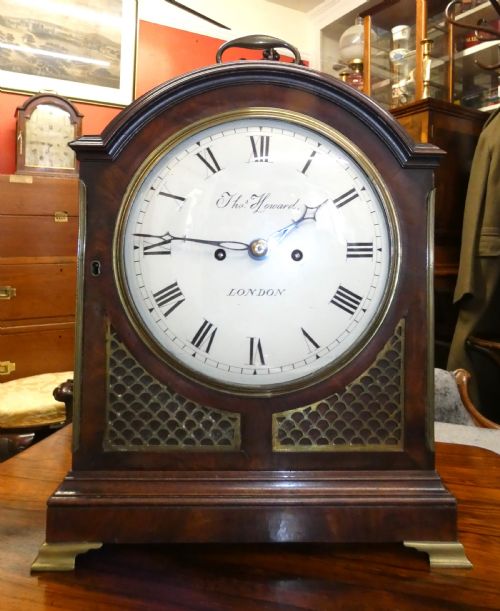
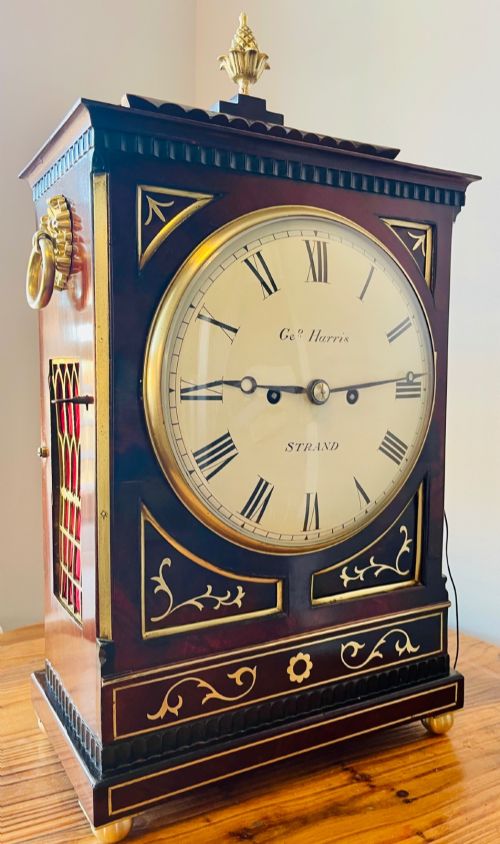
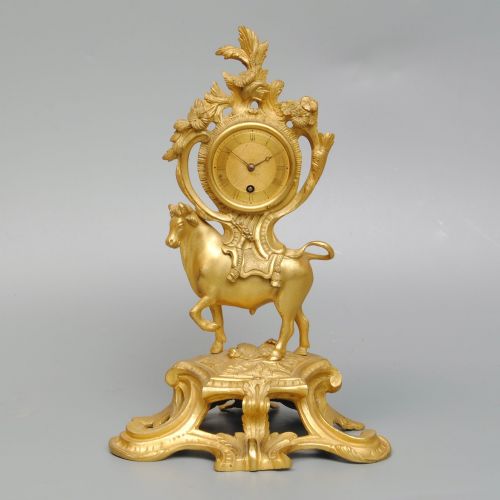
A georgian mantelpiece clock is a compact timekeeper designed to sit on a shelf, table, or mantel, originating from periods spanning the eighteenth and nineteenth centuries. These pieces appear in forms such as bracket clocks, library clocks, and table clocks, often housed in architectural wooden cases.
The selections encountered here lean heavily towards Regency and Georgian periods, showcasing traditional British craftsmanship. Most examples combine mechanical fusee movements with polished wooden housings designed to command attention without dominating a space.
Makers ranged from provincial watchmakers to prominent London horologists, resulting in varying degrees of domestic and formal styling. Whether standing on lancet tops or brass feet, each georgian mantelpiece clock reflects the prevailing aesthetic of its production era.
Materials and construction
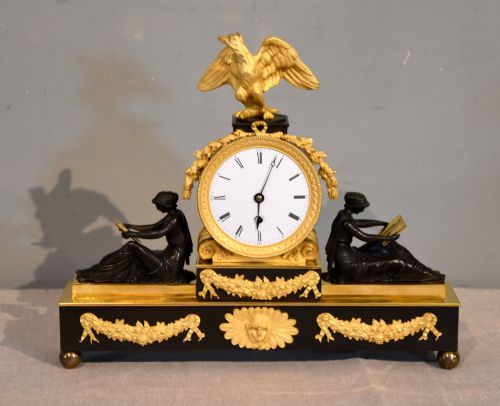
Cases of a georgian mantelpiece clock were primarily constructed from dense hardwoods like mahogany, rosewood, and ebonised wood, frequently enhanced by contrasting brass inlay, satinwood stringing, or gilt bronze mounts. These materials provided structural stability while allowing cabinetmakers to apply smooth polished finishes and crisp geometric detailing.
Dial construction typically involved painted enamel, silvered brass, or etched metal plates protected beneath glazed bezels. Inside, precision brass gear trains operated via fusee movements, translating the steady pull of a cord and spring into regulated mechanical motion.
Georgian Mantelpiece Clock Retail Price Guide 2026
Typical asking prices for georgian mantelpiece clock among the pieces listed under this phrase on Sellingantiques today, from the lower quarter to the upper quarter. They describe what is for sale here now, not the wider market.
Evaluating craftsmanship and execution
Quality in a georgian mantelpiece clock rests on the crispness of the cabinetwork and the sophistication of the internal movement. Superior examples exhibit tightly fitted mitres, finely cast or chased ormolu mounts, and hand-engraved backplates signed by the maker.
The materials themselves dictate the tier of the piece, with richly figured rosewood, intricate brass inlay, and complex silvered dials marking out workshop production of higher ambition. Simpler mahogany cases with plain painted faces represent the standard domestic output of the period.
Baetens London·L. Vick of Stroud·Viner London·Arnold and Frodsham·Grey of Edinburgh·Perigal of London·Desbois and Wheeler·Purvis of London·Plumbly and Tupman·Ganthony of London·Adams of Lombard Street·Leith of London·Christie of Perth
The Georgian Mantelpiece Clock Glossary
- Fusee
- A conical pulley used in a clock movement to equalize the decreasing power of a mainspring as it unwinds. This mechanism ensures consistent torque is delivered to the gear train for accurate timekeeping.
- Bracket clock
- A portable spring-driven clock originally designed to sit on a wall bracket to aid sound projection. Over time, the term came to describe any table or mantel clock of this general box-like form.
- Ormolu
- Finely ground high-carat gold mercury-gilded onto a bronze object, producing a warm yellow metallic lustre. It appears frequently on mounts and feet of fine Regency examples.
- Silvered dial
- A brass clock face treated with a silver compound to produce a frosted matte finish. Numerals and maker signatures are typically engraved into this surface and darkened with black wax.
- Lancet top
- A pointed, gothic-arch shape used for the upper portion of certain clock cases. This silhouette became particularly popular during the Regency period.
Georgian Mantelpiece Clock: Frequently Asked Questions
How do I wind a fusee clock safely?
Winding requires inserting the key into the dial arbor and turning it steadily clockwise until resistance is felt. Care must be taken not to overwind the mainspring, which can damage the internal mechanism.
Most fusee movements maintain tension throughout the winding process, ensuring the clock continues to run while being tended. Regular gentle maintenance keeps these eighteenth and nineteenth-century machines operating smoothly.
Where should I place a mantel clock?
These clocks belong on stable, level surfaces away from direct sunlight, dampness, and drastic temperature fluctuations. A solid mantelpiece, sideboard, or sturdy table provides the ideal environment for reliable performance.
Placing the clock on a level plane ensures the pendulum or balance wheel beats evenly. This prevents the mechanism from running fast, slow, or stopping altogether.
How do I tell a Regency clock from a Victorian one?
Regency pieces often feature clean architectural lines, brass inlay, ormolu mounts, and classical proportions influenced by the early nineteenth century. Cases tend to employ exotic timbers like rosewood alongside mahogany.
Victorian examples frequently introduce heavier proportions, darker ebonised woods, or revival styles such as Gothic details. Examining the lettering on the dial and the interior movement construction helps confirm the production era.
What is the difference between a timepiece and a striking clock?
A timepiece is a clock designed solely to indicate the hours and minutes without sounding any acoustic signals. These models feature a single winding train dedicated entirely to motion work.
A striking clock includes an additional gear train and hammer mechanism that chimes the hours or quarters on a bell or gong. This extra complication requires a second winding hole on the dial face.