
Georgian Mahogany Storage Furniture
Georgian mahogany storage furniture comprises chests of drawers, linen presses, and cupboards built to organise the home with timber strength.
Georgian Mahogany Storage Furniture
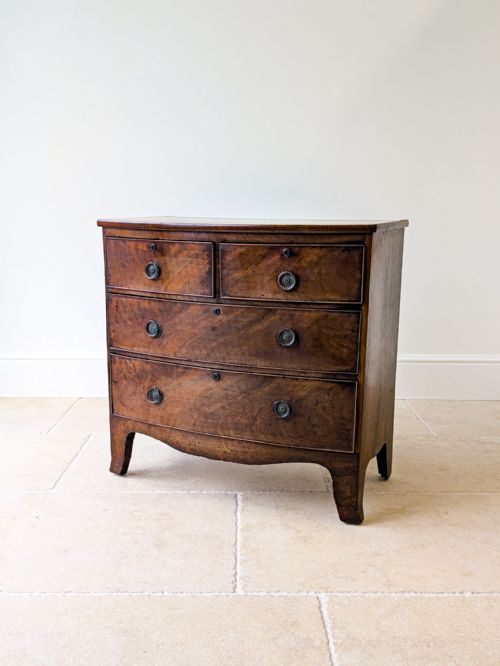
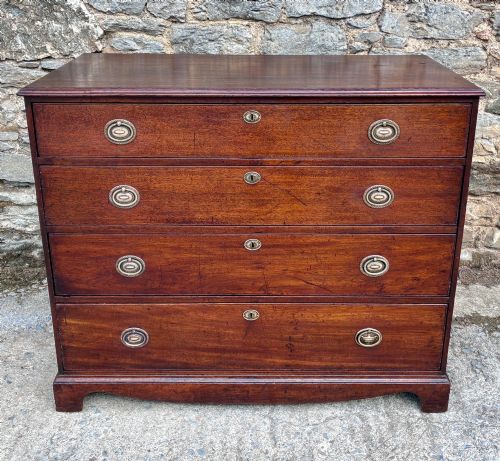
Georgian mahogany storage furniture includes chests of drawers, linen presses, side cabinets, and mule chests designed for domestic storage. These pieces arrive from the Georgian, Regency, and George III periods alongside later revivals, offering robust compartments for household organisation.
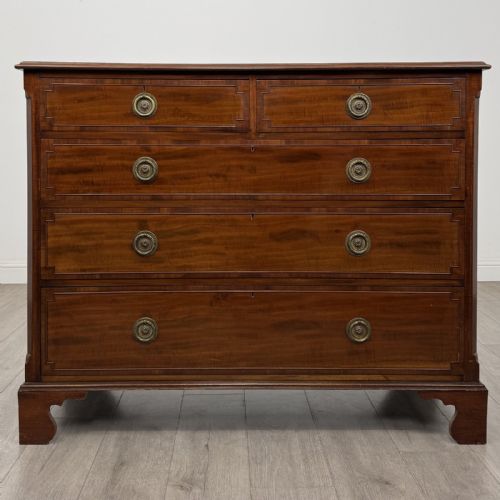
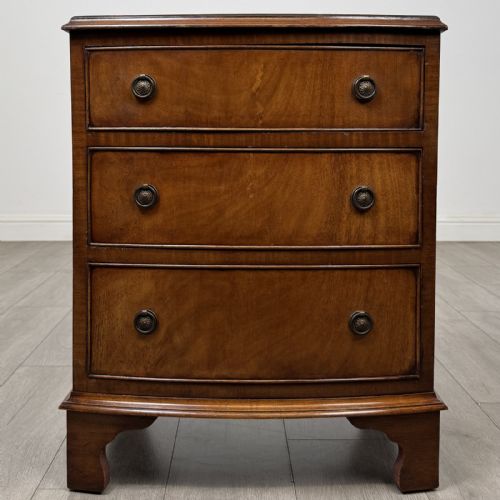
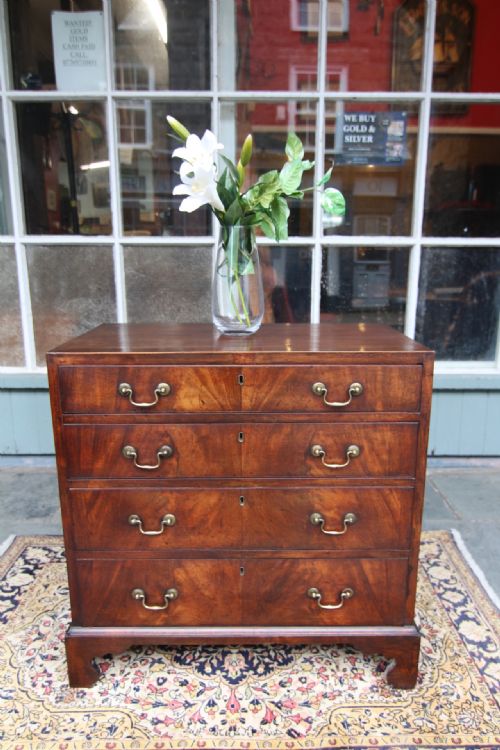
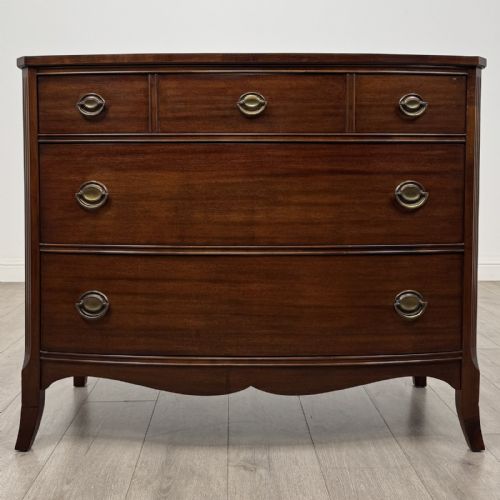
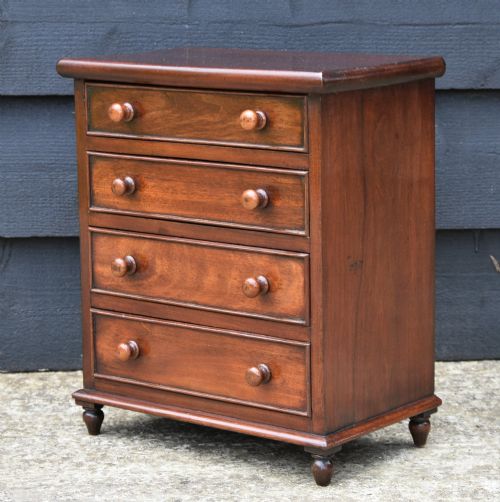
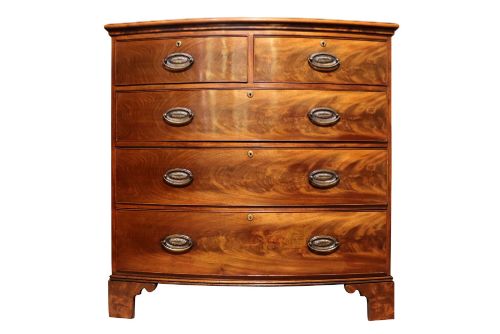
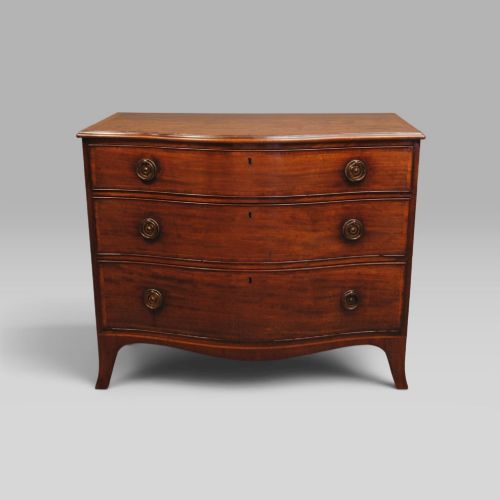
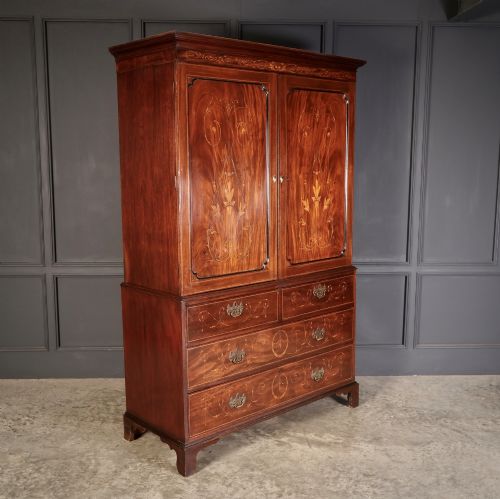
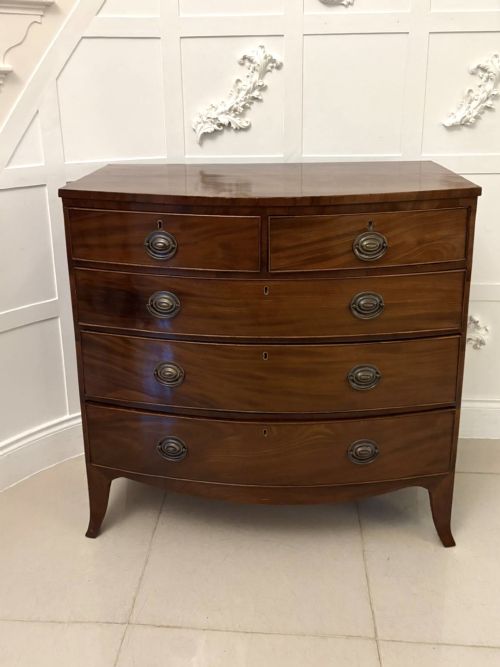
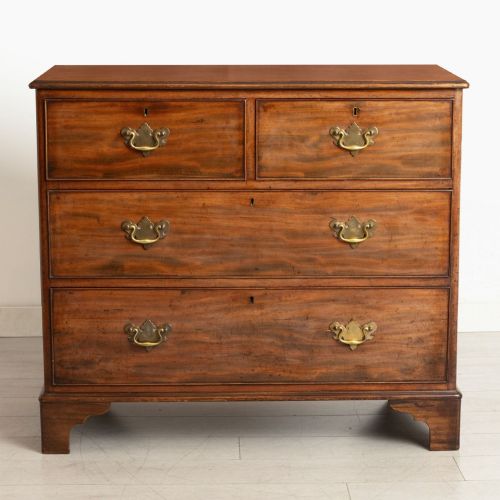
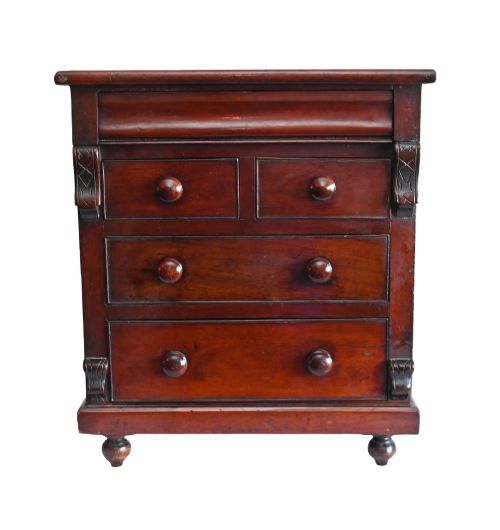
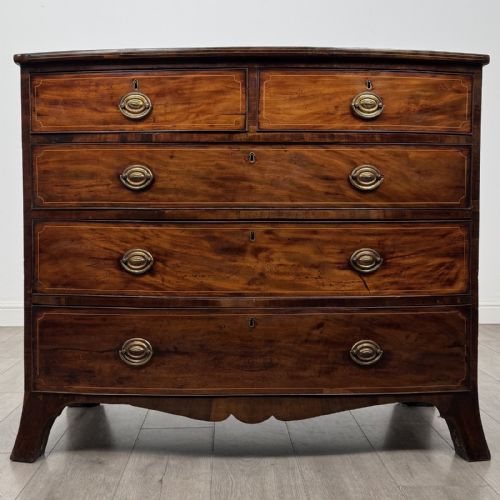
The most common forms on this page are chests of drawers, spanning bow fronts, tallboys, and compact four-drawer formats. Alongside these, linen presses and corner cupboards provide specialised shelving and hanging space constructed from dense hardwoods.
Materials and Construction
Makers built these storage pieces primarily using solid mahogany and flame mahogany veneer over secondary timbers such as oak and pine. The rich grain patterns on drawer fronts were achieved by selecting figured timber slices applied to carcases.
Hardware details such as brass handles and occasional bone escutcheons completed the construction, while internal linings utilised softer woods to reduce overall weight. Crossbanding in contrasting timber veneers frequently framed the top surfaces of finer items.
Listings feature mahogany, oak, and pine, paired with flame mahogany veneer, brass handles, and bone details across Georgian and Edwardian periods.
Distinctions in Quality
Quality in these storage pieces rests upon the choice of timber and the precision of the veneer work, particularly on figured or flame mahogany drawer fronts. The crispness of proportion, such as slender bow fronts or well-scaled chest on chest tiers, separates standard utility items from finer workshops.
Internal joinery, including hand-cut dovetails on the drawer sides and the original retention of brass hardware or sliding shelves like brushing slides, dictates the integrity of the piece. Timber selection for secondary woods like oak rather than pine also indicates a higher standard of manufacture.
Whytock and Reid
The Georgian Mahogany Storage Furniture Glossary
- Linen press
- A tall cupboard featuring sliding trays or shelves in the upper section for storing folded textiles, placed above a base fitted with drawers. These dual-purpose units kept household linens clean and pressed.
- Mule chest
- A blanket chest incorporating one or more functional drawers beneath the main lifting compartment. This hybrid design evolved to provide easier access to stored garments without moving items stacked on top.
- Bow front
- A convex, curved front profile popular on chests of drawers and side cabinets during the Regency and late Georgian eras. This shape softened the rigid geometry of standard rectangular case pieces.
- Brushing slide
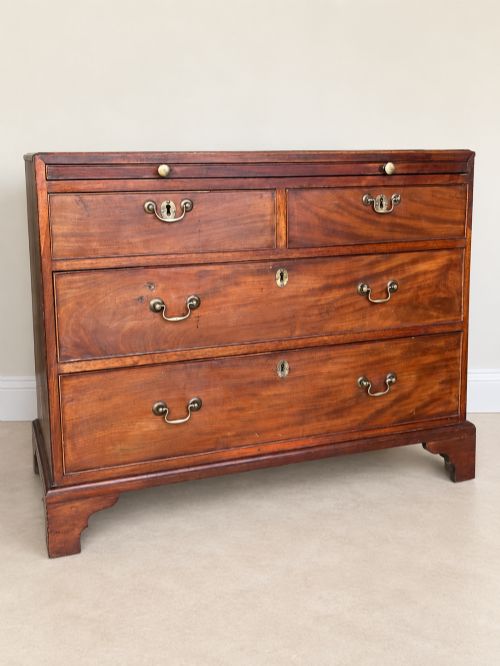
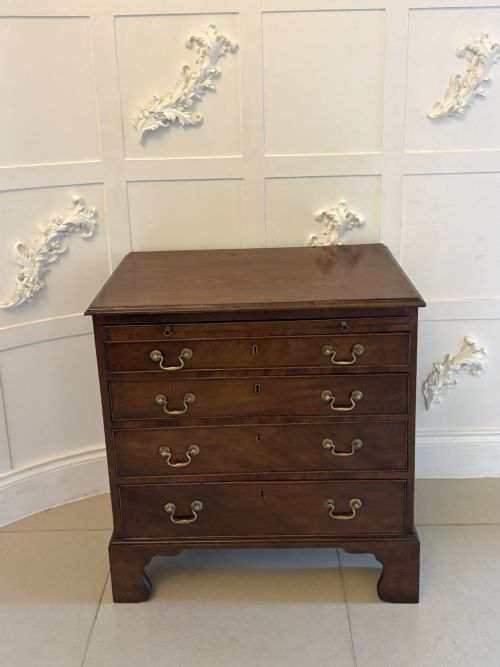
- A pull-out shelf integrated just beneath the top surface of a chest of drawers, originally utilised for folding clothes or writing notes. They sit flush within the carcase when not in use.
- Chest on chest
- A tall storage unit comprising a smaller chest stacked directly on top of a larger base chest, also known as a tallboy. This configuration maximised vertical capacity in bedrooms.
Georgian Mahogany Storage Furniture: Frequently Asked Questions
What is a linen press used for?
A linen press was designed primarily to store household textiles, sheets, and folded garments on internal sliding shelves. The lower chest section provided extra space for heavier apparel.
Over time, many of these cabinets were converted into wardrobes by removing the internal trays to accommodate modern hanging rails.
What is a brushing slide?
A brushing slide is a pull-out wooden shelf integrated just below the top surface of a chest of drawers. It provided a temporary horizontal workspace for folding garments or inspecting items.
When pushed fully in, the slide sits flush with the frame, remaining almost invisible until needed.
Where were these pieces used?
These storage items were placed throughout private homes, primarily in bedrooms, dressing rooms, and panelled parlours. Tallboys and chests of drawers organised apparel, while corner cupboards utilised awkward angles in dining spaces.
Their robust timber construction allowed them to withstand heavy daily use across generations of domestic life.