


Georgian Mahogany Side Chest
A georgian mahogany side chest brings dense timber and compact storage to a room, offering the proportion and grain that collectors prize.
Georgian Mahogany Side Chest
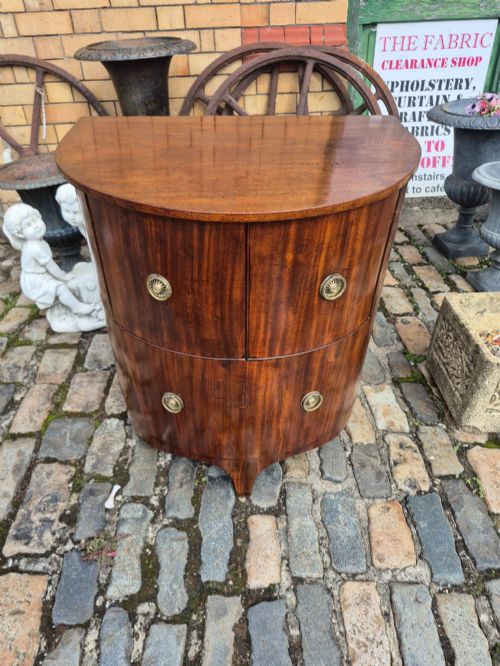
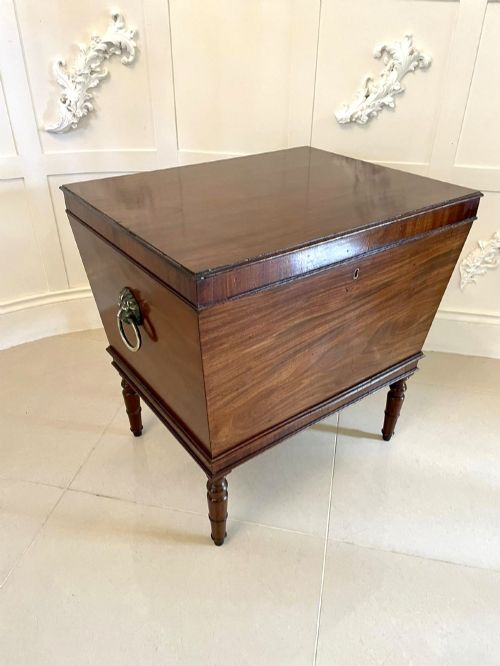
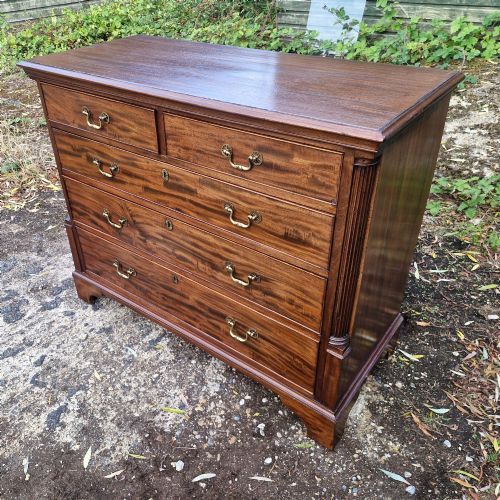
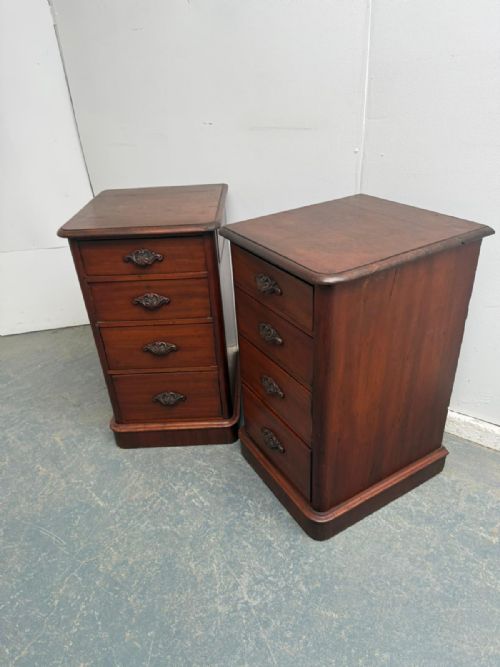
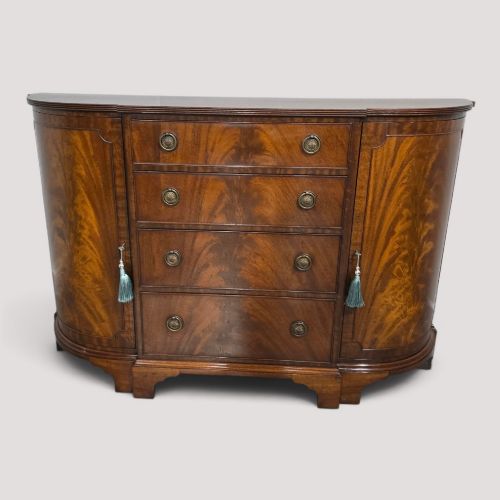
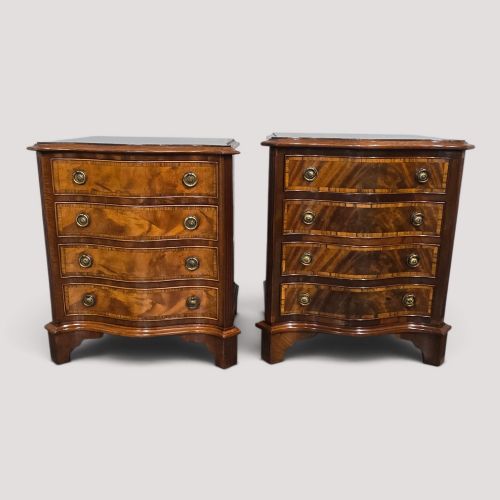
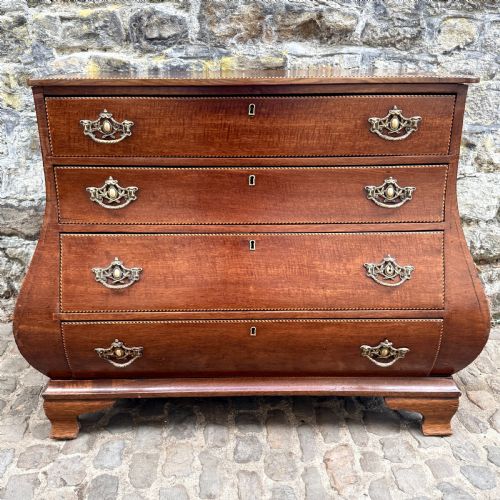
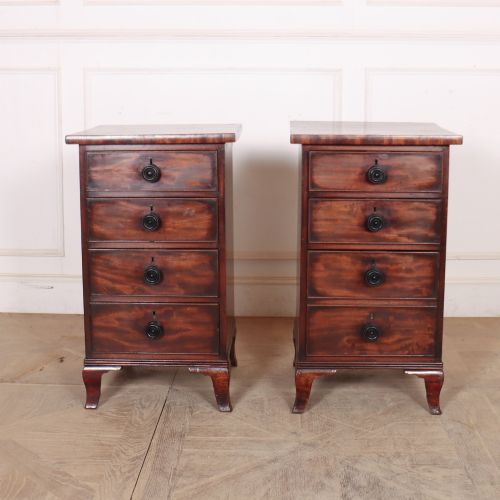
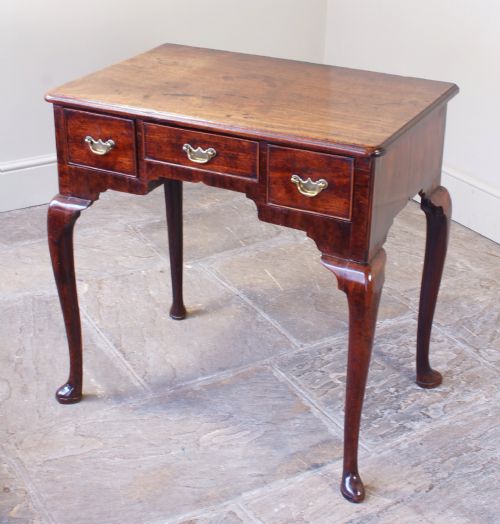
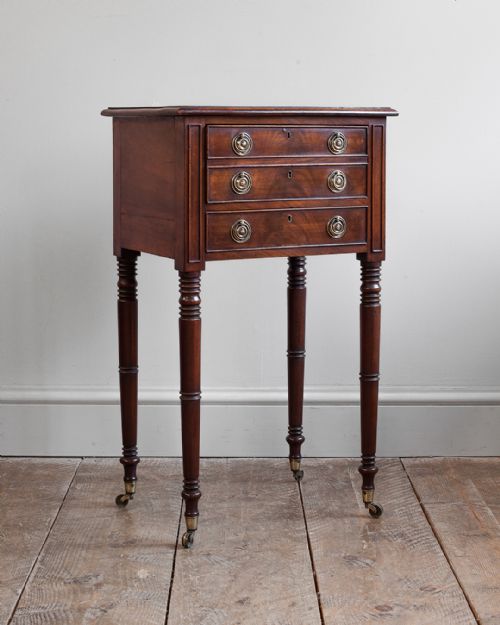
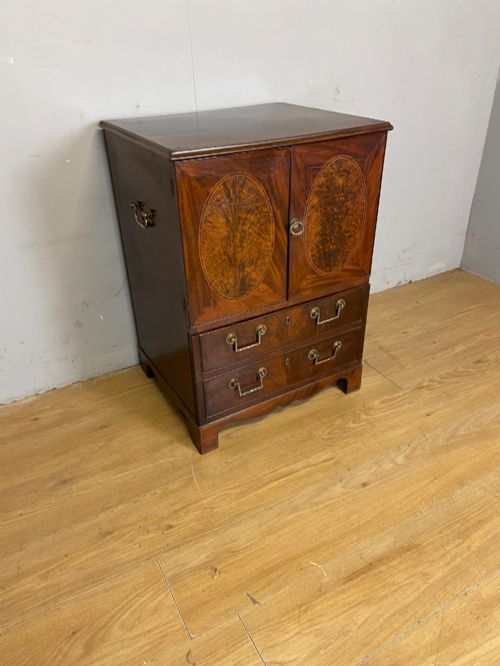
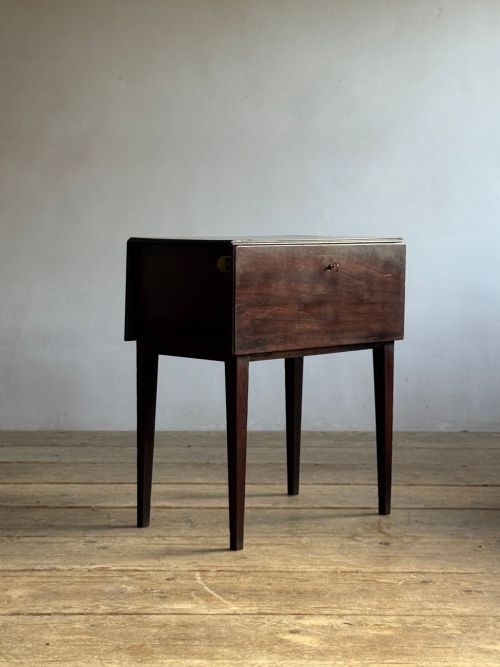
A georgian mahogany side chest spans several forms including bedside cabinets, lowboys, commodes, and small chests of drawers originating from the eighteenth and nineteenth centuries.
The pieces on this page lean heavily toward bedside cabinets and compact chests, often featuring bow fronts or serpentine shapes that suit smaller spaces.
Origins range across English workshops of the Georgian and Regency periods, alongside later revival pieces and occasional Dutch or American examples.
What Varies in Quality
The refinement of the timber figure, from plain boards to highly figured flame mahogany and crisp satinwood stringing, sets individual pieces apart.
Joinery execution and the retention of original brass hardware or period locks distinguish standard production from exceptional workshop output.
Listings span multiple eras from the eighteenth-century Georgian period through Regency, Victorian, and Edwardian revivals.
Walker & Hall, Sheffield·Muirhead Moffat & Co·Whytock & Reid
The Georgian Mahogany Side Chest Glossary
- Lowboy
- A small dressing table or side table with drawers, typically raised on four tall legs. They date predominantly from the mid eighteenth century.
- Bow front
- A convex, curved front elevation that swells outward at the centre. This shape softens the profile of a chest or cabinet.
- Serpentine
- A front contour shaped with a central convex curve flanked by concave sweeps. It requires skilled woodworking to execute cleanly.
- Flame mahogany
- A veneer figure resembling flickering flames, created by cutting across the branch junction of the tree. Cabinet makers reserved this timber for drawer fronts and primary panels.
- Commode
- A decorative low cabinet or chest with doors or drawers. In eighteenth-century usage, the term often denoted a sophisticated bedside or side piece.
Georgian Mahogany Side Chest: Frequently Asked Questions
How do I spot a true period piece?
Examine the timber surfaces inside the drawers and the style of the dovetail joints. Hand-cut joinery and signs of age in the secondary woods help confirm period manufacture.
Compare the proportions and hardware against documented examples from the eighteenth and nineteenth centuries.
Were these chests used beside beds?
Many compact chests and cupboards served as bedside storage for chamber pots or night essentials. Their modest footprint suited smaller bedrooms.
Later Victorian and Edwardian makers continued this tradition with dedicated lamp chests and bedside cabinets.
What is the difference between a lowboy and a side chest?
A lowboy stands on distinct, taller legs with drawers beneath a flat top, functioning primarily as a small table. A side chest sits closer to the floor with stacked drawers filling the main body.
Both forms utilise mahogany construction and share similar eighteenth-century origins.
How do I care for mahogany veneer?
Keep the wood away from direct sunlight and sudden temperature changes to prevent the veneer from lifting. Apply a traditional wax polish occasionally to nourish the surface.
Avoid silicon-based sprays that can penetrate old finishes and damage the timber over time.