





Georgian Mahogany Sewing Table
A georgian mahogany sewing table brings a refined touch of period craft to a room, offering clever storage for needlework alongside compact surfaces.
Georgian Mahogany Sewing Table
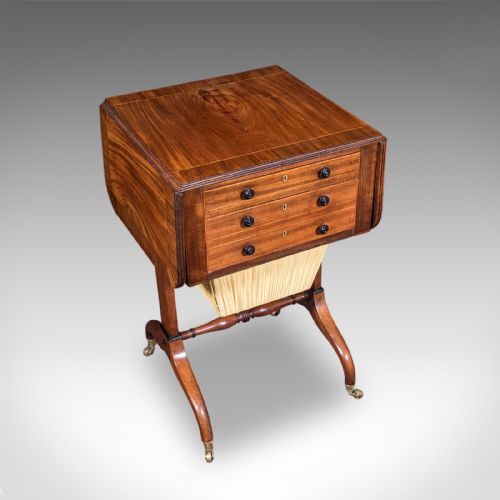
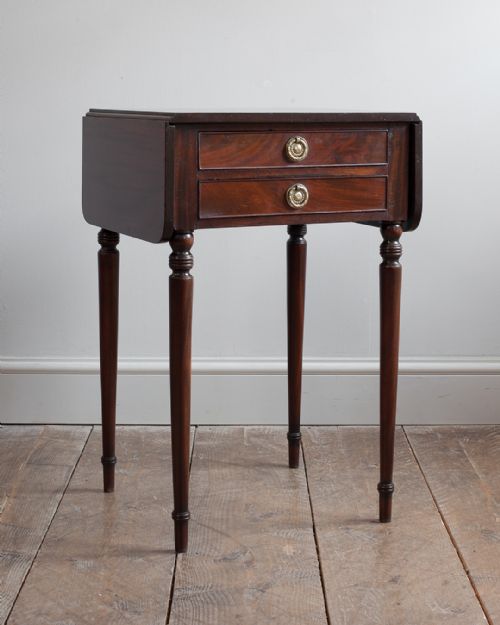
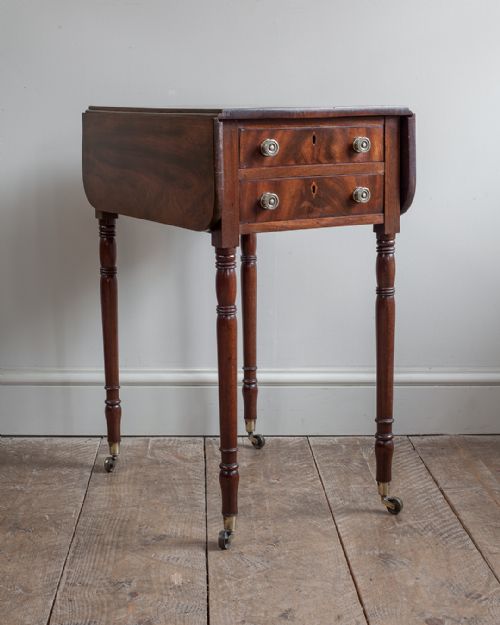
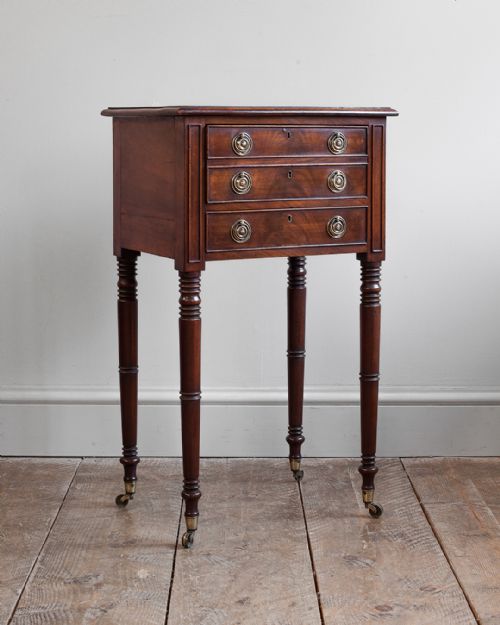
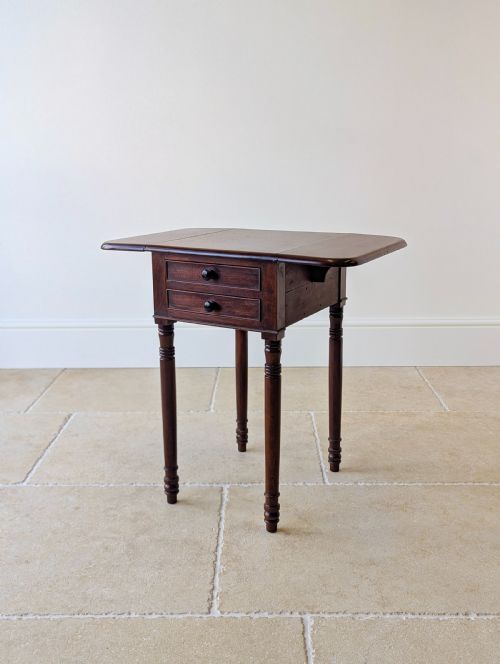
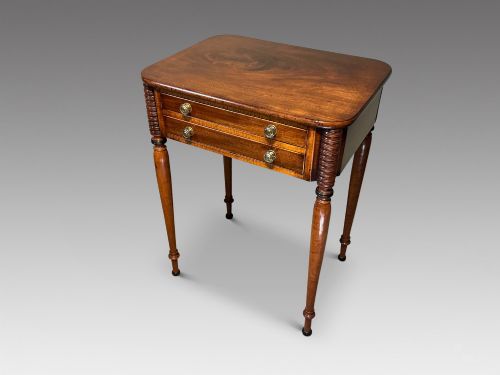
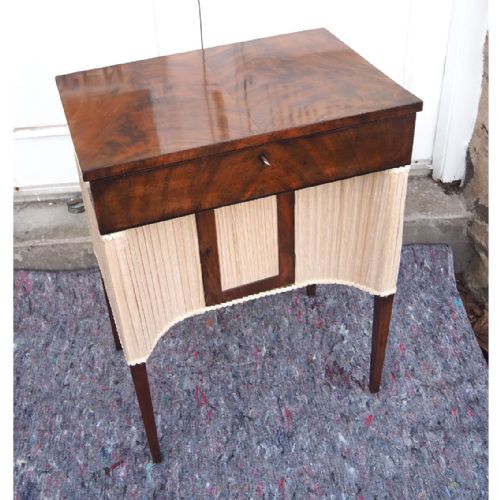
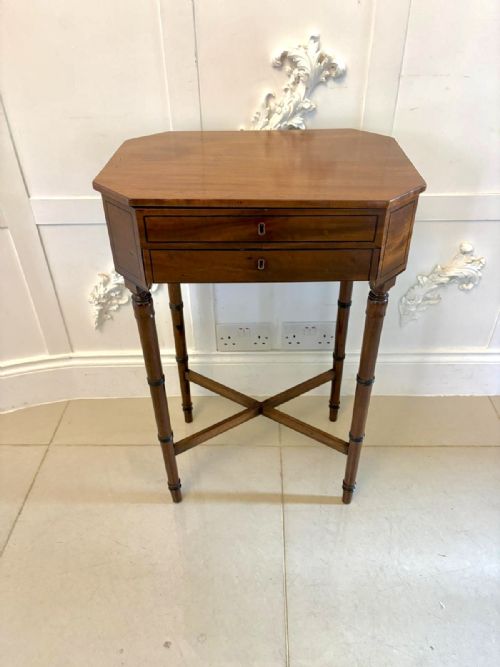
A georgian mahogany sewing table typically appears as a compact piece intended for domestic utility, functioning as a work table, drop leaf table, or occasional side table. These pieces emerge predominantly from the Georgian, Regency, and 19th Century periods, reflecting the domestic habits of the era.
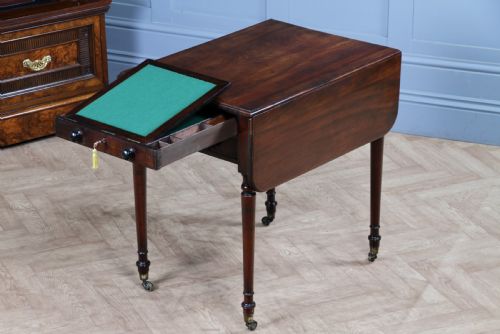
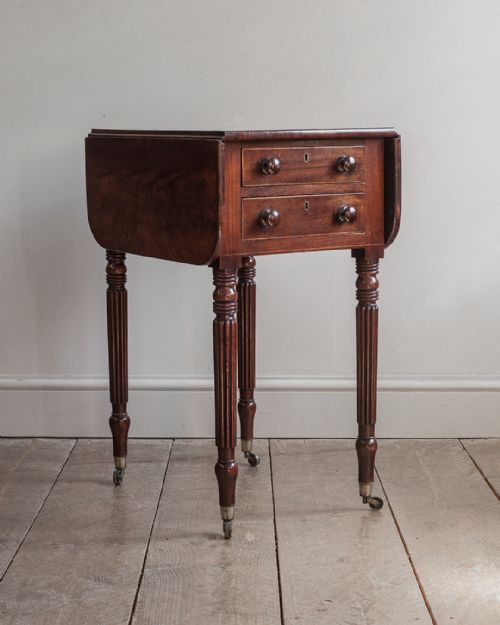
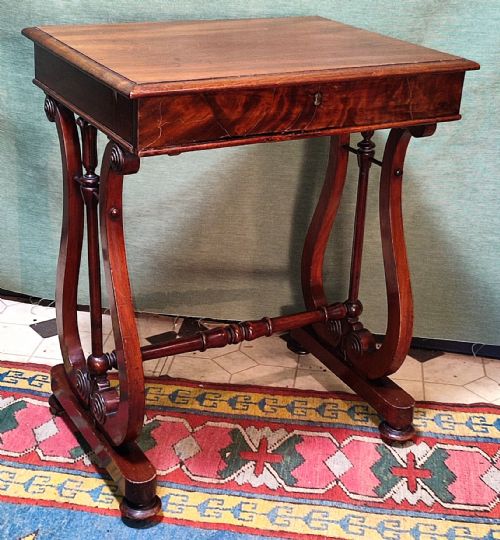
The form frequently incorporates drop leaves, fitted drawers, or hanging silk and fabric bags beneath the surface to hold sewing implements. Variations include pedestal supports, lyre ends, and Pembroke designs, alongside occasional combinations with writing or games surfaces.
Materials and construction
Makers utilised solid mahogany and flame mahogany veneers, often enhanced with contrasting stringing in satinwood, boxwood, and ebony. Structural elements relied on tight joinery suited to small-scale domestic furniture.
Internal components frequently included bone fittings, silk or fabric linings for storage bags, and turned brass hardware or castors. Secondary timbers provided internal framing for drawers and secret compartments.
Listings feature work tables spanning the Georgian, Regency, Victorian, and Edwardian periods, constructed predominantly in mahogany with satinwood, boxwood, and brass details.
Distinctions in execution
Quality rests upon the selection of timber figures, particularly the depth and movement visible in flame mahogany veneers. Precision in cabinetmaking shows in the flush fit of drawers and the crisp execution of inlaid stringing.
Makers of high repute employed superior internal mechanisms for rising compartments and fitted writing drawers. The integration of secondary woods and the retention of original brass and fabric elements further differentiate examples.
Gillows
The Georgian Mahogany Sewing Table Glossary
- Pembroke table
- A small side table featuring two hinged drop leaves on opposite sides. This form often includes one or two end drawers.
- Flame mahogany
- A veneer cut from the fork of the mahogany tree, displaying a distinctive wavy, flamelike grain pattern. Cabinetmakers reserved this timber for prominent exterior surfaces.
- Stringing
- Thin inlay lines of a contrasting wood set flush into the surface of a panel. This technique outlines drawers and table tops.
- Lyre-ended
- A pedestal support shaped in the form of an ancient Greek lyre. This styling appears frequently on Regency work tables.
- Secretaire
- A piece of furniture incorporating a writing drawer with a drop front and internal pigeonholes. These compartments often conceal secret or rising sections.
Georgian Mahogany Sewing Table: Frequently Asked Questions
What is a georgian mahogany sewing table used for?
These tables served primarily as portable work stations for ladies undertaking needlework, embroidery, and mending within the home. The fitted drawers and suspended bags kept threads, needles, and fabric close at hand.
Over time, their compact proportions allowed them to transition easily into lamp tables, side tables, or occasional display surfaces in sitting rooms.
How do I identify a Regency sewing table?
Regency examples often display characteristic architectural details such as pedestal bases, brass paw castors, or lyre-shaped supports. The use of bold brass inlay and contrasting ebony stringing is also common during this phase.
Proportions tend to be neat and upright, aligning with the classical revival styles popular in the early nineteenth century.
Did these tables have specific storage features?
Most variants include a small drawer partitioned internally for spools and tools, frequently accompanied by a fabric or silk basket suspended below. Some elaborate versions feature multiple secret rising compartments.
Combination pieces might also integrate a sliding chess or backgammon board alongside the standard needlework storage.
How do I care for antique mahogany furniture?
Maintain the wood by keeping it away from direct heat sources and strong sunlight, which can dry out the timber and fade the polish. Regular dusting with a soft, dry cloth preserves the finish.
Avoid using silicone-based polishes or excessive moisture, applying traditional wax polish sparingly only when the timber appears dry.