
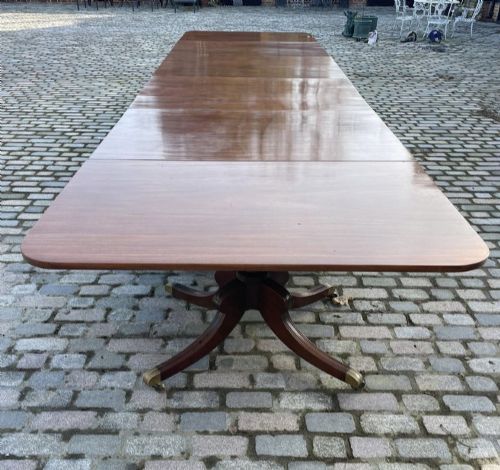
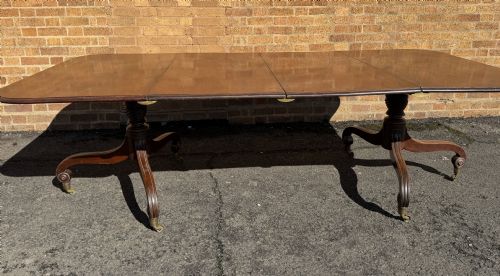
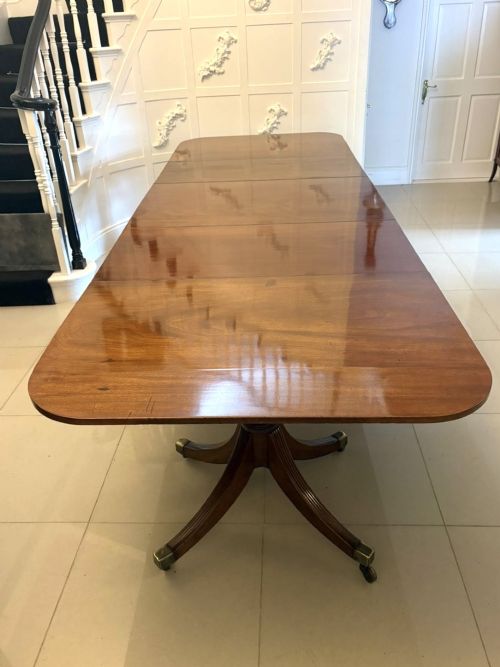
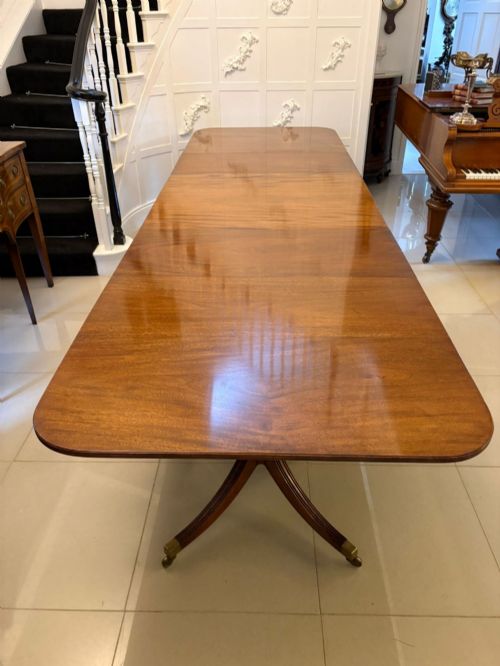



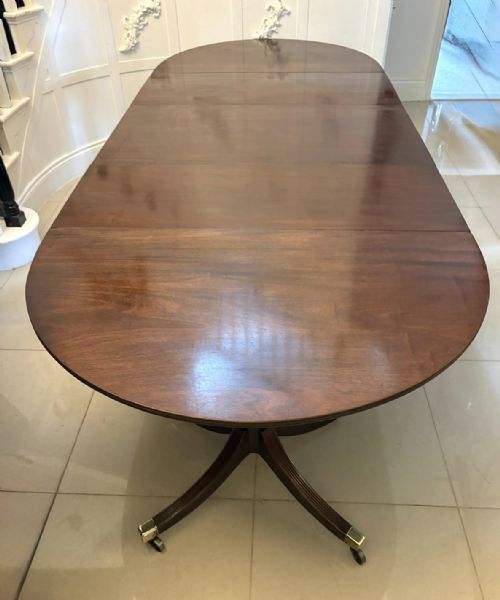
Georgian Mahogany Pillars
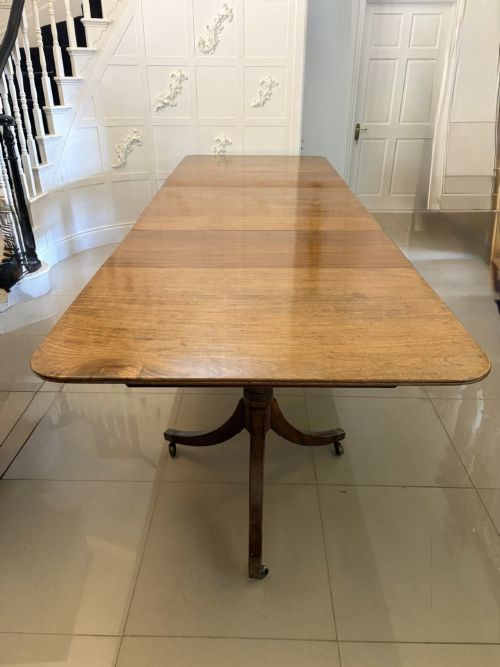
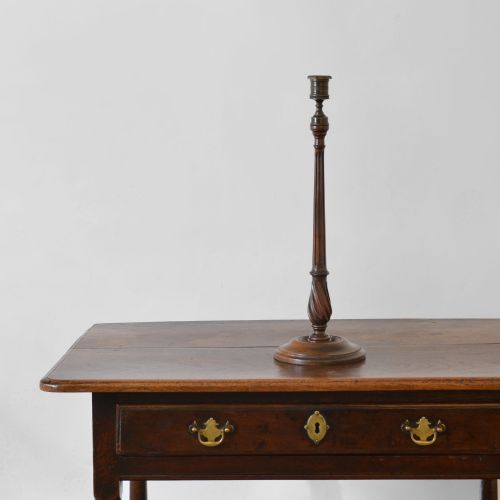
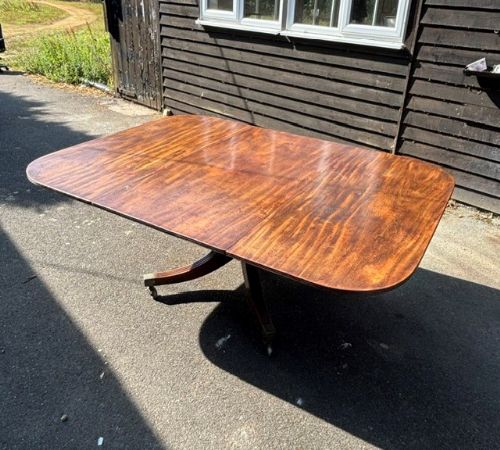
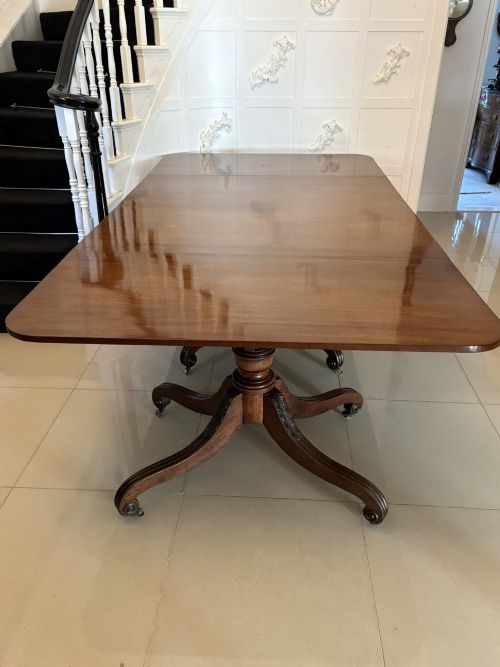
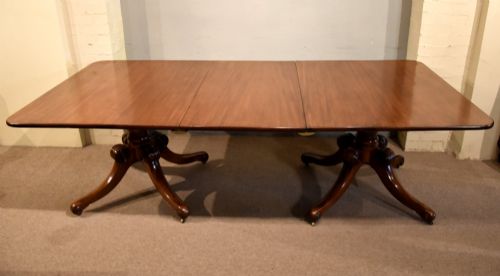
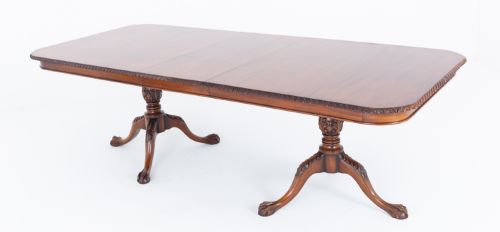
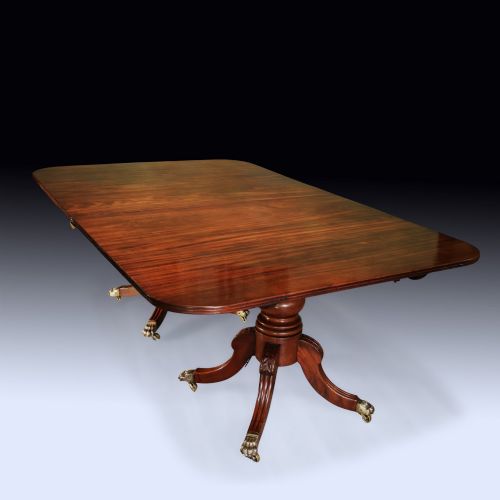
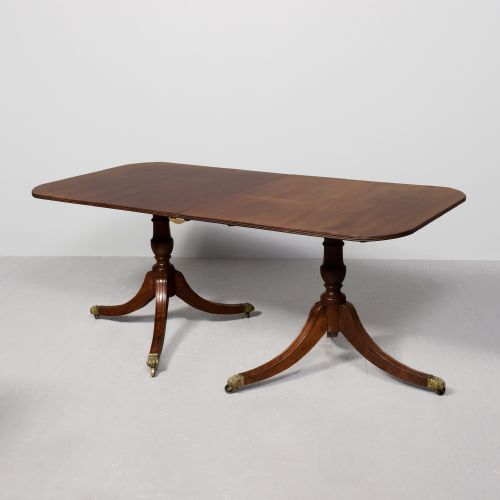
Georgian mahogany pillars denote the structural pedestals supporting extending dining tables, candlesticks, clocks and bed posts from the eighteenth and nineteenth centuries.
Georgian Mahogany Pillars
When you search for georgian mahogany pillars, you encounter structural supports primarily found in multi-pillar extending dining tables, side tables, candlesticks and longcase clocks dating from the eighteenth and nineteenth centuries.
The version you are most likely to meet on this page is the pedestal base of a twin-pillar or three-pillar dining table, alongside occasional architectural bed posts and candlesticks.
These items originate across the Georgian, Regency, George III, George IV, William IV and Edwardian periods, including later revival pieces.
Materials and construction
Makers utilised solid mahogany and figured mahogany timber, frequently combined with brass components such as castors, screw mechanisms or sconces.
Secondary timbers like oak and various other woods appear in the internal framework and support structures.
Joinery methods range from heavy turned uprights fixed to tripod or sabre legs to architectural columns supporting substantial dining leaves.
Assessing quality
The distinction between tiers rests upon the choice of timber figure, such as highly figured mahogany, and the crispness of hand-carved details on the pillar shafts and legs.
Proportion and scale dictate the success of the piece, particularly where multiple pillars must distribute the weight of extending leaves evenly across the floor.
Original brass hardware, such as castors and pull-out mechanisms, preserves the integrity of the construction more effectively than later replacements.
Thomas Butler·Richard Gibbs London·William Trotter
The Georgian Mahogany Pillars Glossary
- Mahogany
- A durable tropical hardwood prized for its deep reddish-brown colour and rich grain figures.
- Pillar
- A vertical column or pedestal supporting a tabletop, clock case, bed canopy or candlestick.
- Extending table
- A dining table designed with removable leaves and multiple pillars to accommodate varying numbers of diners.
- Tripod table
- A small occasional table supported by a single central pillar resting on three spreading feet.
- Sconce
- A metal socket or holder fitted to the top of a candlestick to secure the candle.
Georgian Mahogany Pillars: Frequently Asked Questions
What are georgian mahogany pillars?
Georgian mahogany pillars are the vertical wooden supports found beneath extending dining tables, candlesticks, longcase clocks and bed posts. They anchor the design of large furniture pieces from the eighteenth and nineteenth centuries.
These columns take the form of turned pedestals, tripod bases or architectural shafts. They provide the necessary strength to hold heavy mahogany tabletops and extending leaves.
How were multi-pillar tables used?
Multi-pillar dining tables served large households for formal dining, allowing hosts to insert or remove leaves depending on the number of guests. The pillars distributed weight evenly across the room.
Smaller pillar tables and Pembroke tables functioned as movable surfaces for tea, writing or card games. Candlesticks and bed posts served domestic lighting and structural needs respectively.
How do I care for mahogany furniture?
Mahogany furniture benefits from stable indoor humidity levels away from direct heat sources and strong sunlight, which can fade the timber. Regular dusting with a dry cloth maintains the surface.
Avoid applying modern silicone polishes, as traditional wax is more appropriate for nineteenth-century polished wood surfaces. Gentle handling of extending leaf mechanisms prevents strain on the pillars.
How can I tell the period?
Dating relies on stylistic clues such as the profile of the pillar turning, the shape of the leg supports and the presence of brass castors or screw mechanisms. George III and Regency pieces display distinct neoclassical or heavy revival proportions.
Examining the construction methods, secondary woods like oak, and signs of wear on the timber underside helps distinguish original Georgian work from later Edwardian revivals.