
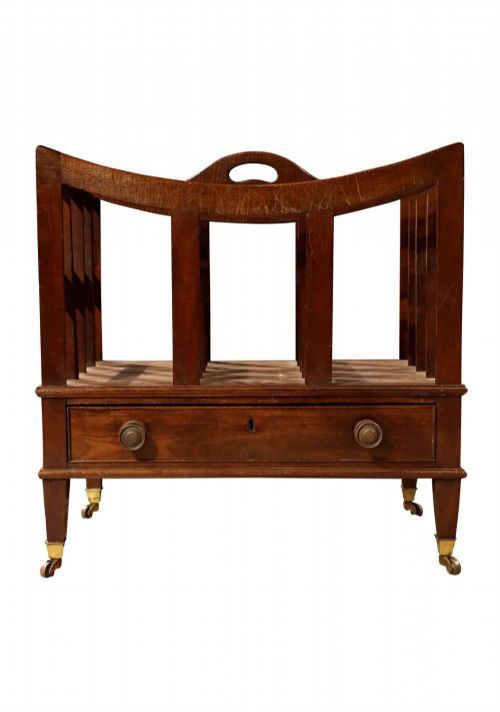


Georgian Mahogany Music Stand
A georgian mahogany music stand brings functional elegance to a room, offering adjustable surfaces and compartmented storage for scores and volumes.
Georgian Mahogany Music Stand
When you search for a georgian mahogany music stand, you encounter pieces designed for holding folios, sheets and books, often combining reading surfaces with divisions or drawers below. The selection ranges widely across periods, including pieces from the eighteenth and nineteenth centuries alongside later revivals from the twentieth century.
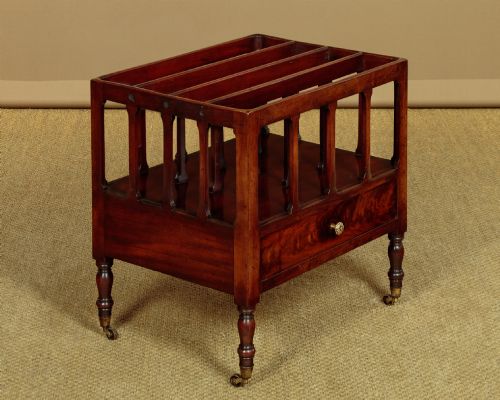
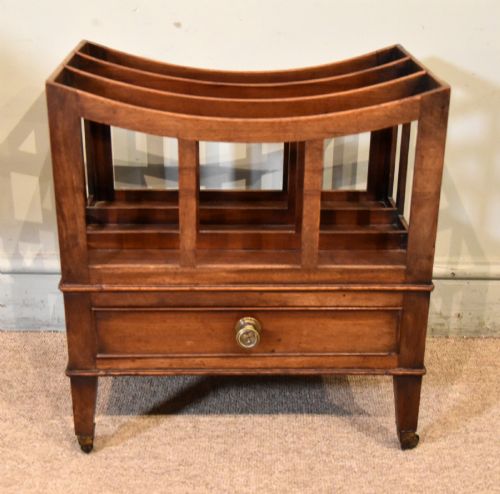
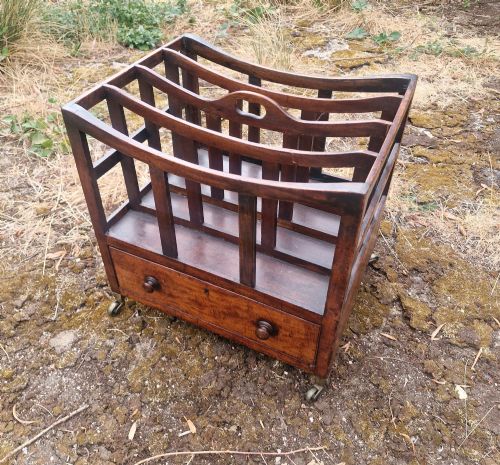
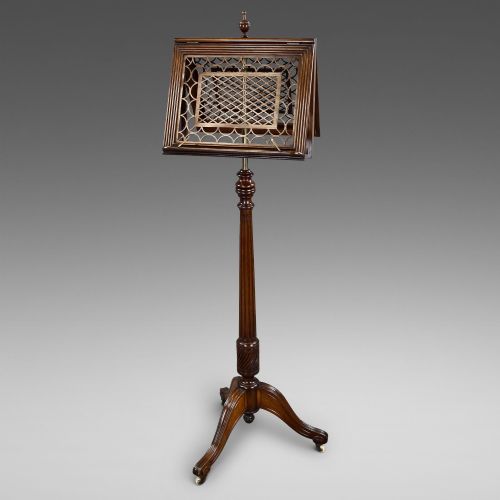
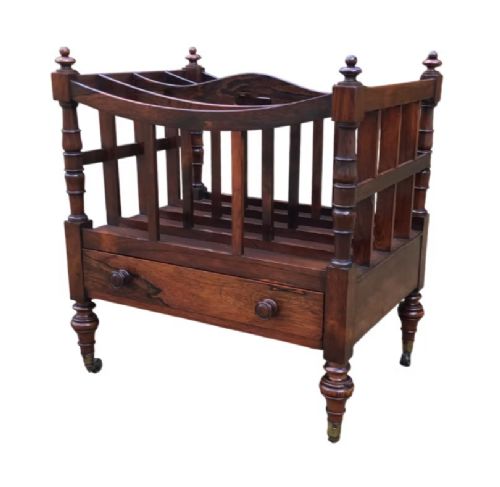
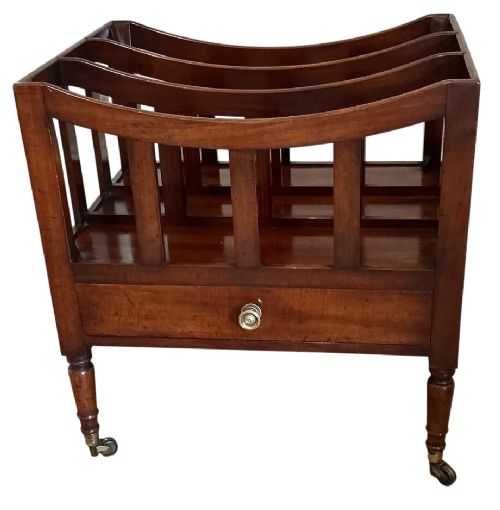
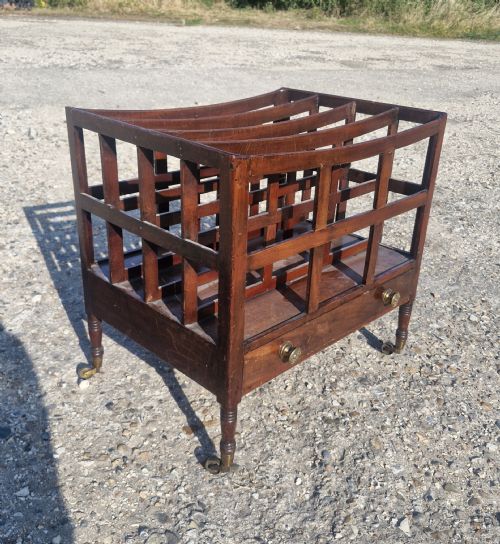
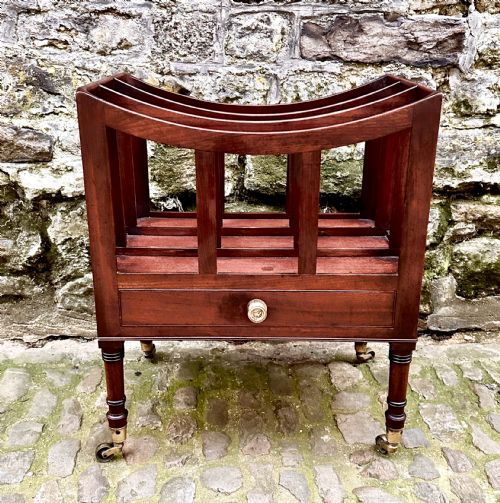
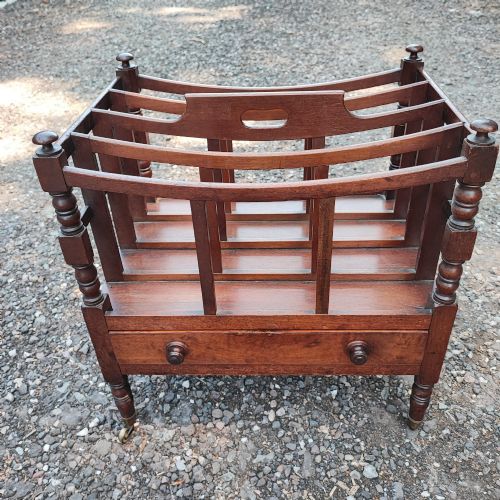
The most common forms you meet on this page are canterburys with slatted partitions and freestanding adjustable reading or duet stands. These objects originate from Georgian, Regency, George III, George IV, and William IV eras, though Edwardian and later twentieth-century iterations also appear.
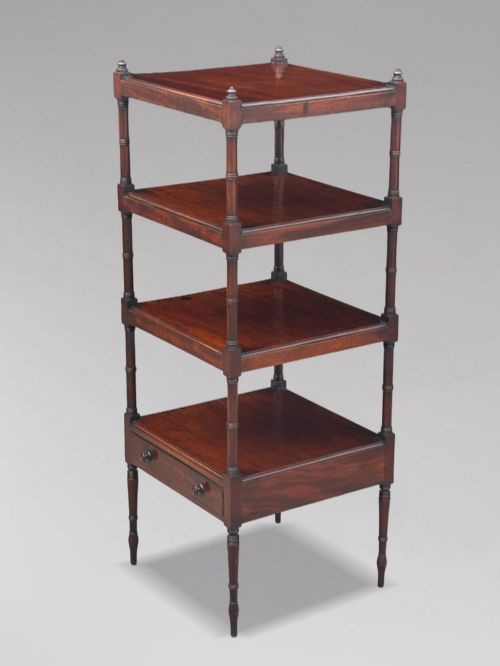
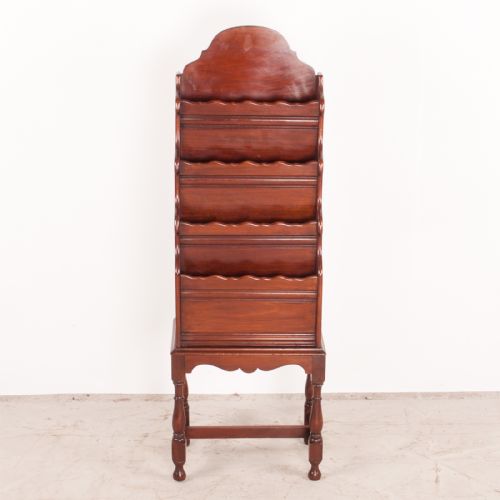
Beyond dedicated music stands, related forms such as whatnots, magazine racks, and reading tables share the same timber and functional purpose. These pieces reflect domestic habits of earlier centuries, where dedicated furniture kept reading matter close to the chair or piano.
Distinctions in quality
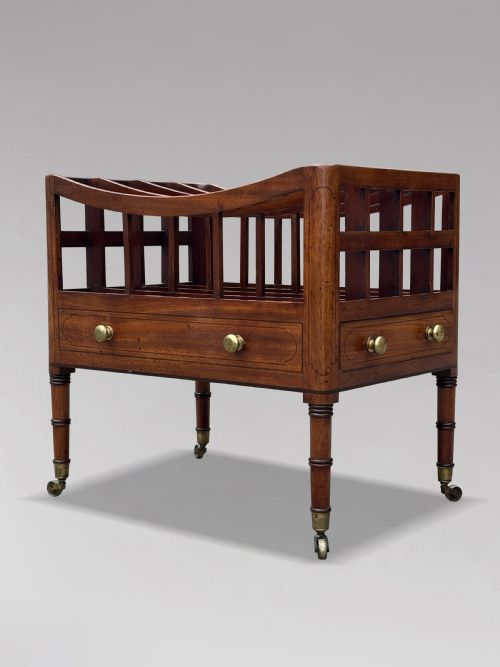
The refinement of the timber and the crispness of any inlay or fretwork distinguish finer pieces from standard production. Dense Cuban mahogany and subtle satinwood contrast reveal an elevated standard of material selection by the maker.
Mechanisms also mark the division between utility and high craftsmanship. Smoothly operating adjustable brass ratchets and well-fitted internal drawers demonstrate superior workshop execution compared to stiffer, simpler joints.
Materials recorded across the inventory include solid mahogany, Cuban mahogany, satinwood inlay, brass, and ebony.
The Georgian Mahogany Music Stand Glossary
- Canterbury
- A low, freestanding stand with vertical partitions, traditionally used for sheet music, newspapers, and magazines. These often rest on turned legs fitted with castors for easy movement around a drawing room.
- Duet stand
- A music stand designed to hold two scores side by side, allowing two musicians to read simultaneously. They frequently feature adjustable reading desks supported on a central pillar.
- Whatnot
- An open set of tiered shelves used for displaying or storing books and folios. Examples with integrated music stands combine open shelving with dedicated lower storage compartments.
- Reading table
- A specialised table equipped with a tilting or adjustable top for books and folios. These tables often incorporate drawers or drop leaves alongside the main writing or reading surface.
- Stringing
- Thin inlaid lines of contrasting timber used to outline panels and edges. Satinwood and ebony frequently provide this decorative border on mahogany surfaces.
Georgian Mahogany Music Stand: Frequently Asked Questions
What is a canterbury?
A canterbury is a low, partitioned stand designed to hold sheet music, newspapers, and magazines near a piano or seating area. Most examples feature three or four vertical divisions above a low drawer.
Originating in the eighteenth century, the form evolved to serve various domestic storage needs while remaining compact enough to move easily on castors.
How do adjustable stands work?
Adjustable music stands rely on brass ratchets, sliding stems, or screw mechanisms concealed within the central column or behind the reading ledge. These allow the user to alter the height and tilt of the book rest.
Operating the mechanism requires releasing a catch or loosening a thumbscrew to position the board at the desired angle before securing it again.
What is Cuban mahogany?
Cuban mahogany is a dense, highly figured hardwood harvested in the West Indies and widely used in British cabinet making during the eighteenth and early nineteenth centuries. It is prized for its deep colour and weight.
Pieces constructed from Cuban mahogany often display rich grain patterns and exceptional durability compared to later or alternative timber sources.
How do I distinguish periods?
Distinguishing periods relies on observing leg styles, hardware, and construction details such as dovetailing and timber selection. Georgian and Regency pieces typically show finer hand-turned components and specific brass fittings.
Later revival pieces from the Edwardian era or the twentieth century often adopt earlier stylistic cues but reveal different construction methods and lighter secondary woods upon closer inspection.