
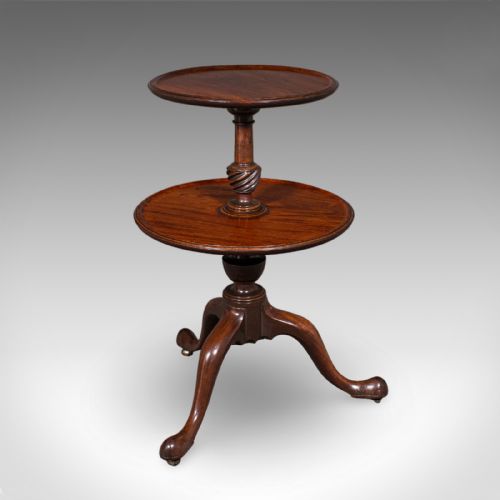


Georgian Mahogany Dumbwaiter
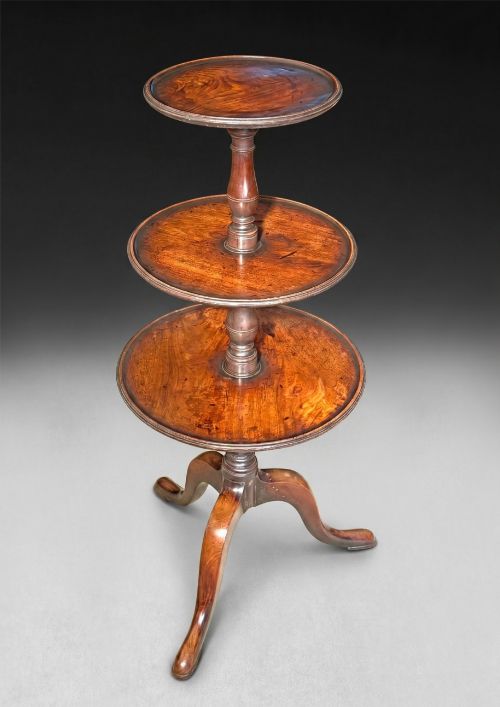
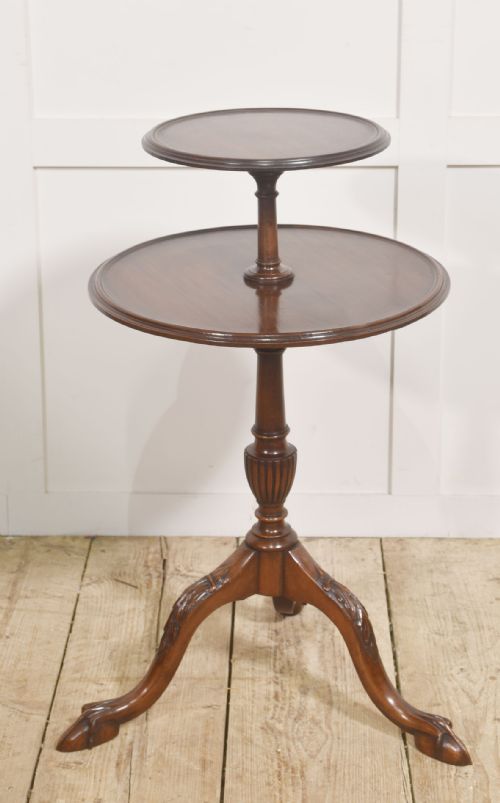
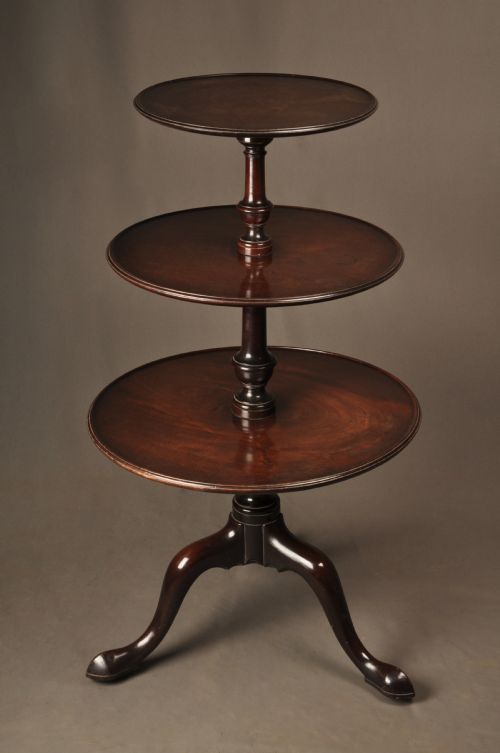
A georgian mahogany dumbwaiter is a tiered serving stand designed to hold food and drink without the need for hovering servants during dinner.

Georgian Mahogany Dumbwaiter
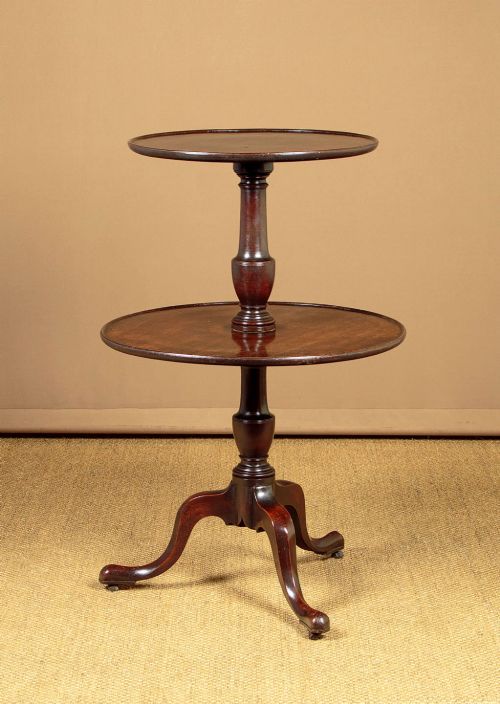
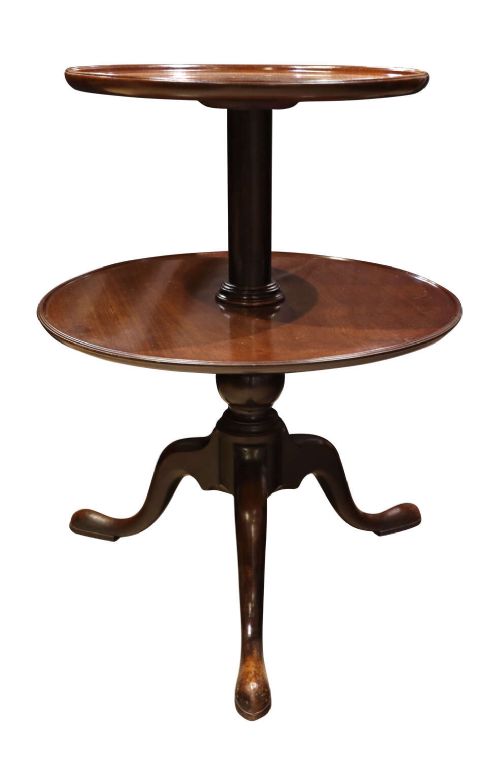
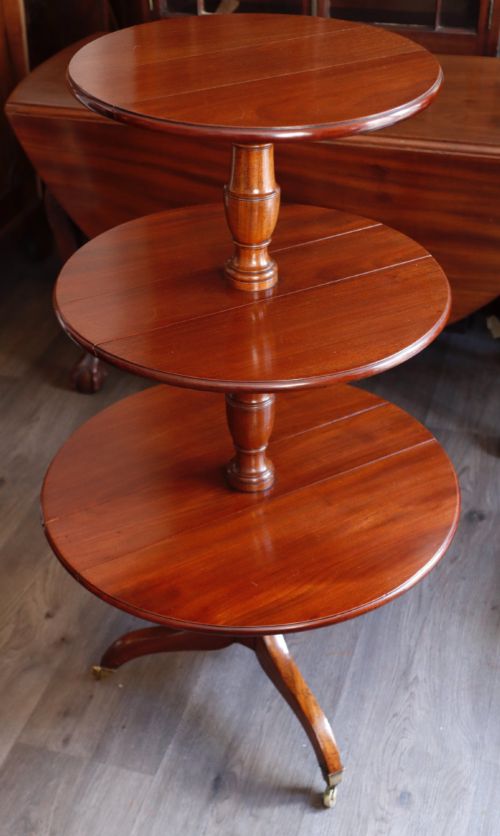
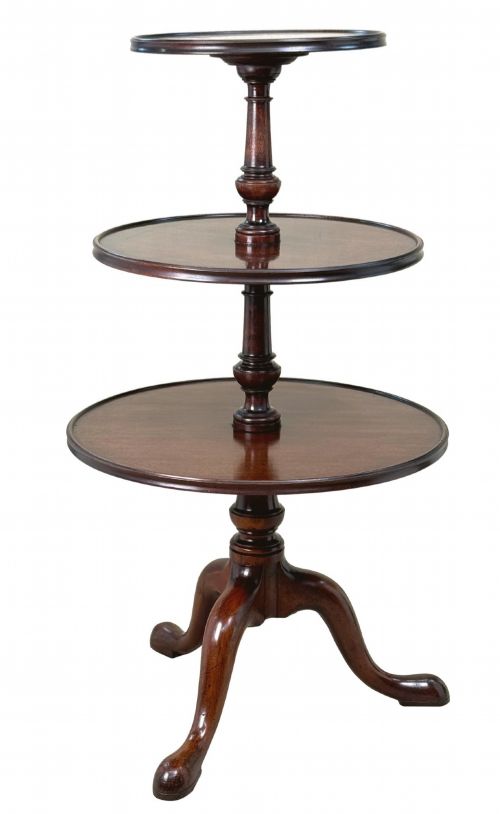
A georgian mahogany dumbwaiter takes the form of a tiered serving stand, most commonly featuring two or three graduated circular trays stacked upon a central column and tripod base. These practical dining room accessories emerged to assist with self-service during lengthy meals.
The examples found here span the eighteenth century and the regency period, alongside later revival pieces from the early twentieth century. Two-tier and three-tier formats dominate the selection, often incorporating revolving mechanisms or drop-leaf edges.
Makers utilised solid mahogany and brass fittings, occasionally adding fiddleback grain patterns or inlay work to elevate the visual appeal. The resulting forms serve today as versatile side tables or tiered etageres within period interiors.
How they were made
Cabinetmakers constructed these stands predominantly from solid mahogany, relying on the timber's dense grain to support heavy stacked trays without sagging. Turning lathes shaped the central pillars, while fine brass castors and swivel mechanisms enabled the tiers to rotate smoothly.
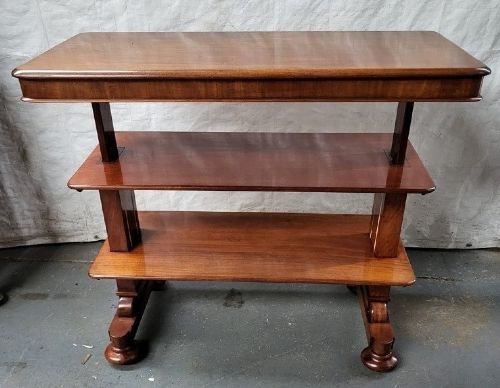
Joinery methods included sturdy tripod bases jointed directly into the turned central shaft to provide balance under weight. Some variants incorporated folding drop-leaf sections or clever metamorphic mechanisms requiring precise hinge work and fitted supports.
Georgian Mahogany Dumbwaiter Retail Price Guide 2026
Typical asking prices for georgian mahogany dumbwaiter among the pieces listed under this phrase on Sellingantiques today, from the lower quarter to the upper quarter. They describe what is for sale here now, not the wider market.
Listings feature mahogany, solid mahogany, brass, and inlay across occasional tables, side tables, and tiered tables.
What varies in quality
The distinction between ordinary utility pieces and superior examples lies in the selection of the timber and the crispness of the turning. Rich grain figures such as fiddleback mahogany indicate careful material choice by the cabinetmaker.
Structural stability depends heavily on the integrity of the tripod joint and the smooth operation of any revolving tiers. Refined proportion in the graduated trays and minimal, elegant brass hardware separate master craftsmanship from later revival work.
Gillow
The Georgian Mahogany Dumbwaiter Glossary
- Tripod base
- A three-legged support system providing stability for the central column of the stand. This configuration prevents wobbling on uneven dining room floors.
- Tiered table
- A piece of furniture comprising multiple horizontal surfaces stacked vertically. This design maximises display and serving space within a compact footprint.
- Revolving mechanism
- A swivel pivot allowing the trays to turn smoothly for easy access. This engineering permits diners to reach dishes without standing.
- Drop-leaf
- A hinged section of a tray that can be lowered when not in use. This feature saves space in smaller dining rooms.
- Metamorphic
- Describing furniture designed to transform into different configurations for alternative uses. These clever pieces adapt from serving stands to side tables.
Georgian Mahogany Dumbwaiter: Frequently Asked Questions
What is a dumbwaiter used for?
These tiered stands held dishes, bottles, and glasses during meals when hosts preferred to dine without servants present in the room.
Diners simply rotated the tiers to help themselves to whichever course or beverage they required next.
How do I distinguish georgian from later pieces?
Authentic eighteenth-century examples exhibit hand-turned wooden components, subtle patination on the mahogany, and period joinery methods without modern hardware.
Twentieth-century revival pieces often display lighter, uniformly finished timber and machine-made fittings that lack historical wear.
Where should I place a dumbwaiter at home?
They fit naturally beside a dining table, serving the original purpose of holding glassware or serving dishes during dinner parties.
Alternatively, use them in a corner or hallway as a decorative display surface for plants and books.
Do all tiers rotate on these stands?
Many examples feature revolving mechanisms on one or more of the graduated trays, though fixed tiered tables also exist within the tradition.
Rotating trays allowed guests to access food easily from any seated position around the dining table.