


Georgian Mahogany Drafting Desk
A georgian mahogany drafting desk brings mechanical ingenuity and rich cabinetwork together for serious drawing or writing.
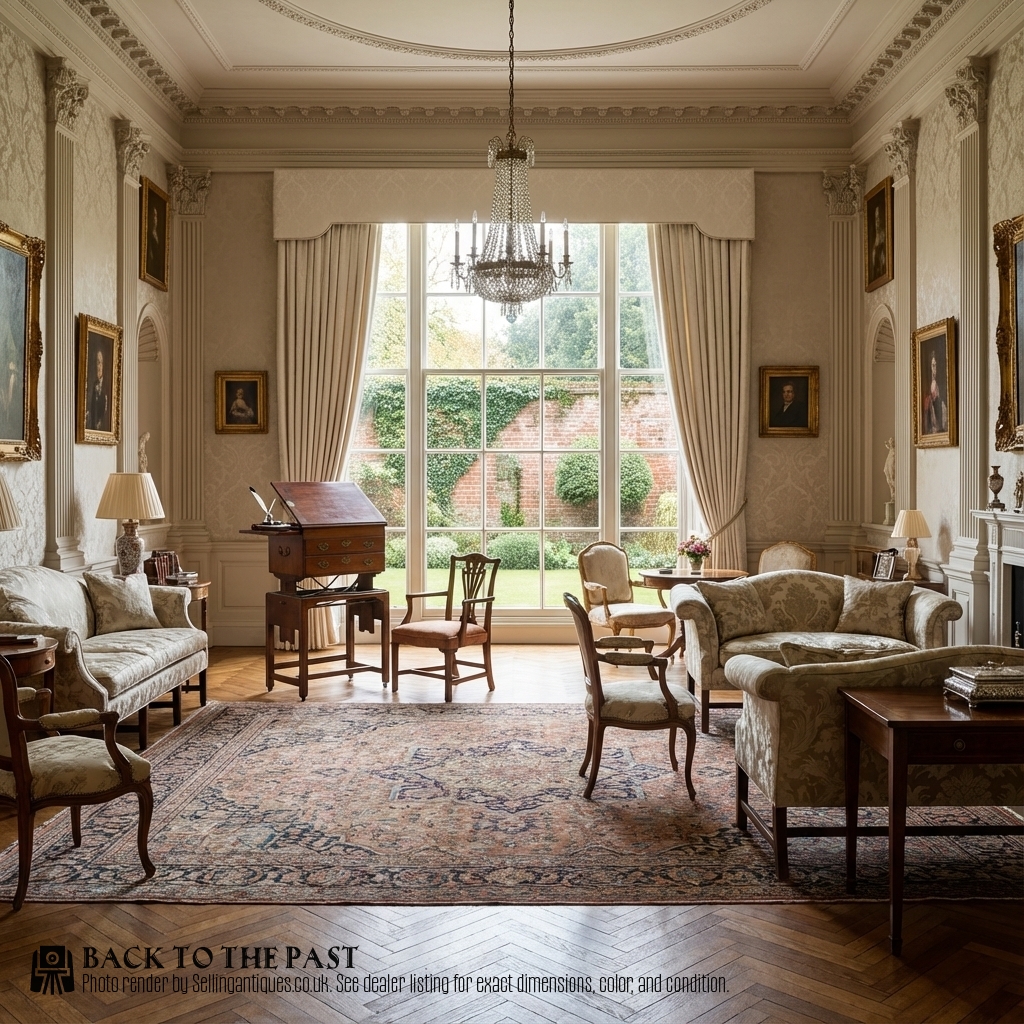
Georgian Mahogany Drafting Desk
A georgian mahogany drafting desk is a specialised piece of antique furniture designed for drawing, drafting, or reading. These pieces span the eighteenth century and the regency era, uniting utilitarian function with refined materials. The examples found here take forms such as architects tables, reading tables, and cartographer's folio tables.
The objects listed on this page reflect both standard english cabinetmaking and high workshop output. Pieces designated for architects, artists, and cartographers dominate the selection, highlighting the specific workspace needs of the period. Every version relies on the timber and hardware characteristic of late georgian production.
How they were made
The primary structural timber used in these drafting desks is mahogany, selected for its stability and rich grain. Cabinetmakers frequently utilised figured mahogany veneers to enhance the visual depth of primary surfaces. Secondary timbers and boxwood stringing often appear alongside brass hardware and inset leather or baize writing panels.
Construction techniques focus on mechanical adjustability, allowing reading slopes and writing surfaces to alter in height or angle. Riser mechanisms and lift-over designs require precise joinery to ensure smooth daily operation without compromising structural integrity. Brass ratchets and hinges facilitate these complex movements while adding durable metallic contrast to the wood.
The listings on this page span the georgian, regency, and late georgian periods, featuring mahogany, brass, leather, boxwood, and baize.
What varies in quality
Quality in a georgian mahogany drafting desk depends largely on the sophistication of its internal mechanisms and the handling of timber. Superior examples feature robust, finely engineered ratchets and smoothly operating metamorphic actions that endure repeated adjustment. Plain timber construction gives way in finer pieces to deeply figured mahogany boards chosen with deliberate care.
The integration of secondary materials such as boxwood stringing, brass mounts, and original leather or baize surfaces distinguishes higher-grade production. Master workshops achieved cleaner lines and tighter joints, whereas lesser pieces rely on simpler framing with less refined hardware. The overall harmony between mechanical utility and cabinetmaking restraint dictates the standing of each piece.
Gillows
The Georgian Mahogany Drafting Desk Glossary
- Metamorphic
- Furniture designed to transform from one form or function into another through hidden hinges, pivots, or sliding actions. This ingenuity defines many advanced drafting and library tables.
- Figured mahogany
- Timber displaying irregular growth patterns such as flame, curl, or fiddleback that create decorative optical effects under polish. Cabinetmakers reserved these choice boards for primary display surfaces.
- Baize
- A coarse woolen fabric woven to resemble felt, frequently used as a soft writing or drafting surface on period desks. It protects delicate paper and provides traction for drawing instruments.
- Boxwood stringing
- Thin inlay lines of pale yellowish wood set into contrasting dark mahogany veneers to edge panels and drawers. This delicate detail defines much of late georgian decorative work.
- Cartographer
- A specialist maker or user of maps who required bespoke tables with large flat surfaces and folio storage. Such furniture accommodated oversized paper sheets and specialised drawing tools.
Georgian Mahogany Drafting Desk: Frequently Asked Questions
What is an architects desk?
An architects desk is an adjustable table designed to hold large drawings, plans, or books at a comfortable angle for working.
These pieces typically feature a rising central panel supported by a ratchet mechanism alongside stationary ledges for writing materials.
How do you adjust the top?
Most desks use an internal wooden or brass ratchet mechanism mounted beneath the rising reading surface.
Lifting the panel engages the support at various notched angles, which you release by lifting the surface to its maximum height before lowering.
Were these used for writing?
Many drafting tables served multiple purposes as writing desks, reading tables, and general library furniture.
The inclusion of inset leather or baize writing surfaces alongside adjustable slopes allowed owners to switch easily between writing letters and drawing plans.
How do I date a desk?
Dating relies on observing the cabinetmaking style, timber characteristics, and mechanical hardware choices typical of specific periods.
Eigteenth-century and regency examples display distinct structural proportions, brass handle designs, and veneer selections that evolved over time.