

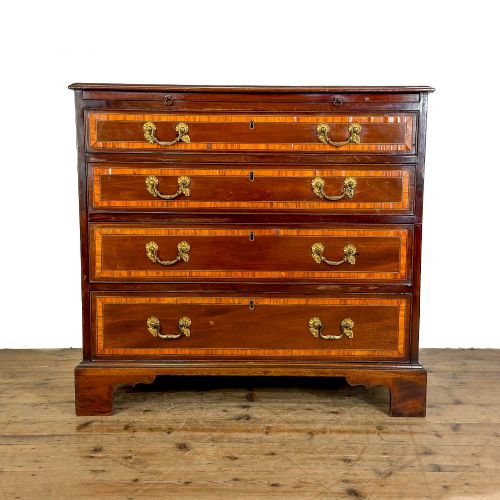
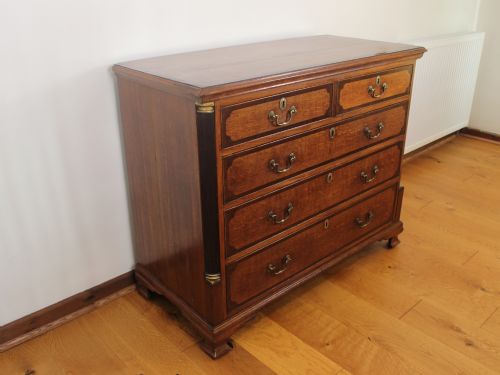


Georgian Mahogany Crossbanded Chest
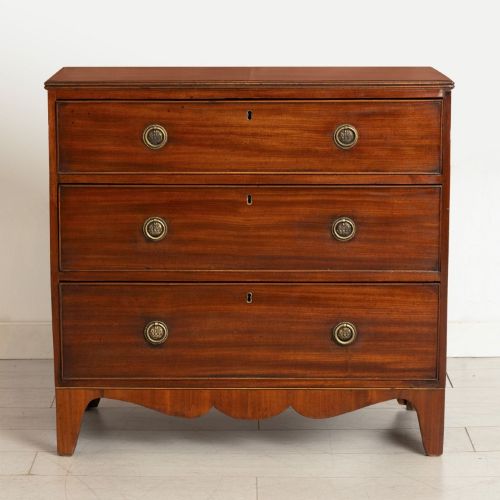
A georgian mahogany crossbanded chest brings rich timbers and neat border details together in a practical bedroom storage piece.
Georgian Mahogany Crossbanded Chest
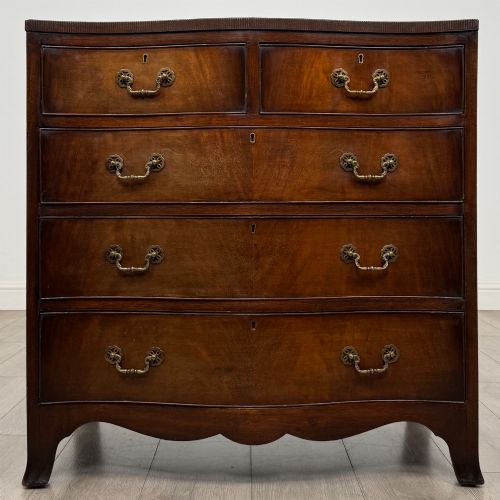
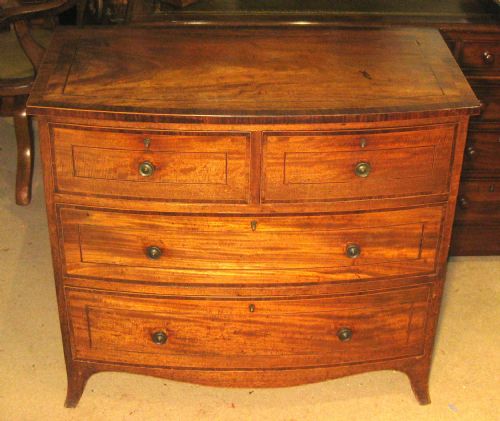
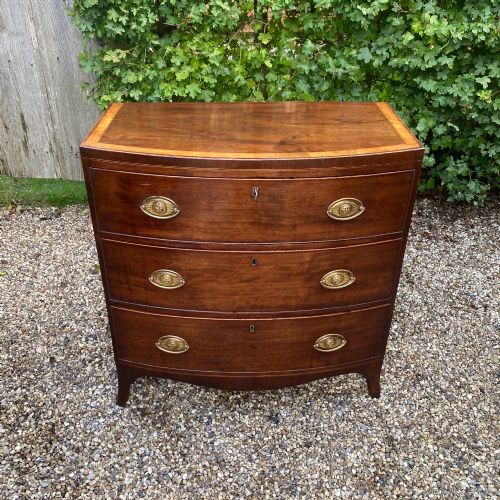
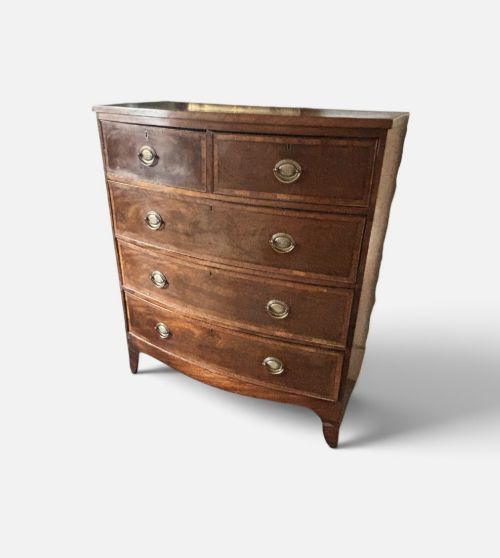
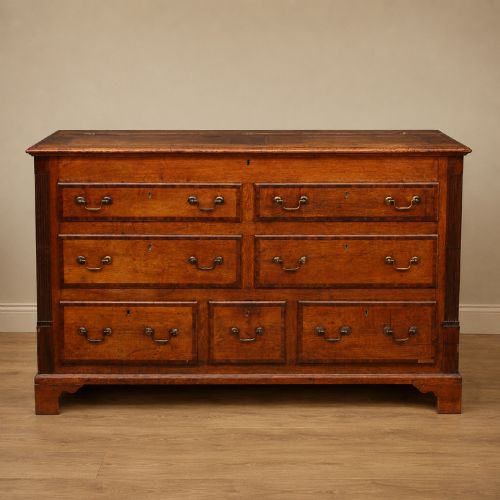
A georgian mahogany crossbanded chest is a functional wooden storage unit defined by contrasting border veneers laid across the primary timber surfaces. These items originate predominantly from the Georgian, Regency and Victorian periods, taking forms such as bow fronts, straight fronts, mule chests and linen presses.
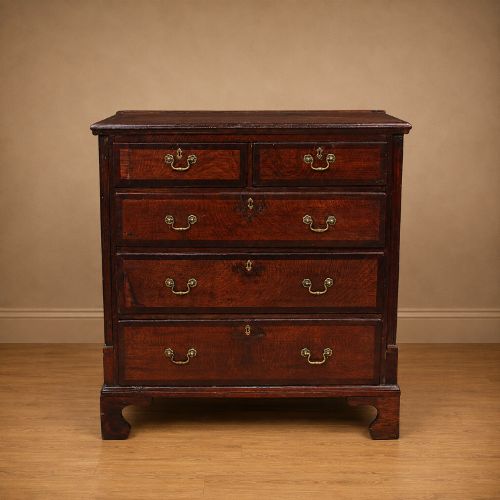
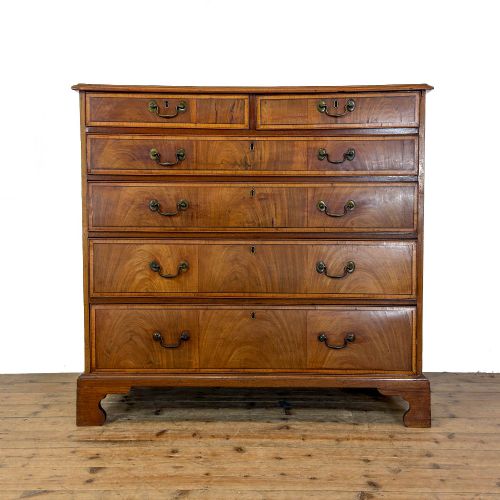
The version most commonly encountered on this page pairs a sturdy carcase of mahogany or oak with a decorative crossbanded perimeter on the top surface. Drawers are arranged in traditional graduated tiers, often retaining original brass drop handles or backplates.
Materials and construction
Cabinet makers built the primary carcases using solid mahogany or oak, selecting dense timbers that would remain stable over centuries of use. Drawer linings were frequently constructed from secondary woods like oak or pine to ensure smooth daily operation.
Crossbanding involved laying thin strips of contrasting timber, such as satinwood, rosewood, walnut or mahogany itself, so that the grain ran perpendicular to the main panel. This decorative border technique required precise hand-cutting and skilled gluing to prevent lifting or warping along the edges.
Listings feature mahogany, oak, satinwood, rosewood, and amboyna veneer.
Factors in quality
Quality rests upon the crispness of the crossbanded borders and the selection of figured mahogany with deep natural warmth and grain movement. Superior pieces display seamless veneer matching where the grain flows logically across the drawer fronts and top.
The structural integrity of the drawer construction, including hand-cut dovetails and clean secondary wood linings, separates fine cabinet work from simpler vernacular output. Original brass hardware and undisturbed timber patination further elevate the standing of an individual piece.
The Georgian Mahogany Crossbanded Chest Glossary
- Crossbanding
- A border veneer technique where thin strips of wood are laid around the perimeter of a top or drawer front so the grain runs at right angles to the central panel. This frames the primary timber with a distinct contrasting edge.
- Bow front
- A convex curved front profile popular in furniture design from the late eighteenth century onwards. It softens the boxy geometry of a standard rectangular chest.
- Mule chest
- A storage chest fitted with one or more functional drawers beneath the main compartment. It bridges the evolution between traditional blanket chests and modern drawer units.
- Linen press
- A tall cabinet featuring upper doors enclosing sliding trays for textiles above a base section of smaller drawers. These pieces provided ample storage for household linens in period bedchambers.
Georgian Mahogany Crossbanded Chest: Frequently Asked Questions
How do I date a crossbanded chest?
Dating relies on examining construction methods, such as the shape of the dovetails on the drawer sides and the type of secondary timbers used internally. The overall proportions and handle styles also shift between the eighteenth century and the later Victorian revivals.
Secondary clues include the specific choice of crossbanding veneers and the presence of makers marks or original backing boards. Comparing these details against documented examples helps narrow down the decade of manufacture.
What is the difference between oak and mahogany carcases?
Oak carcases typically indicate vernacular or regional British cabinet making, often paired with mahogany drawer fronts and crossbanding for a decorative contrast. Solid mahogany carcases appeared in more expensive urban workshops.
Both timbers provide excellent structural stability, but mahogany offers a smoother reddish-brown surface polish. Oak versions present a heavier, more tactile grain structure visible on the sides and interiors.
Where should I place a bow front chest?
A bow front chest functions well in a bedroom or hallway where the curved projection softens traffic flow around the furniture. Because the front curves outward, measuring the clearance space in narrower rooms ensures the piece sits comfortably.
Keeping the chest away from direct heat sources and strong sunlight protects the aged mahogany surface and delicate crossbanded borders from drying out over time.
Are brass handles original on these chests?
Original brass handles show consistent wear patterns and match the fixing holes left in the drawer timber from the period of manufacture. Replacements often leave slight ghost marks or mismatched indentation circles on the wood surface.
Many antique chests received updated hardware during their working lives, which remains an accepted part of their ongoing history rather than a major detraction.