
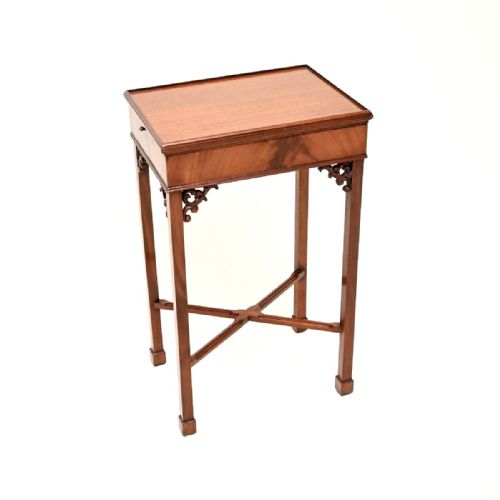

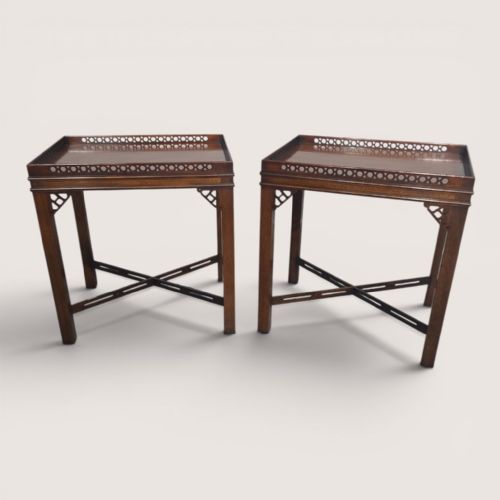
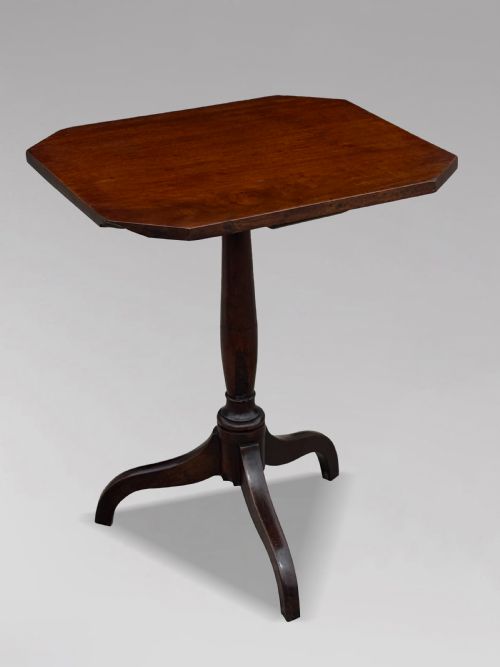
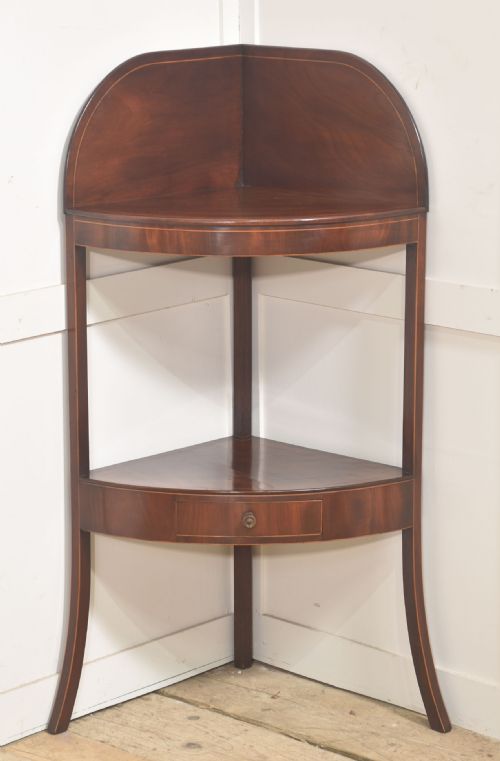
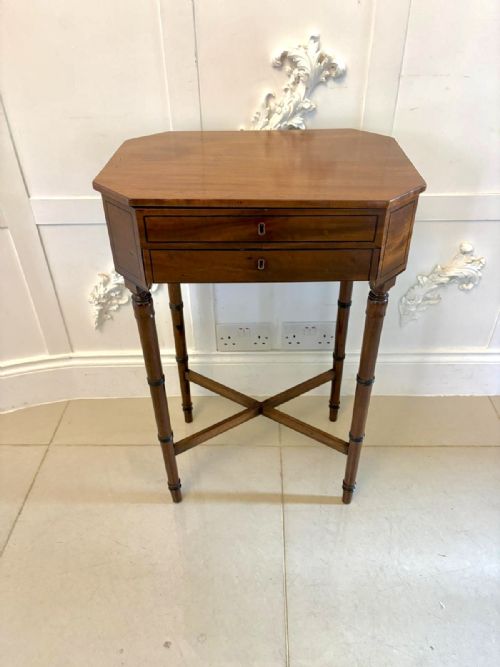


Georgian Mahogany Corner Table
A georgian mahogany corner table utilises the awkward angles of a room with polished timber and period cabinetwork.
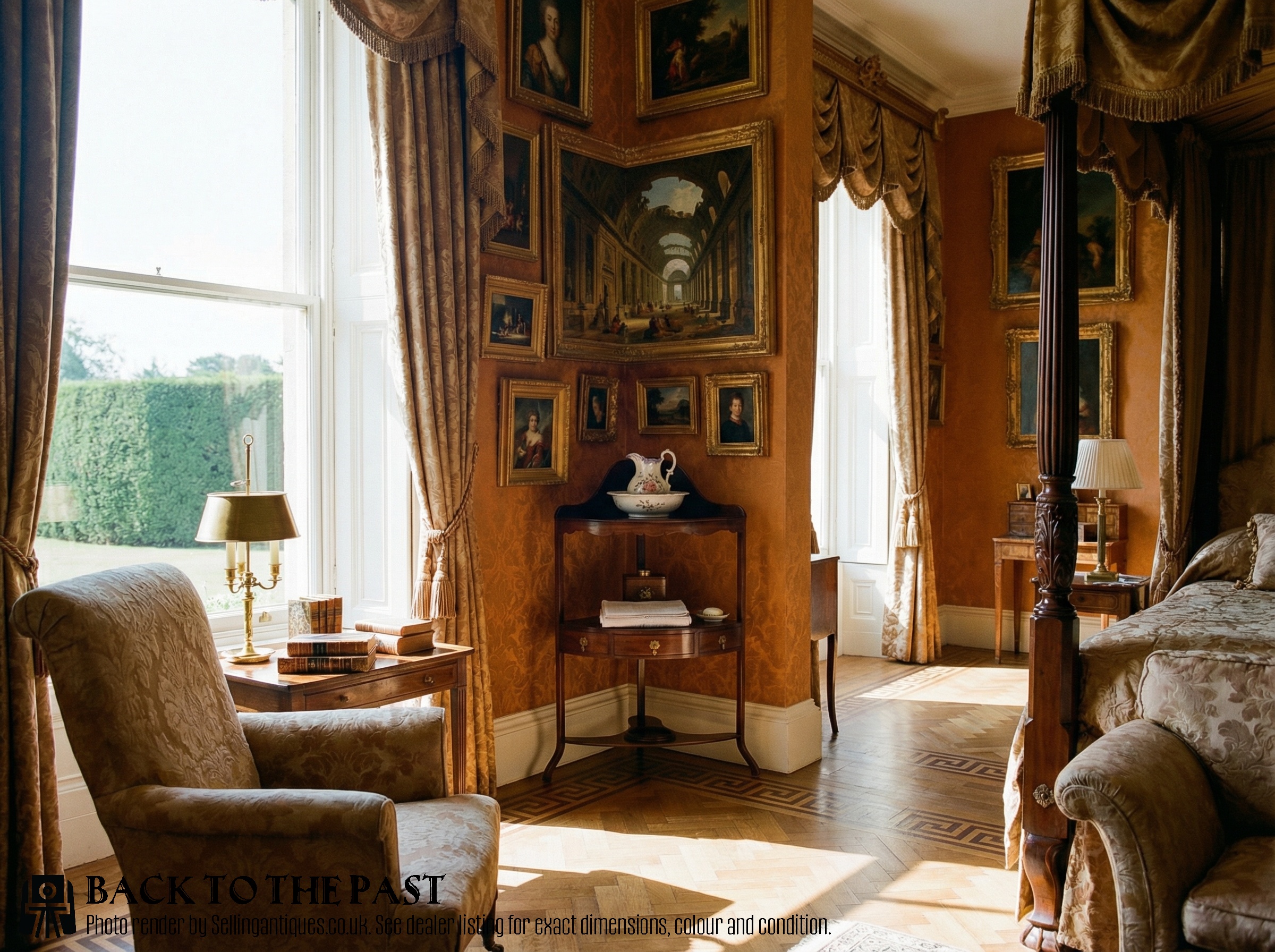
Georgian Mahogany Corner Table
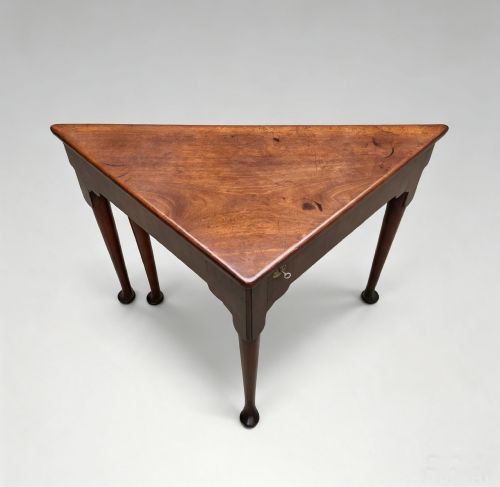
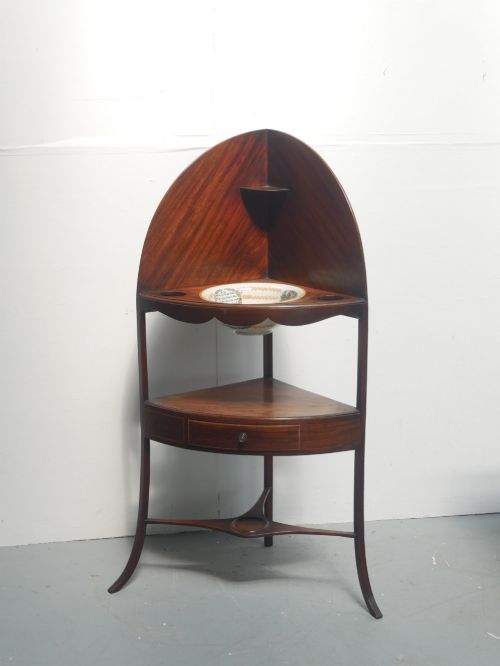
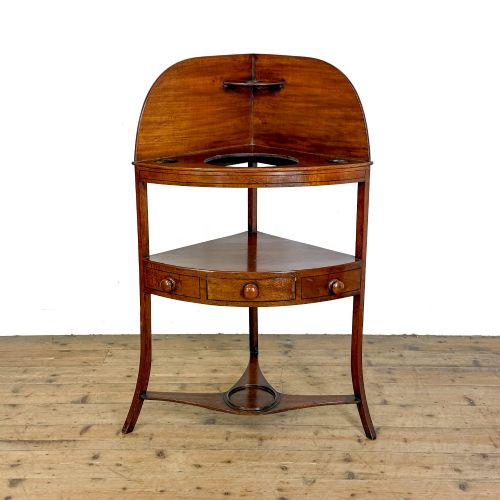
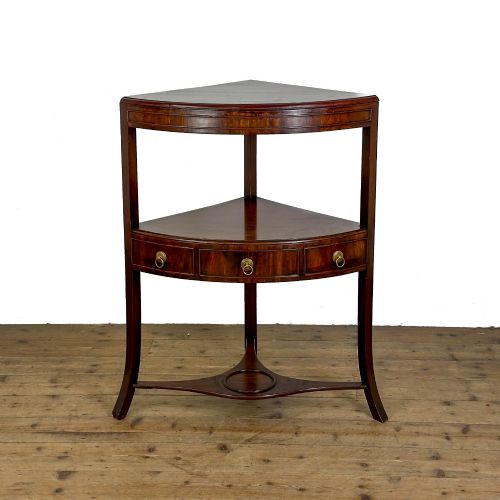
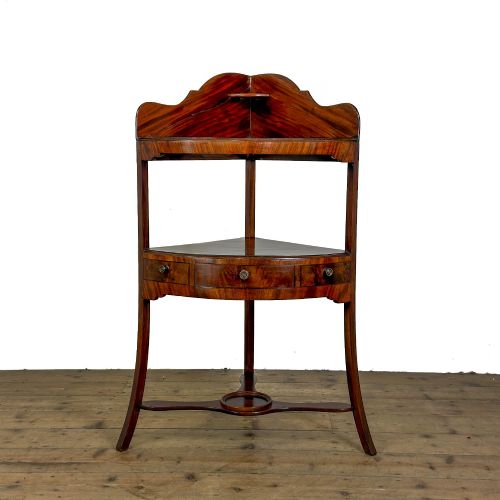
A georgian mahogany corner table brings functional furniture into angles and wall junctions where standard rectangular pieces cannot fit. The selection spans utilitarian washstands with tiered shelves and basin rings alongside folding tea tables, drop-leaf forms, and pot cupboards.
The objects derive primarily from the eighteenth and nineteenth centuries, reflecting Georgian, George II, George III, and Regency periods. While many listings designate washstands and basin supports, others serve as occasional, lamp, or drop-leaf tables designed specifically for room perimeters.
How they were made
Cabinetmakers constructed these tables using solid mahogany, frequently augmented by secondary timbers and decorative stringing. Workshops incorporated boxwood and satinwood for fine inlay work on friezes, drawer fronts, and shelf edges.
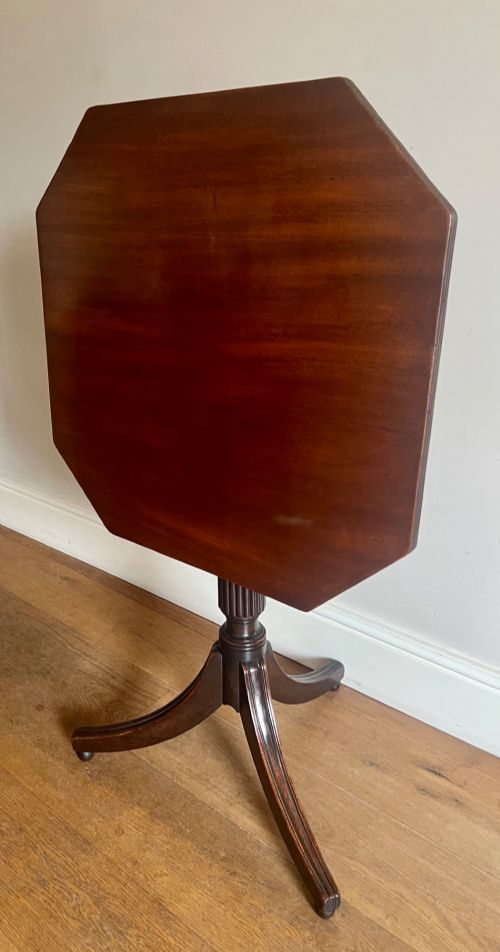
Construction techniques include folding mechanisms for game and tea tables, tripod bases with tilt-top actions, and specialised cut-outs in washstand tops to hold ceramic basins.
The inventory combines utilitarian washstands with occasional lamp tables, console tables, and drop-leaf forms in mahogany.
What varies in quality
The standard of a georgian mahogany corner table depends upon the selection of timber figure, the crispness of carved details such as hoof feet or brackets, and the integrity of original folding or drop-leaf mechanisms. Superior examples exhibit balanced proportions that negotiate wall angles cleanly without awkward overhangs.
Finer pieces show restrained use of boxwood inlay and well-fitted internal components like original ceramic elements, washbowls, or removable sewing baskets, whereas lesser pieces rely on plain timber surfaces and later alterations.
The Georgian Mahogany Corner Table Glossary
- Mahogany
- A dense tropical timber valued for its rich reddish-brown colour and stable grain. It forms the primary structural and surface material for the majority of these pieces.
- Washstand
- A specialised table featuring cut-outs in the top tier for ceramic basins, often accompanied by lower shelves for jugs and toiletries. They represent a significant portion of corner furniture forms.
- Tripod base
- A three-legged support structure attached to a central column, frequently utilised on snap-top and occasional tables to ensure stability on uneven floors.
- Drop-leaf table
- A table design incorporating hinged flaps that lower or raise on swinging brackets, allowing the footprint to expand or contract according to space requirements.
- Inlay
- A decorative technique inserting contrasting woods such as boxwood and satinwood flush into the mahogany surface to create geometric borders or lines.
Georgian Mahogany Corner Table: Frequently Asked Questions
What rooms suit a corner table?
These tables fit efficiently into dead corners of reception rooms, hallways, and bedrooms where straight furniture leaves awkward gaps. Their geometry maximises floor space while providing a functional surface for lamps, plants, or display items.
Originally built for specific domestic chores like washing or serving tea, contemporary living uses them as decorative focal points that utilise neglected wall junctions.
How do washstands differ from standard tables?
Washstands feature tiered platforms designed to hold ceramic basins and water jugs, often including enclosed cupboard sections or small drawer units at the base. Standard corner tables provide flat surfaces for display or occasional use without basin apertures.
Both forms share the same triangular footprint intended for room perimeters, but the internal layout reflects their distinct functional origins.
What timber features indicate age?
Older pieces display rich, deep patination developed through centuries of polishing alongside heavy, dense mahogany construction. Secondary timbers like oak or pine inside drawer linings help establish the period of manufacture.
Hand-cut joints and minor irregularities in the timber grain point toward eighteenth-century workshop production rather than later mass manufacturing.
Are folding tops common?
Folding mechanisms appear frequently on tea, game, and drop-leaf versions to allow surfaces to double in size when opened against a wall. Hinged flaps and rotating leaves required precise cabinetwork to ensure the timber sat level when extended.
These folding variants provide versatile surfaces that adapt from compact corner units into operational tables.