


Antique Wooden Wash Table
These antique wooden wash tables are practical pieces of vernacular furniture built to hold basins and ewers before plumbed bathrooms arrived.
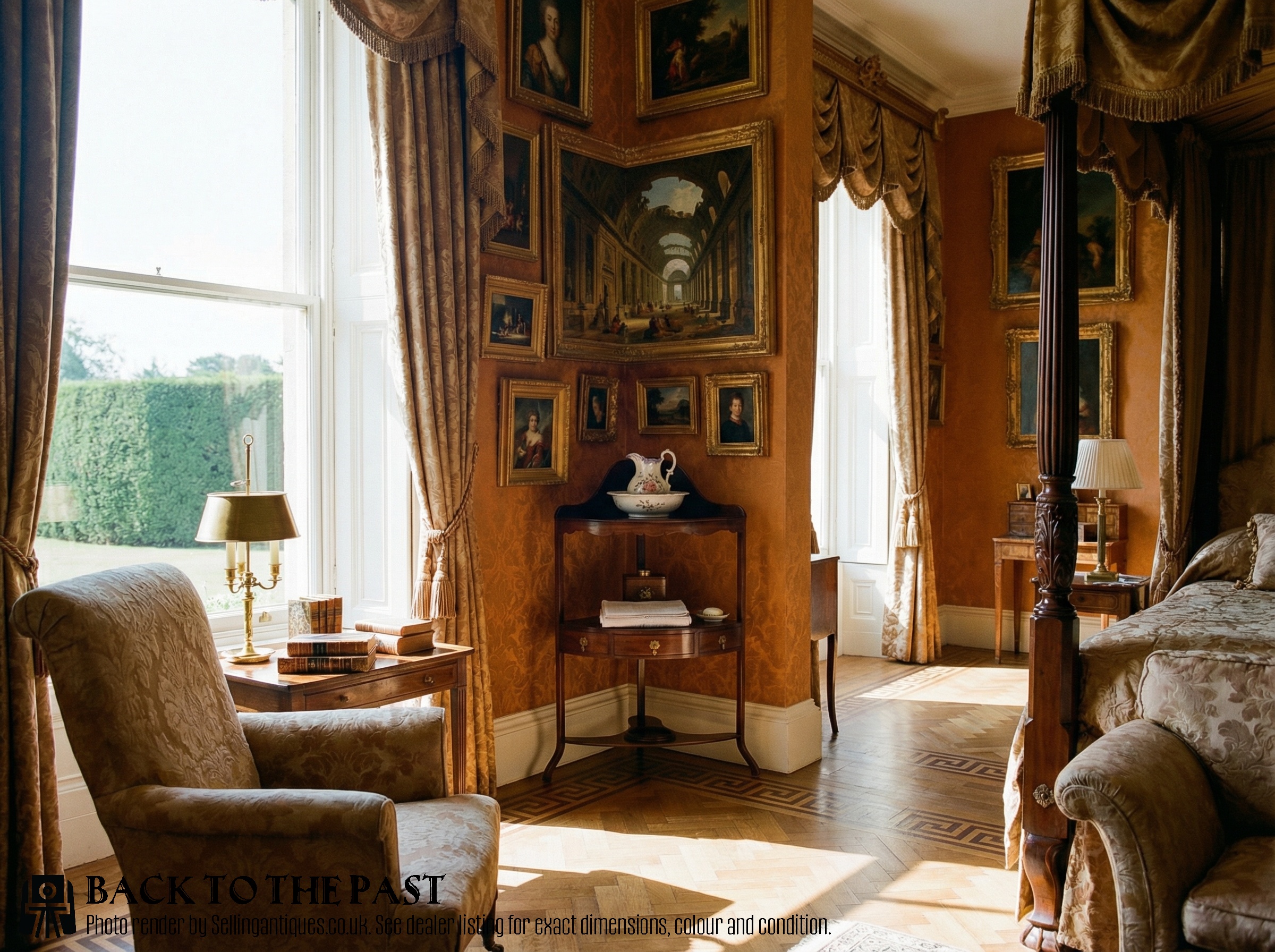
Antique Wooden Wash Table
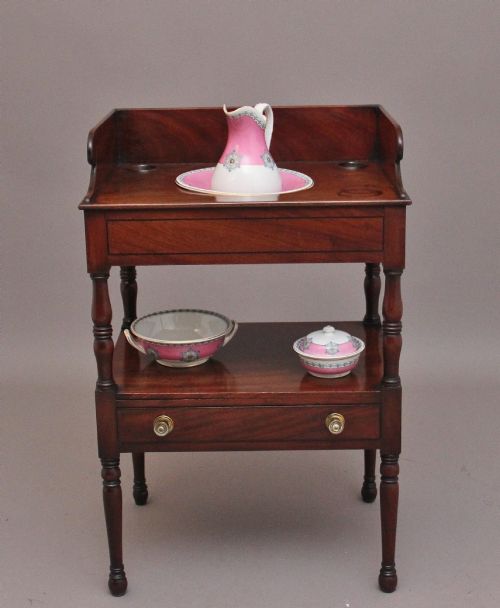
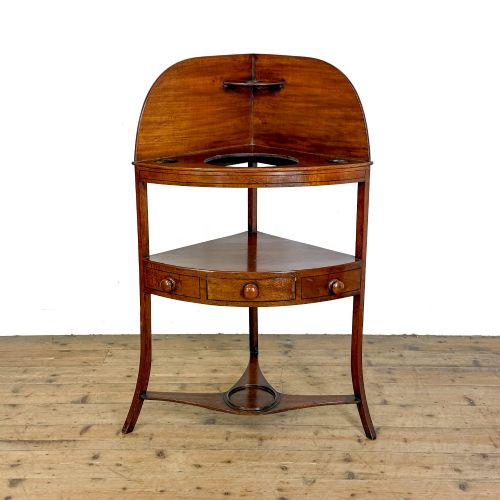
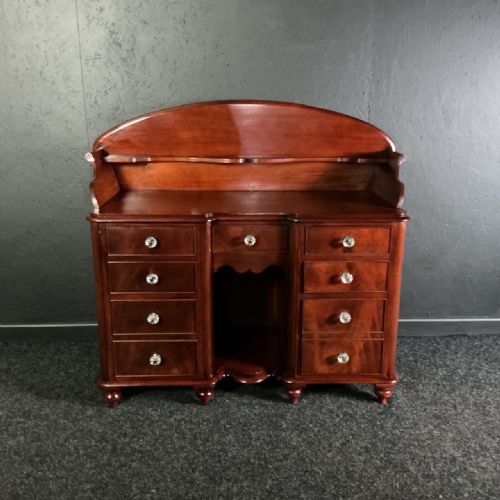
An antique wooden wash table is a functional piece of bedroom furniture designed to hold washing basins and water jugs in domestic settings before the arrival of modern plumbing. Buyers seeking an antique wooden wash table typically encounter Georgian corner models and 19th-century freestanding variants made from solid timber.
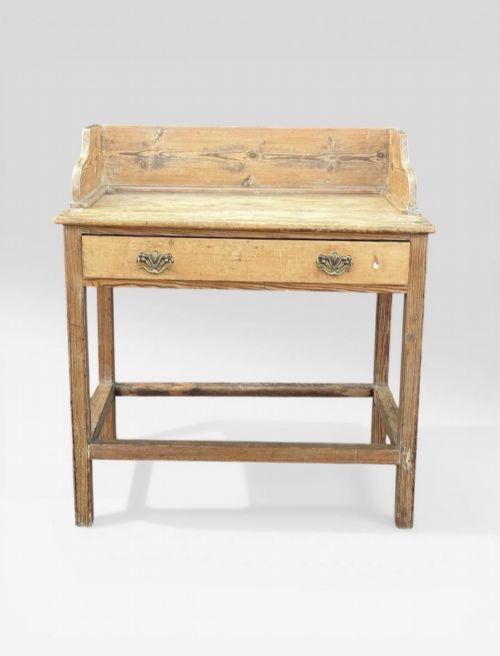
The selection ranges from George III and Regency corner washstands with shaped cut-outs for bowls to late Victorian satinbirch tables and rustic pine farmhouse pieces. Many survive in mahogany, often featuring tiered shelves or small drawers beneath the surface originally intended for soap and small toiletries.
How they were made
Cabinet makers constructed these wash tables primarily using mahogany, pine, and satinbirch, often incorporating boxwood inlay on finer Georgian examples. Joinery techniques varied from sturdy mortise and tenon frames in utilitarian pine pieces to delicate dovetailing in the drawers of formal mahogany models.
Later Victorian versions frequently integrated fitted marble tops to resist water damage from splashing during daily washing routines. Brass hardware, including small knobs and handles, complemented the timber construction while occasional glass components appeared in related fittings.
Some corner tables include tiny concealed spaces once meant for holding shaving soap.
What varies in quality
Quality in these wash tables rests upon the selection of timber, the crispness of the turning on legs, and the sophistication of any inlay work. Finer Georgian and Regency examples exhibit carefully figured mahogany veneers and precise boxwood stringing, whereas rustic pieces rely on straightforward plank construction.
The degree of original survival, such as intact tier configurations and unaltered marble or wooden tops, determines the integrity of each piece. Tables that retain their balanced proportions and unblemished surfaces demonstrate superior craftsmanship compared to heavily altered or mismatched examples.
The Antique Wooden Wash Table Glossary
- Corner washstand
- A triangular form designed to fit neatly into the corner of a period bedroom to conserve floor space.
- Satinbirch
- A pale, highly figured timber utilised in late Victorian cabinet making for its luminous yellow-brown grain.
- Boxwood inlay
- Contrasting pale wood inserted into dark timber surfaces to create decorative geometric lines or motifs.
- George III
- The stylistic period spanning the mid-to-late 18th century, characterised by classical proportions and mahogany craftsmanship.
- Washstand
- A dedicated wooden table or cabinet constructed to hold basins, ewers, and washing accessories.
Antique Wooden Wash Table: Frequently Asked Questions
Where were wash tables placed?
These tables stood in bedrooms and dressing rooms to hold water basins before plumbed bathrooms became standard in homes.
Corner designs tucked neatly into unused angles of a room, while freestanding tables sat against bedroom walls.
How do I tell periods apart?
Georgian and Regency pieces tend to feature fine mahogany timbers, slender turned legs, and curved basin cut-outs.
Victorian examples often introduce pine, satinbirch, or heavy marble tops designed to handle splashing water.
Can I use one today?
These tables adapt well to modern interiors as hallway tables, plant stands, or occasional side surfaces.
Their lower shelves and small drawers provide practical storage for small everyday items in living spaces.
Did they all have marble tops?
Early Georgian and 18th-century versions featured fitted wooden tops with circular cut-outs to suspend washing bowls.
Marble tops became more common during the Victorian era to protect the wood from water damage.