

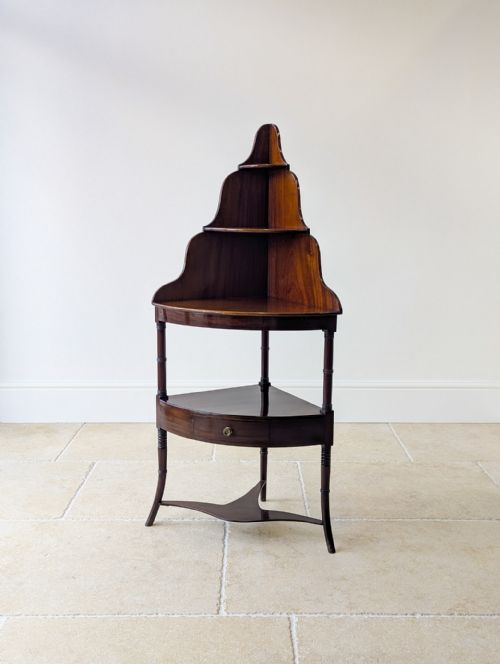


Georgian Tier Corner Stand
A georgian tier corner stand puts wasted wall space to work with architectural precision and rich timber grain.
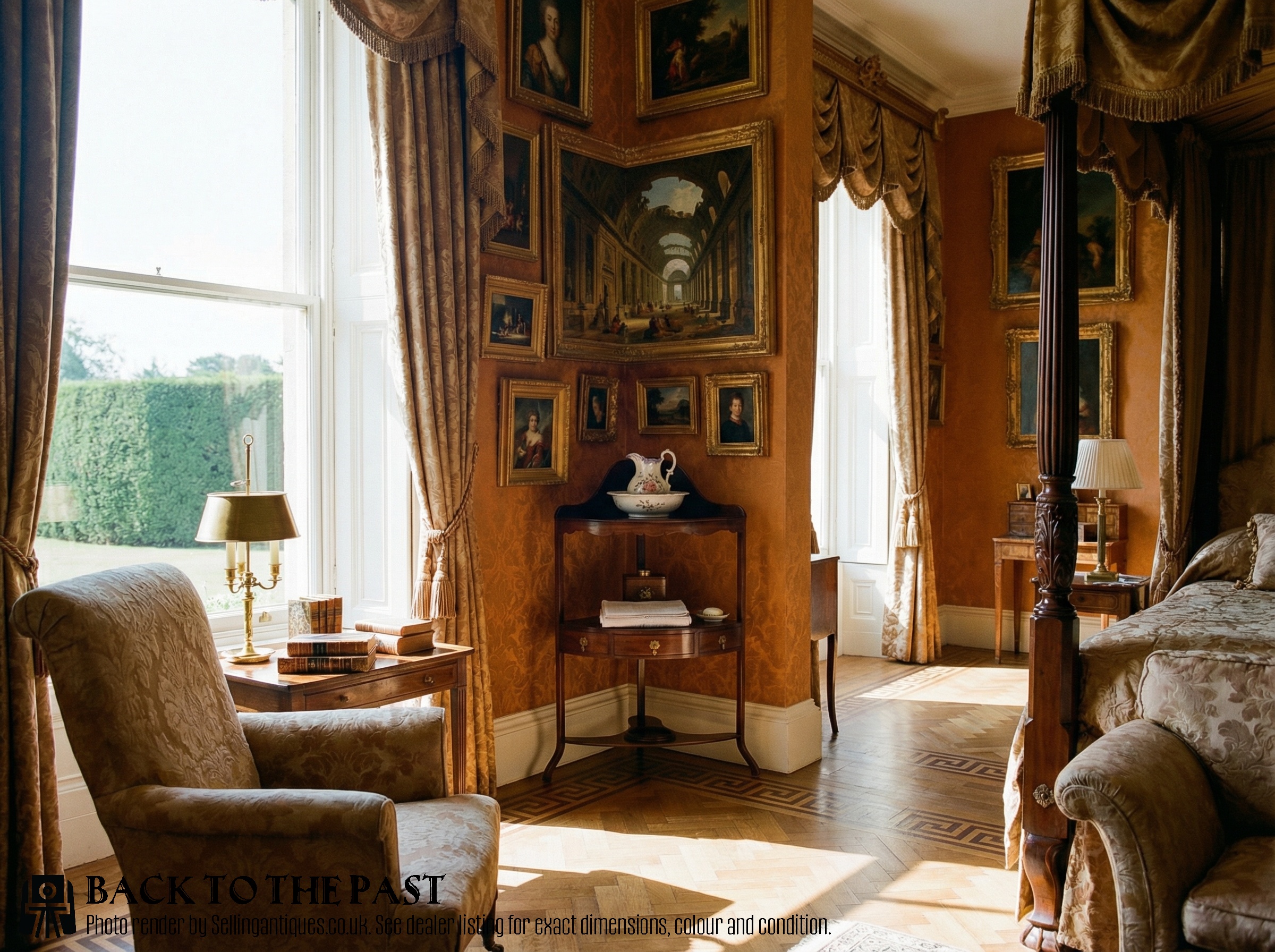
Georgian Tier Corner Stand
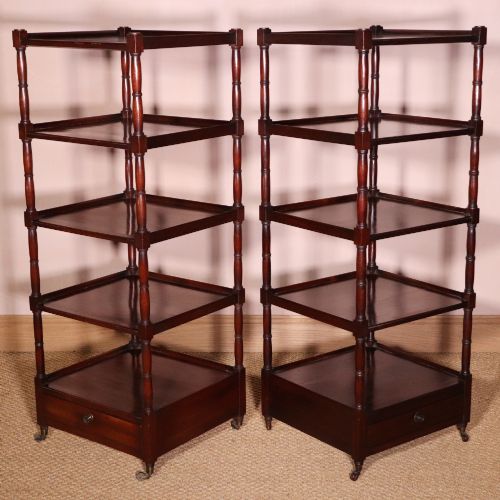
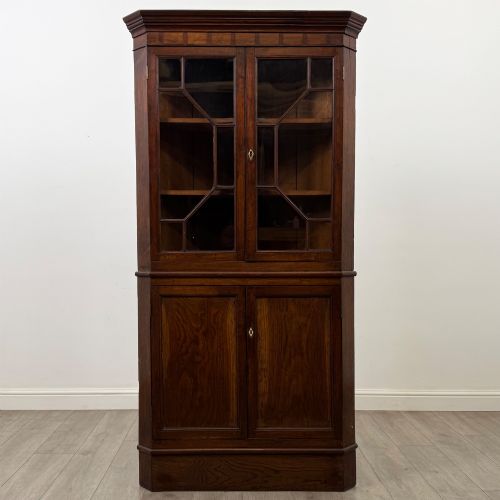
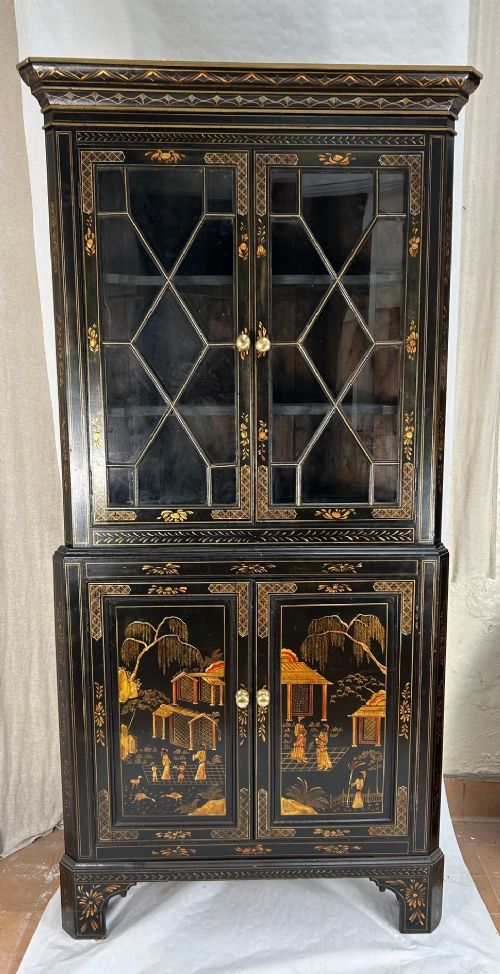
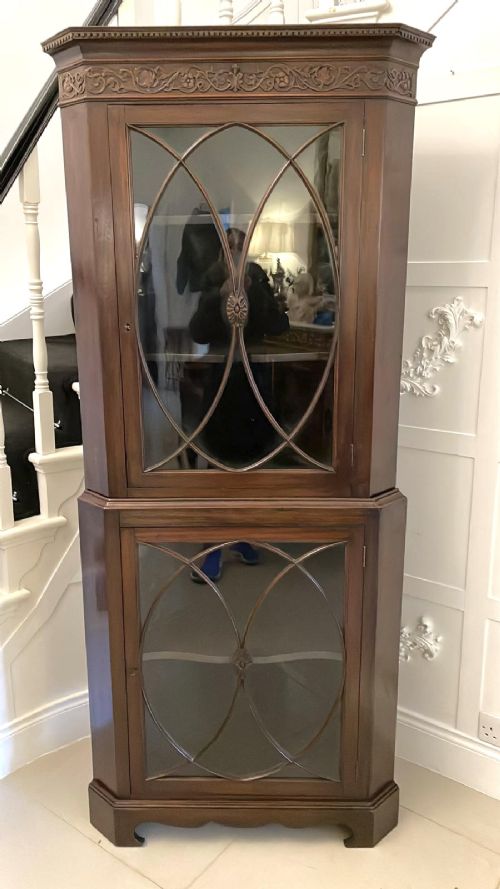
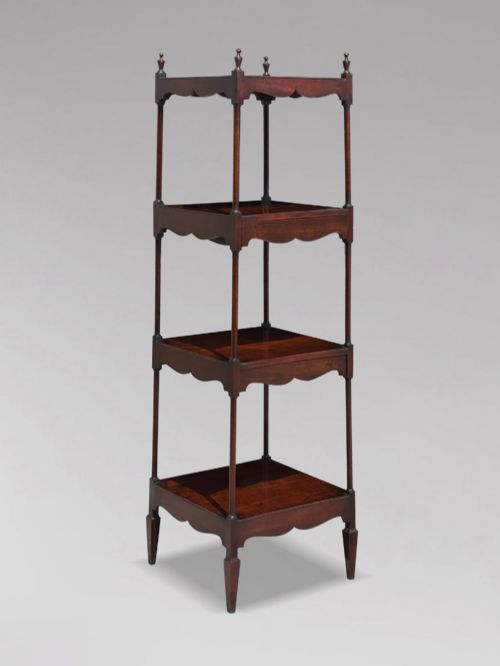
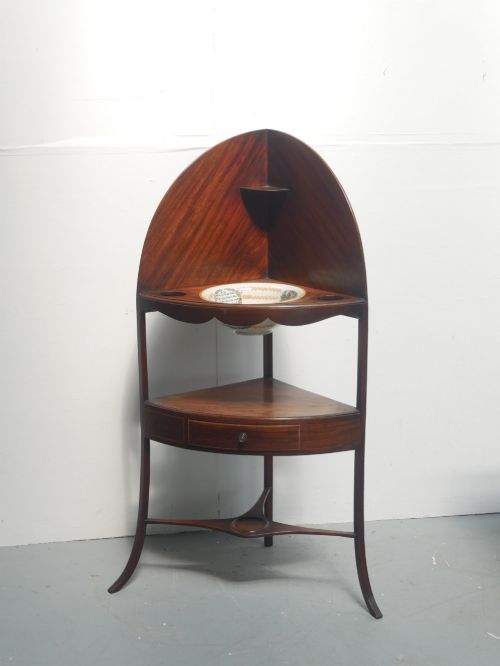
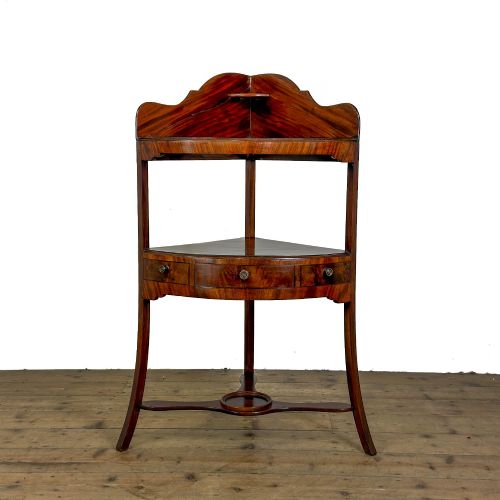
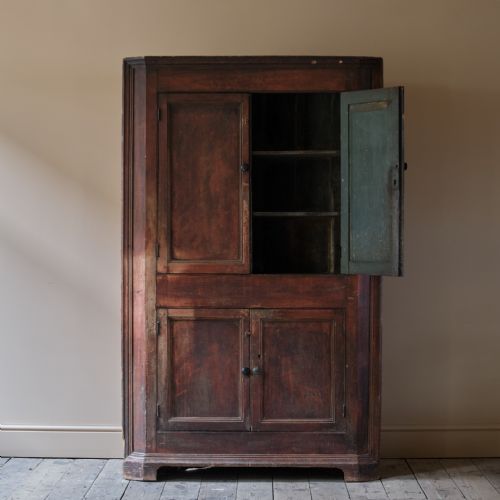
A georgian tier corner stand utilises right-angled joinery to fit snugly into room intersections while providing multiple display surfaces. These pieces take the form of corner cupboards, washstands, and tiered etageres designed to maximise tight spatial footprints without sacrificing display capacity.
The versions most frequently met on this page span the Georgian, Regency, and nineteenth-century periods, constructed primarily in mahogany and oak. Buyers often encounter bow-fronted iterations, glazed display cabinets, and open multi-tiered structures intended for corner placement.
Makers designed these tiered stands to serve various domestic functions, from holding wash basins to displaying porcelain and books. Their triangular and sector-shaped shelves reflect a distinct period focus on efficient room planning and elegant interior storage.
Materials and Construction
Cabinet makers relied heavily on solid mahogany and oak, frequently employing brass hardware and glass panels for doors and display sections. Timber selection prioritized rich grain patterns, occasionally utilising painted finishes, maple, or walnut for specific decorative effects.
Joinery techniques involved precise corner fitting, dovetailed drawers, and pegged framing to ensure stability in right-angled furniture. Tiered structures and etageres utilised turned supports or upright columns to divide levels cleanly while maintaining structural integrity under weight.
Some corner stands doubled as discreet wash stations, hiding basins behind panelled doors before indoor plumbing arrived.
Variations in Quality
Quality separates pieces through the selection of timber veneers, the crispness of carved details, and the subtlety of proportion. Superior examples demonstrate careful grain matching on curved bow fronts and refined turning on upright supports.
Construction methods also distinguish standard utility pieces from high-status furniture, particularly in the precision of corner joints and the integration of original brass or glass components. Finer items exhibit restrained decorative stringing, astragal glazing bars, or thoughtful internal configurations.
Gillows
The Georgian Tier Corner Stand Glossary
- Astragal
- A moulding profile used to hold glass panes in cabinet doors. It creates a neat grid pattern across the glazing.
- Bow front
- A convex curved cabinet front that projects outward. This shape softens sharp corners in domestic interiors.
- Etagere
- A set of open shelves for displaying small objects. It provides multiple tiers supported by slender uprights.
- Washstand
- A specialised piece designed to hold basins and toiletries. These often feature cut-out tops and lower shelves for pitchers.
- Whatnot
- A multi-tiered piece of freestanding furniture used for storage and display. It became popular during the Georgian and Regency eras.
Georgian Tier Corner Stand: Frequently Asked Questions
Where should a corner stand go?
These stands fit naturally into unused room intersections, turning awkward angles into functional display areas. They anchor empty wall junctions without disrupting traffic flow.
Position them in dining rooms, hallways, or reception spaces where vertical storage matters. Their geometry specifically serves dead space in period interiors.
What is a tier stand used for?
Tiered stands provide multiple open levels to exhibit ceramics, books, or decorative objects. Their stacked design maximises vertical capacity over a small floor footprint.
Historical examples also accommodated wash basins and bedroom accessories. Today, they function primarily as display furniture for collections.
How do I spot a Georgian piece?
Look for dense mahogany or oak timbers, hand-cut joinery, and period-appropriate hardware. Proportions tend to follow classical architectural rules with restrained ornamentation.
Examine the secondary woods inside drawers and cabinet backs for age indicators. Construction methods should match eighteenth or early nineteenth-century workshop practices.
Are corner cabinets stable?
The triangular footprint naturally anchors the piece against two intersecting walls. This geometry provides inherent stability despite narrow proportions.
Floor-standing versions distribute weight securely across multiple points of contact. Wall-mounted or cupboard variants benefit from proper bracket fixings into solid masonry.