
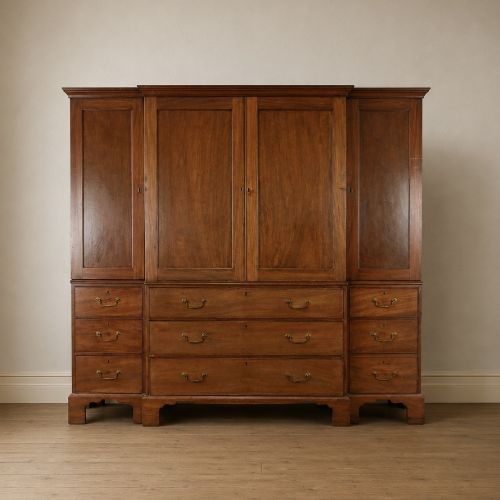
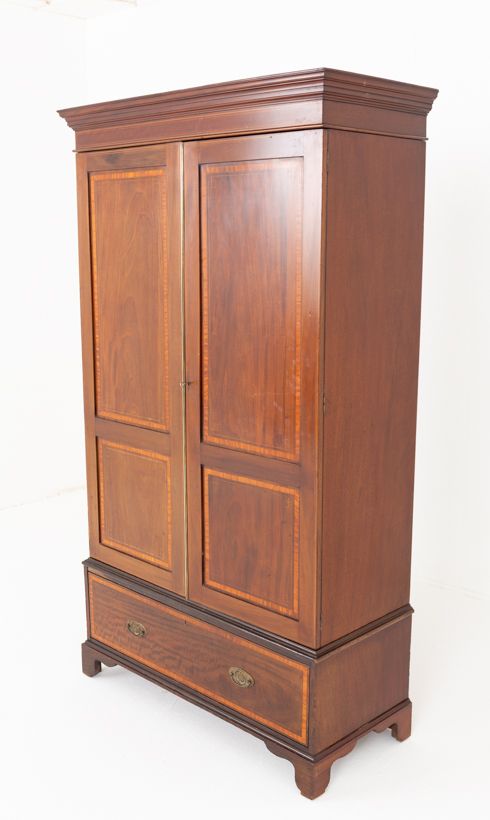
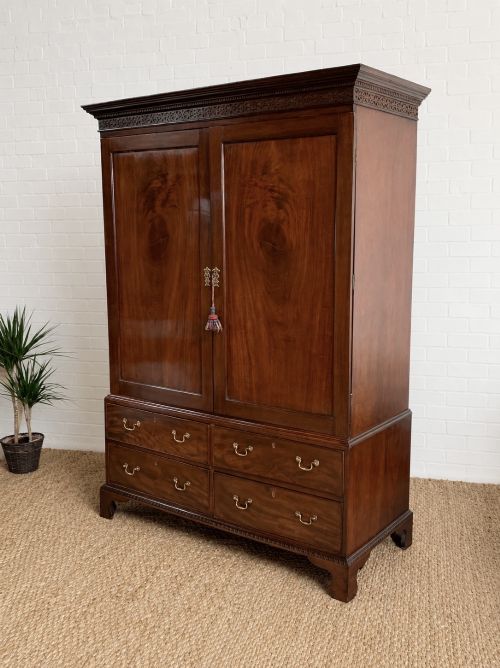
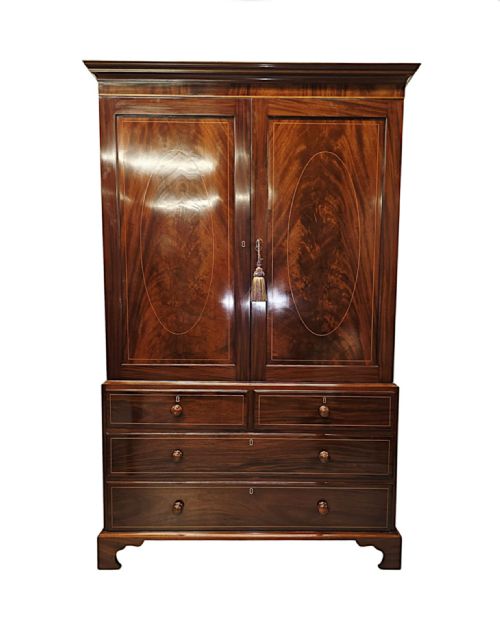
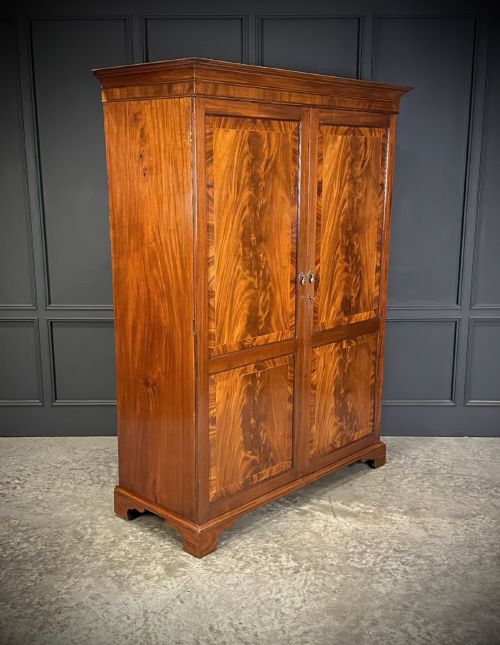
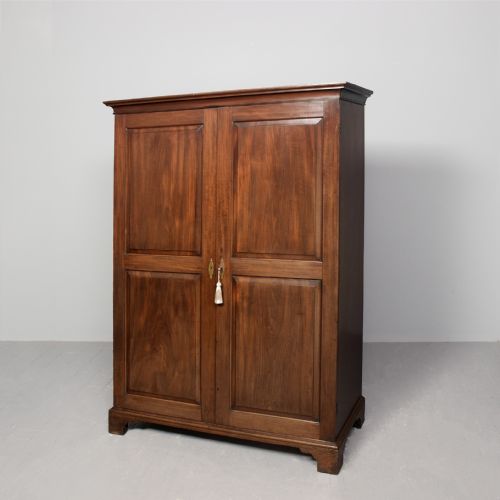
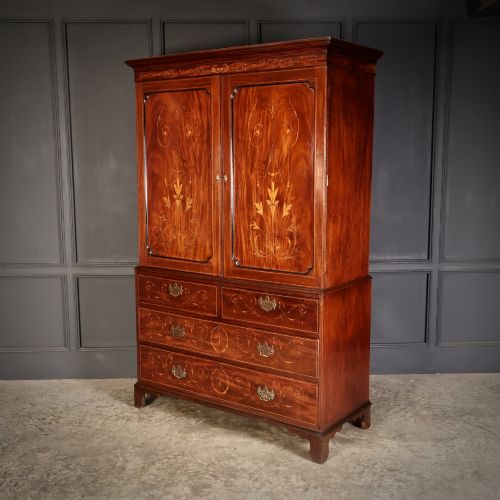
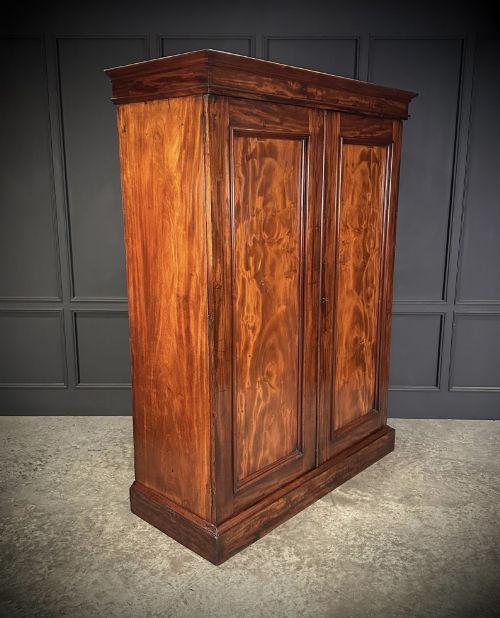
Georgian Mahogany Clothes Cupboard
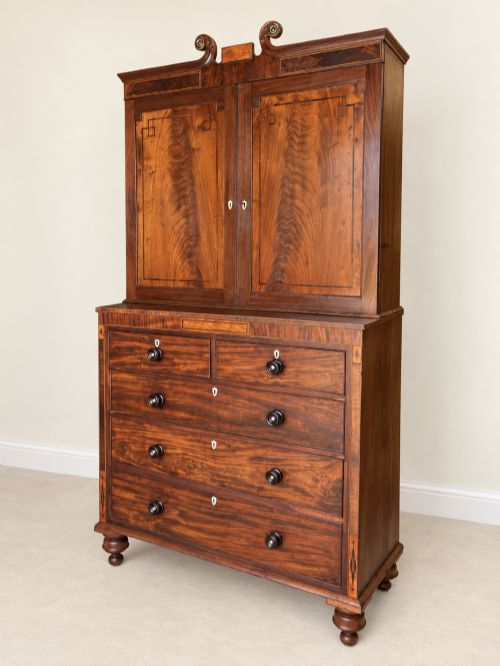
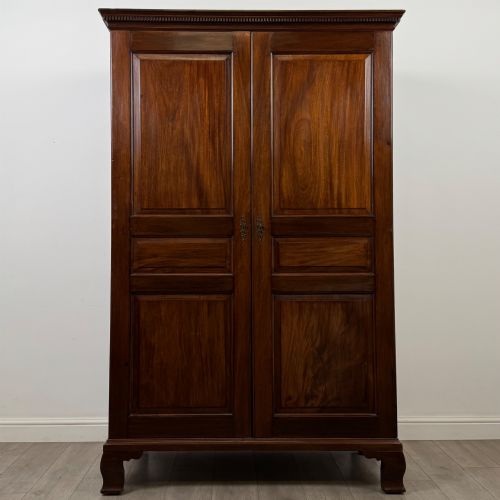
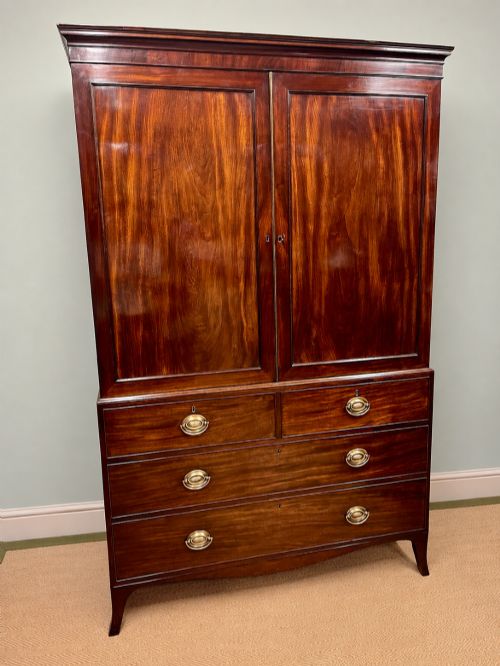
A georgian mahogany clothes cupboard is a robust storage piece built to hold household textiles and attire, combining architectural timber framing with generous internal capacity.
Georgian Mahogany Clothes Cupboard
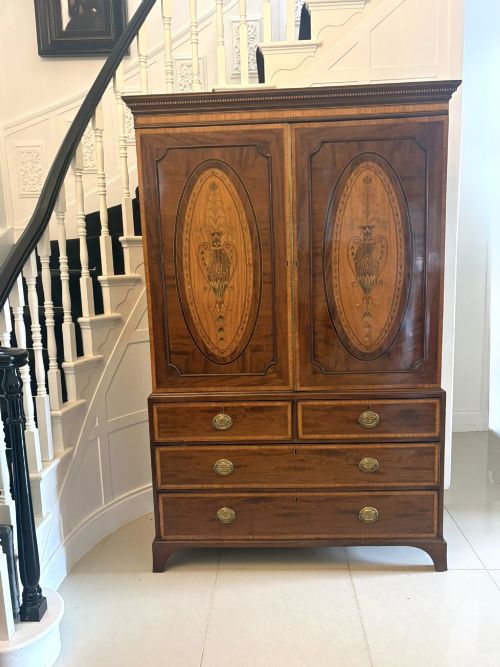
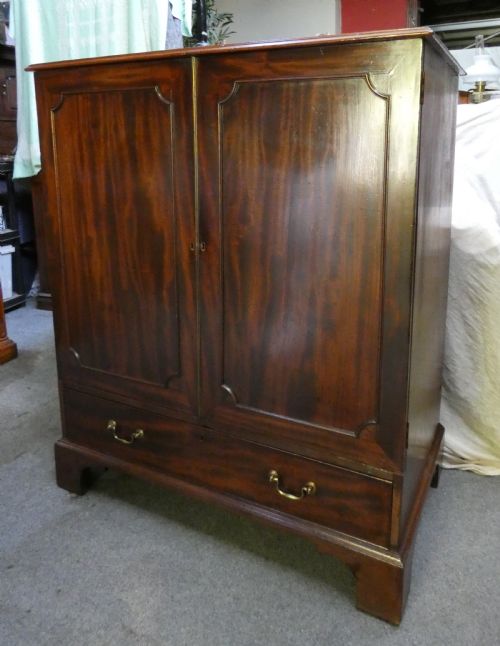
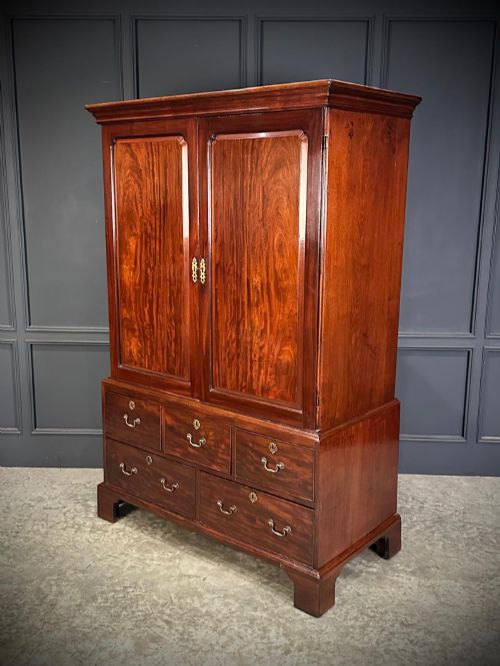
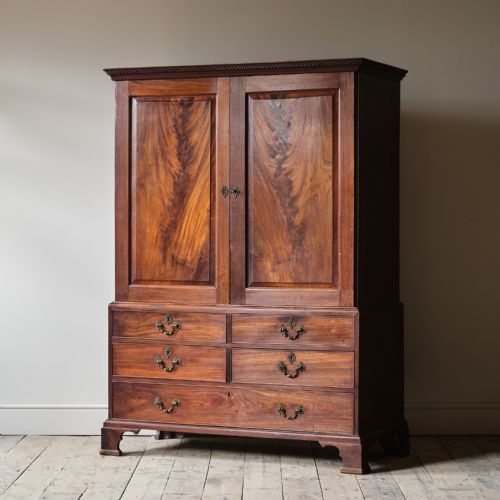
A georgian mahogany clothes cupboard encompasses linen presses, wardrobes, armoires, and press cupboards originating across the Georgian, Regency, and nineteenth-century periods. These architectural storage pieces typically combine an upper section of linen slides or hanging space above a chest base containing drawers.
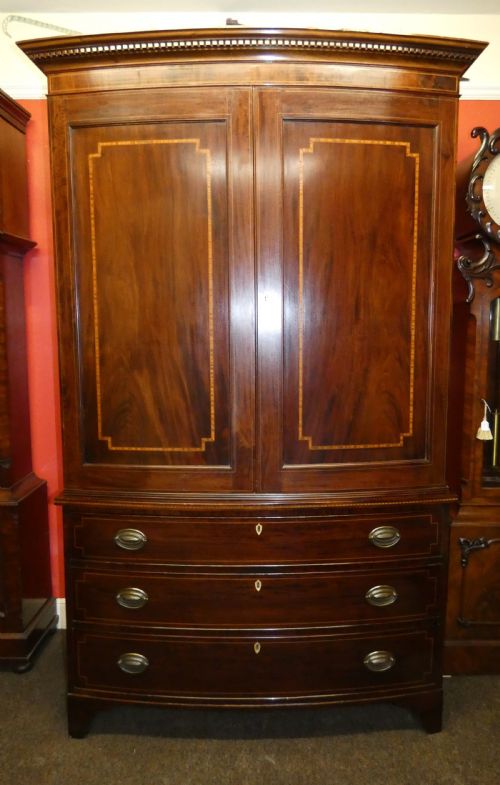
The versions most frequently encountered on this page include George III linen presses and nineteenth-century mahogany wardrobes featuring panelled doors and bracket or plinth feet. Examples range from compact dwarf presses and bowfront configurations to large breakfront and double wardrobe constructions.
Craftsmanship and Construction
Quality varies according to the selection of timber grain, demonstrated in the choice of richly figured flame mahogany veneers and the precision of satinwood and boxwood inlay work. Finer examples display meticulous attention to internal joinery, including smoothly sliding linen trays and closely fitted drawer dovetails.
Structural integrity and proportion distinguish higher grades of manufacture, particularly where architectural elements such as cornices and bracket feet integrate harmoniously with the primary casework without distortion or mismatched timber selections.
The inventory records regional variations including Channel Island hall wardrobes alongside standard British press cupboards.
Francis Brodie·Gillows
The Georgian Mahogany Clothes Cupboard Glossary
- Linen Press
- A dual-purpose storage item comprising upper sliding trays for textiles set above a chest of drawers. This form evolved to protect folded garments before hanging wardrobes became standard.
- Cupboard on Chest
- A tall storage form featuring an upper cabinet mounted directly onto a lower chest of drawers. This design maximises vertical floor space for domestic organisation.
- Flame Mahogany Veneer
- A thin layer of timber sliced from the fork of the mahogany tree to create a distinctive flickering flame pattern. Cabinet makers applied this to prominent door and drawer surfaces for visual impact.
- Crossbanding
- A decorative border of veneer laid around the perimeter of a panel or drawer front with the grain running perpendicular to the centre. This technique frames the primary timber surface.
- Blind Fretwork
- Carved ornamental patterning applied directly to a solid wooden background rather than pierced right through. This style appears frequently on eighteenth-century cornices and friezes.
Georgian Mahogany Clothes Cupboard: Frequently Asked Questions
What is a linen press?
A linen press is a tall storage furniture piece designed with upper shelving or sliding trays enclosed by doors, positioned above a base section of chest drawers.
Historically, households utilised these compartments to store folded bed linens, household textiles, and garments flat to prevent stretching before modern wardrobes became common.
How do I date a Georgian wardrobe?
Dating involves examining the structural timber, secondary woods like oak, brass hardware styles, and decorative details such as bracket feet or cornices.
Earlier pieces often feature solid mahogany with simple panel doors, whereas later Regency and nineteenth-century examples introduce flame veneers, bowfronts, and satinwood inlay.
Where should I place a large press cupboard?
These substantial timber items require stable interior wall placements away from direct radiator heat and strong sunlight to protect the mahogany veneer and solid construction.
Measuring ceiling height and doorway clearance prior to placement ensures the tall proportions fit securely within bedroom or hallway spaces.
Can I use these for modern clothes hanging?
Many of these pieces feature internal sliding linen trays that can be adapted or removed to accommodate modern clothes rails for coat hangers.
Selecting wardrobe variants or press cupboards with deep internal carcases allows standard clothing hangers to fit comfortably behind the main doors.