
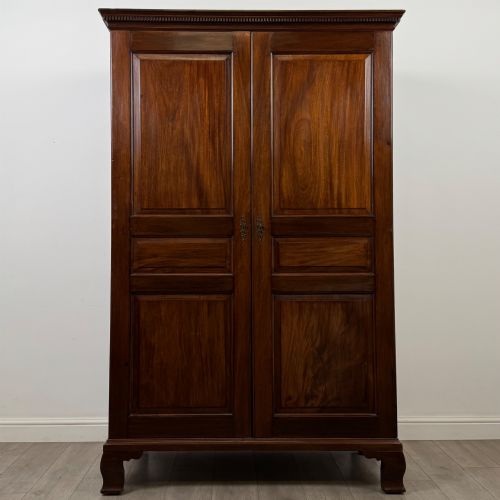
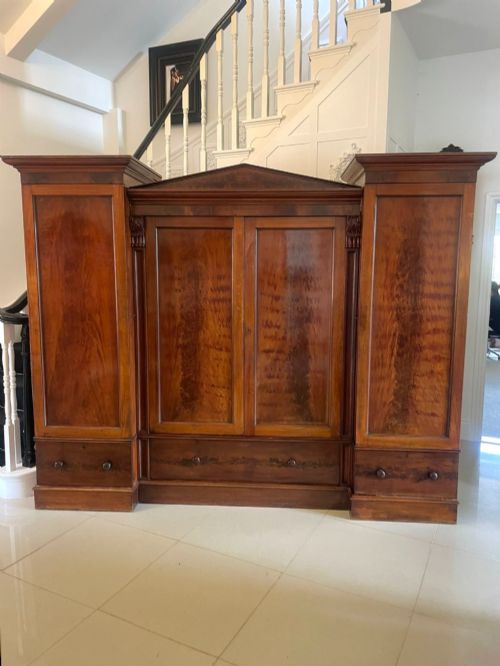
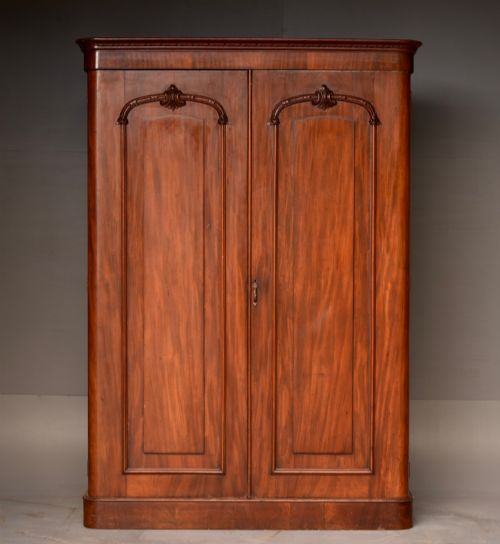
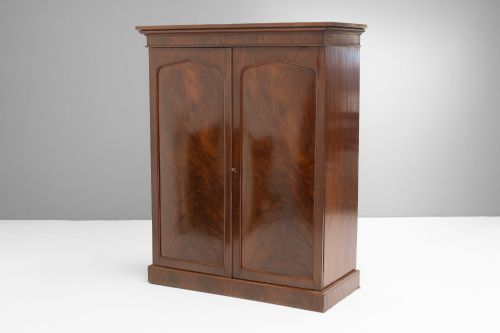
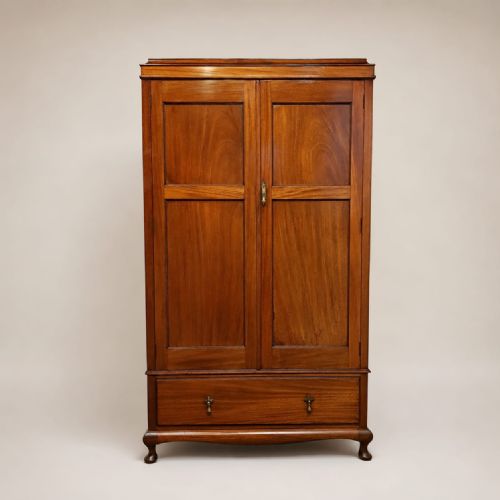
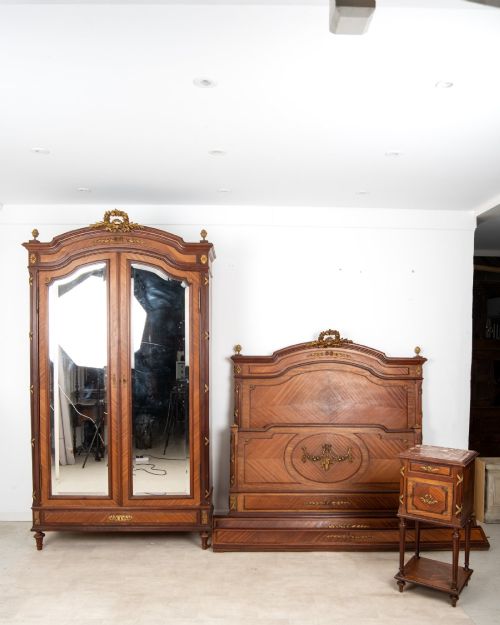
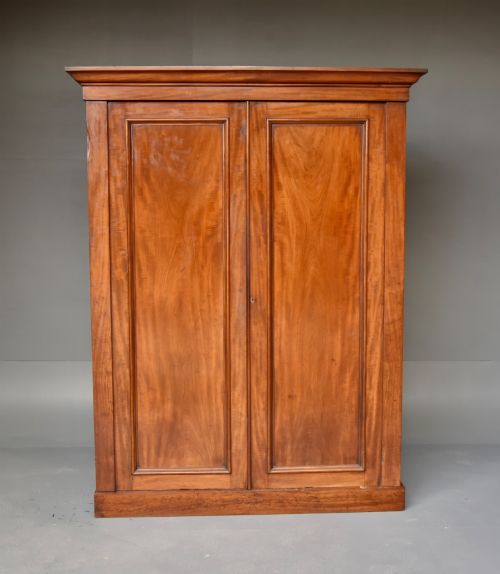
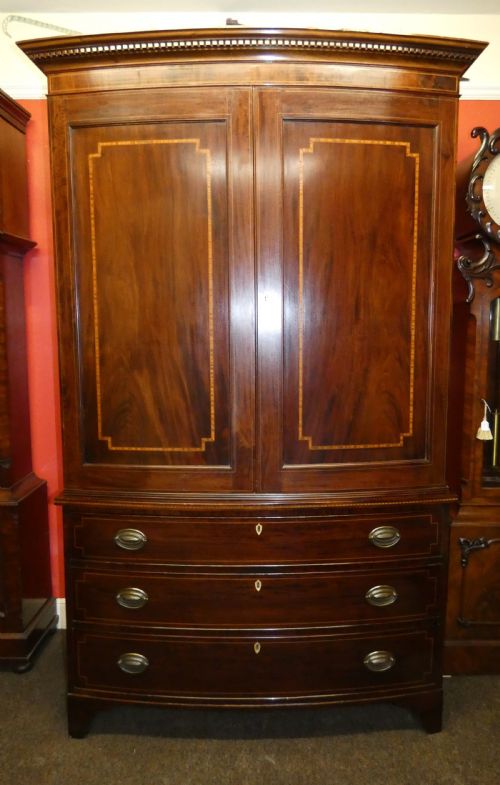
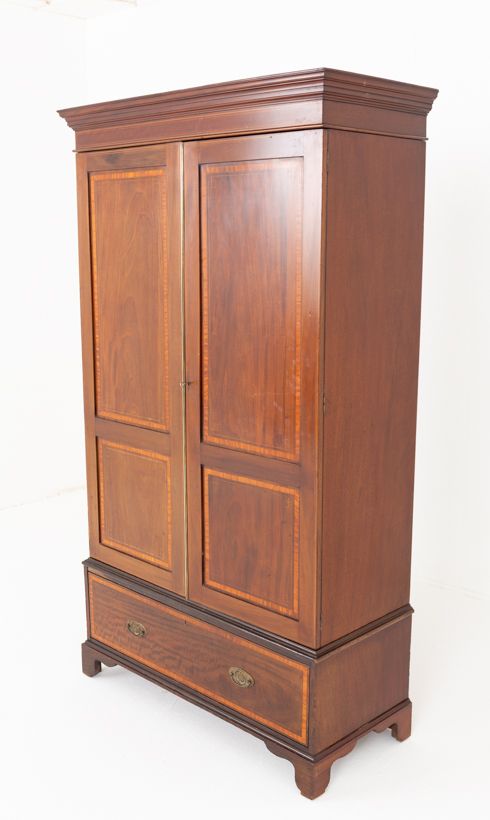
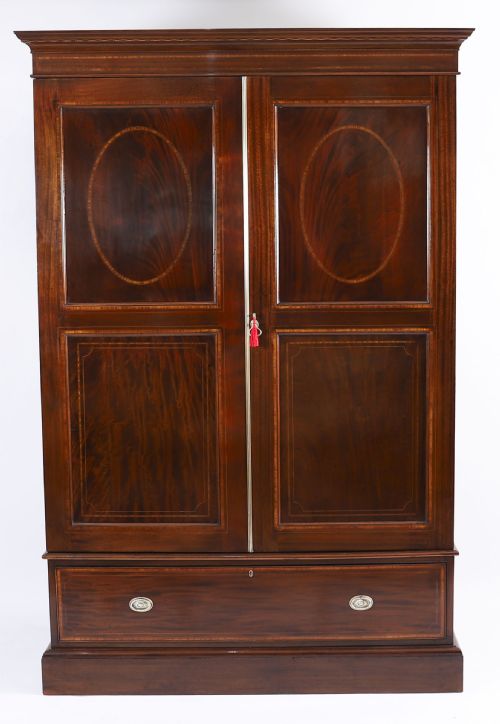
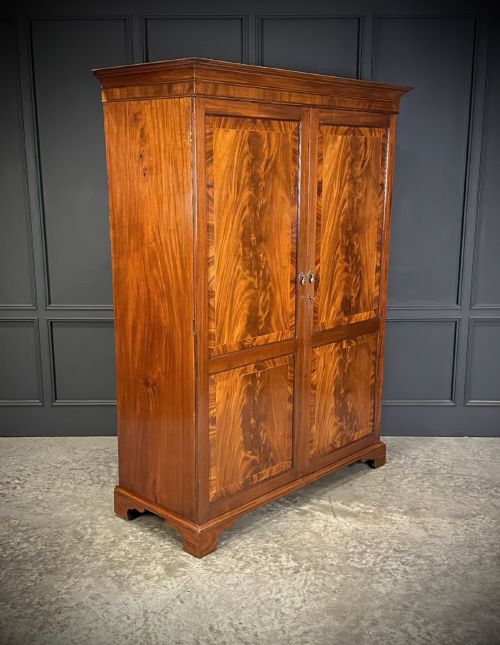
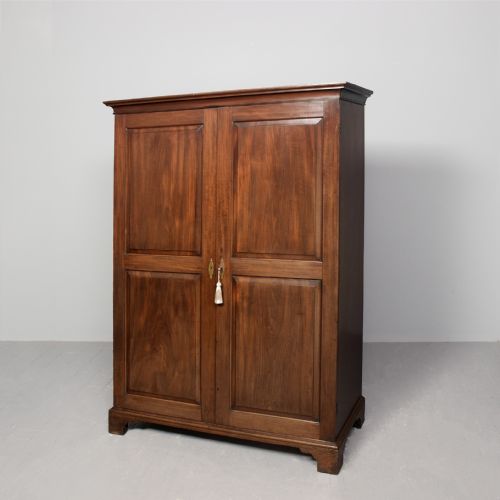
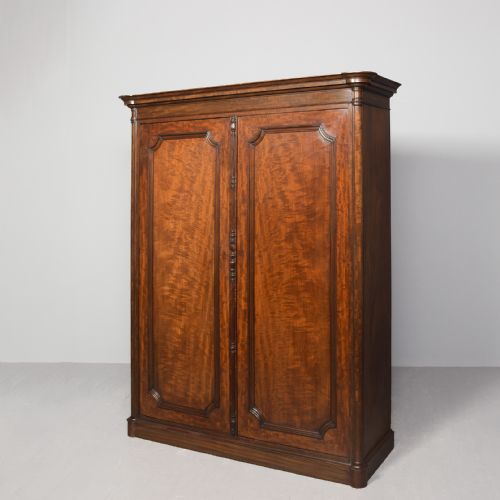
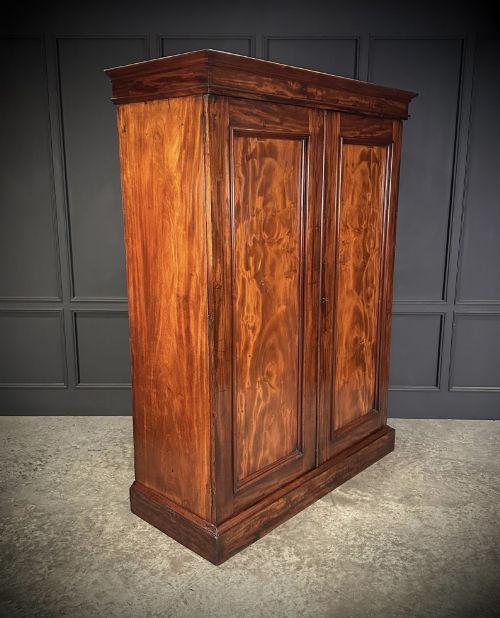
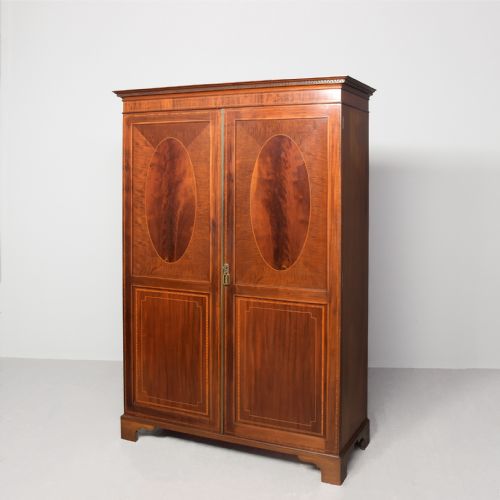
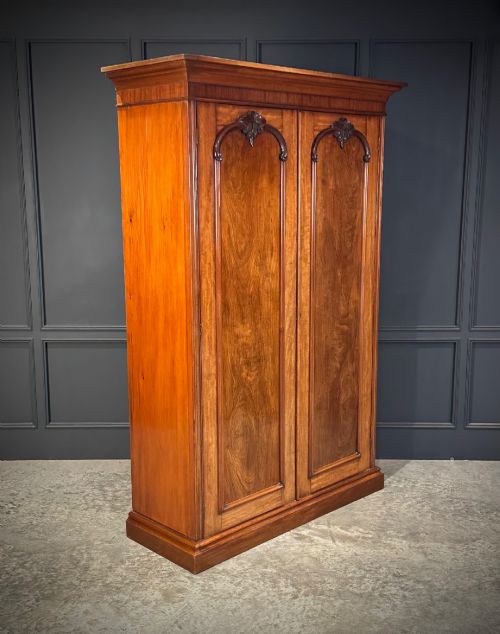
Double Door Mahogany Armoire
A double door mahogany armoire brings substantial presence and deep timber tones to a bedroom, offering timeless storage built to last.
Double Door Mahogany Armoire
When you search for a double door mahogany armoire, you encounter large storage pieces originating mainly from the eighteenth, nineteenth, and early twentieth centuries. These wardrobes, linen presses, and cabinets provide tall interior hanging space and shelving, often built in distinct sections for easier transport.
You are most likely to meet Victorian and Georgian examples on this page, alongside Edwardian and revival pieces. The forms range from simple two-door cupboards to grand linen presses with sliding trays and deep drawers beneath.
How they were made
Cabinet makers utilised solid mahogany and applied flame mahogany veneer over secondary timbers such as oak, achieving rich grain patterns across wide doors. Brass hardware, including hinges, locks, and handles, secures the heavy timber panels and adds functional contrast.
Detailing often involved boxwood inlay, satinwood stringing, and marquetry work, particularly on revival pieces. French polishing finished the surfaces to bring out the deep reddish-brown tones inherent in the timber.
Makers occasionally stamped their firm names directly into the primary timber frame, leaving an indelible mark for future collectors to trace.
What varies in quality
Quality rests primarily on the choice of timber and the handling of the veneer. Pieces featuring heavily figured flame mahogany or finely matched panel grains sit well above plain boards.
Construction methods also separate standard items from superior works, particularly in the crispness of carved mouldings, the tightness of dovetail joints in internal drawers, and the integrity of the original brass furniture.
S & H Jewell, High Holborn, London·Howard & Son's Berners Street
The Double Door Mahogany Armoire Glossary
- Flame mahogany
- A distinct veneer cut from the branch forks of the mahogany tree, creating a dramatic, flickering flame pattern across the timber surface. This decorative figure was heavily favoured by cabinet makers for principal doors.
- Linen press
- A tall piece of furniture comprising upper sliding trays for folded textiles and lower drawers for hanging garments. These forms evolved during the eighteenth century before full-height wardrobes became standard.
- Biedermeier
- A central European style spanning the nineteenth century characterised by utilitarian comfort, clean architectural lines, and minimal ornamentation that allowed the natural grain of mahogany to take precedence.
- Stringing
- A delicate inlay of contrasting light timber, such as boxwood, set into shallow channels on door panels or cornices. This technique outlines the structural geometry of the piece.
- Dovetail
- A traditional interlocking joint used to construct drawer boxes securely without reliance on metal fasteners. Hand-cut variations indicate earlier craftsmanship.
Double Door Mahogany Armoire: Frequently Asked Questions
How do I use a double door mahogany armoire?
These tall pieces serve primarily as bedroom wardrobes or linen storage units, offering deep hanging space behind the main doors and additional room in lower drawers. Their substantial scale also suits large hallways or dressing rooms for organising bulky garments.
Because many vintage examples arrive in modular sections, positioning them requires careful measurement of ceiling height and floor space. Internal fittings can be adapted with modern rails while preserving the historic timber carcass.
How do I tell a Georgian armoire from a Victorian one?
Georgian pieces, dating through the eighteenth and early nineteenth centuries, typically exhibit restrained classical proportions, understated cornices, and elegant bracket feet. Their mahogany tends to have a softer, wax-finished patination.
Victorian wardrobes from the mid-to-late nineteenth century often appear larger and heavier, sometimes featuring arched door panels, heavy plinth bases, and more elaborate crests. The timber finish can be glossier due to nineteenth-century shellac techniques.
How should I care for antique mahogany furniture?
Keep mahogany furniture away from direct sunlight and heat sources to prevent the timber from drying out and the veneer from lifting. Maintaining stable room humidity preserves the integrity of the wood and the old polish.
Dust regularly with a soft, dry cloth and apply a quality beeswax sparingly when the surface appears dry. Avoid silicone-based sprays, which can penetrate old finishes and attract dust.