


18th Century Clothes Press
An 18th century clothes press is a substantial storage piece designed to keep garments and linen flat, offering both practical utility and period character.
18th Century Clothes Press
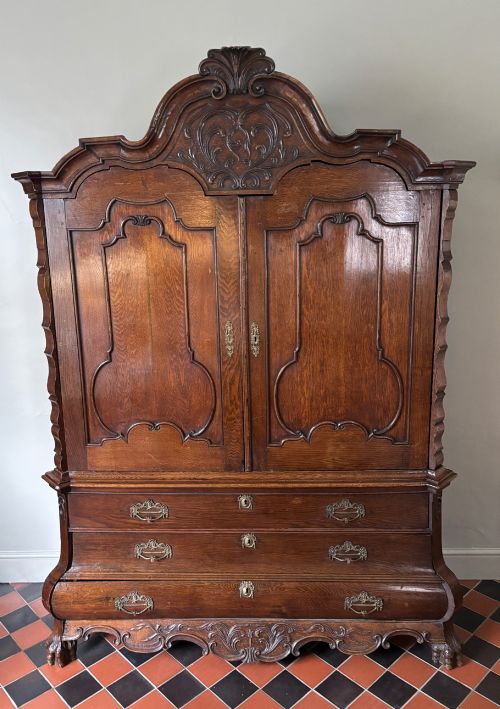
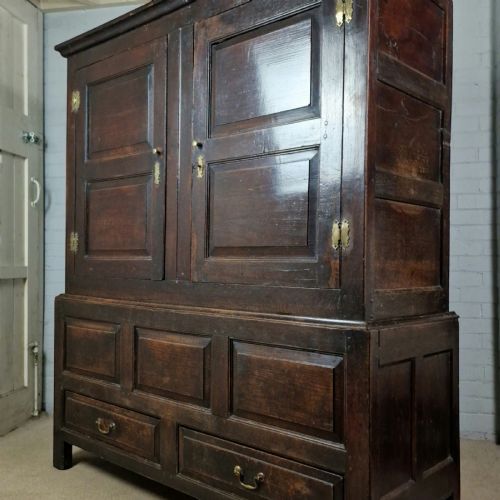
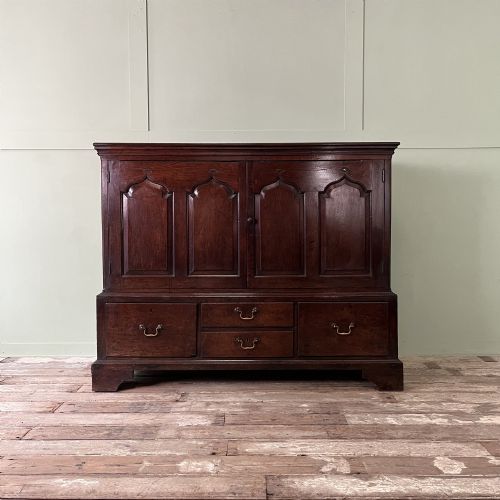
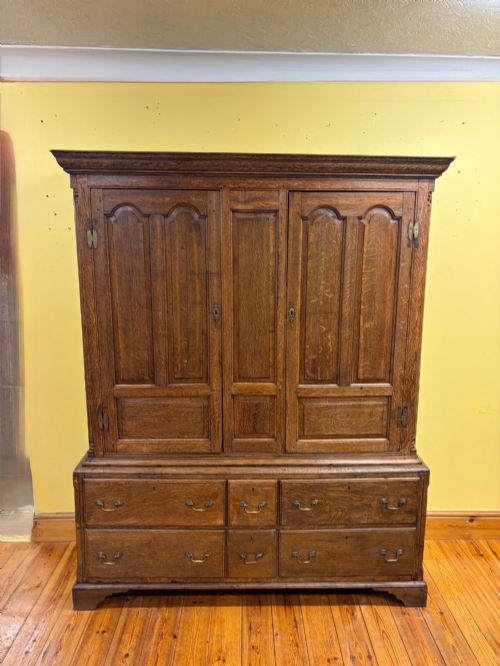
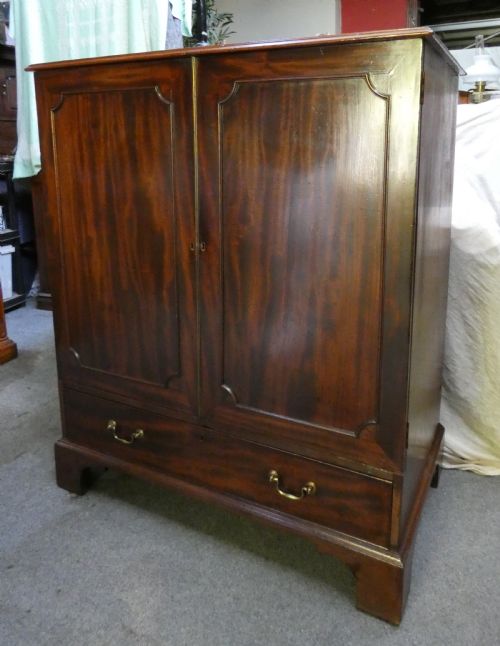
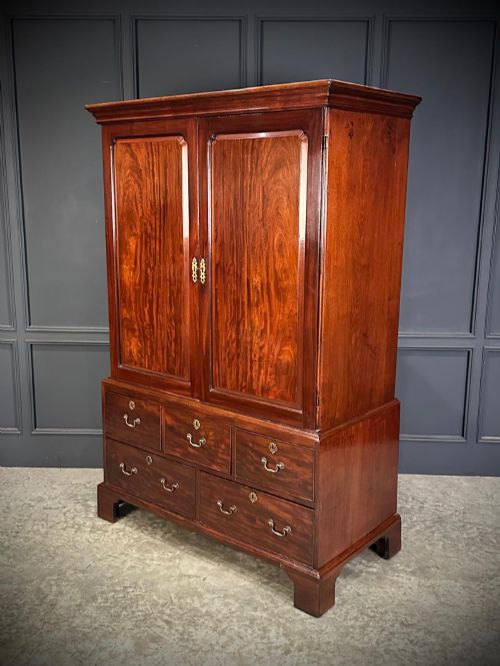
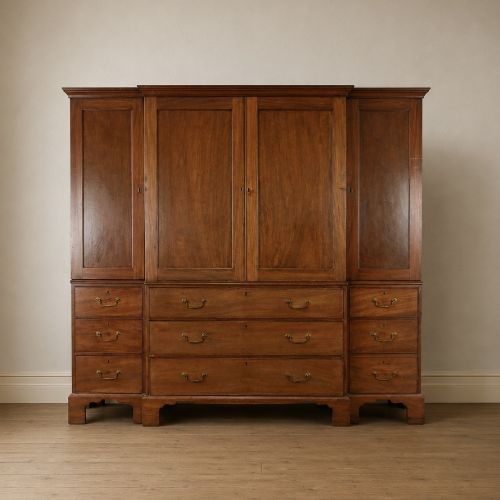
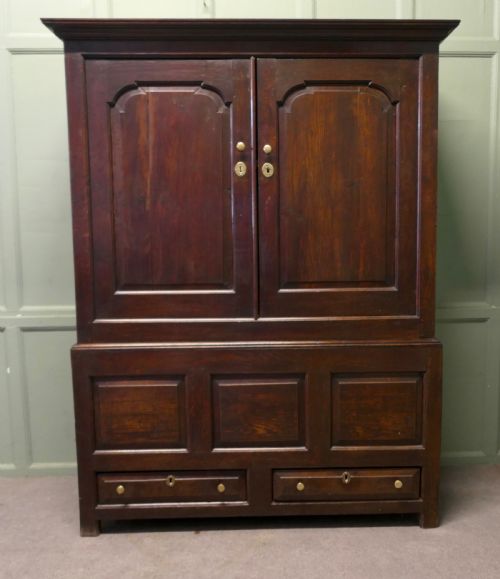
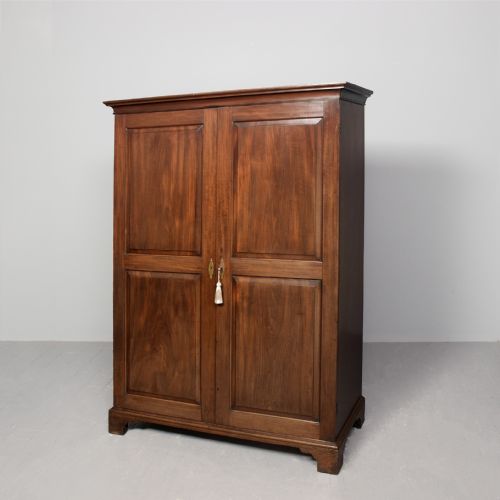
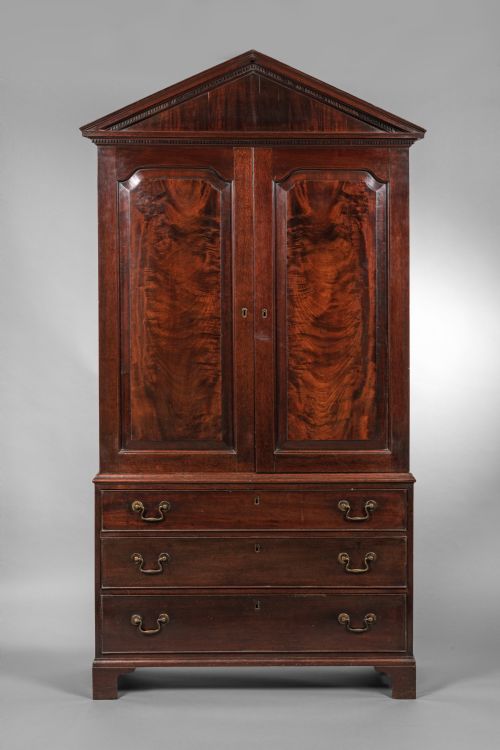
When searching for an 18th century clothes press, buyers encounter robust pieces designed for domestic storage before the modern wardrobe became standard. These items combine upper cupboard sections with lower chest configurations, frequently identified as linen presses or housekeeper cupboards in the historical record.
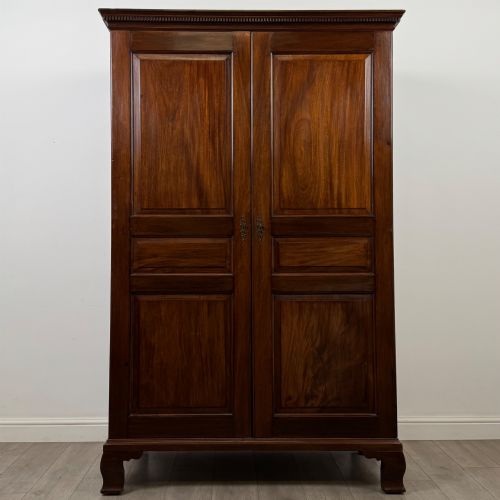
The versions met most often on this page date from the Georgian era, spanning George II, George III, and general 18th century periods. Oak and mahogany dominate the offerings, appearing in both country vernacular styles and more formal urban designs.
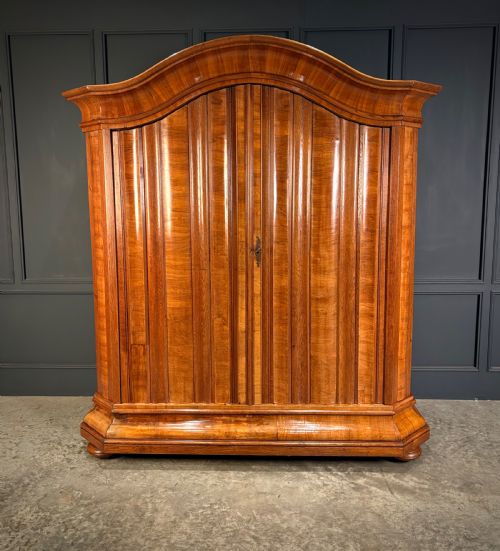
Formats range from small low cupboards to large breakfront wardrobes and cabinets. Regional variations such as Welsh and Channel Islands pieces also surface regularly among the listings.
How They Were Made
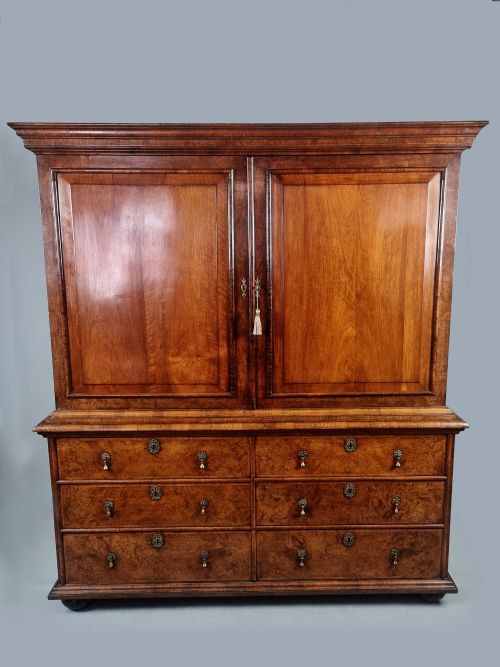
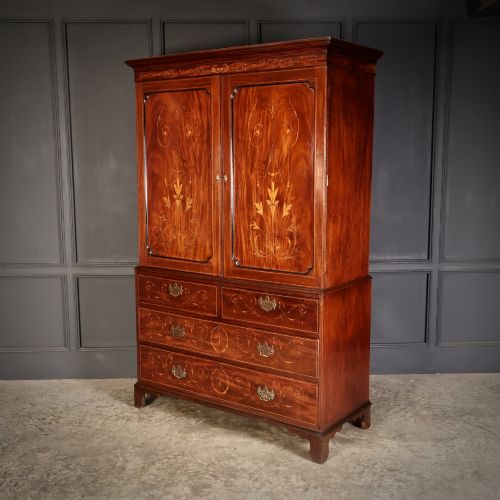
Cabinet makers utilised solid timbers like oak and mahogany, often pairing them with secondary woods for internal components. Selected pieces incorporate burr walnut, satinwood, and marquetry inlay to elevate the external appearance.
Construction relies on traditional joinery techniques, featuring panelled doors, dovetailed drawer construction, and brass hardware. Surface treatments include polished flame mahogany and natural or bleached oak finishes.
Regional variants include Welsh country pieces and Channel Islands wardrobes alongside standard English forms.
What Varies in Quality
Quality rests heavily on the choice of timber and the precision of the joinery. Figured grain, such as flame mahogany or burr walnut, elevates the visual presence compared to plain surfaces.
Proportion and architectural detailing distinguish standard utility items from finer commissions. Well-executed mouldings, intact original brasses, and balanced cornices separate exceptional examples from simpler regional pieces.
Francis Brodie
The 18th Century Clothes Press Glossary
- Clothes press
- A tall piece of furniture featuring upper doors enclosing sliding trays or hanging space, positioned above a chest of drawers. It was originally built to store folded garments and linen.
- Livery cupboard
- An older term for a storage cupboard or cabinet used in households to keep food, clothing, or general provisions. These frequently appear in heavy oak from the 18th century.
- Breakfront
- A cabinet design where the central section projects forward from the flanking wings. This configuration provides a grander architectural facade on larger Georgian pieces.
- Secretaire
- A desk form incorporated into a larger cabinet or chest, featuring a drop-down writing flap concealing small drawers and pigeonholes. It adds a dual workspace function to the storage unit.
18th Century Clothes Press: Frequently Asked Questions
What is an 18th century clothes press used for?
An 18th century clothes press provides deep storage through a combination of upper shelving or sliding trays and lower drawer space. Originally, families used the upper section to store flat linens and folded garments before hanging clothes became common.
Today, these versatile cupboards function well in modern bedrooms or hallways as primary wardrobe storage or linen cabinets. Their substantial internal volume accommodates bulky items while concealing them behind panelled doors.
How do I tell an oak press from a mahogany one?
Oak presses generally display a pronounced grain pattern with visible medullary rays and range in colour from golden honey to deep brown. These examples frequently originate from country workshops and carry a heavier, vernacular aesthetic.
Mahogany presses exhibit a denser, tighter grain that takes a high polished finish, often showing rich reddish-brown tones or flame figuring. These pieces typically reflect more formal Georgian urban cabinet making.
How do I live with a large clothes press?
Integrating a large press into a room requires measuring both floor space and ceiling height, as these pieces are exceptionally tall and heavy. Placing them against a blank wall allows their architectural proportions to anchor the room.
Interior management involves utilising the sliding trays for folded textiles or sweaters, while lower drawers handle smaller apparel. Proper placement avoids direct sunlight to protect the aged wood surfaces.
How can I tell George II from George III pieces?
George II pieces often display heavier proportions, walnut veneers, or early dark oak construction with robust architectural mouldings. Baroque influences occasionally linger in the heavier carved details of these mid-century items.
George III pieces shift towards lighter mahogany constructions, refined bracket feet, and neoclassical satinwood or marquetry inlay. The overall silhouette becomes more restrained as the century progresses toward 1800.