




Georgian Mahogany Cellaret
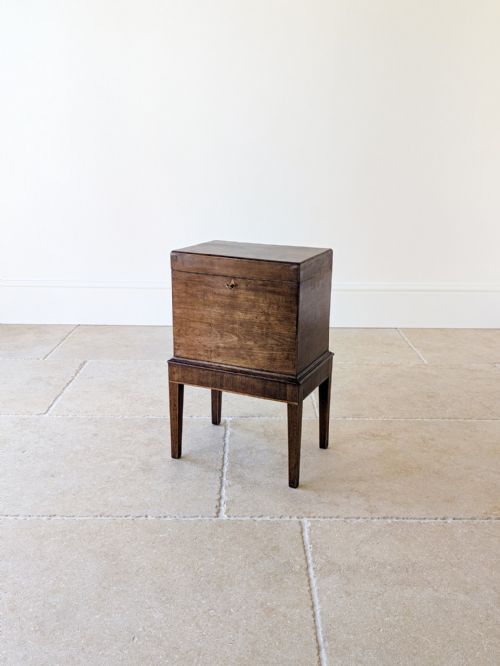
These Georgian mahogany cellaret pieces are substantial wine coolers and bottle boxes designed to keep fine vintages ready for the dining room.
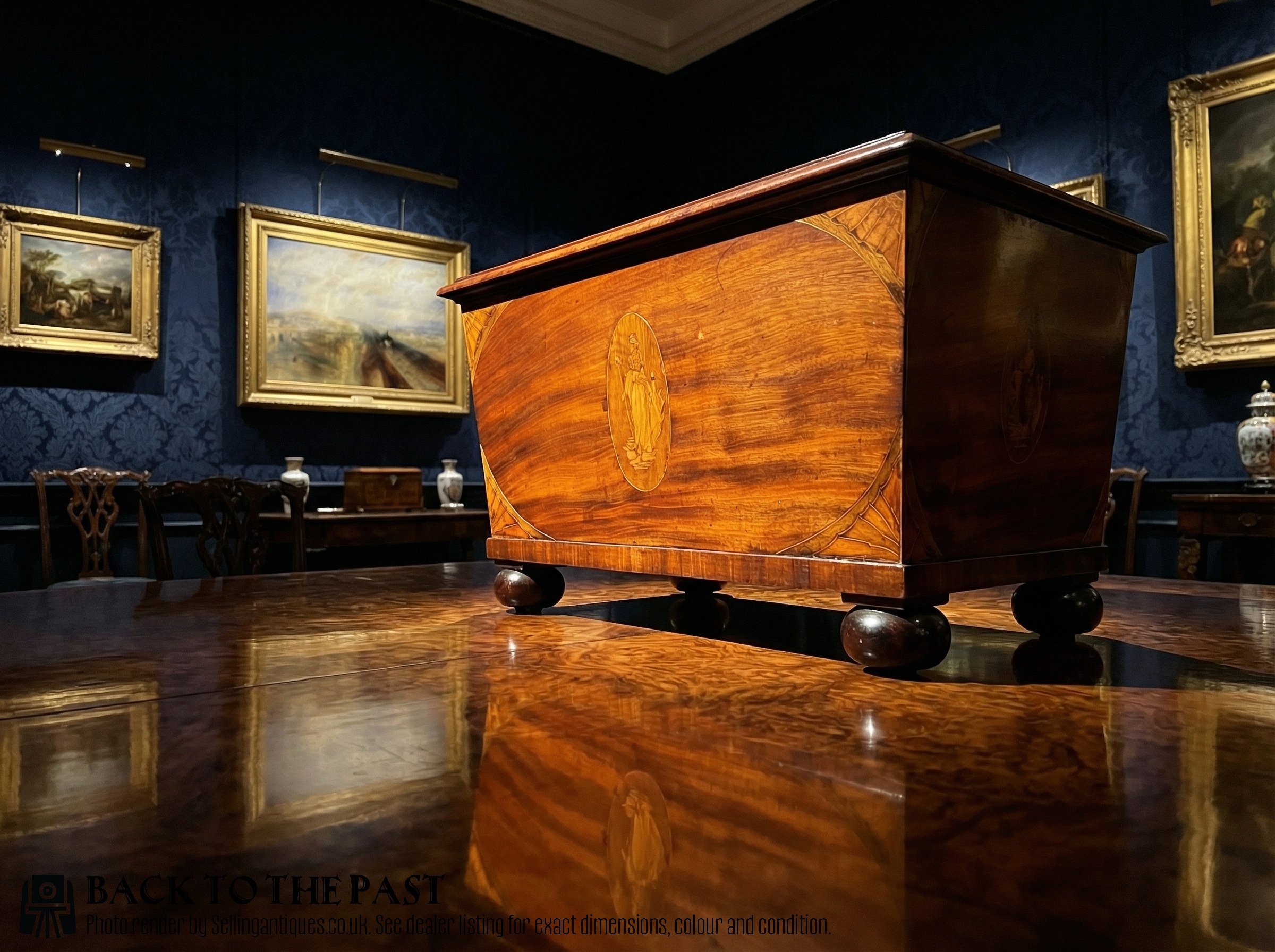
Georgian Mahogany Cellaret
A georgian mahogany cellaret is a sturdy wooden container built to hold wine bottles securely beneath the dining table or sideboard. The selection on this page centres primarily on pieces from the Georgian, George III, and Regency periods, alongside later revival examples.
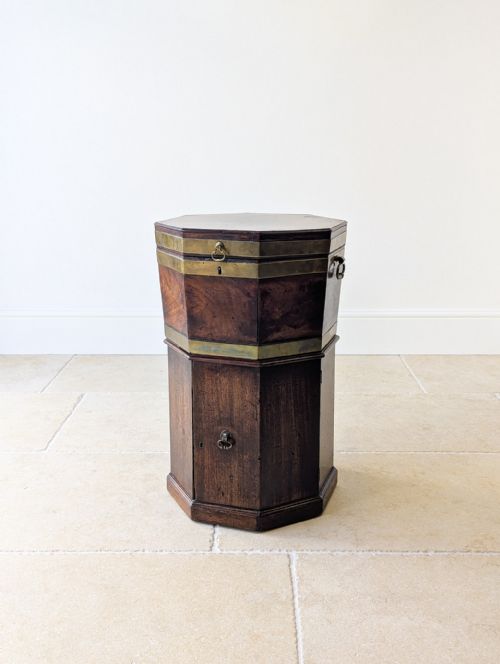
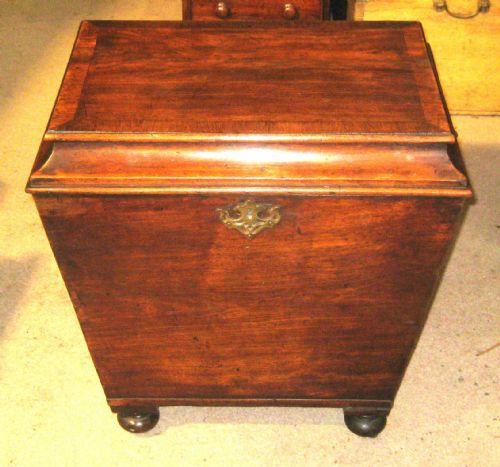
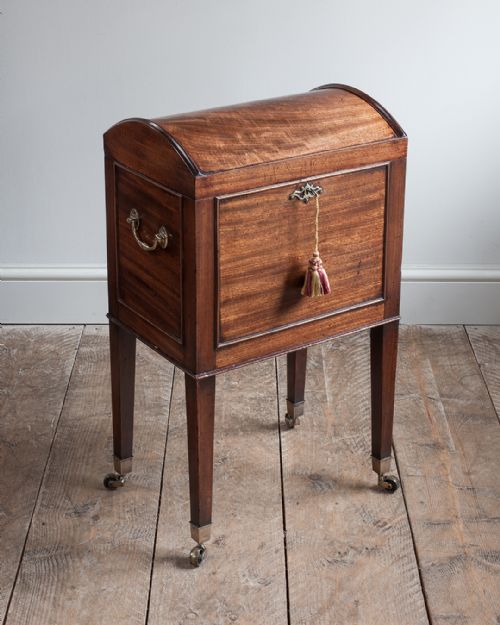
Makers fashioned these objects in various distinct shapes, including octagonal boxes, serpentine fronts, and classical sarcophagus designs. Some sit directly on the floor, while others are raised on architectural stands or feature lead linings for ice.
Materials and Construction
Craftsmen utilised solid mahogany and rich flame veneers, frequently embellishing the timber with satinwood inlay, cross-banding, and ormolu mounts. Structural integrity often relied on heavy brass binding and robust brass carrying handles.
Interior arrangements commonly incorporated lead linings to hold ice and water for chilling bottles, alongside fitted wooden dividers to separate individual decanters safely.
Some containers feature fierce brass lion masks baring their teeth to hold the side carrying rings.
Judging the Standard
Quality rests in the choice of timber figure, such as richly marked flame mahogany, and the crispness of any inlaid satinwood or carved details like lion masks. Finer examples display superior proportion and original brass mounts rather than later replacements.
Robert Strahan & Co·Gillows·T.Feetham
The Georgian Mahogany Cellaret Glossary
- Cellaret
- A secure box or chest used for storing and cooling wine bottles in the dining room. These containers date predominantly from the eighteenth and nineteenth centuries.
- Sarcophagus
- A monumental container shape featuring a domed or peaked lid, popular for Regency wine coolers. The form mimics classical stone tombs.
- Satinwood
- A bright, yellowish timber utilised for contrasting stringing and decorative inlay work on mahogany furniture. It adds a luminous border to panels.
- Ormolu
- Gilded bronze used for decorative mounts and feet on high-status furnishings. The finish provides a bright metallic contrast to dark wood.
Georgian Mahogany Cellaret: Frequently Asked Questions
What is a georgian mahogany cellaret used for?
These boxes held wine bottles and decanters close to the dining table during formal meals. Servants filled the interior with ice to chill the contents before serving.
They stood on the floor or on dedicated stands, keeping the dining room orderly and the wine at the correct temperature.
How do I tell an original from a revival piece?
Examine the timber shrinkage, interior lead linings, and the method of construction for signs of age. Eighteenth-century examples show distinct hand-tool marks and period fixings.
Revival pieces from later decades often employ machine-cut elements and cleaner, less worn interior compartments.
Did all cellarets have lead linings?
Many examples feature lead-lined interiors designed to hold melting ice without damaging the surrounding mahogany timber. This practical lining kept white wines and claret cool throughout long dinners.
Some dry storage boxes omit the lining, relying entirely on wooden dividers for holding spirit decanters.
Where should I place a cellaret in a modern home?
A cellaret functions well as a distinctive side table or a low cabinet for storing bottles in a living space or dining room. Their substantial proportions make them ideal focal points.
Ensure the piece avoids direct sunlight to protect the polished mahogany surface and decorative veneers.