
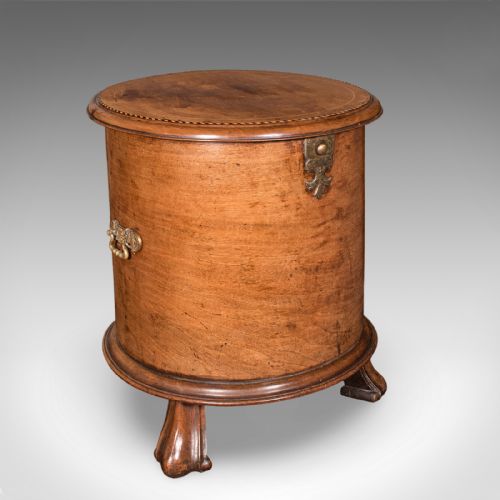
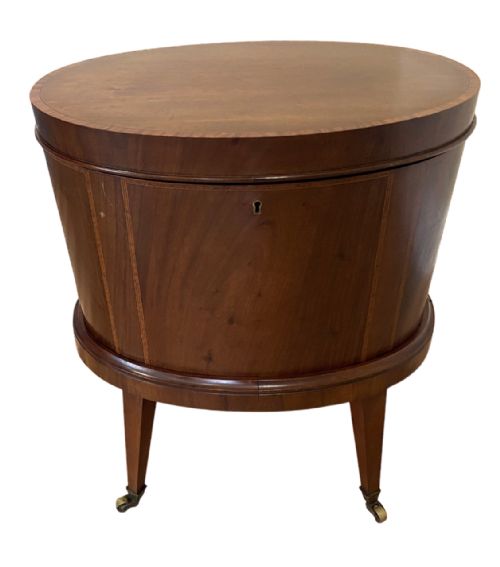


Inlaid Mahogany Wine Cooler
An inlaid mahogany wine cooler brings Georgian and Regency elegance to dining rooms, designed to chill bottles with refined decorative craft.
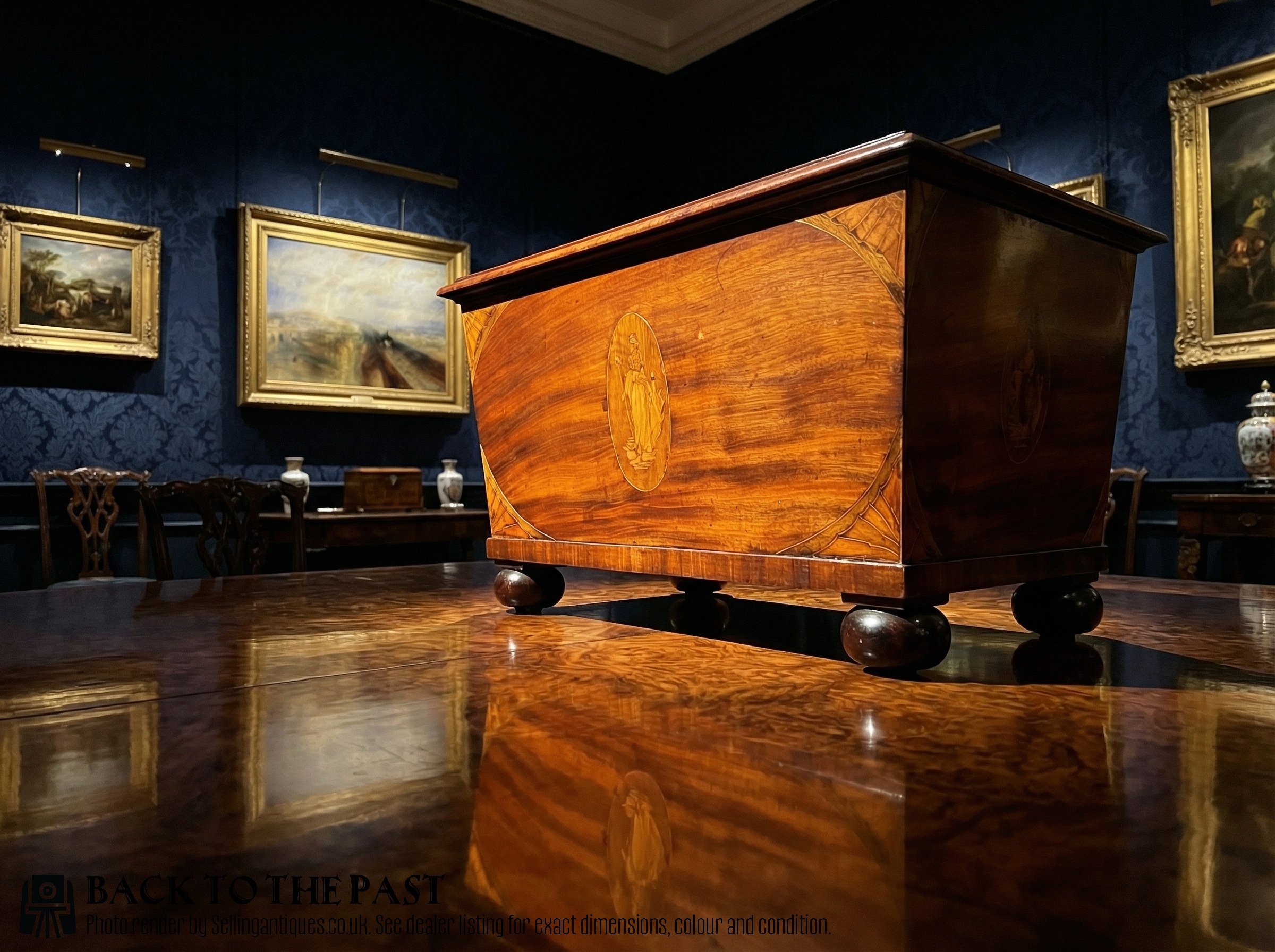
Inlaid Mahogany Wine Cooler
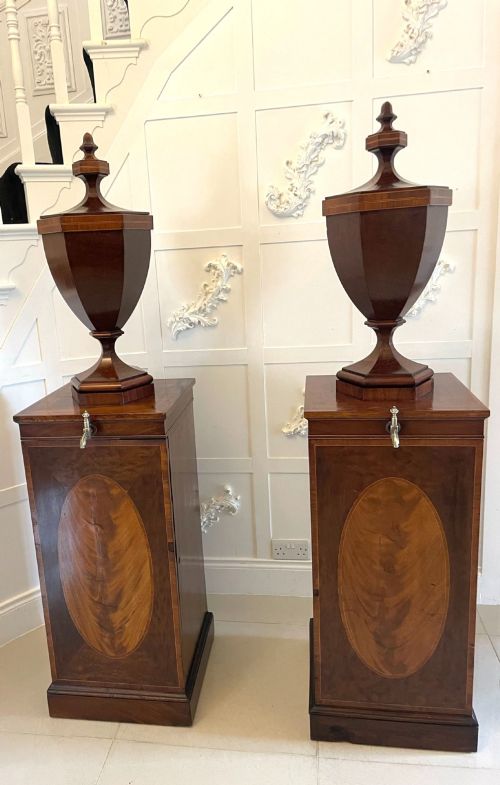
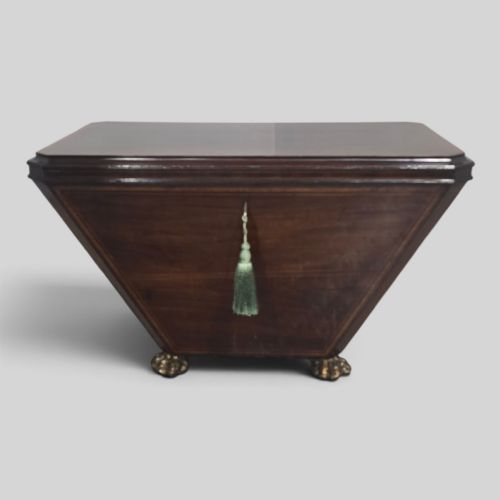
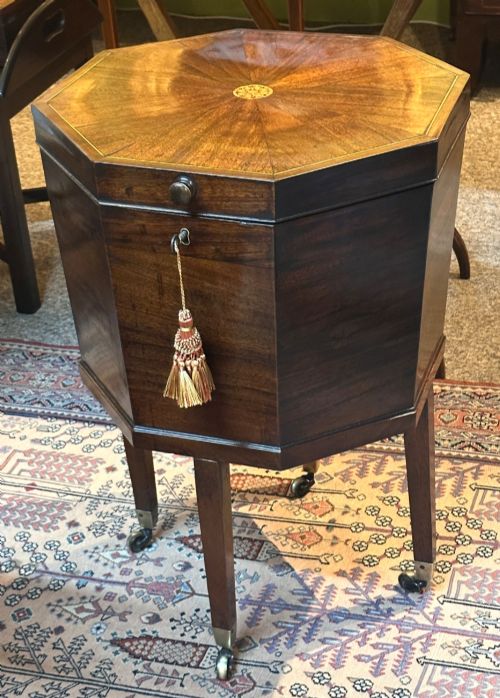
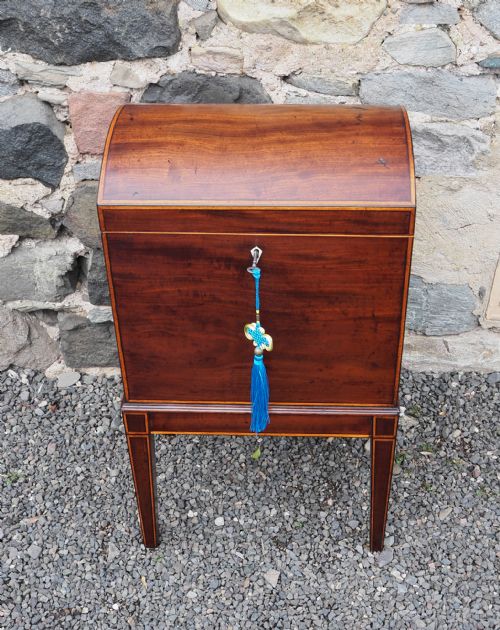
When you search for an inlaid mahogany wine cooler, you encounter substantial dining room containers designed to hold bottles and ice during formal meals. The examples on this page span from the George III and Regency periods through to Victorian and Edwardian revivals, taking forms such as octagonal boxes, oval cellarettes, and monumental pedestals with urns.
Most pieces you meet date from the Georgian era, constructed to stand beneath sideboards or upon dedicated stands to serve wine correctly. Makers utilised rich timbers like mahogany, often accented with boxwood and satinwood inlay, creating classical architectural profiles that functioned as both service items and decorative furniture.
Materials and construction
Cabinet makers built these pieces using solid mahogany and figured wood veneer over sturdy carcass timbers, shaping them into octagonal, oval, or rectangular bodies. Brass handles, feet, and bands frequently complemented the timber, providing robust support for heavy, ice-filled interiors.
Decorative surfaces relied on precise contrast inlay, employing boxwood and satinwood stringing or banded borders to define geometric panels and shield motifs. This careful joinery ensured the internal linings held moisture while the exterior displayed the natural grain of the mahogany.
Some nineteenth-century examples doubled as knitting baskets or tea stoves, proving that historical hosts expected furniture to multitask.
Judging quality and craftsmanship
The distinction between standard production and top-tier pieces rests on the crispness of the cabinetwork and the subtlety of the timber selection. Superior items display finely figured mahogany veneers matched symmetrically across the panels, paired with intricate, hand-cut boxwood and satinwood inlay rather than simple painted lines.
Structural integrity and original hardware elevate certain examples, particularly where mounts like brass paw feet or lion mask ring handles remain intact. The sophistication of the internal fittings, such as lead linings or divided bottle compartments, further separates utilitarian containers from masterwork furniture.
Edwards and Roberts·Gillows·Freemans of Norwich
The Inlaid Mahogany Wine Cooler Glossary
- Cellarette
- A lockable container or cabinet designed specifically for holding bottles of wine safely in a dining room. These pieces sat beneath sideboards or on the floor during meals.
- Inlay
- A decorative technique where contrasting woods like boxwood or satinwood are fitted flush into recessed channels within the primary mahogany surface. This creates crisp geometric borders and classical motifs.
- Pedestal and Urn
- A grand dining room arrangement featuring a monumental vessel raised on a matching cupboard base. They served an architectural function in formal Georgian interiors.
- Stringing
- A narrow strip of contrasting wood inlay used to outline panels, drawers, or table tops. It provides delicate linear definition to darker timbers.
- Serpentine Front
- A curved furniture front characterised by a convex centre flanked by concave ends. This undulating shape demands advanced woodworking skill to execute properly.
Inlaid Mahogany Wine Cooler: Frequently Asked Questions
How were these wine coolers used originally?
These vessels were filled with ice and water to chill wine bottles during long dining courses, positioned near the dining table or beneath a sideboard for easy access by servants.
Inside, lead linings or wooden partitions kept bottles upright and separated while melting ice collected safely at the base.
Where should I place a wine cooler today?
An antique wine cooler serves as an exceptional side table in a dining room or living space, offering generous internal storage for blankets or magazines.
Many collectors also use them as decorative plant stands or jardinières, letting the rich mahogany and inlay stand as a focal point in a hallway.
How do I distinguish a George III piece from a Victorian revival?
George III pieces typically exhibit native cabinetmaking techniques, lighter construction details, and period-appropriate brass hardware that shows authentic wear and hand-finished patination.
Victorian revivals from the late nineteenth century often feature heavier proportions, machine-cut veneers, and slightly brighter timber finishes typical of later industrial production methods.
What is the difference between a cellarette and a wine box?
A cellarette generally refers to a larger, fixed or floor-standing container with specific internal bottle divisions, sometimes featuring a drawer at the base for corkscrews or linen.
A wine box is typically a portable tabletop or stand-mounted chest designed to transport or store a smaller selection of bottles securely.