

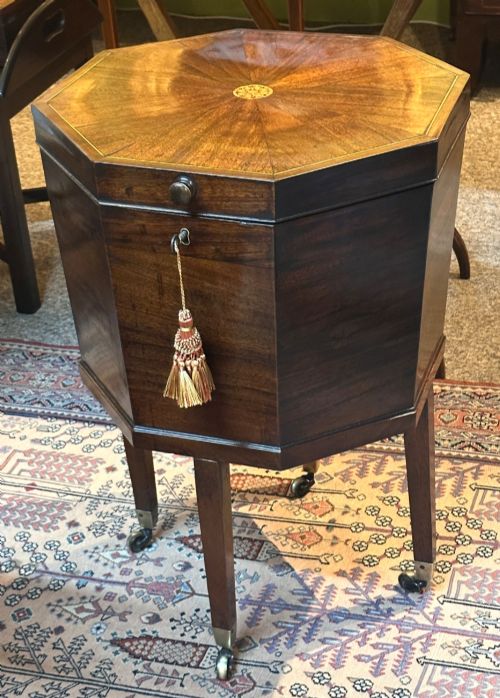
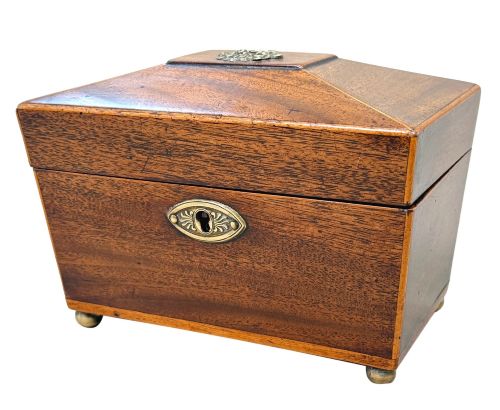
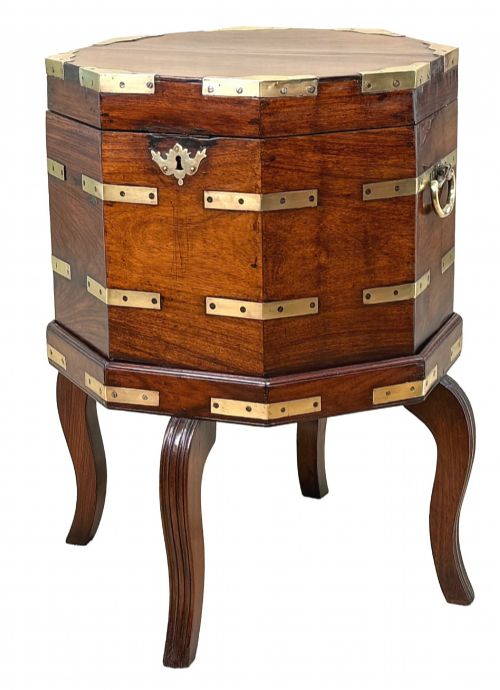
Georgian Mahogany Caddy
When you search for a georgian mahogany caddy, you are looking at timber boxes made to store dried tea leaves securely under lock and key.
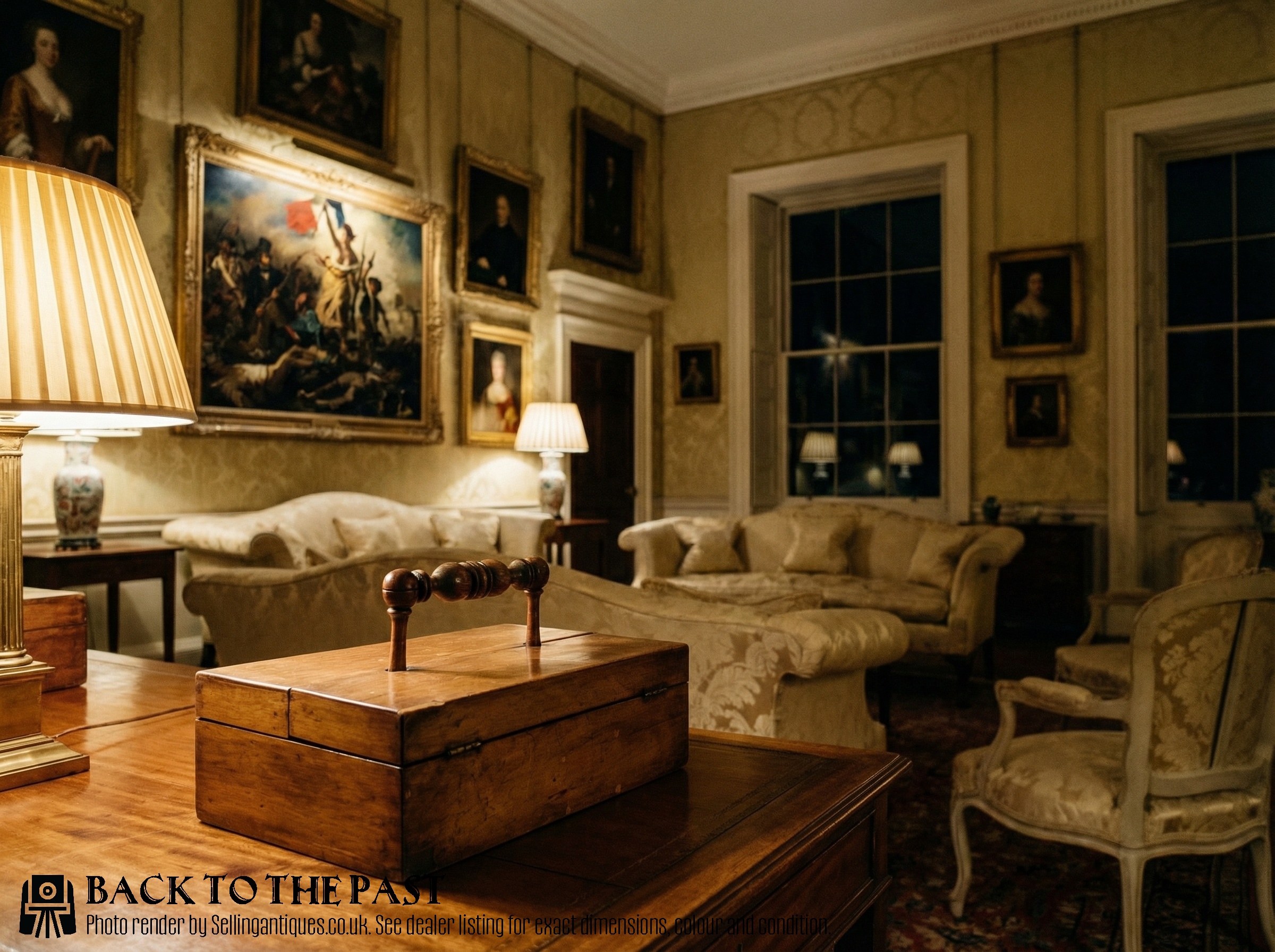
Georgian Mahogany Caddy
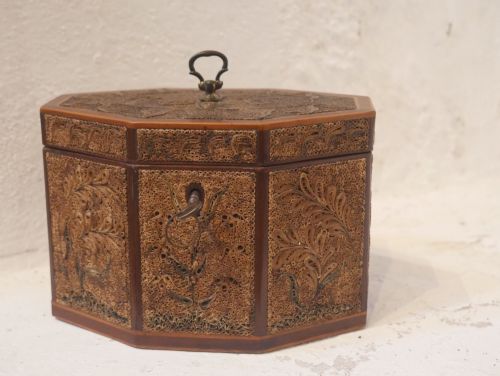
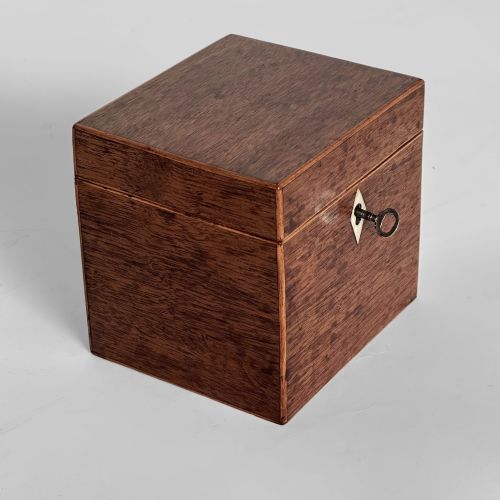
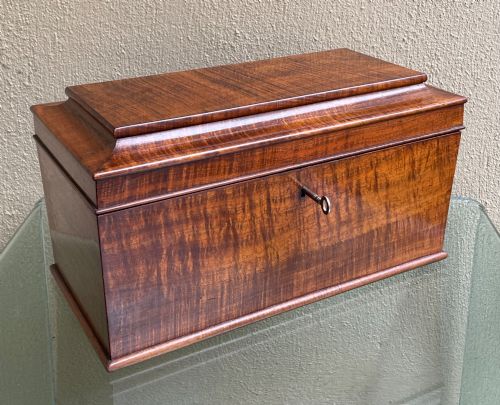
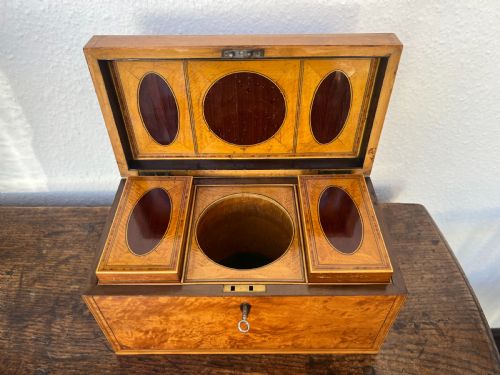
A georgian mahogany caddy is a lidded container constructed during the eighteenth or early nineteenth century to protect expensive imported leaves from dampness and theft. These pieces appear in rectangular, octagonal, oval, and sarcophagus forms, often featuring internal compartments for different tea varieties and a central mixing bowl space.
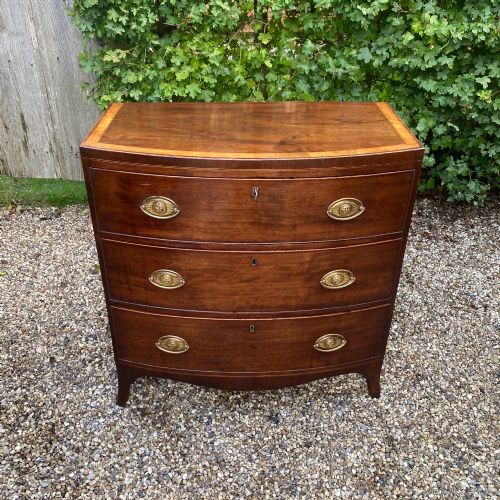
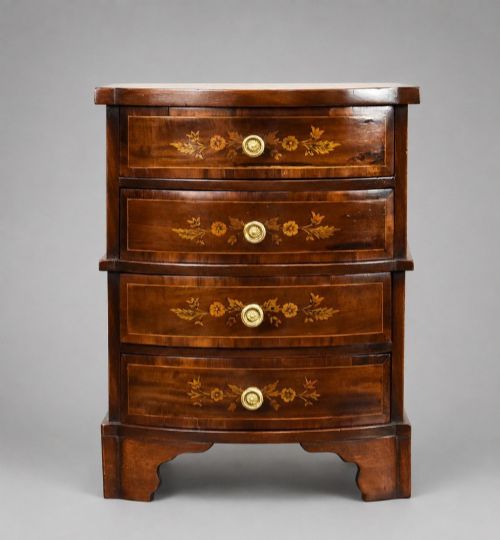
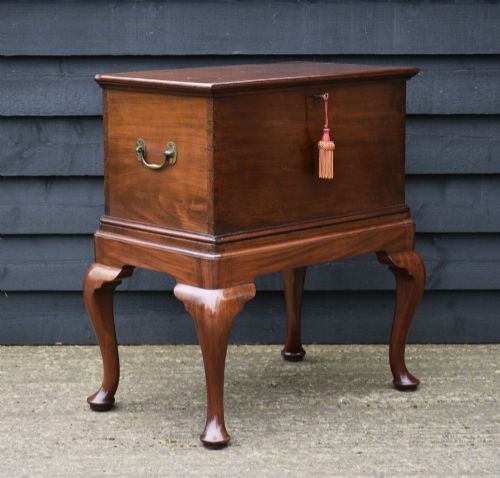
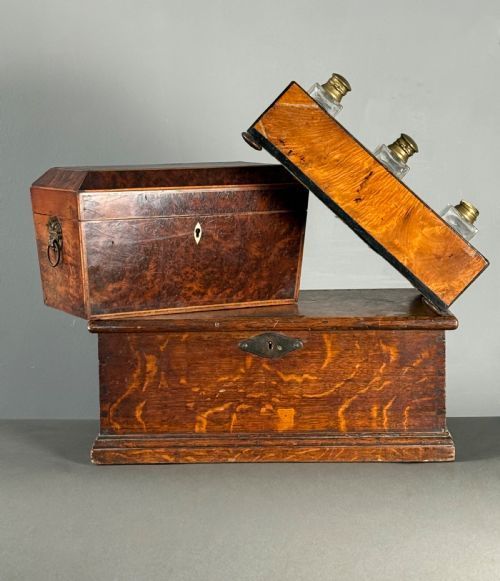
Beyond tea storage, the broader selection includes related forms like cellarettes, wine coolers, and miniature chests of drawers sharing the same characteristic caddy top moulding. Most examples originate from the Georgian and Regency periods, utilising dense imported timber alongside decorative veneers.
Makers designed these boxes for domestic use in affluent households where tea was a prized commodity. Surviving specimens range from plain rectangular storage boxes to elaborate pieces inlaid with contrasting boxwood and satinwood stringing.
Materials and construction
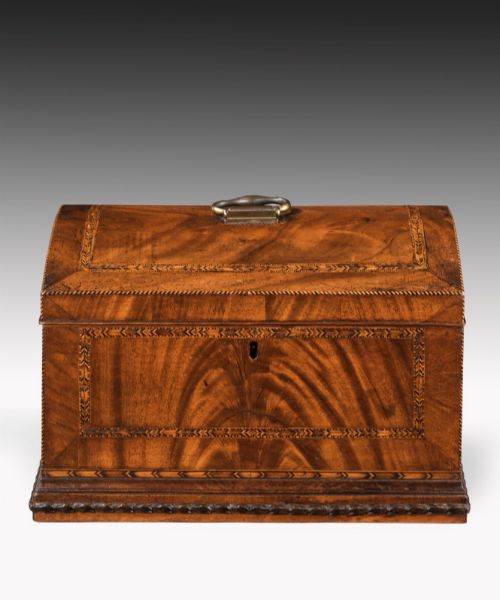
Cabinet makers built the primary carcass using solid mahogany or applied rich flame mahogany veneers over a secondary wood base. Selected panels often display distinctive grain patterns, enhanced through careful polishing.
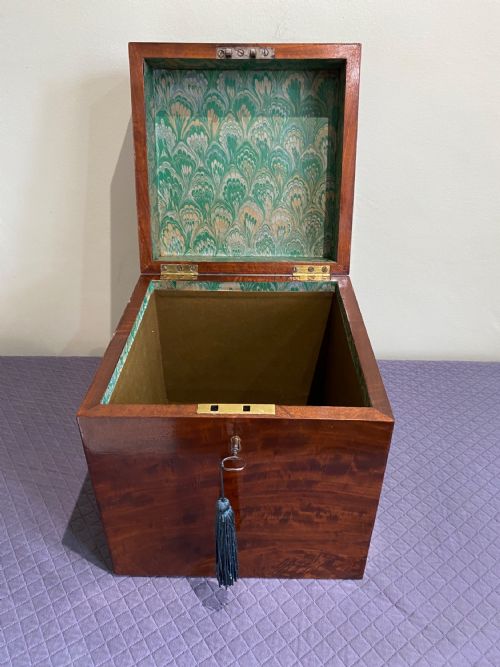
Construction relied upon tight corner joints, occasionally reinforced with brass stringing, escutcheons, and carrying handles. Interior compartments frequently retain remnants of foil lining or fitted wooden lids designed to preserve aroma.
Secondary decorative elements incorporated boxwood, satinwood, ebony, bone, and mother of pearl for stringing or geometric star inlays. Specialised pieces utilised coopered stave construction secured with brass hoops.
Georgian Mahogany Caddy Retail Price Guide 2026
Typical asking prices for georgian mahogany caddy among the pieces listed under this phrase on Sellingantiques today, from the lower quarter to the upper quarter. They describe what is for sale here now, not the wider market.
Miniature naval rum barrels fitted with brass bands allowed sailors to bring a taste of the sea directly onto the drawing room desk.
Factors determining quality
Quality rests primarily on the choice of timber and the precision of the cabinet work. Highly figured flame or fiddleback mahogany veneers combined with delicate contrasting stringing indicate superior craftsmanship.
The integrity of the original hardware, including working locks with matching keys and cast brass carrying handles, elevates an item's standing. Finer examples retain intact interior fittings, such as lidded tea canisters and original glass mixing bowls.
Proportion and form dictate the desirability of each piece. Crisp execution of moulded caddy tops and sharp geometric inlays distinguish workshop pieces from more utilitarian containers.
Gillows
The Georgian Mahogany Caddy Glossary
- Caddy top
- A distinctive moulded edge profile found on boxes and miniature chests, resembling the lid of a tea caddy. This architectural detail dates the joinery to the late eighteenth or early nineteenth century.
- Sarcophagus
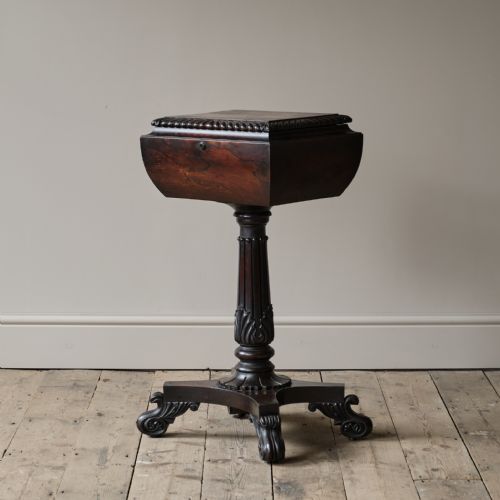
- A box shape featuring a domed or sloping lid resting on a rectangular base, reminiscent of classical funerary monuments. This grand form appeared frequently on larger tea containers and wine coolers during the Regency era.
- Cellarette
- A standalone or floor-standing cabinet designed to hold bottles of wine or spirits. These sturdy containers often employed coopered construction with metal bands.
- Stringing
- Thin lines of contrasting timber inlaid into the surface of a piece to create decorative borders. Makers used materials like boxwood, ebony, and satinwood against the dark mahogany background.
- Teapoy
- A pedestal table fitted with a large box on top for storing tea. These pieces combined furniture support with internal storage compartments.
Georgian Mahogany Caddy: Frequently Asked Questions
What was inside a georgian mahogany caddy?
These boxes contained two or three lidded canisters designed to keep different varieties of black and green tea separate and fresh. Many also housed a central glass bowl used for blending the leaves before brewing.
Because tea was an expensive commodity, the entire interior was secured with a functioning brass lock and key to prevent household theft.
How do I tell a tea caddy from a decorative box?
Authentic tea containers feature internal divisions specifically sized for tea leaves, frequently accompanied by fitted wooden lids or remnants of foil lining. Plain decorative boxes lack these internal partitions and are designed for general storage.
Examining the base and interior construction reveals whether the box was built for leaf storage or general correspondence.
How should I care for antique mahogany wood?
Keep wooden boxes away from direct sunlight and steady sources of heat to prevent the mahogany veneers from drying and cracking. Maintain a stable room temperature and dust gently with a dry, soft cloth.
Avoid modern liquid polishes or silicone sprays, which can penetrate old finishes and attract dust over time.
What is the difference between Georgian and Regency styles?
Georgian pieces dating from the mid-to-late eighteenth century often emphasise classical proportions, subtle bracket feet, and delicate stringing details. Regency items from the early nineteenth century lean toward heavier classical influences, including animal paw feet and brass inlay.
Both periods utilised premium mahogany, but Regency designs frequently adopted more monumental forms like the sarcophagus shape.