




Georgian Mahogany Bottle Chest
A georgian mahogany bottle chest is a robust timber container built to hold wine bottles or medical draughts, offering a glimpse into period entertaining.
Georgian Mahogany Bottle Chest
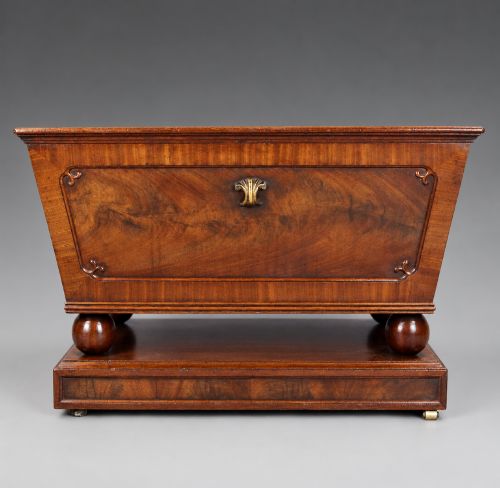
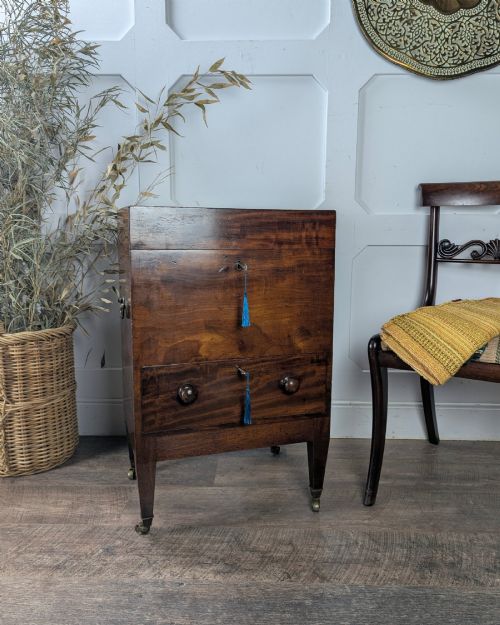
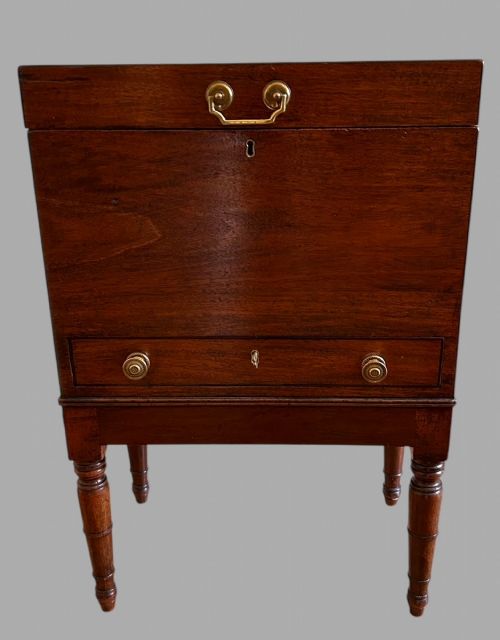
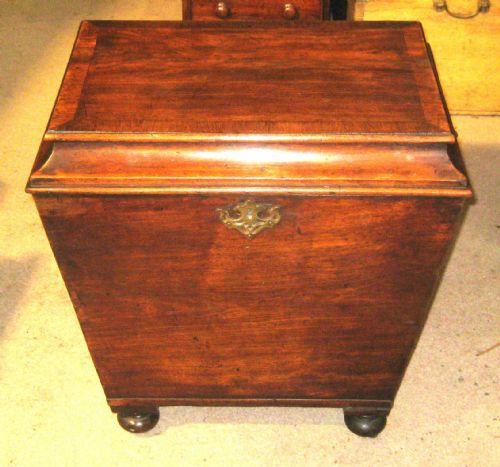
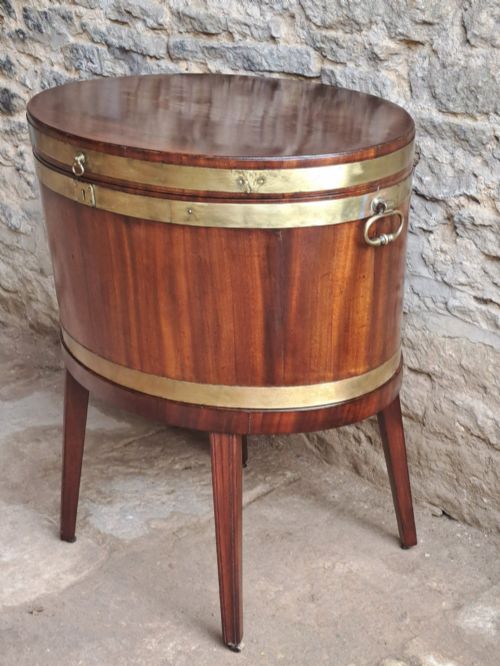
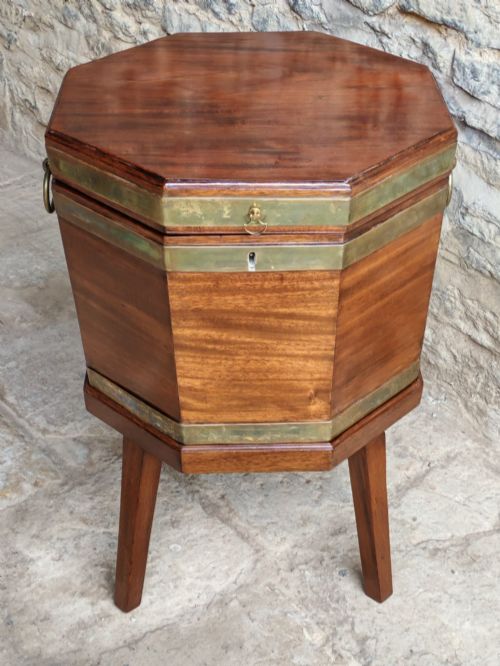
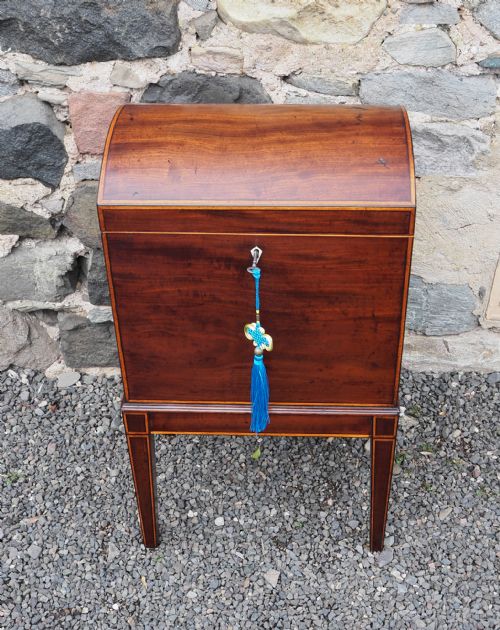
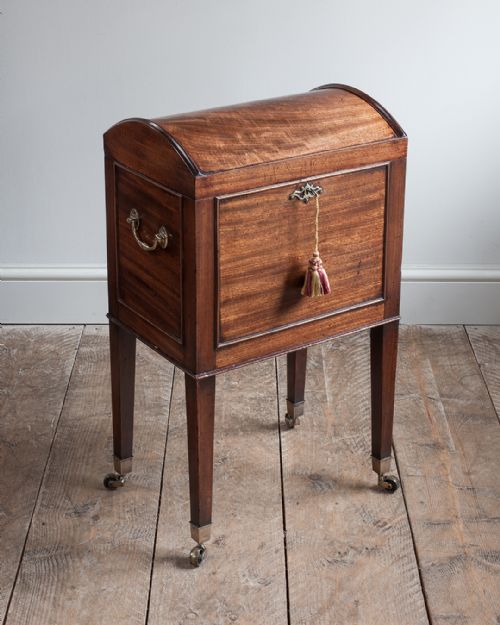
A georgian mahogany bottle chest typically takes the form of a wine cooler, cellarette, or apothecary box designed to store liquid refreshments or medical bottles securely. These pieces emerge predominantly from the Georgian, Regency, and 18th-century periods, capturing an era of refined domestic hospitality.
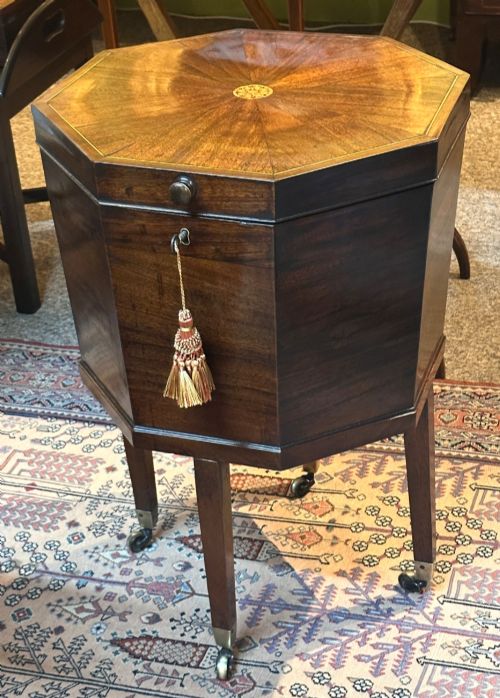
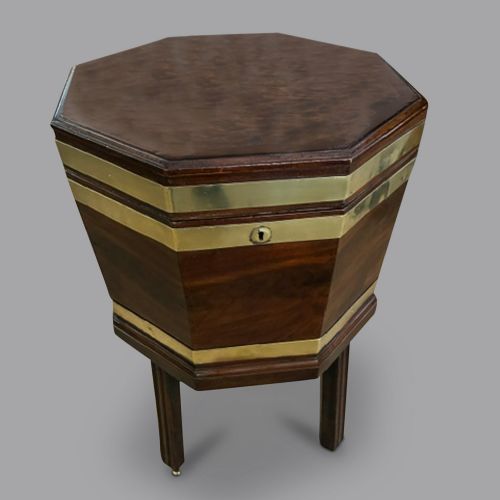
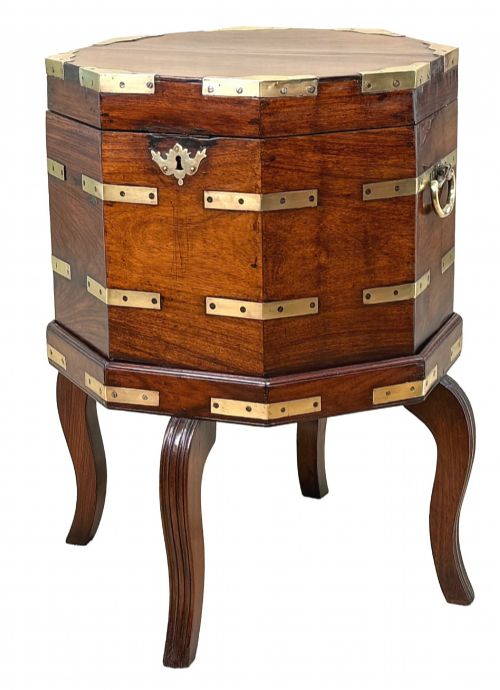
The most common formats met on this page include octagonal wine coolers, sarcophagus-shaped cellarettes, and fitted travelling boxes complete with original glass bottles and drawers. Buyers will also encounter variants with boxwood inlay, brass binding, and flame mahogany surfaces that highlight the rich grain of the timber.
Materials and construction
Makers relied heavily on solid mahogany and flame mahogany veneers, often enhanced with contrasting boxwood inlay or ebonised wood details. The surfaces display a deep natural patina achieved through traditional polishing methods applied to dense tropical timber.
Metal fittings played a crucial structural and decorative role, featuring brass bands, carrying handles, and secure locks. Inside these containers, compartments lined with velvet or fitted for glass bottles protected fragile contents during use and transport.
Some miniature apothecary boxes travelled across continents, carrying tiny original glass bottles ready to cure sudden Victorian stomach ailments on the move.
Evaluating quality and execution
The distinction between standard examples and the finest pieces rests upon the choice of timber and the precision of the cabinetwork. Superior items utilise highly figured flame mahogany and crisp carving, such as fluted tops or well-defined sarcophagus moulding.
Completeness and originality dictate the standing of a piece, particularly in apothecary boxes and cellarettes retaining their original glass bottles, velvet linings, and period brass hardware. Attribution to notable workshops like Gillows further elevates the calibre of a piece through documented craftsmanship.
Gillows
The Georgian Mahogany Bottle Chest Glossary
- Cellarette
- A lockable container used for storing wine bottles near the dining table before refrigeration. These units often feature internal divisions to keep bottles separated.
- Sarcophagus
- A monumental architectural shape resembling a stone coffin, featuring a domed lid and tapered sides popular during the Regency period. This profile gave large wine coolers a commanding presence in dining rooms.
- Flame mahogany
- A decorative wood veneer cut from the branch junction of the mahogany tree, producing a distinctive flickering flame pattern. Cabinet makers reserved this timber for the most prominent exterior surfaces.
- Apothecary box
- A compact portable cabinet fitted with internal drawers and glass bottles designed to hold medicines and tinctures. These travel chests provided medical supplies for households on the move.
- Patina
- The deep gloss and mellow surface texture acquired by wood over centuries of handling and polishing. This characteristic shine acts as a visual indicator of age and careful maintenance.
Georgian Mahogany Bottle Chest: Frequently Asked Questions
What is the difference between a cellarette and a wine cooler?
A cellarette specifically refers to a lockable chest or box built to store wine securely away from servants or guests. A wine cooler encompasses a broader category of containers, some of which were lined with metal to hold ice.
Both terms appear frequently across Georgian and Regency listings to describe timber refreshment holders.
How do I date a mahogany bottle chest?
Dating relies upon stylistic markers such as the architectural sarcophagus form of the Regency period versus the simpler octagonal geometry typical of George III pieces. Hardware details, including brass carrying handles and lock mechanisms, also point to specific manufacturing eras.
Examining the secondary woods inside drawers provides further clues regarding the date of construction.
Were apothecary boxes used in the home?
Apothecary boxes served as portable pharmacies for country houses, travelling physicians, and military officers on campaign. They held essential ingredients and mixed draughts before commercial bottled medicines became widespread.
Their fitted interiors and tiny glass bottles reflect a high degree of domestic organisation.
How should I care for antique mahogany?
Protect antique mahogany by keeping the timber away from direct sunlight and sudden temperature shifts that cause wood to split. Regular dusting with a dry cloth maintains the finish without building up heavy wax residues.
Maintaining stable indoor humidity preserves the structural integrity of brass mounts and internal velvet linings.