
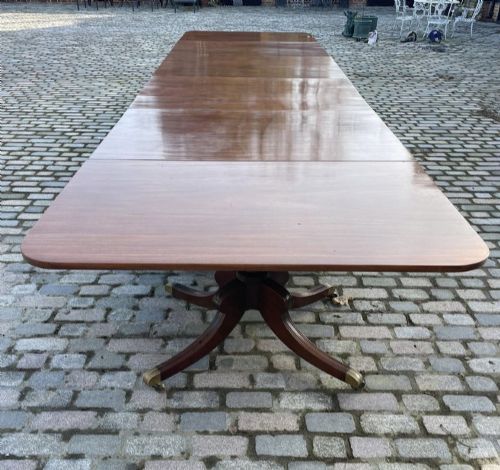
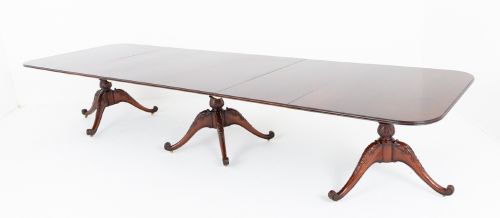
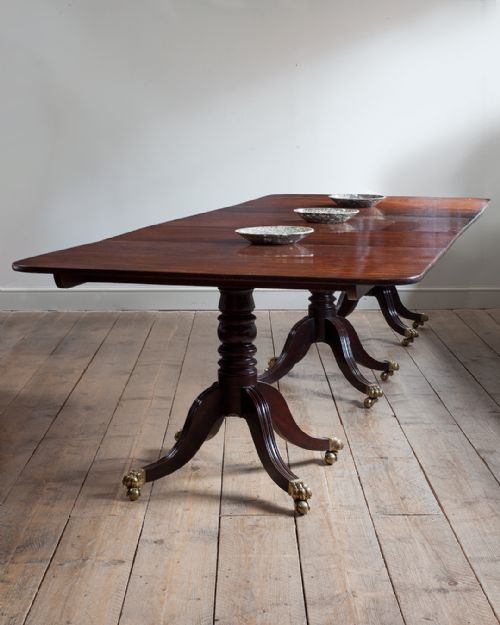
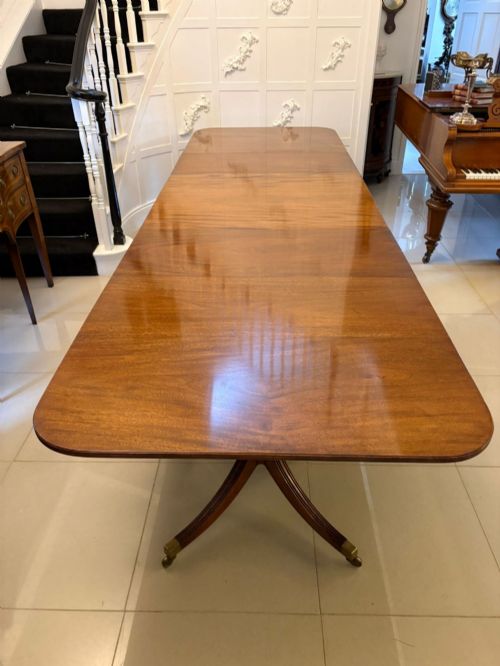
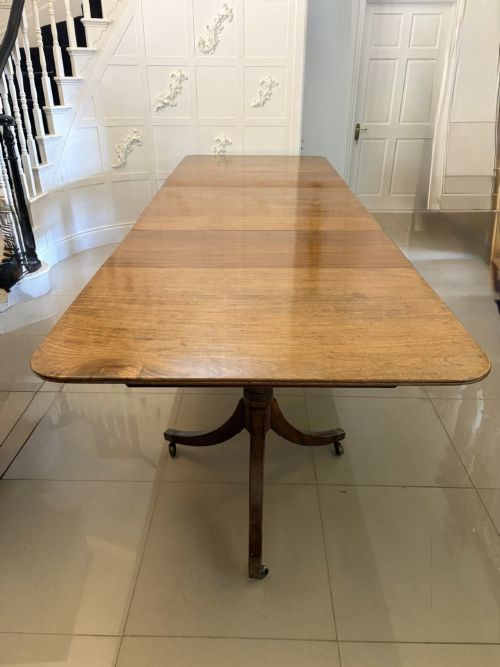

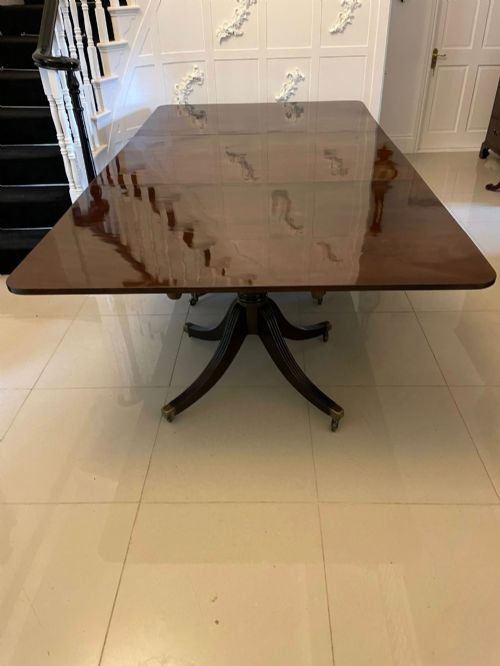
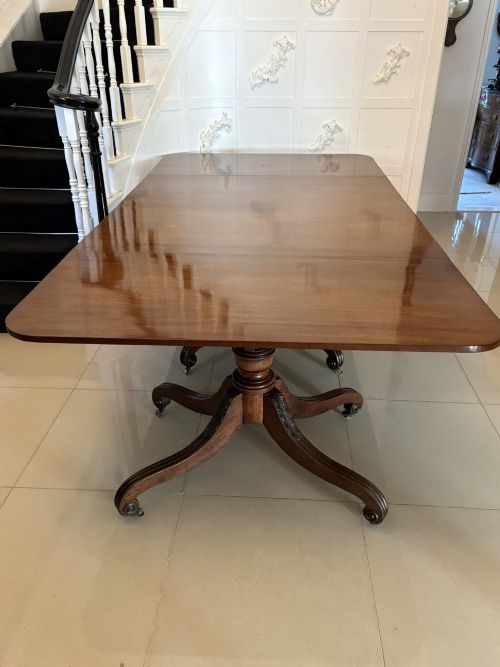
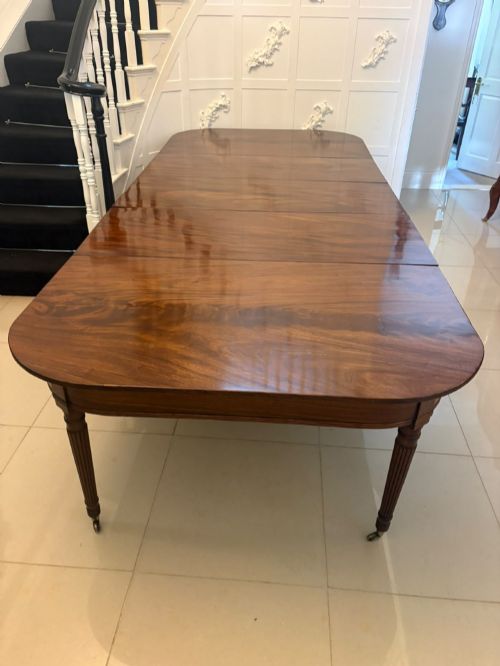


Georgian Mahogany Banquet Table
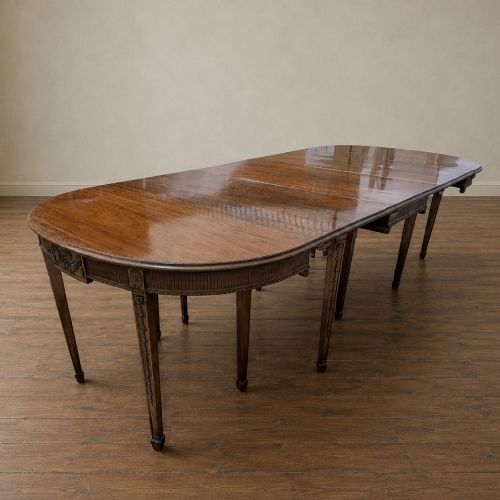
A georgian mahogany banquet table provides generous seating for a grand interior, uniting period craftsmanship with exceptional scale.
Georgian Mahogany Banquet Table
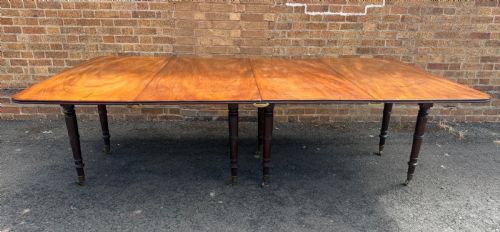
When you search for a georgian mahogany banquet table, you encounter substantial dining furniture designed to accommodate large gatherings. These pieces typically feature multiple pedestals or pillars supporting extending leaves, allowing the surface length to adjust according to need.
The versions most frequently met on this page span the late eighteenth century into the nineteenth century, encompassing Georgian, Regency, George III, and William IV periods. They range from twin pedestal formats seating ten up to extensive multi-pillar examples capable of seating twenty-eight.
Makers often utilised modular D-end sections alongside central leaves to create versatile configurations. Forms vary from restrained classical designs to elaborate tables attributed to prominent workshops.
How they were made
Cabinet makers constructed these tables primarily from solid timber and selected veneers, using mahogany, Cuban mahogany, Cuban flame mahogany, and figured mahogany for the visible surfaces. Satinwood inlay frequently provides contrasting detail along borders and friezes.
Structural integrity relies on timber pillars, often numbering two to three, supported by reeded legs fitted with brass castors. Patent mechanical actions and removable leaves allow the framework to extend smoothly while maintaining stability across large spans.
Listings include examples from the Georgian, Regency, Edwardian, and nineteenth-century periods, alongside George III and William IV styles.
What varies in quality
The distinction between standard examples and the finest pieces rests upon timber selection and cabinet-making execution. Tables featuring richly figured grain patterns, such as flame or plum pudding mahogany, demonstrate superior material choice by the workshop.
Proportion, leg carving, and the sophistication of extending mechanisms further separate the output. Workshops known for documented attribution command attention for refined architectural proportions and seamless leaf integration.
Gillows·Waring and Gillow·Robert Adam
The Georgian Mahogany Banquet Table Glossary
- Pedestal base
- A central support structure consisting of a column rising from a platform or radiating legs. This configuration allows diners maximum legroom around the perimeter of the table.
- Extending leaf
- A removable section of timber inserted into the centre of the table to increase its overall length. These leaves are stored separately when the table is reduced in size.
- D-end
- A semi-circular table section resembling the letter D. When separated from a central dining table, these individual units function independently as console tables against a wall.
- Reeded leg
- A column decorated with parallel, convex mouldings carved directly into the timber. This classical decorative technique appears frequently on Regency and George III supports.
- Patent action
- A mechanical apparatus designed to facilitate the extension of dining tables using internal screws, runners, or pivots. Such systems allowed a single person to expand heavy timber frames.
Georgian Mahogany Banquet Table: Frequently Asked Questions
How do I seat twenty people?
Tables of this scale achieve large capacities by employing three or more distinct pedestals to support multiple extending leaves. This multi-pillar framework distributes weight evenly and provides adequate leg clearance.
Arranging the leaves requires releasing the mechanical or slip-joint connections between the sections. Operators slide the pedestals apart and drop the additional panels into the resulting gap before securing the frame.
What is Cuban mahogany?
Cuban mahogany refers to timber harvested from Swietenia mahogani trees native to the Caribbean. This material gained renown for its dense grain and deep colouration.
Cabinet makers valued the wood for its stability and resistance to warping. Over centuries, exposure to light deepens the rich patina visible on these surfaces.
How do pedestals work?
Pedestal tables use central vertical columns rather than corner legs to support the top. These columns typically terminate in splayed legs fitted with brass castors for mobility.
In extending formats, the pedestals separate on hidden runners. Additional leaves drop onto locating pins to lock the extended surface level.
How do I identify Regency style?
Regency style draws on classical Greek and Roman motifs, favouring clean architectural lines and restrained ornamentation. Details such as reeded legs and brass inlay characterise the aesthetic.
Proportions remain balanced, with an emphasis on the natural grain of figured mahogany rather than heavy carving. Cabinet makers balanced utility with elegance in these designs.