



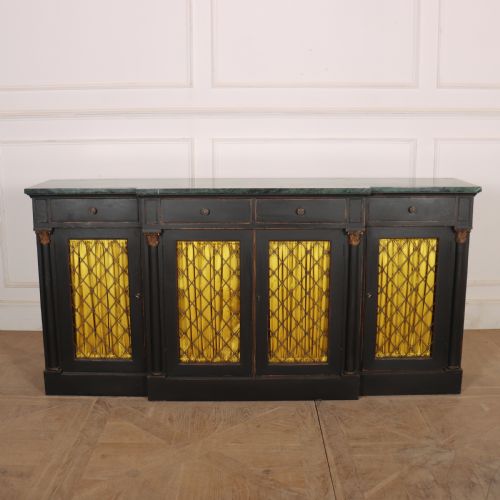


Georgian Low Breakfront Cabinet
A georgian low breakfront cabinet brings stately proportion and rich timbers to a room, offering both display and concealed storage.
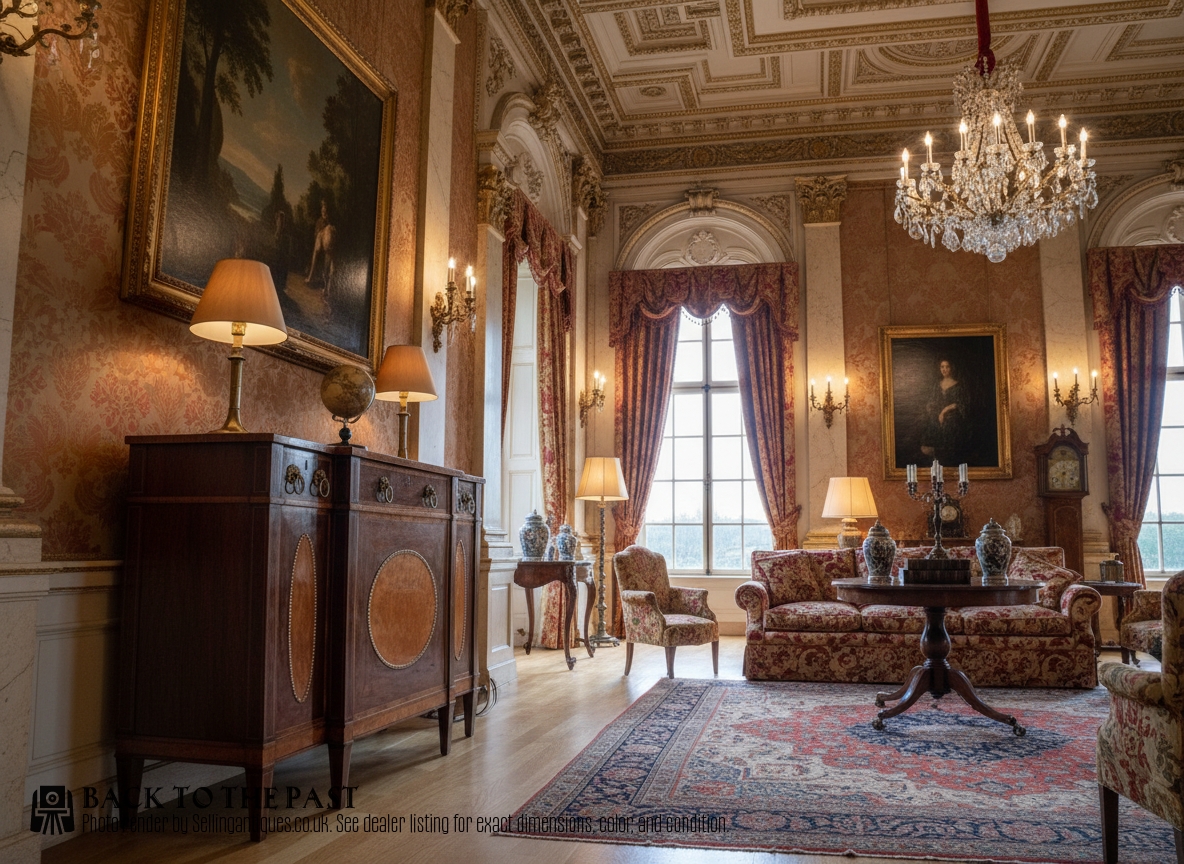
Georgian Low Breakfront Cabinet
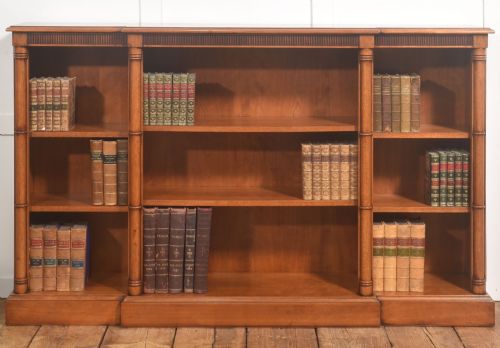
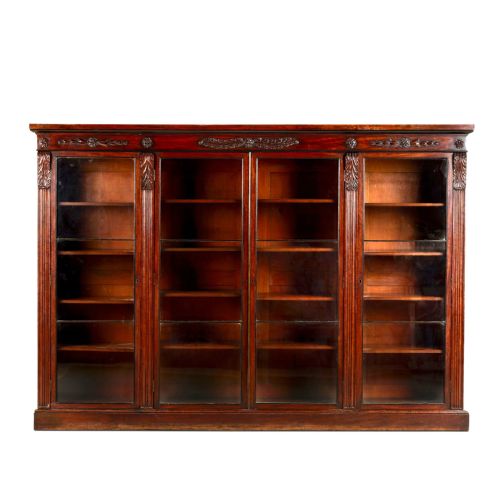
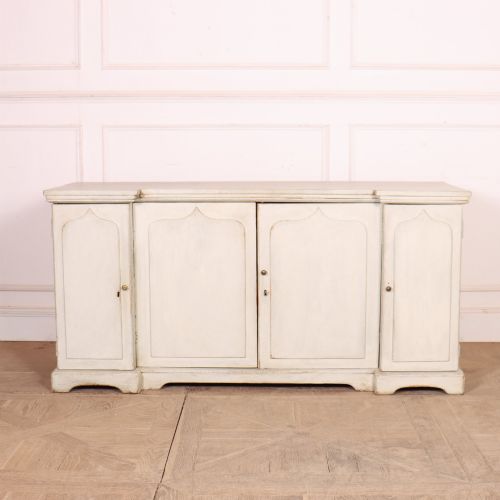
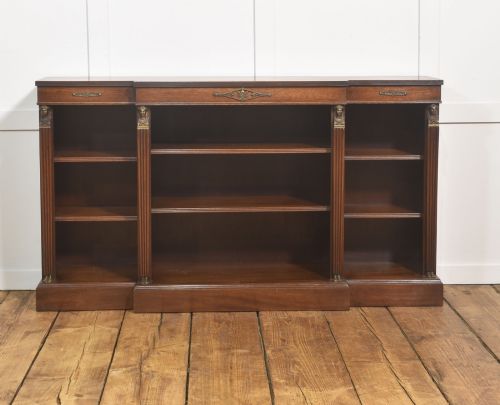
When you search for a georgian low breakfront cabinet, you are looking at substantial furniture pieces characterised by a central section flanked by slightly recessed or projecting wings. The versions most likely to be met on this page span the Regency, 19th Century, and 18th Century periods, incorporating forms such as bookcases, side cabinets, and dresser bases.
Materials represented in these forms include mahogany, rosewood, oak, walnut, and painted wood, often detailed with brass and marble. Styles range from George III and Regency to Edwardian and Victorian interpretations.
Materials and construction
Cabinet makers utilised dense timber stocks such as mahogany, rosewood, and walnut to build the foundational carcases of these breakfront pieces. Surface treatments often involved fine figuring in the wood grain, sometimes enhanced with parcel gilding or painted finishes.
Hardware and secondary elements incorporate brass fittings, marble tops, and occasionally specialised additions like leather dummy books. Construction methods rely on traditional joinery suited to heavy bookcases and side cabinets.
Georgian Low Breakfront Cabinet Retail Price Guide 2026
Typical asking prices for georgian low breakfront cabinet among the pieces listed under this phrase on Sellingantiques today, from the lower quarter to the upper quarter. They describe what is for sale here now, not the wider market.
Listings span multiple eras from the 18th Century through the Edwardian period, executed in mahogany, rosewood, oak, and walnut.
Judging quality in breakfront cabinetry
The distinction between standard examples and the finest pieces rests upon the choice of timber and the sophistication of the cabinet maker. Richly figured rosewood or mahogany veneers and refined brass mounts elevate an item well above simpler oak or painted pine constructions.
Proportion and architectural detailing also dictate worth, where crisp moulding profiles and well-executed breakfront geometry demonstrate superior craftsmanship.
Maple & Co.
The Georgian Low Breakfront Cabinet Glossary
- Breakfront
- A piece of furniture having a central section that projects forward from the flanking wings. This architectural arrangement creates depth and visual interest across the facade.
- Dresser base
- A low sideboard or cabinet featuring storage cupboards and drawers beneath a flat top surface. These utilitarian forms served dining rooms and kitchens.
- Parcel gilt
- Partially gilded woodwork where specific carved details, mouldings, or highlights are covered in thin gold leaf. This technique contrasts metallic brilliance against dark polished timber.
Georgian Low Breakfront Cabinet: Frequently Asked Questions
What is a breakfront cabinet?
A breakfront cabinet is a large storage piece where the front surface steps forward in sections, typically with a prominent central block. This design breaks up the linear monotony of long walls in grand rooms.
Such cabinets function as bookcases, sideboards, or display units, combining open shelving with enclosed cupboard space.
Where should I place this cabinet?
These substantial pieces anchor a principal reception room, dining space, or large hallway. Their low profile allows art to be hung above them without crowding the wall.
Ensure adequate floor space is available to accommodate the projecting central section and the swing of any cupboard doors.
How do I identify a Regency period piece?
Regency furniture dates from the early nineteenth century and often employs dark timbers like mahogany and rosewood. Look for classical restraint, brass stringing, and parcel gilt accents.
Makers of this era favoured architectural lines and symmetrical forms derived from ancient design precedents.
What is the difference between a bookcase and a side cabinet?
Bookcases feature open or glazed shelving designed primarily for the storage and display of volumes. Side cabinets offer enclosed cupboard storage behind solid or glazed doors.
Some hybrid forms integrate open shelving above a low cabinet base, serving both display and storage functions simultaneously.