

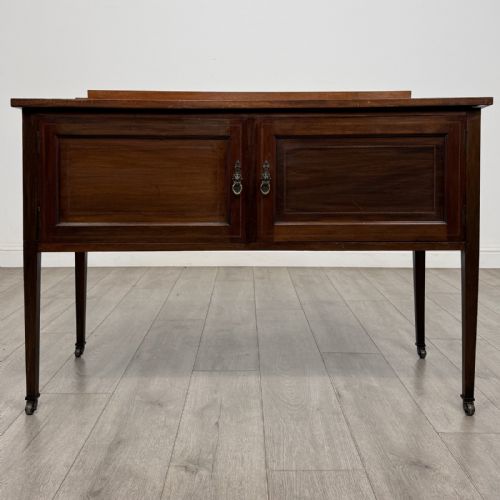
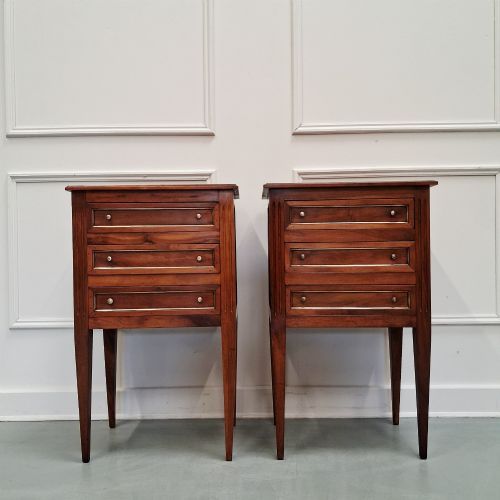
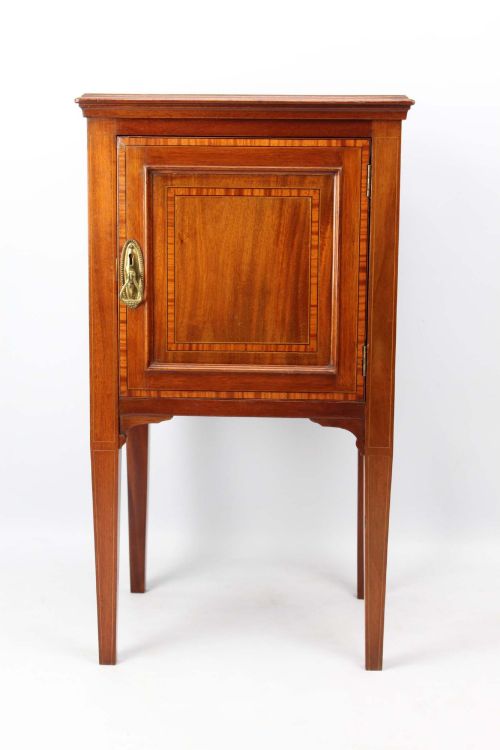
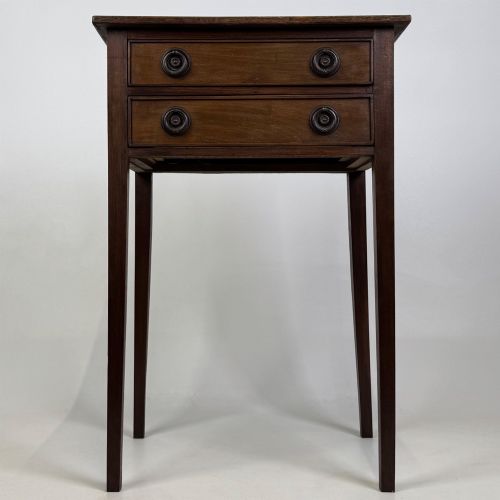
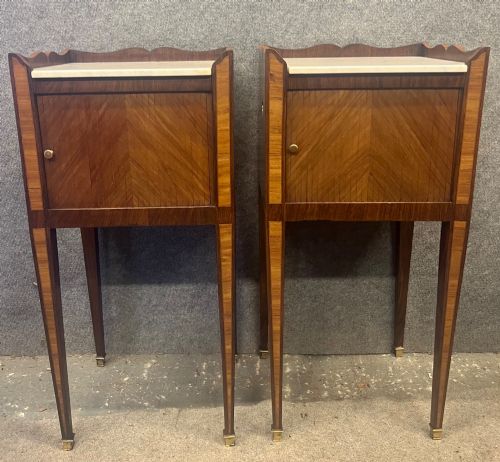
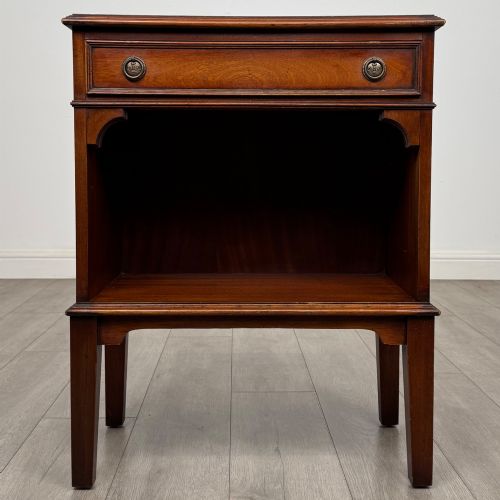


Tapered Leg Side Cabinet
These tapered leg side cabinet examples span George III elegance to Art Deco utility, offering refined storage for any room.
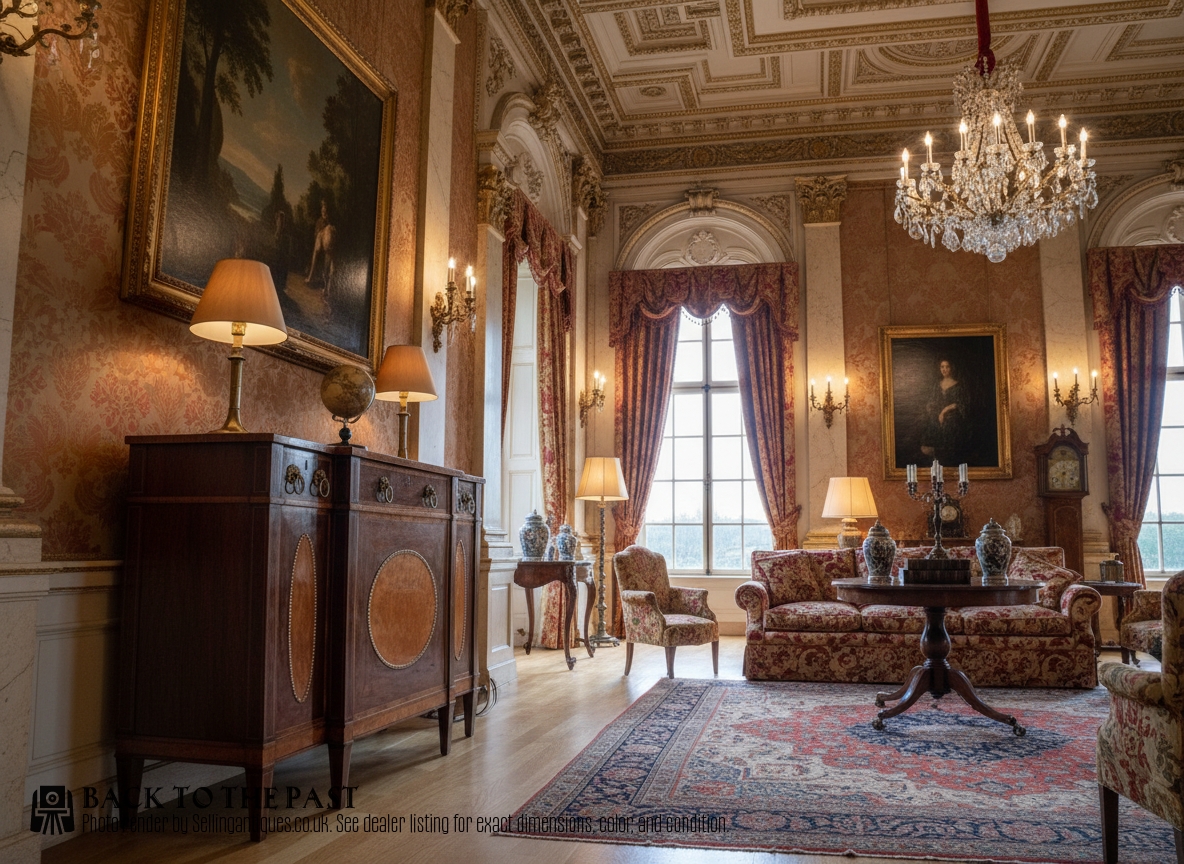
Tapered Leg Side Cabinet
A tapered leg side cabinet brings compact storage and slender geometry to a room, appearing in forms from Georgian washstand cabinets to Edwardian and Art Deco bedside tables. You encounter pieces spanning the nineteenth and twentieth centuries, reflecting shifts in domestic utility across Georgian, Edwardian, and Art Deco eras.
The evidence shows these items function as side tables, bedside cabinets, and sideboards, frequently elevated on slender supports. Mahogany and walnut dominate the selection, often enriched with satinwood crossbanding or brass detail.
Regional variations include French inlaid bedside cabinets, Swedish bedside tables, and English George III breakfront examples. Buyers find both single items and pairs, offering flexibility for flanking a bed or anchoring a hallway.
Construction and materials
Cabinetmakers utilised dense timbers such as mahogany, walnut, and figured walnut as the structural core for these pieces. Solid wood construction provides durability, while selected veneers enhance the visual grain across drawer fronts and top surfaces.
Surface enrichment involves satinwood crossbanding, contrasting stringing, and brass detail such as mounts and handles. Painted wood surfaces and marble inserts also appear, demonstrating varied finishing techniques suited to specific stylistic periods.
Tapered Leg Side Cabinet Retail Price Guide 2026
Typical asking prices for tapered leg side cabinet among the pieces listed under this phrase on Sellingantiques today, from the lower quarter to the upper quarter. They describe what is for sale here now, not the wider market.
Tambour nightstands hide your midnight reading behind sliding wooden slats that roll like a tiny garage door.
Judgements of quality
Quality rests in the crispness of the timber selection and the precision of decorative inlays such as satinwood crossbanding. Finer examples display carefully matched wood grains and harmonious proportions between the cabinet body and the slender supports.
The integration of brass details and the neatness of drawer construction distinguish superior workshops from standard production. Material integrity, from solid wood frames to well-fitted marble tops, dictates the standing of each piece.
The Tapered Leg Side Cabinet Glossary
- Crossbanding
- A border band of veneer laid around the perimeter of a tabletop or drawer front with the grain running perpendicular to the centre.
- Tambour
- A flexible shutter door formed of narrow vertical strips of wood glued to a canvas backing, allowing it to slide smoothly around a curved cabinet corner.
- Breakfront
- A cabinet front where the central section projects forward from the flanking outer sections, creating architectural depth.
- Washstand
- A utilitarian piece designed for personal ablutions, often featuring enclosed storage below a top surface suited to basins.
- Bijouterie table
- A glass-topped display table designed for showcasing small decorative objects and precious curiosities.
Tapered Leg Side Cabinet: Frequently Asked Questions
Where should I place a side cabinet?
These cabinets suit bedrooms as bedside tables or lamp tables, and hallways where floor space is restricted.
Their slender profile and storage capacity allow them to function effectively alongside seating or beneath mirrors in reception rooms.
How do I identify a Georgian piece?
Georgian examples, such as George III breakfront cabinets or washstands, display restrained classical proportions and fine timber selection.
Construction methods from this period rely on traditional joinery and dense native or imported hardwoods.
Are pairs common for these cabinets?
Pairs of bedside cabinets and lamp tables appear frequently, particularly within twentieth-century French and Swedish groups.
Matching pairs provide symmetry when placed on either side of a bed or fireplace.
What maintenance do these cabinets need?
Routine care involves dusting with a dry cloth and occasional application of appropriate furniture wax to nourish the wood.
Protecting surfaces from excessive moisture and direct sunlight preserves the finish and inlaid details.