

Georgian Leather Writing Desk
A georgian leather writing desk is a functional antique workspace lined with hide, prized for period character and rich timber.
Georgian Leather Writing Desk
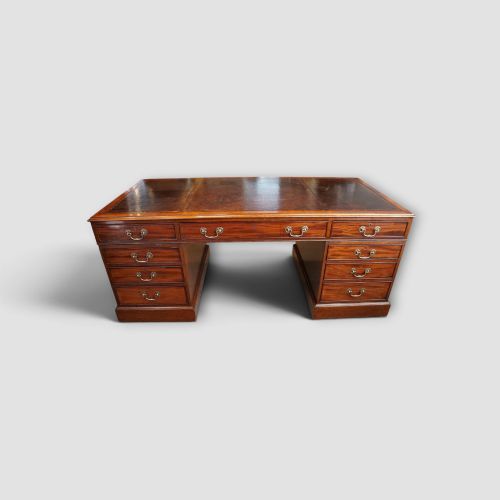
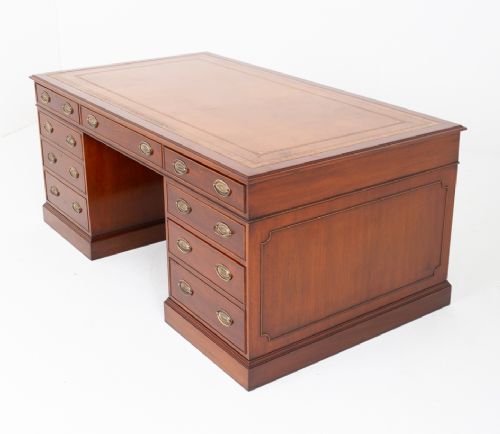
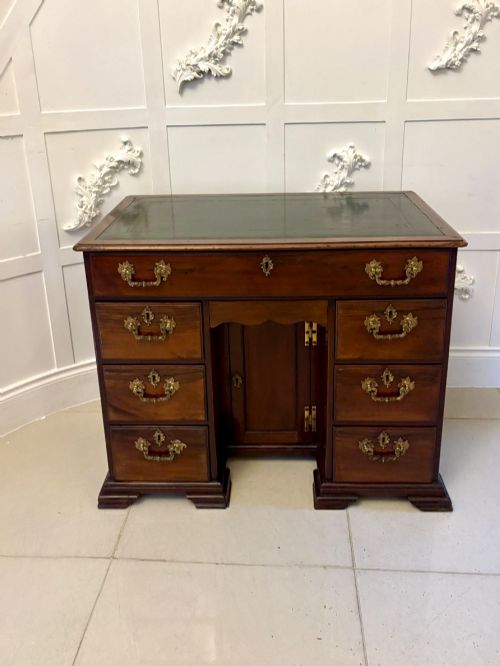
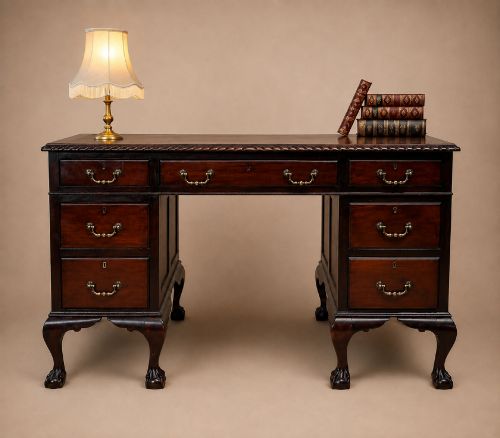
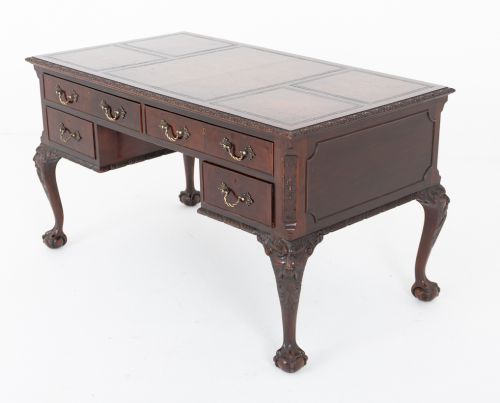
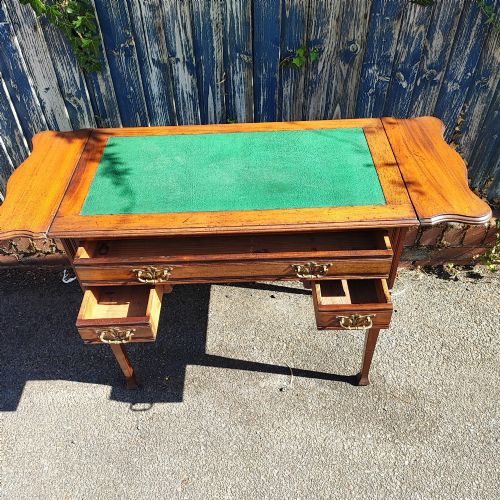
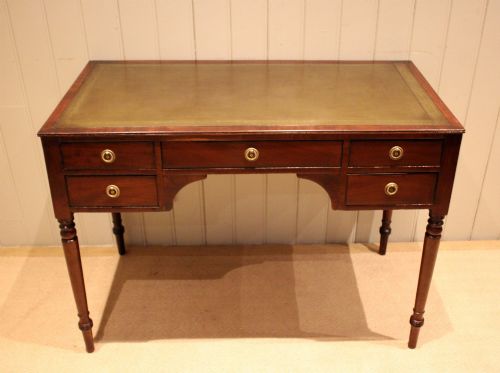
A georgian leather writing desk encompasses a variety of timber furniture forms designed for correspondence, study, and estate management. Buyers exploring this search phrase encounter pedestal desks, writing tables, partner setups, and smaller kneehole forms fitted with inset leather surfaces.
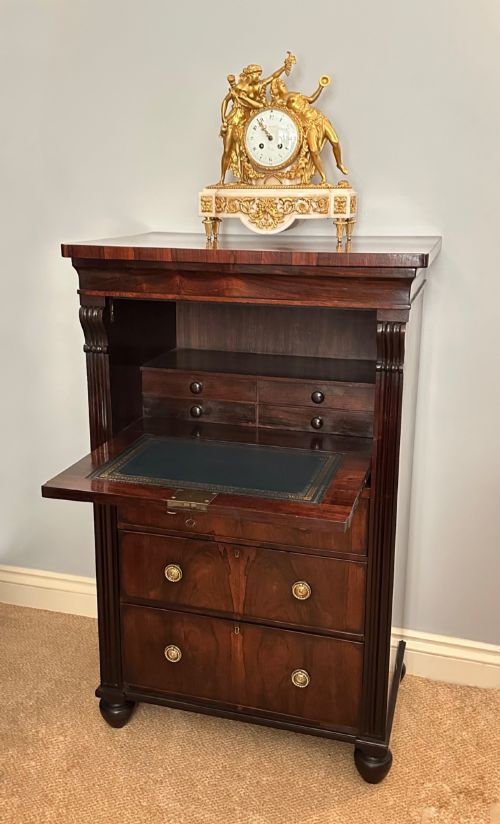
The material record spans genuine Georgian and Regency eras alongside later revivals from the nineteenth and early twentieth centuries. Mahogany and walnut dominate the selection, accompanied by rarer examples in satinwood, burr oak, and rosewood.
Pedestal configurations and freestanding writing tables appear most frequently among the current selection. These pieces bridge domestic writing duties and grand library organisation, retaining centuries of practical utility.
How they were made
Cabinet makers utilised dense hardwoods such as mahogany and walnut for structural stability and fine carving capabilities. Secondary timbers supported internal drawer linings while decorative veneers like burr walnut and satinwood created visual contrast on primary surfaces.
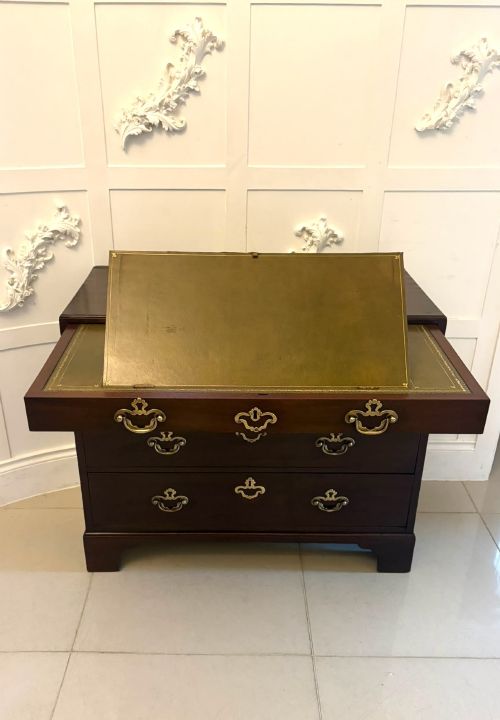
Writing surfaces incorporated inset panels of leather, frequently finished with blind or gilt tooling around the perimeter. Brass hardware, including drop handles and escutcheons, secured drawers and cupboards whilst adding functional ornamentation.
Joinery techniques relied on dovetailed drawer construction and mortise and tenon frames to withstand decades of daily use. Inlaid banding and crossbanding demonstrated advanced cabinet-making skill across Georgian and Sheraton periods.
Materials recorded on this site include mahogany, walnut, burr walnut, satinwood, oak, rosewood, brass, and leather.
What varies in quality
The grade of timber selection and figure sets superior examples apart from standard workshop output. Heavily figured mahogany, burr walnut, and matched veneers indicate a higher initial commission and greater material cost.
The integrity of the construction, from smooth drawer operation to the handling of secondary timbers, reflects disciplined workshop standards. Original brasses and well-preserved leather inserts retain the historical continuity sought by serious collectors.
Gillows of Lancaster
The Georgian Leather Writing Desk Glossary
- Partners desk
- A large double-sided pedestal desk designed for two people to work opposite each other. These forms feature drawers and cupboards accessible from both sides.
- Kneehole desk
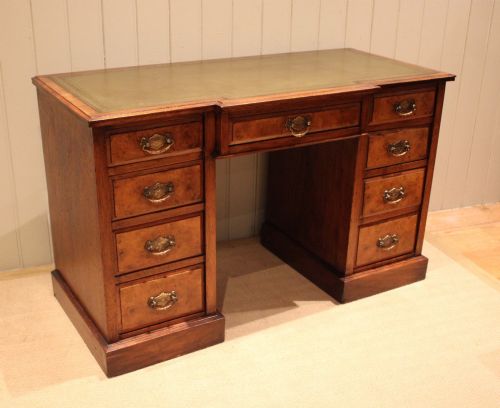
- A compact desk featuring a central recess for the user's legs, flanked by pedestals of smaller drawers. They often incorporate a concealed central drawer or cupboard door.
- Drum table
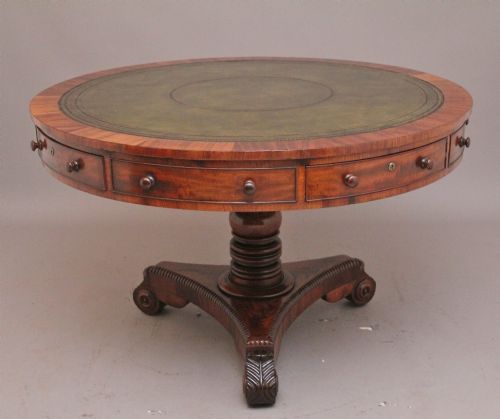
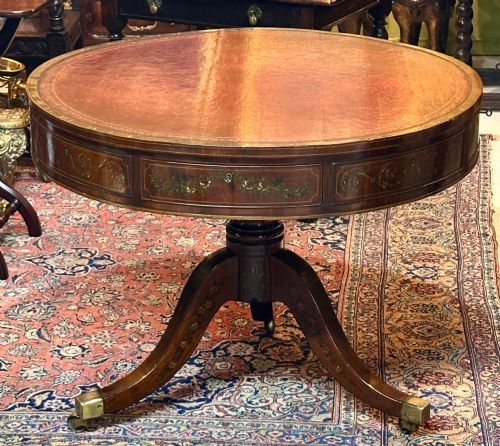
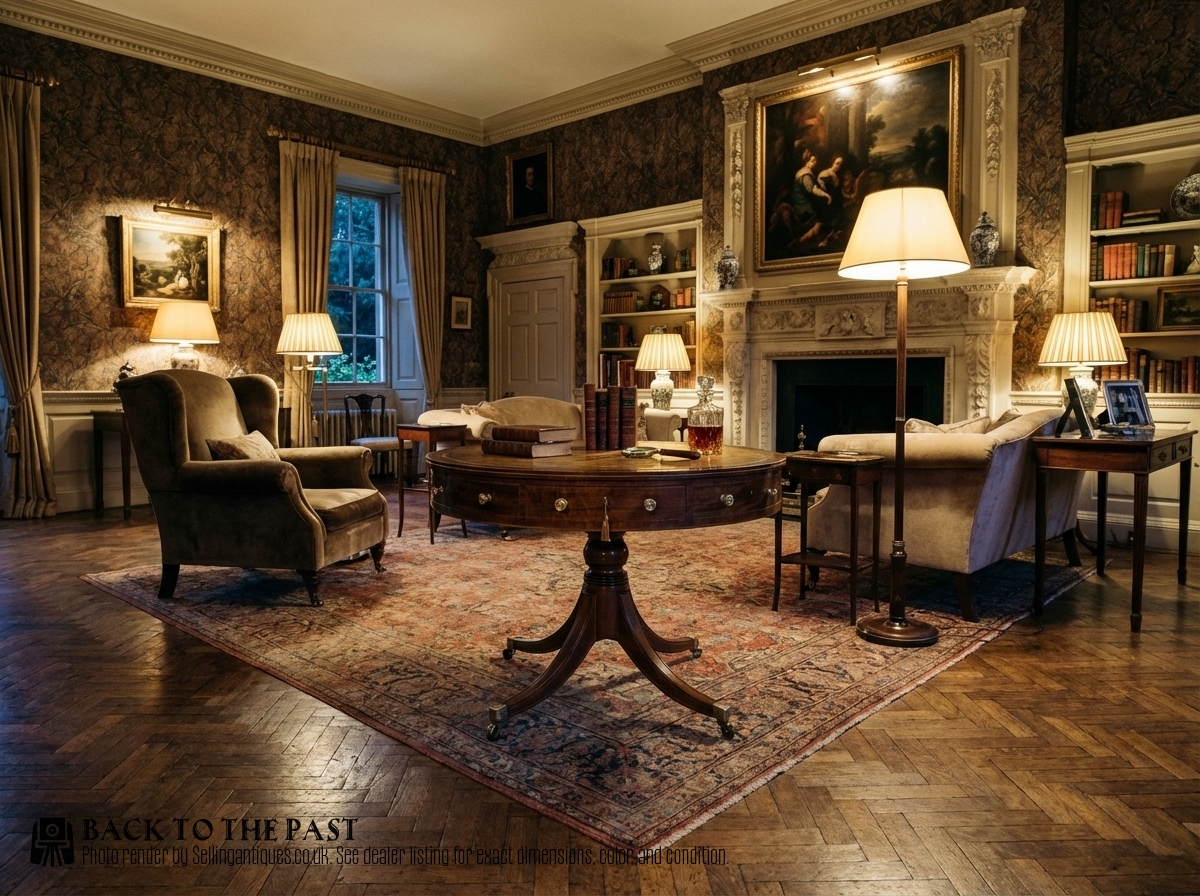
- A circular library table featuring a revolving or stationary top surrounded by frieze drawers. They typically stand upon a central pillar supported by splayed legs.
- Crossbanding
- A decorative border of veneer laid with the grain running perpendicular to the main surface. This technique frames table tops and drawer fronts with geometric precision.
- Tooled leather
- Leather writing surfaces decorated with pressed gold leaf or blind impressions along the borders. This finish provides a traditional texture for writing.
Georgian Leather Writing Desk: Frequently Asked Questions
What is a partners desk?
A partners desk is a large workspace designed with drawers and cupboards on both opposing sides. This layout allowed two individuals to work facing one another in a library or study.
Such pieces usually require significant floor space and serve as central statements within a room.
How do I maintain the leather top?
Leather writing surfaces benefit from occasional cleaning with a damp cloth and mild treatments to prevent drying. Avoiding direct sunlight helps preserve the colour and suppleness of the hide.
Harsh chemical cleaners should be avoided to protect any gilt tooling around the perimeter.
Are these desks suitable for daily use?
These pieces were built by skilled cabinet makers using durable hardwoods designed for enduring functionality. Modern placement requires only standard care to protect antique timber and leather from moisture.
Many owners use them as functional computer desks or traditional writing spaces.
How can I tell a revival piece from a Georgian original?
Distinguishing original eighteenth-century work from later revivals involves examining secondary timbers, construction methods, and wear patterns. Revival pieces often date from the Victorian era or the early twentieth century while mimicking earlier Chippendale or Sheraton styles.
Consulting the timber ageing and dovetail construction helps clarify the period of manufacture.