
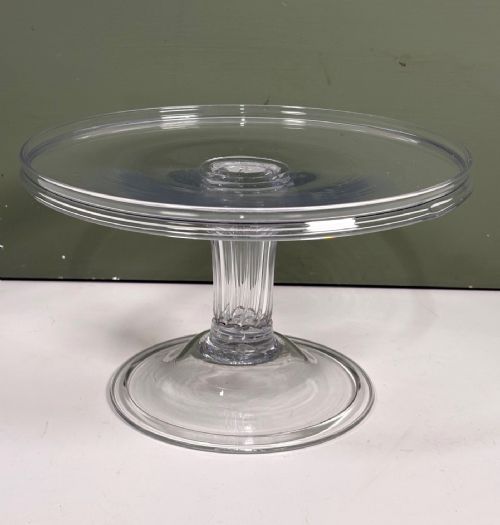


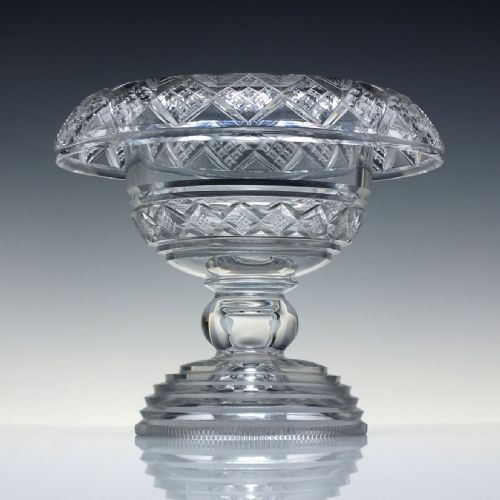


Georgian Lead Glass Stand
These georgian lead glass stand pieces offer heavy brilliant metal and crisp baluster stems that anchor a Georgian table.
Georgian Lead Glass Stand
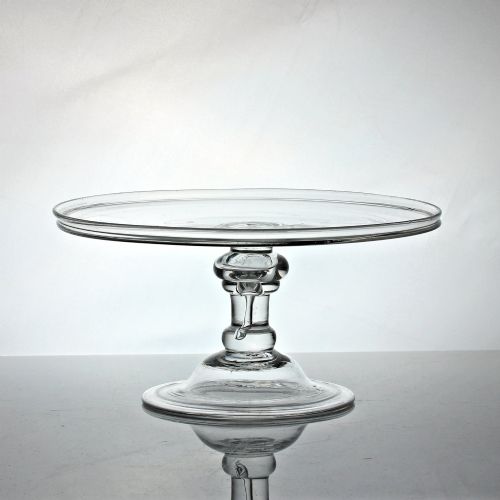
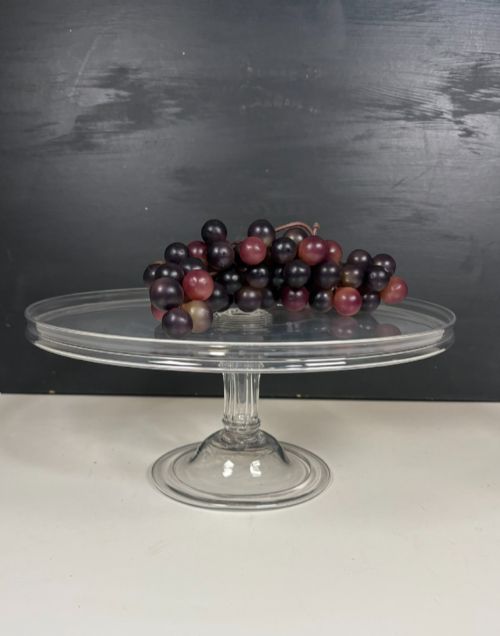
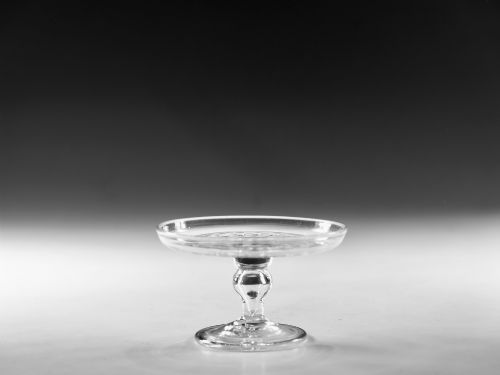
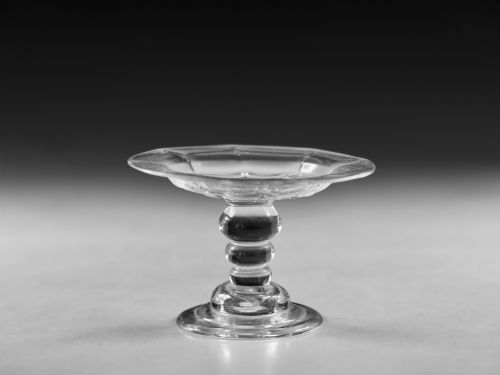
A georgian lead glass stand takes the form of a tazza, patch stand, sweetmeat or standing bowl raised on a distinct foot. These serving pieces held small sweetmeats, patches or fruit during the eighteenth century.
Visitors encounter miniature patch stands from the early decades of the century alongside larger George III tazzas and standing bowls. The smaller pieces often feature triple-knop stems and terraced feet.
English production dominates this category, spanning the George II and George III periods in clear lead metal. The forms range from simple folded feet to heavy cut glass standing bowls.
How they were made
Glassmakers utilised heavy lead metal and flint glass to achieve deep clarity and substantial weight in these stands. The addition of lead oxide produced a softer metal suited to cutting and moulding.
Hot metal was blown and manipulated to form spreading folded feet and baluster stems with knops. Some vessels received rib-moulding or honeycomb moulding while hot on the iron.
The finishing touches involved wheel-cutting or polishing the upper plate and foot rim. Craftsmen assembled stems and plates by thermal attachment before annealing the completed vessel.
What varies in quality
Quality rests in the weight of the lead metal and the crispness of the moulded or cut decoration. A superior piece displays sharp facets in honeycomb patterns and clean lines on the baluster stem.
Proportion dictates the elegance of the profile, particularly the balance between the spreading foot and the upper tray. Heavy metal distribution without excessive thickness marks the better workshops.
The integrity of the surface shows in the absence of heavy scratching and the preservation of the original polish. Early folded rims and untouched foot rings demonstrate superior initial execution.
The Georgian Lead Glass Stand Glossary
- Tazza
- A shallow bowl or plate raised on a stem and foot, used for serving sweets or fruit. These pieces form the core of early glass display.
- Patch stand
- A miniature pedestal dish designed to hold small cosmetic patches worn on the face during the eighteenth century. They frequently feature delicate baluster stems and terraced feet.
- Baluster stem
- A sturdy, swelling stem shape derived from architectural balusters, common in English glass from the early period. It provides both structural support and tactile grip.
- Folded foot
- A base formed by turning the hot edge of the glass under to create a reinforced rim. This technique adds weight and stability to the standing vessel.
- Lead crystal
- Glass containing a high proportion of lead oxide, known for its refractive brilliance and heavy feel. It defined the output of English glasshouses during this era.
Georgian Lead Glass Stand: Frequently Asked Questions
What were glass patch stands used for?
These small pedestals held tiny silk or velvet patches that fashionable individuals placed on their faces to hide blemishes or signal social stance. Their diminutive size kept them close at hand on dressing tables.
Over time, collectors repurposed them as miniature display items or sweetmeat dishes due to their fine proportions and charming scale.
How do you date an 18th century glass tazza?
Dating relies on observing stem formations, foot construction, and the type of metal used by the glasshouse. Early examples from the seventeen-thirties often incorporate heavy baluster stems and folded feet.
Later pieces from the turn of the nineteenth century tend to show larger diameters and early cutting styles rather than heavy knopped stems.
Are these glass stands made of lead crystal?
English production of this period relied heavily on lead metal and flint glass recipes to achieve brilliance and density. This heavy composition allowed makers to draw out complex baluster stems without losing structural integrity.
The high lead content also gives these pieces their characteristic resonant ring and substantial heft in the hand.
How should I display a glass tazza safely?
Place the stand on a stable, level surface away from busy edges where it might suffer accidental knocks. Good ambient lighting helps reveal the clarity of the lead metal and the details of the stem.
Avoid placing them in direct sunlight for extended periods or near sources of sudden temperature change to protect the historical glass.