




Georgian Landscape Wall Art
Georgian landscape wall art brings country scenes, coastal views and rural architecture into rooms through period paintings, prints and drawings.
Georgian Landscape Wall Art
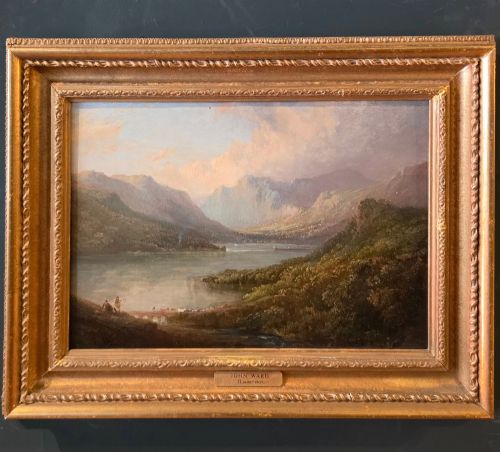
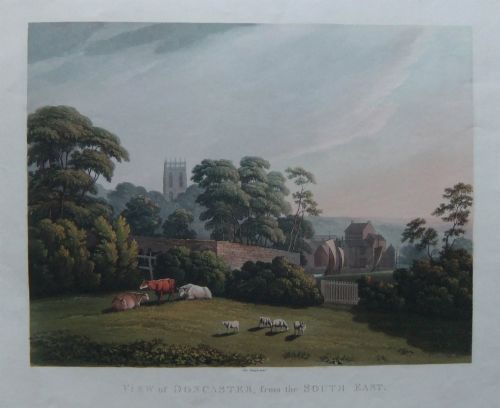
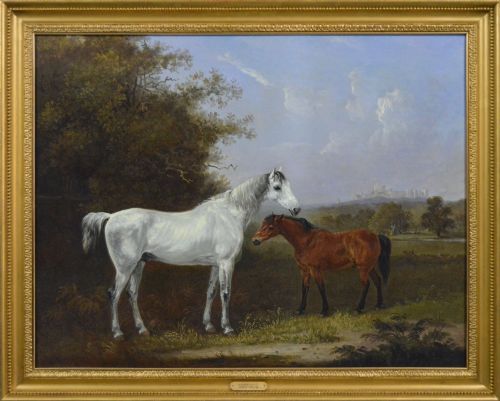
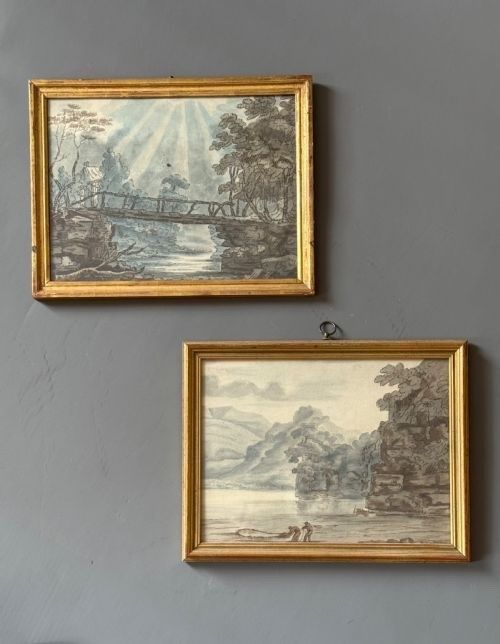
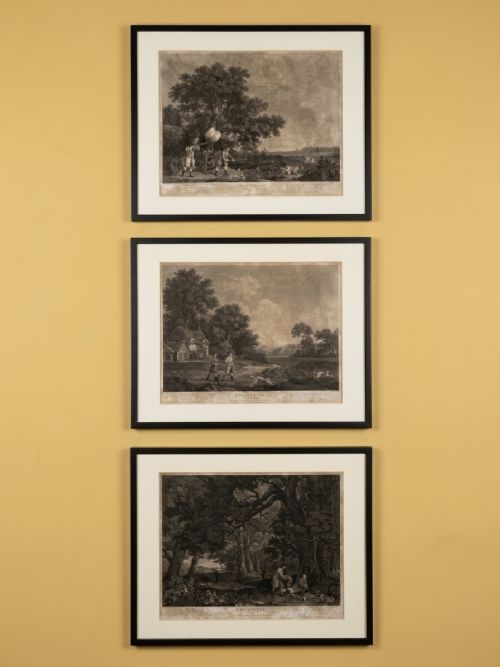
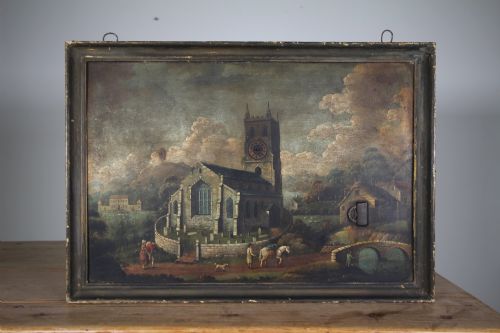
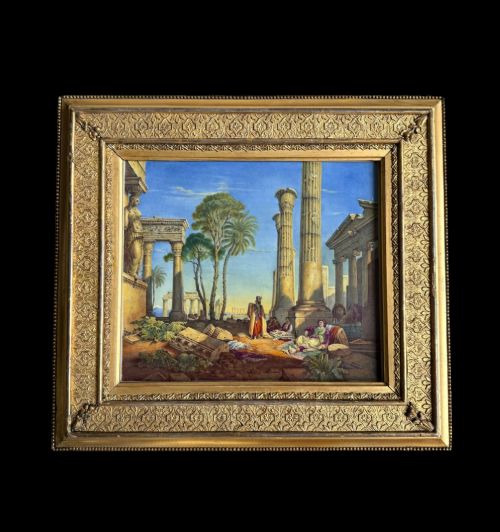
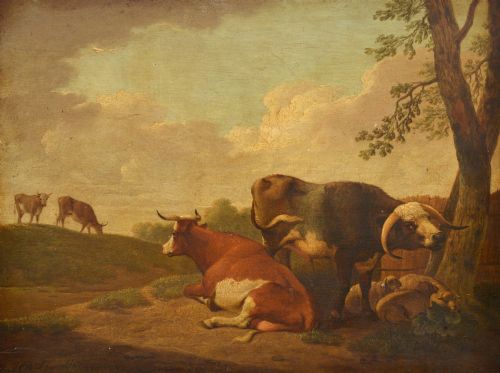
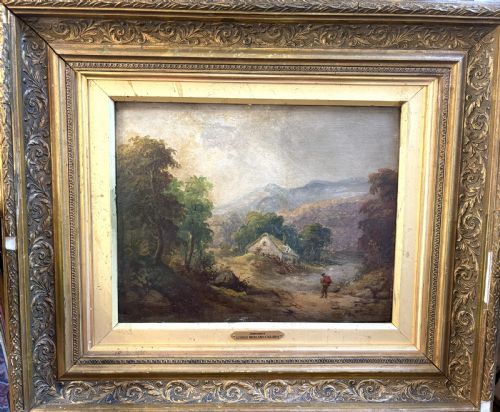
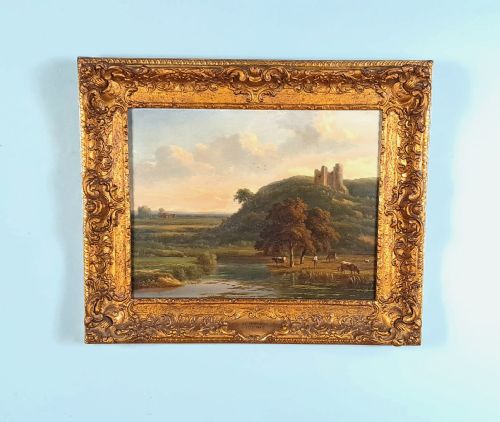
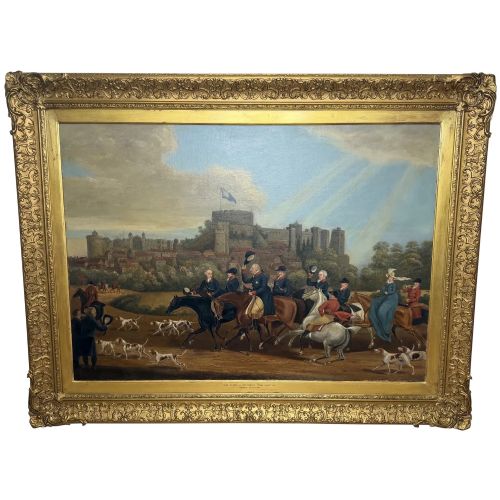
Georgian landscape wall art encompasses oil paintings, watercolours, engravings and needlework pictures depicting rural vistas, rivers and country estates. These works reflect the aesthetic interests of the eighteenth and nineteenth centuries, capturing both British countryside scenes and idealised continental views with classical ruins.
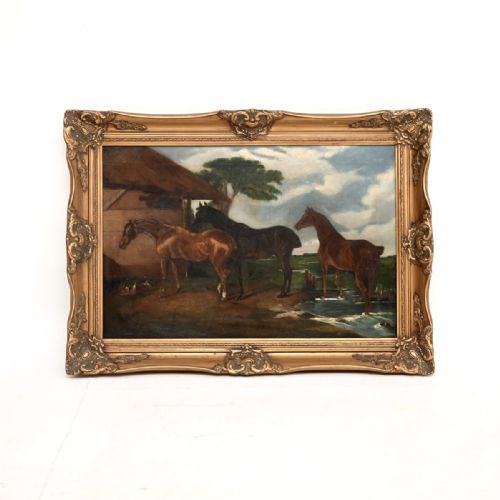
The selections available include works on canvas, wood panel, paper and tin, housed in period frames of wood and giltwood. Buyers frequently encounter nineteenth-century interpretations alongside works created during the Georgian period itself, featuring subjects such as coaching scenes, harbours and agricultural life.
How they were made
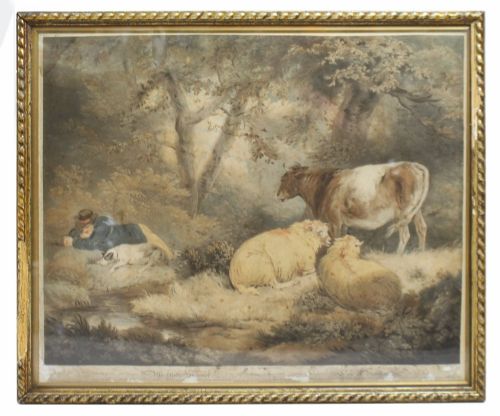
Makers utilised oil paint on canvas, board and wood panel, alongside watercolour and gouache on paper, to build up terrestrial and atmospheric depths. Engravings and mezzotints were printed on paper from plates, sometimes with added hand-colouring.
Support materials range from stretched canvas laid onto board to silkwork and enamel plaques. Frames of carved gilt wood frequently completed the presentation of these artworks.
Georgian Landscape Wall Art Retail Price Guide 2026
Typical asking prices for georgian landscape wall art among the pieces listed under this phrase on Sellingantiques today, from the lower quarter to the upper quarter. They describe what is for sale here now, not the wider market.
Periods represented include the eighteenth century, the Regency era and the Victorian period.
What varies in quality
Handling of light, shadow and atmospheric perspective distinguishes proficient compositions from rigid ones. The precision of brushwork in foliage, water and figures demonstrates the maker's technical capability.
The preservation of the original surface, pigment stability and the integrity of the secondary support materials determine the longevity and visual impact of the piece.
George Morland·William Barnard·Edmund Bristow·William Woollett·George Stubbs·Hendrik Willem Schweickhardt·T C Hofland·John Constable·John Sanderson Wells·Giovanni Paolo Panini·J Laporte·Clifton Tomson·Samuel Henry Alken·John Inigo Richards·John Boydell·W Ward
The Georgian Landscape Wall Art Glossary
- Mezzotint
- A printmaking process where the copper plate is roughened to achieve tonal variation. This technique allows for rich, dark areas and smooth gradations of light.
- Giltwood
- Wood carved and coated with gold leaf or gold paint. It is commonly found on frames enclosing period paintings and mirrors.
- Aubusson tapestry
- A hand-woven textile produced in the French town of Aubusson, often featuring pastoral or architectural scenes.
- Gouache
- An opaque water-based paint composed of pigment, water, and a binding agent such as gum arabic. It dries to a matte finish.
- Pen and ink
- A drawing medium using fluid ink applied with a pen to paper, often serving as a preliminary sketch or finished monochrome work.
Georgian Landscape Wall Art: Frequently Asked Questions
What subjects appear in Georgian landscape wall art?
These works depict English countryside views, coastal shipping scenes, hunting parties and classical architectural ruins. Rural occupations and domestic animals frequently populate the foregrounds.
Artists drew inspiration from both local topography and idealised continental landscapes, recording the changing character of rural life.
Are prints considered wall art?
Engravings, mezzotints and coloured prints formed a major part of period interior decoration alongside unique paintings. Publishers produced these to make scenic views accessible to a wider audience.
Collectors often value these printed works for their crisp detail and historical documentation of vanished landscapes.
How do I care for antique wall art?
Protecting works on paper and canvas from direct sunlight prevents fading of pigments and degradation of the support materials. Maintaining stable indoor humidity levels safeguards wood panels and gilt frames against warping.
Displaying pieces away from direct heat sources ensures the longevity of both paint and paper.