
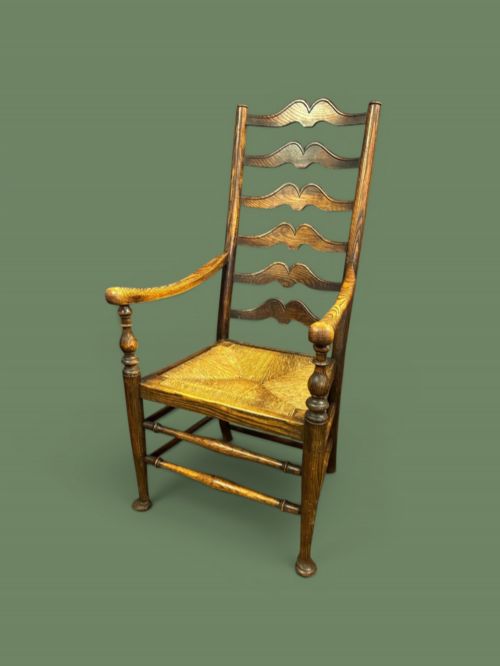


Georgian Ladderback Carver Chair
These georgian ladderback carver chair pieces offer sturdy vernacular seating and timeless upright comfort for any traditional room.
Georgian Ladderback Carver Chair
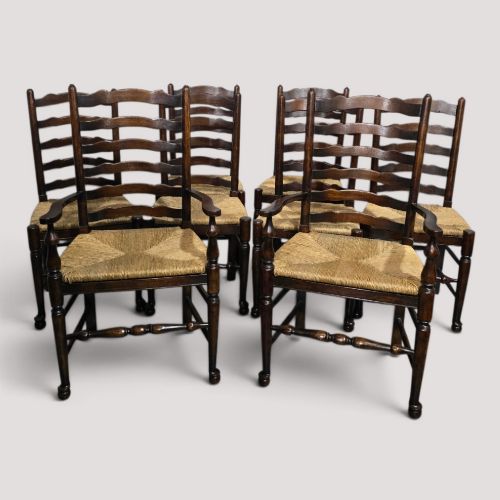
The selections span from authentic eighteenth-century production through nineteenth-century vernacular pieces to later twentieth-century revivals. Many survive as single carvers, while others form part of larger sets intended for grand dining tables.
How they were made
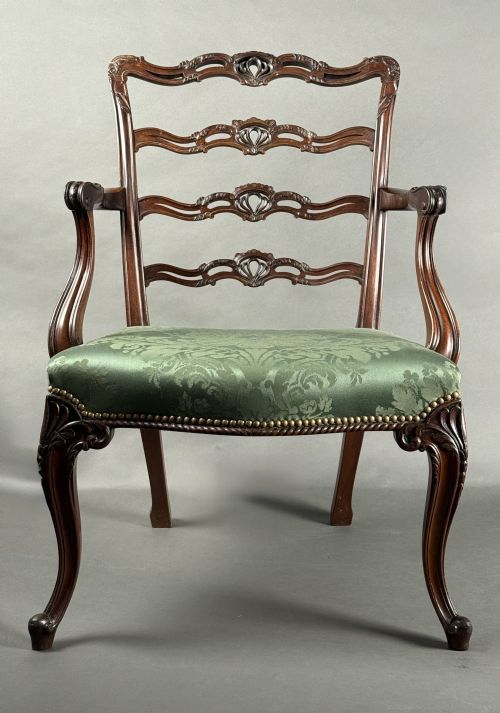
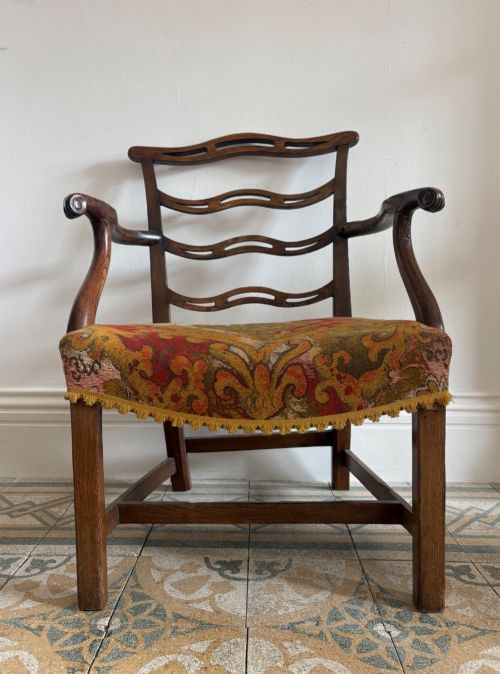
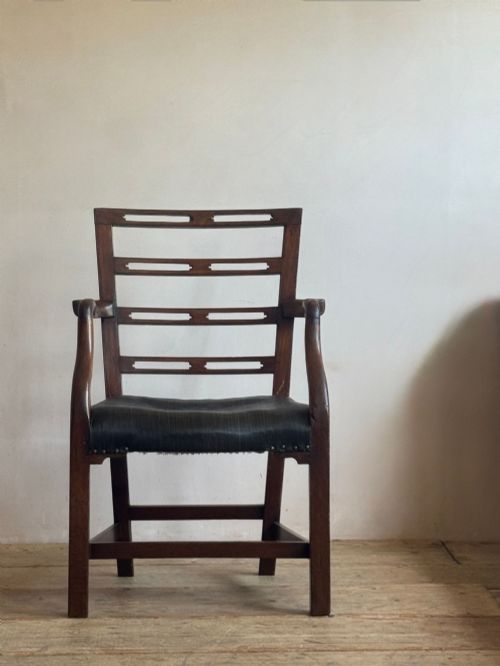
Cabinetmakers and country joiners turned solid timbers such as mahogany, ash, and elm for the uprights and horizontal slats. The frames relied upon traditional mortise and tenon joinery to withstand daily use over centuries.
Seats utilised woven rush, fabric, tapestry, or velvet dropped into or lashed over the wooden rails. Some formal examples incorporated drop-in upholstered pads covered in textiles.
Some ladder rungs are gently graduated in width, creating a subtle optical illusion of greater height.
What varies in quality
The choice of primary wood dictates much of the stature, moving from utilitarian native ash and elm up to finely figured mahogany. Timber selection reflects whether a piece was commissioned for a polite parlour or a regional farmhouse.
Refinement in the shaping of the horizontal ladder rungs and arm terminals separates simpler vernacular items from sophisticated cabinetwork. Subtle piercings and carved crest rails distinguish elite interpretations from everyday workshop output.
The Georgian Ladderback Carver Chair Glossary
- Carver chair
- An armchair, typically designed with arms to match a set of smaller dining chairs. These served the head of the table or acted as occasional desk seating.
- Ladderback
- A chair back featuring multiple horizontal wooden slats resembling the rungs of a ladder. These slats are often curved for ergonomic comfort.
- Rush seat
- A seating surface woven from dried marsh rushes twisted into cords. This traditional technique provides a resilient and breathable platform.
- Vernacular
- Everyday objects made by local tradesmen using regional materials rather than following high London court fashions. These pieces emphasise functional utility and local tradition.
Georgian Ladderback Carver Chair: Frequently Asked Questions
What is a carver chair?
A carver chair is an armchair traditionally placed at the head of a dining table or utilised as an occasional desk seat.
It matches the simpler side chairs in style while offering the added comfort of armrests.
How do I care for rush seats?
Rush seats require a dry environment and gentle cleaning with a soft brush to remove dust.
Avoid excessive moisture, which can cause the natural plant fibres to weaken and snap over time.
Are these chairs comfortable?
The horizontal rungs of the backrest provide robust lumbar support during long periods of sitting.
Woven rush or upholstered pads deliver a firm yet accommodating foundation for daily dining.
How do I date a ladderback chair?
Dating relies upon examining the timber species, hand-tool marks, and the specific contouring of the ladder rungs.
Earlier eighteenth-century examples often display greater wear and simpler regional turning compared to later revivals.