


Georgian Japanned Longcase Clock
A georgian japanned longcase clock brings remarkable Chinoiserie decoration and intricate brass movements into a room.
Georgian Japanned Longcase Clock
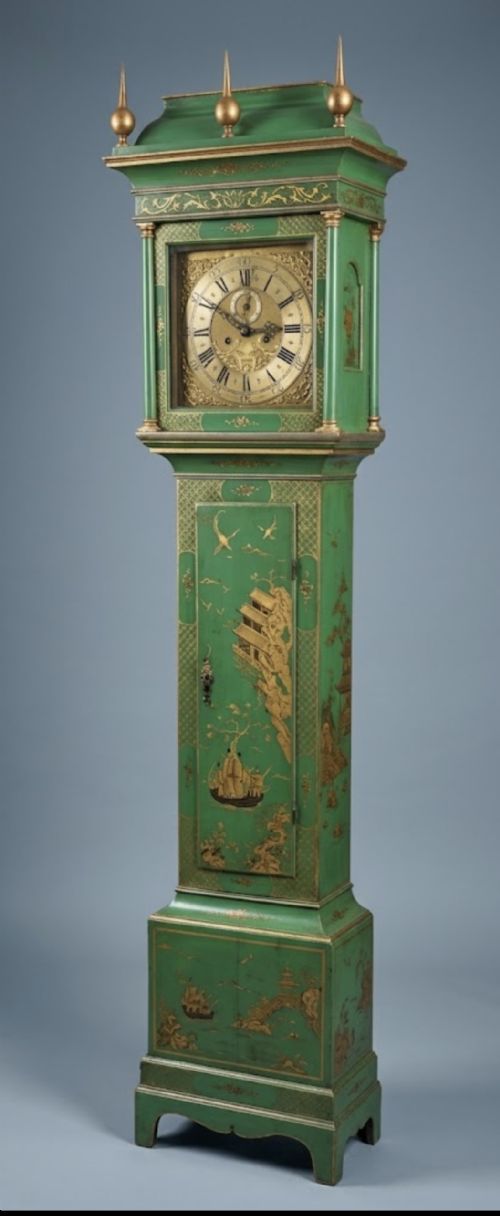
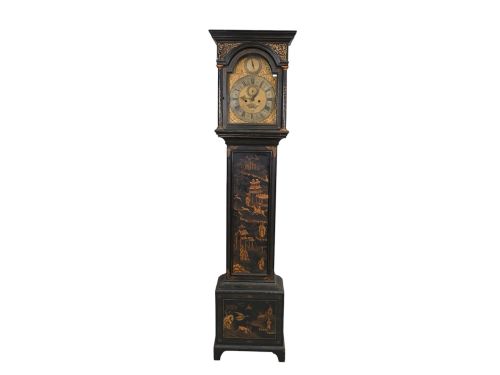
A georgian japanned longcase clock combines tall wooden cases with painted Chinoiserie scenes and brass clockwork movements. These striking timepieces stand tall in hallways and living spaces, serving as both functional clocks and elaborate works of decorative art.
Most examples found here date from the 18th century, spanning periods like Early Georgian and the reigns of George I and George III. Makers housed these movements in tall wooden trunks finished with lacquer and gilt details.
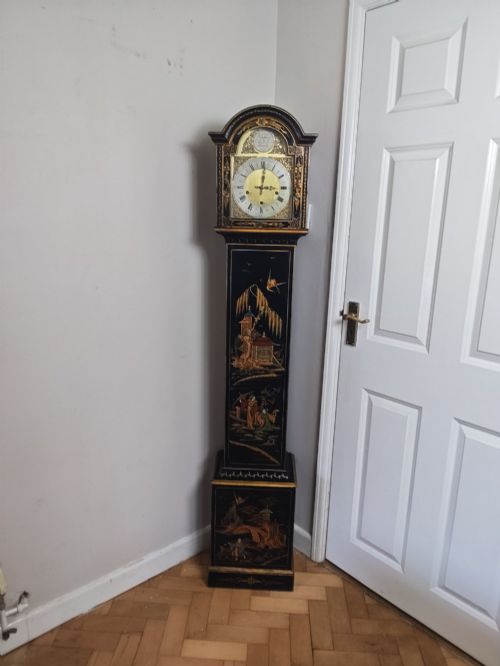
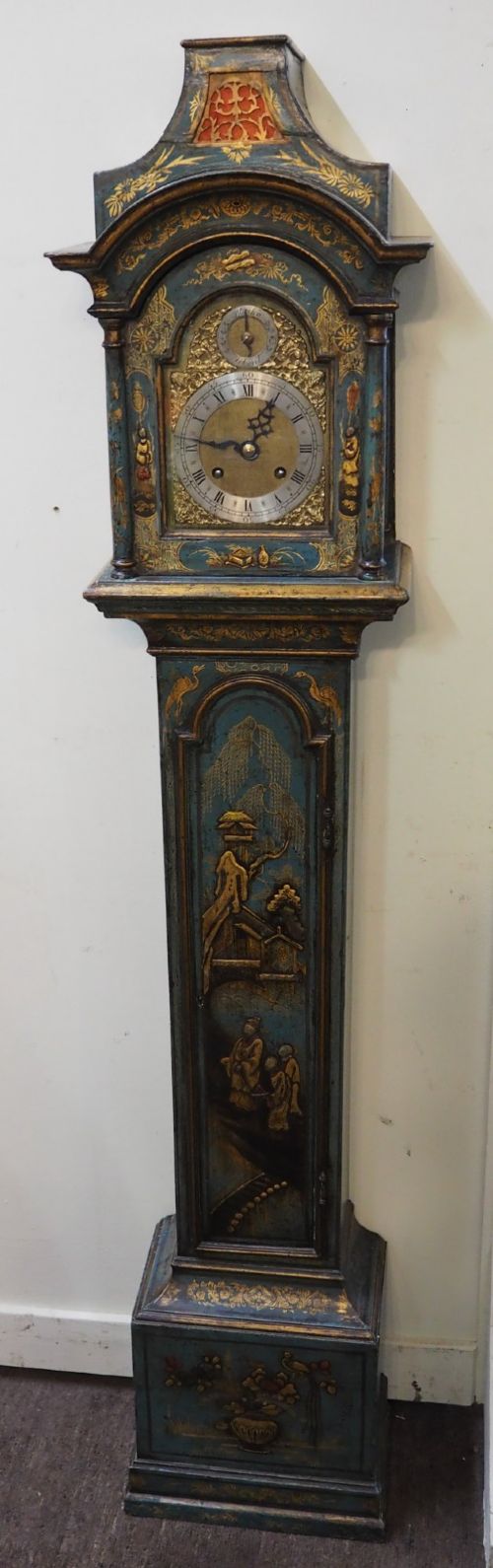
Alongside standard tall grandfather clocks, the selection includes smaller grandmother clocks and musical or automaton variations. The predominant visual style relies heavily on green, blue and gilt lacquer work depicting traditional figures and landscapes.
Materials and Construction
The construction of a georgian japanned longcase clock relies on wooden carcases prepared with layers of lacquer and finished with gold leaf. Artisans applied successive coats of varnish and pigment to create the distinctive glossy surface before painting oriental motifs in gilt.
The internal mechanics depend on heavy brass movements, often paired with glass panels in the hood door to protect the dial. Dial faces typically feature cast brass spandrels, engraved silvered chapter rings and steel hands.
Cases utilise timber substrates coated in specialised lacquer preparations, followed by meticulous hand-gilding. The resulting finish mimics imported Asian screens, a technique highly fashionable among 18th-century British cabinet makers and decorators.
Listings feature periods spanning early Georgian and the 18th century alongside later 20th-century grandmother clocks.
Distinctions in Quality
The sophistication of the painted Chinoiserie decoration dictates much of the visual appeal in a georgian japanned longcase clock. Finer pieces display crisp gilt figures, complex architectural scenes and well-preserved background lacquer with minimal craquelure.
Movement complexity also sets superior examples apart, particularly those featuring musical mechanisms, automata like rocking figures, or eight-day gear trains. Signed dials by recorded makers add significant historical interest compared to unsigned provincial alternatives.
John Fielder of Alton·William Kipling London·Wise of Reading·Thomas Utting of Yarmouth·Gardner of London·Robert Berry
The Georgian Japanned Longcase Clock Glossary
- Japanned
- European wood finishing technique imitating East Asian lacquerware using accumulated layers of varnish and metallic dust. It created glossy, raised surfaces decorated with figures and landscapes.
- Spandrel
- The triangular corner space on a clock dial between the circular chapter ring and the square frame. These brass ornaments were frequently cast in elaborate rococo or baroque patterns.
- Grandmother clock
- A miniature version of the traditional longcase clock, typically slender and shorter in overall height. They became popular in later periods such as the 20th century.
- Automaton
- Mechanical feature integrated into a clock dial that moves independently of the timekeeping, such as a rocking figure or sailing ship. These intricate additions increase the mechanical interest of the piece.
Georgian Japanned Longcase Clock: Frequently Asked Questions
How do I wind a longcase clock?
Most eight-day clocks require a key to pull the weights back up to the top of the trunk once a week. Care must be taken not to overwind the mechanism.
Moving the hands should be done slowly and strictly in a clockwise direction to avoid damaging the delicate internal gear train.
Where should I place my clock?
Position the clock against a sturdy interior wall away from direct sunlight, radiators and damp exterior doors. Temperature fluctuations can affect the wooden case and lacquer finish.
Ensure the floor is level so the pendulum swings evenly and the clock keeps accurate time without stopping.
What is the difference between grandfather and grandmother clocks?
Grandfather clocks are the standard full-size longcase clocks, usually standing over six feet tall and housing heavy eight-day movements. They dominated 18th-century hallways.
Grandmother clocks are significantly smaller and slender variants produced later, designed to fit into more compact rooms with lower ceilings.
How can I identify an 18th-century clock?
Examine the dial construction, brass movement plates and the composition of the wood behind the lacquer. 18th-century examples often feature engraved maker signatures and distinct hand-cut brass gears.
The style of the Chinoiserie decoration and the formulation of the lacquer also offer strong clues to the period of manufacture.