


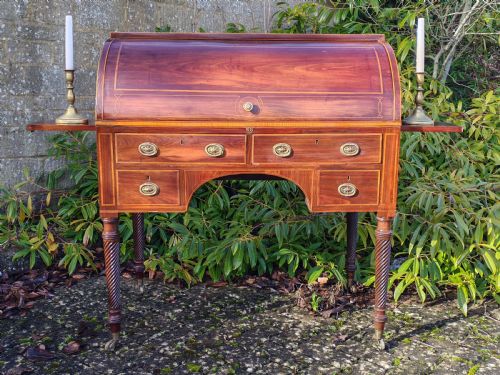
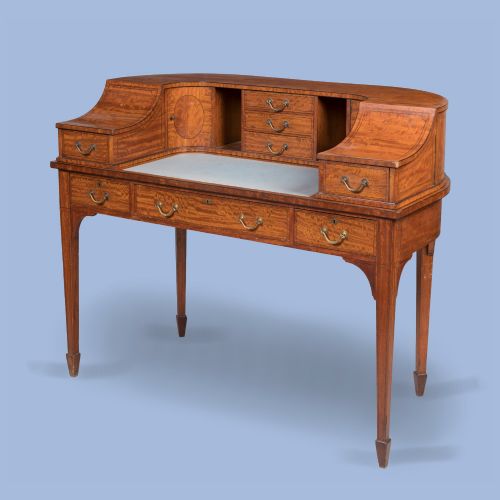
Georgian Inlay Bureau Desk
A georgian inlay bureau desk combines a writing slope with clever compartments, offering a tactile writing surface wrapped in decorative timber.
Georgian Inlay Bureau Desk
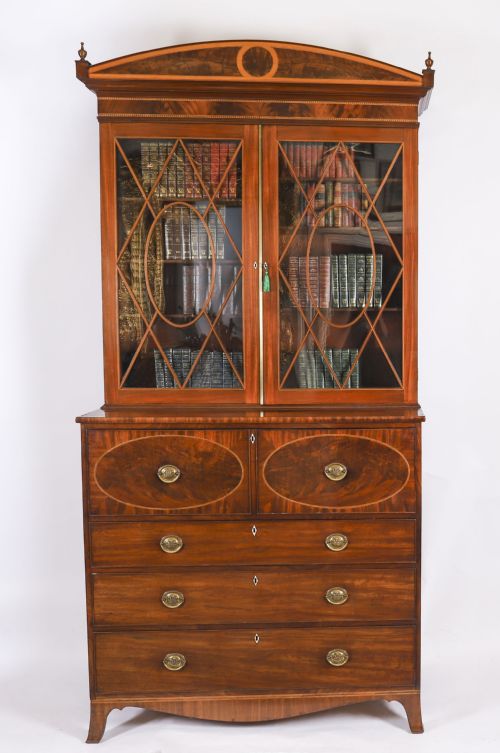
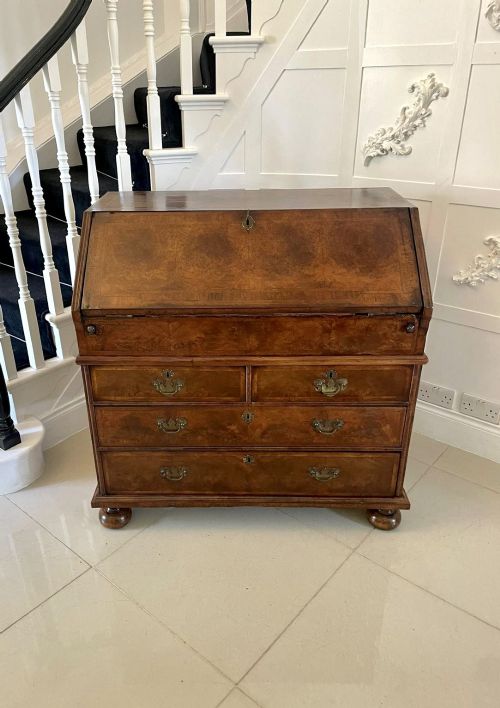
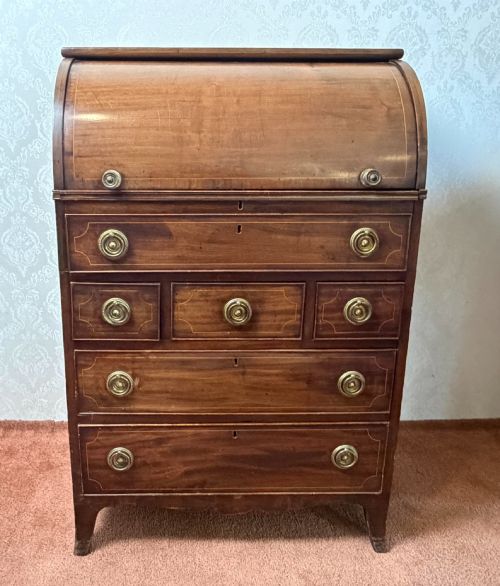
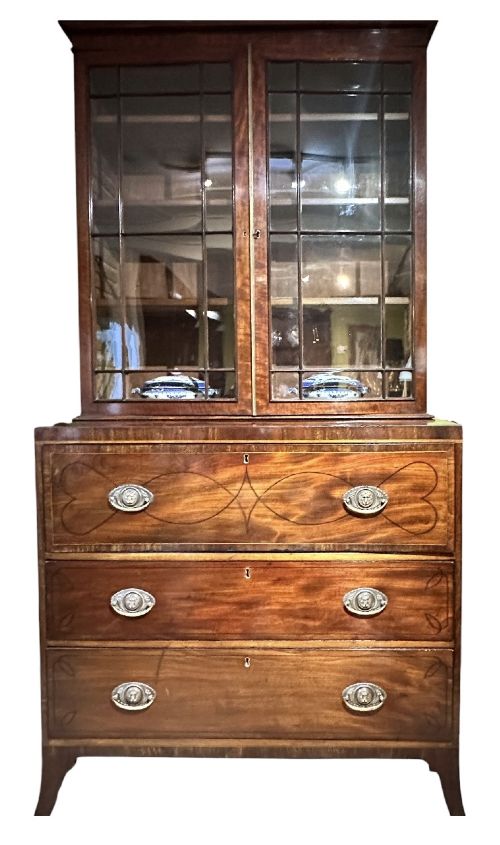
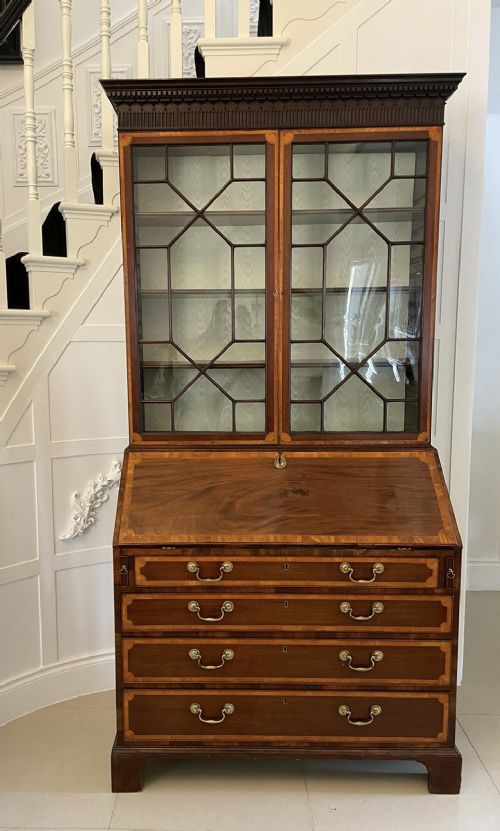
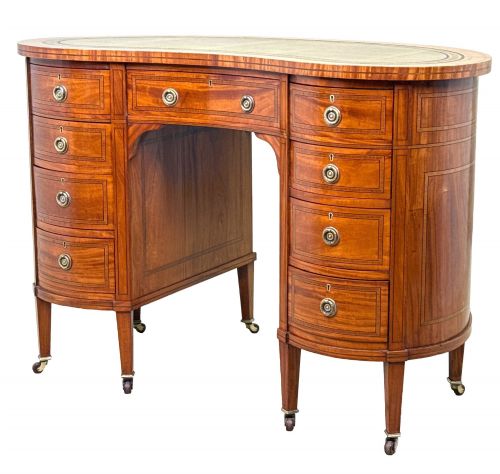
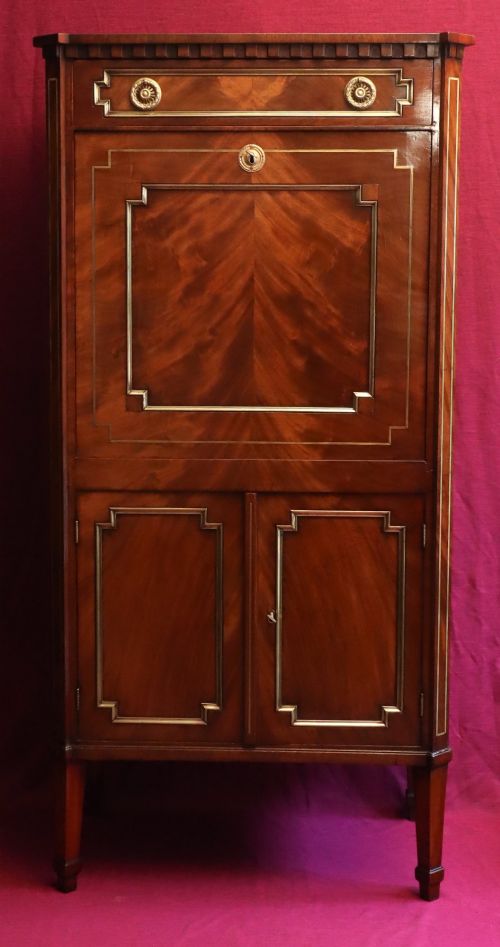
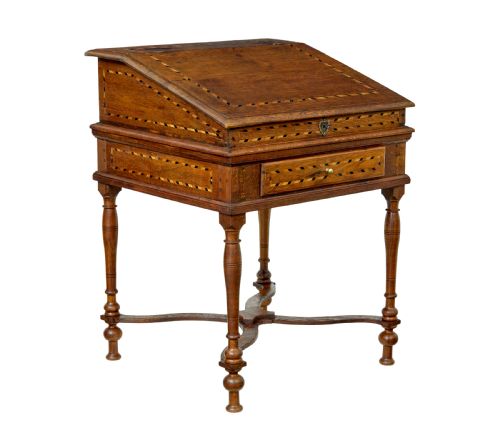
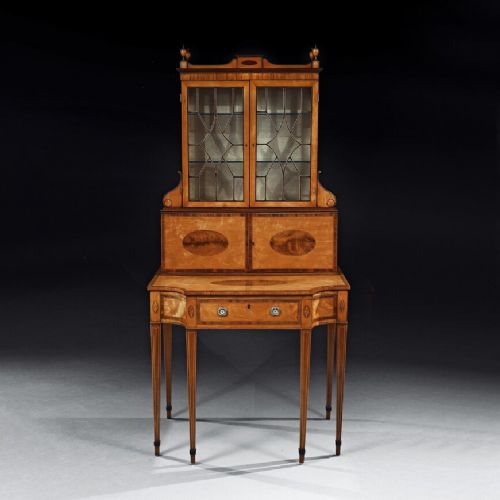
A georgian inlay bureau desk is primarily a fall-front writing cabinet or cylinder desk designed for domestic correspondence and record keeping. These pieces range from compact floor-standing writing slopes to towering bureau bookcases housing glazed shelving above.
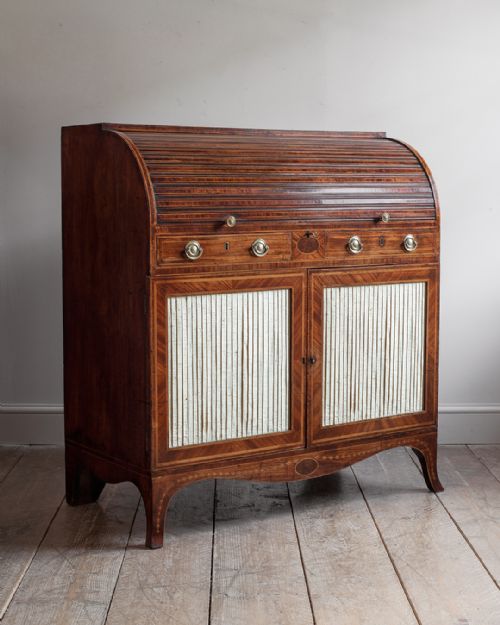
The version most commonly met on this page is the mahogany bureau or secretaire bookcase originating from the eighteenth and nineteenth centuries. Alongside these stand smaller satinwood cylinder desks and tambour writing cabinets decorated with contrasting timber banding.
How they were made
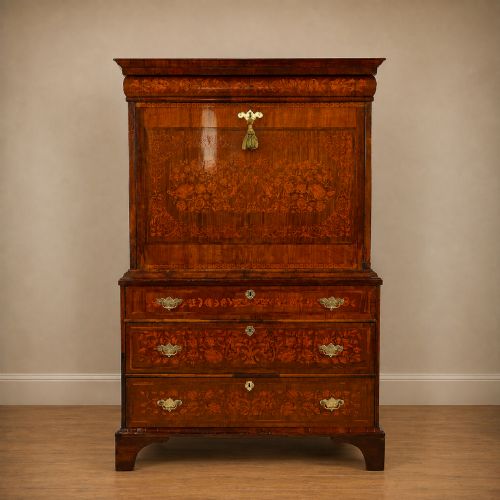
Cabinet makers constructed carcass frames from solid native hardwoods like mahogany, walnut, and oak, applying finely sliced veneers to flat surfaces. Flame mahogany and burr walnut provided rich grain patterns across drawer fronts and fall-front flaps.
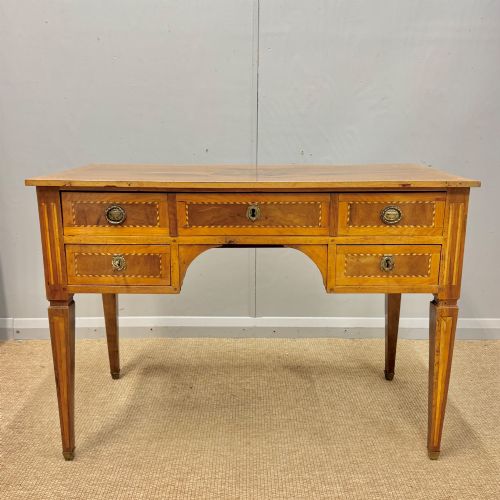
Decorative surface patterns relied on intricate inlay and marquetry using satinwood, fruitwood, and partridgewood, often arranged in geometric banding or floral motifs. Brass handles, key escutcheons, and occasional glass doors completed the construction.
Many writing compartments include hidden release springs that pop open secret drawers when pressed.
What varies in quality
Quality rests in the depth of timber selection and the precision of the cabinet work, particularly around internal pigeonholes and secret drawers. Pieces displaying book-matched flame veneers or meticulous satinwood banding demonstrate superior workshop input.
Structural integrity of the fall-front hinge mechanism and the smoothness of interior slide operations distinguish finer examples. The crispness of floral marquetry and the retention of original brass hardware elevate individual pieces.
The Georgian Inlay Bureau Desk Glossary
- Bureau
- A writing desk featuring a sloping fall-front flap that opens to reveal small drawers and pigeonholes.
- Tambour
- A sliding shutter formed of narrow strips of wood glued to a canvas backing, used to enclose desk surfaces.
- Secretaire
- A cabinet or bookcase containing a fitted writing drawer or a drop-front desk compartment.
- Marquetry
- Decorative woodwork where pieces of various coloured veneers are fitted together to form pictorial designs.
- Escritoire
- A writing cabinet with a fall-front writing surface, originating in seventeenth-century France.
Georgian Inlay Bureau Desk: Frequently Asked Questions
What is a bureau bookcase?
A bureau bookcase combines a sloping desk compartment at the base with a shelved cabinet enclosed by doors above.
These taller items served as multi-purpose furniture for storing books and managing correspondence in principal rooms.
How do cylinder desks work?
Cylinder desks feature a rounded rolling wooden shutter that conceals the writing surface and internal pigeonholes when closed.
Pulling the writing slide forward automatically retracts the cylinder mechanism upward into the desk body.
What is satinwood inlay?
Satinwood inlay involves cutting pale, lustrous yellow timber into contrasting dark mahogany or walnut surfaces to create decorative borders.
Cabinet makers utilised this technique extensively during the late eighteenth century to lighten and frame drawer fronts.
Where were these desks placed?
These pieces sat primarily in parlours, libraries, and private bedrooms for household administration and letter writing.
Freestanding models allowed placement away from walls, displaying finished timber work on all sides.