

Georgian Inlaid Storage Chest
A georgian inlaid storage chest brings walnut, mahogany, and satinwood together into a practical container shaped by eighteenth and nineteenth century joinery.
Georgian Inlaid Storage Chest
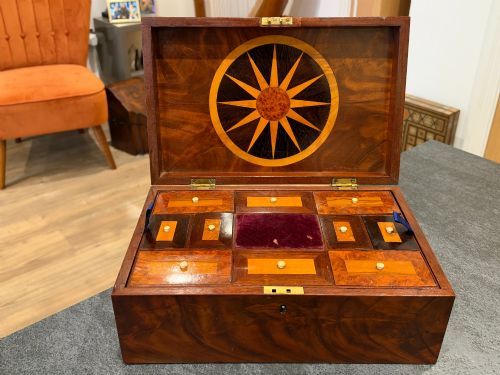
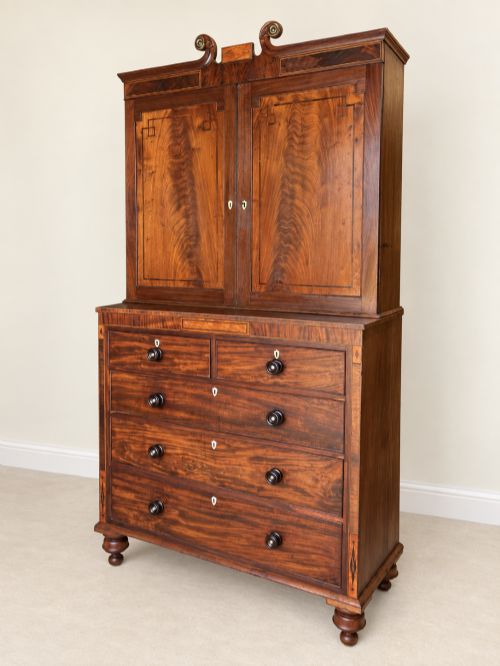
A georgian inlaid storage chest encompasses diverse forms ranging from large chests of drawers and tallboys to linen presses, cabinets, and smaller tea caddies or sewing boxes. The pieces originate predominantly from the Georgian, George III, Regency, and nineteenth-century periods, with occasional revival items appearing from later decades.
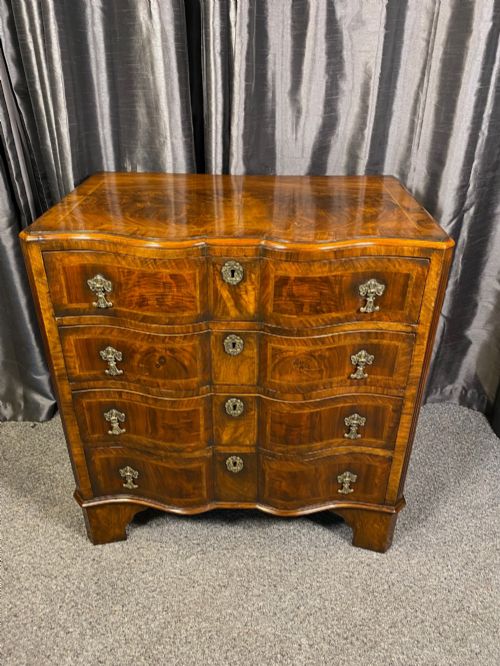
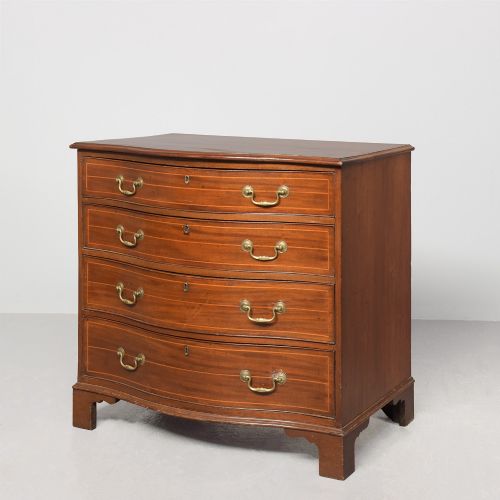
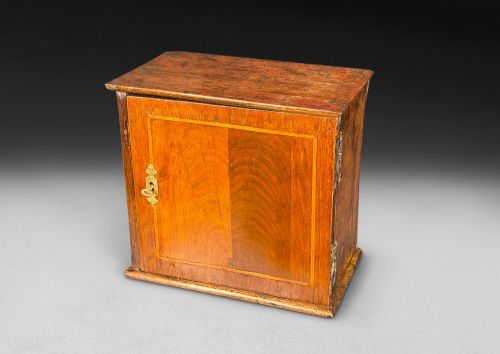
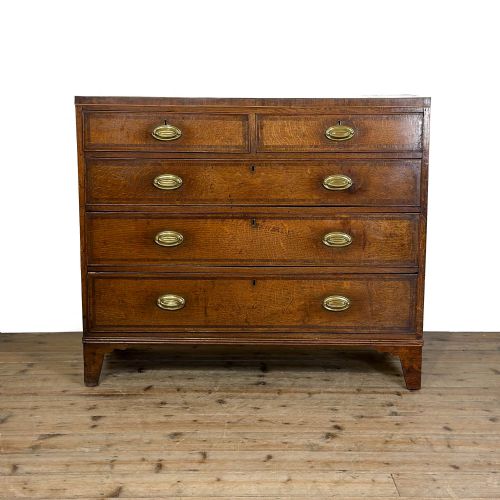
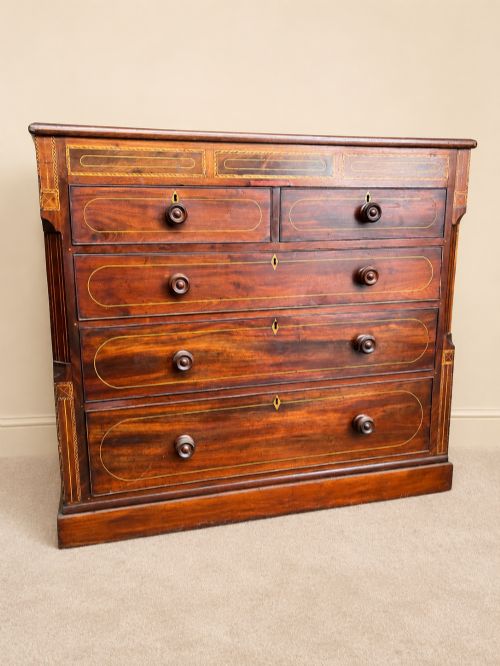
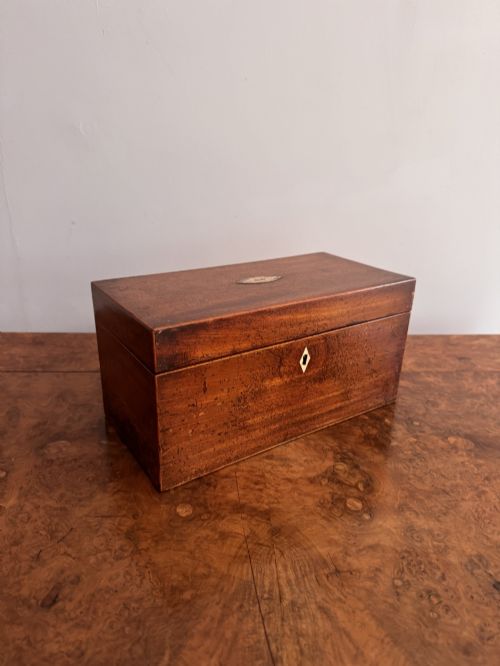
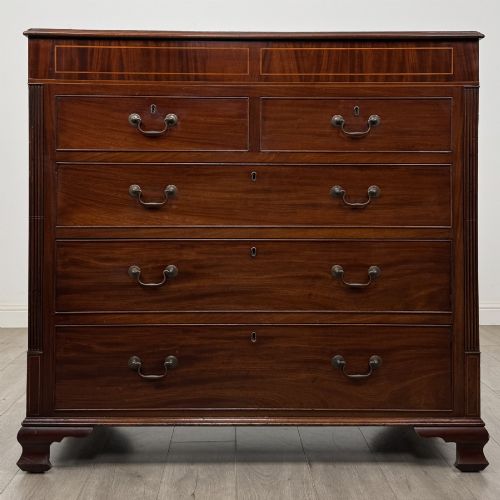
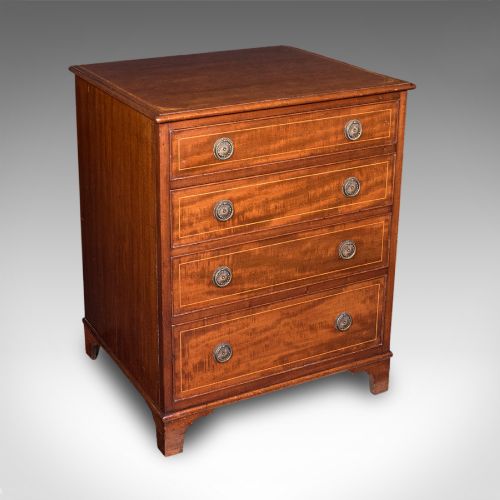
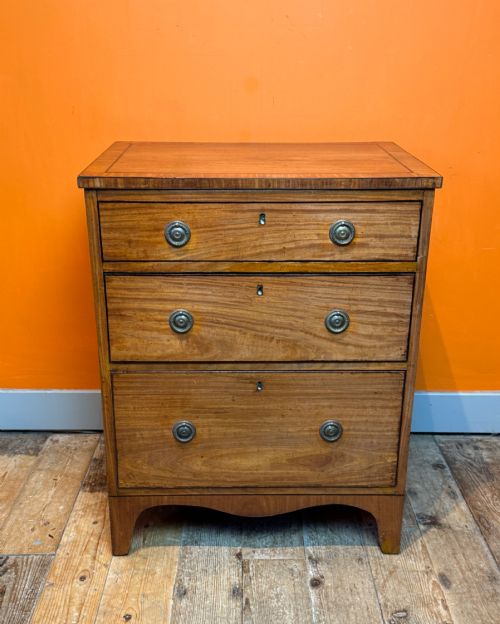
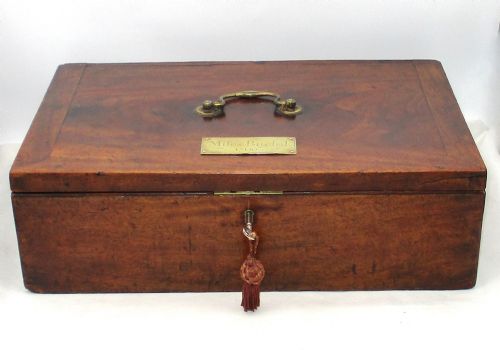
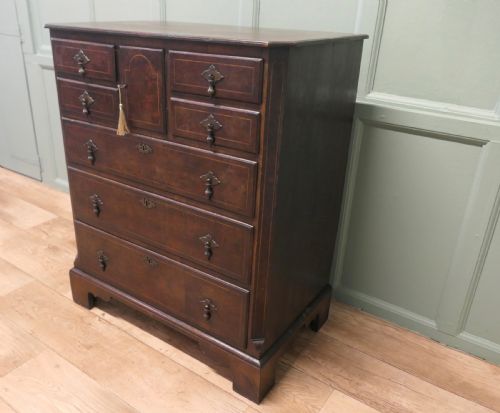
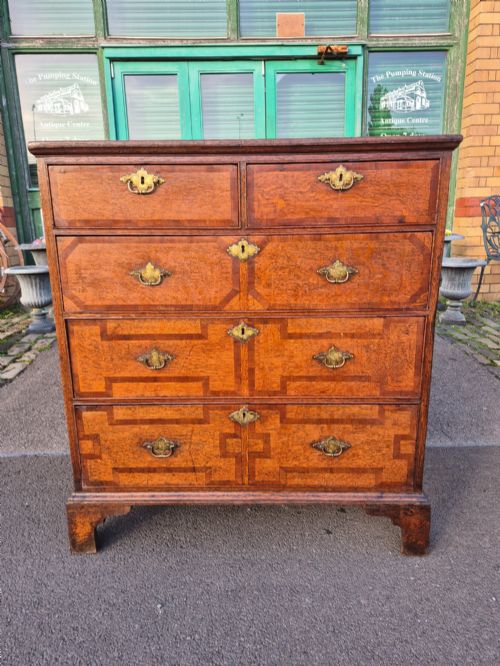
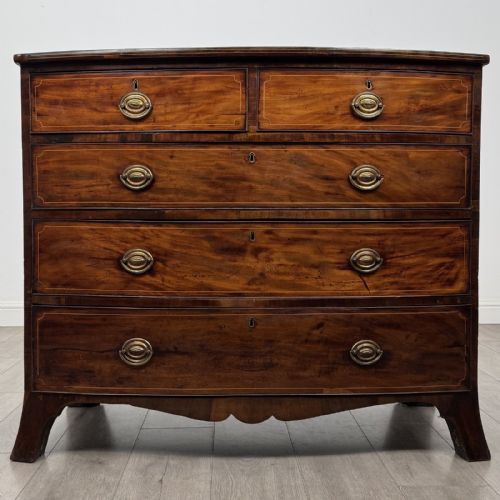
The most common examples on this page are chests of drawers constructed in mahogany, walnut, or oak, often finished with satinwood stringing or marquetry panels. Alongside standard drawer configurations, buyers frequently encounter specialised storage such as document boxes, spice cabinets, and tea caddies.
Materials and technique
Cabinetmakers utilised solid timbers and veneers of mahogany, walnut, oak, and satinwood, frequently embellishing surfaces with contrasting boxwood or ebony inlays. Brass hardware, including lion mask handles and drop handles, alongside bone escutcheons, completed the construction.
Joinery methods relied on hand-cut dovetails for drawer construction and pegged tenons for larger carcases. Marquetry, stringing, and feather-banded borders required precise hand-cutting to set contrasting woods flush into the primary timber.
Georgian Inlaid Storage Chest Retail Price Guide 2026
Typical asking prices for georgian inlaid storage chest among the pieces listed under this phrase on Sellingantiques today, from the lower quarter to the upper quarter. They describe what is for sale here now, not the wider market.
Listings feature eighteenth and nineteenth-century periods, utilising mahogany, walnut, oak, satinwood, and brass.
Judging quality
Quality rests on the selection of timber figures, such as flame mahogany or burr yew-wood, and the precision of the contrasting inlay work. Crisp execution in stringing and marquetry separates finer pieces from simpler workshop productions.
Structural integrity and the retention of original brass handles, bracket feet, and working locks distinguish better examples. The finesse of the secondary timbers and the neatness of internal dovetailing reveal the standard of the original maker.
Druce & Co
The Georgian Inlaid Storage Chest Glossary
- Serpentine
- A front shape that curves inward centrally and bows outward at the sides. This undulating profile requires skilled carpentry to execute on drawer fronts.
- Marquetry
- Decorative patterns formed by fitting veneer pieces onto a structured surface. Craftsmen use various woods and sometimes bone to create pictorial or geometric designs.
- Tallboy
- A case piece consisting of one tall chest stacked upon a larger lower chest. This form maximises vertical storage space in domestic interiors.
- Bracket foot
- A furniture foot shaped like a bracket, often mitred at the corner. It supports case pieces like chests of drawers and cabinets during the Georgian period.
- Tea caddy
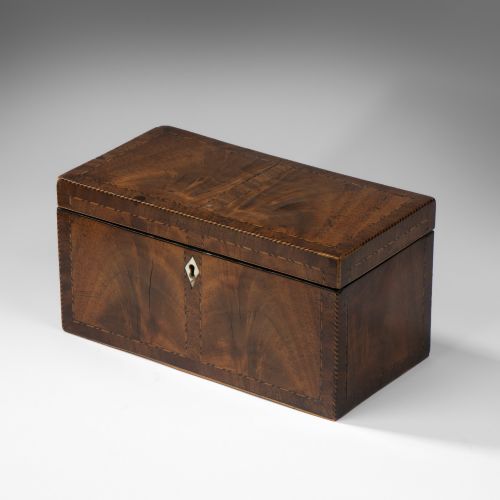
- A small lidded box designed for storing loose tea leaves. These containers often feature internal compartments and lockable lids.
Georgian Inlaid Storage Chest: Frequently Asked Questions
What is a georgian inlaid storage chest used for?
These pieces served primary domestic functions for organising garments, linens, documents, and valuable commodities like tea. Larger forms anchored bedroom and parlour storage.
Today, they function as practical storage furniture in modern interiors, utilising deep drawers and compartmentalized inserts to house contemporary items while retaining period character.
How do I identify a Georgian piece?
Identification relies on observing construction characteristics, timber choices like mahogany and walnut, and specific regional design traits such as bracket feet and stringing. Secondary woods and hand-cut dovetailing provide further chronological clues.
Comparing the proportions and decorative vocabulary against documented examples from the eighteenth century helps confirm the period of manufacture.
Where were these storage chests placed?
Historically, large chests of drawers and linen presses stood in bedrooms, dressing rooms, and galleried landings. Smaller containers like tea caddies rested on side tables or tea tables in reception rooms.
In modern rooms, these versatile items fit easily into hallways, living spaces, and bedrooms as focal storage points.
Are tea caddies considered storage chests?
Tea caddies operate as miniature storage chests designed specifically to protect and preserve expensive tea leaves. They utilise similar cabinetmaking techniques, including fine veneers and inlay.
Many feature internal compartments and lockable lids mirroring the security and construction methods of full-sized case furniture.