




Four Drawer Serpentine Chest
A four drawer serpentine chest brings undulating elegance and generous storage to a room, combining curved drawer fronts with classical proportions.

Four Drawer Serpentine Chest
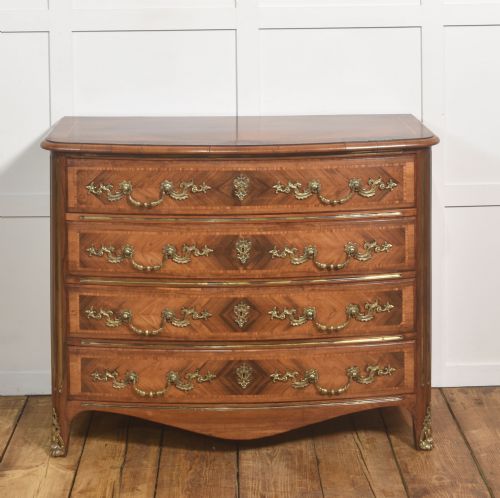
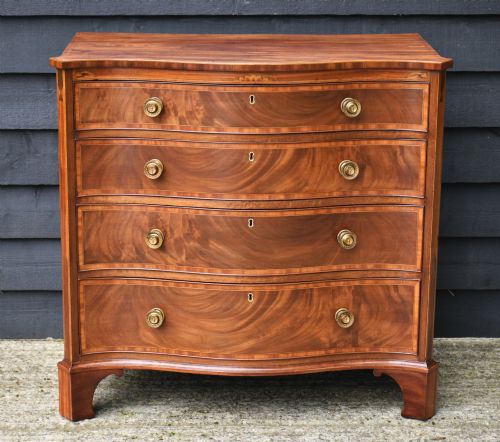
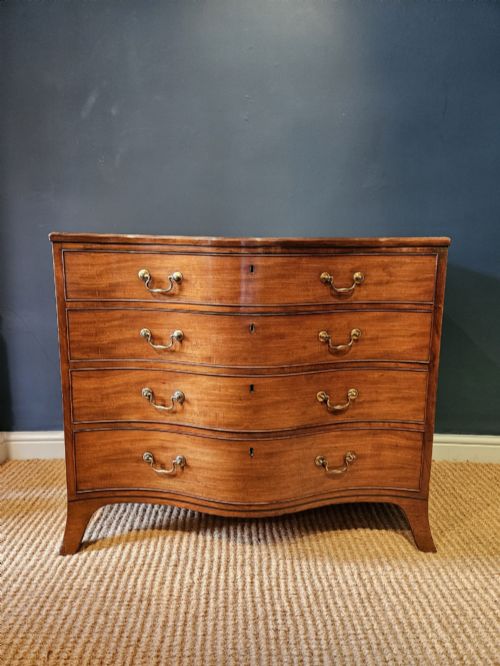
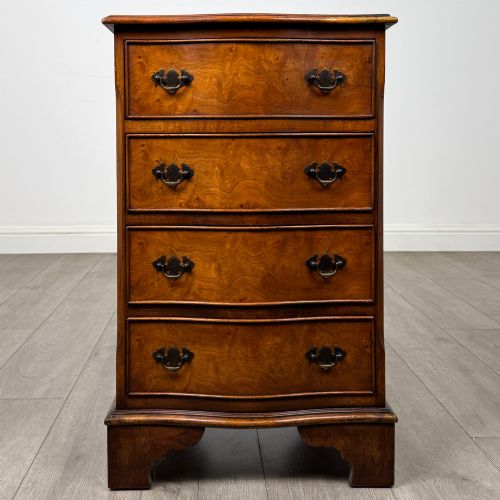
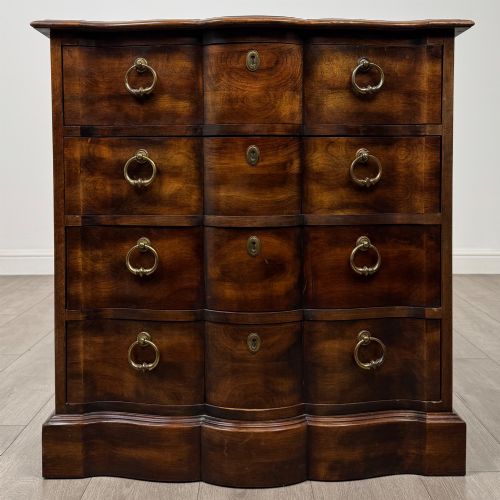
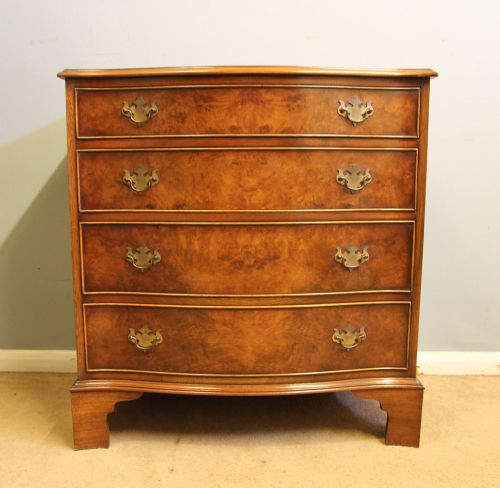
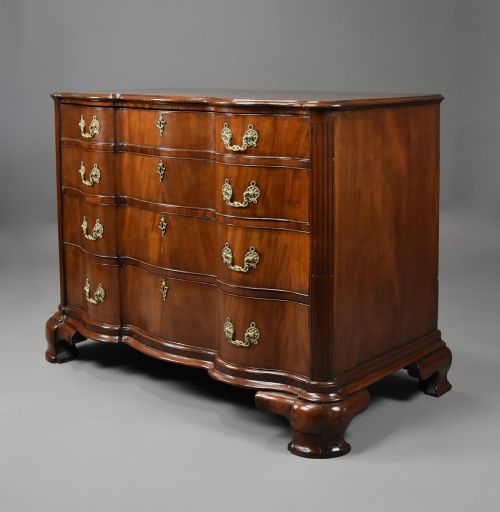
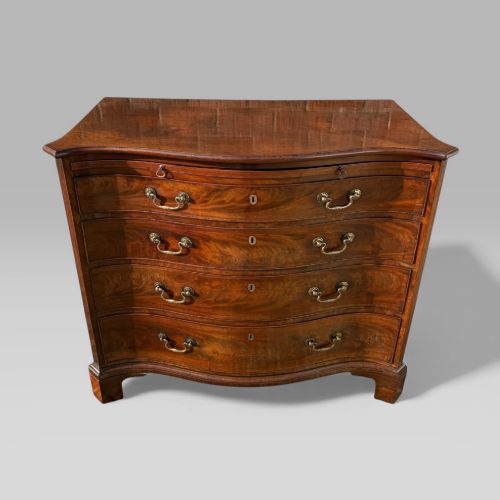
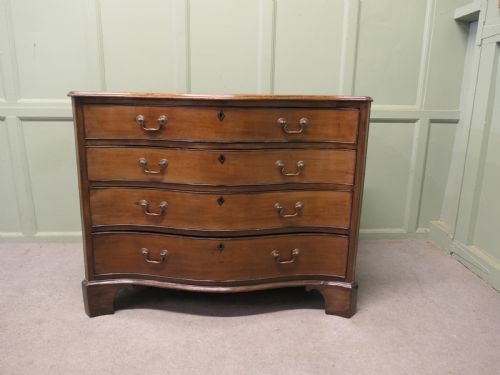
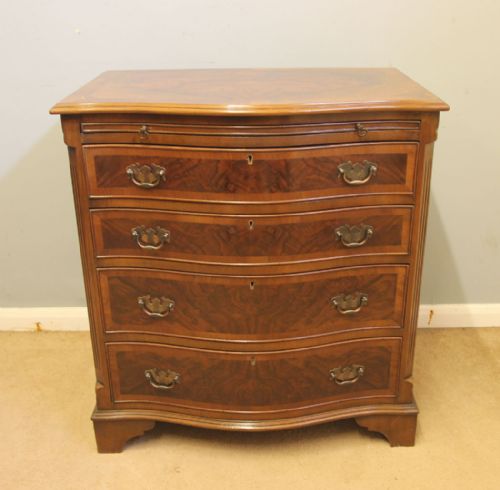
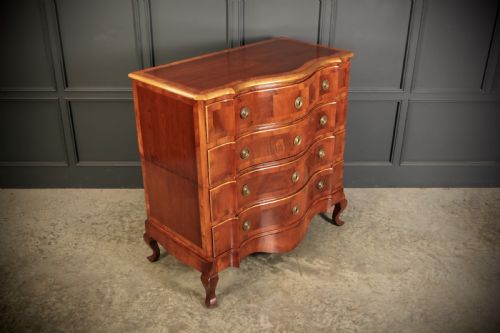
A four drawer serpentine chest presents a distinctive concave centre flanked by convex outer curves, creating a fluid movement across the front elevation. Buyers seeking this form encounter significant examples from the Georgian period alongside later revivals from the Edwardian era and the twentieth century.
The materials span rich figured mahogany and warm burr walnut, occasionally accented with boxwood inlay or painted finishes. Continental interpretations include Dutch rococo commodes and Swedish pieces alongside English cabinet-making traditions.
What Varies in Quality
The distinction between ordinary and exceptional pieces lies in the choice and matching of wood veneers across the curving drawer fronts. Grain patterns that flow harmoniously from drawer to drawer indicate superior planning and craftsmanship by the maker.
Proportion and the crispness of the curved mouldings also dictate the standing of a piece. Finer examples retain their original brass hardware, well-cut bracket feet, and secondary woods that show minimal disturbance over centuries of use.
Listings feature 18th-century Georgian pieces alongside Edwardian revivals, 19th-century continental commodes, and 1930s burr walnut editions.
The Four Drawer Serpentine Chest Glossary
- Serpentine
- A front elevation characterised by a convex central section flanked by two concave curves, or vice versa. This flowing contour requires precise carpentry.
- Commode
- A European term for a low chest of drawers or cabinet, frequently applied to continental serpentine pieces. These often stand on shorter cabriole or bracket feet.
- Figure
- The natural pattern or design in wood grain, particularly prominent in mahogany, walnut, and burr timbers. Highly figured surfaces are prized for their visual depth.
- Bracket foot
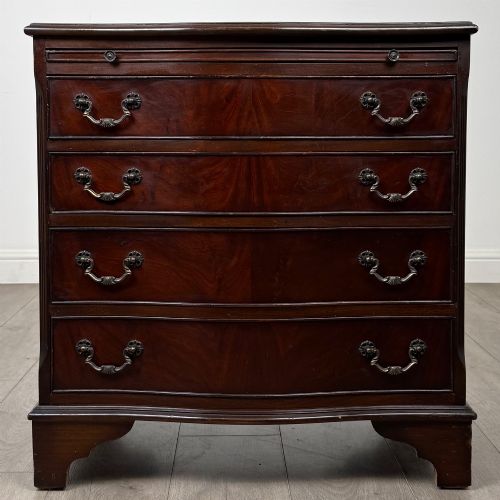
- A structural support foot shaped like a bracket, commonly found beneath the corners of Georgian case furniture. They can be ogee, plain mitred, or shaped.
- Slide
- A pull-out wooden board integrated above the top drawer, historically used as a writing surface. These are encountered on select 18th-century examples.
Four Drawer Serpentine Chest: Frequently Asked Questions
How do I date a serpentine chest?
Dating relies on examining the timber species, secondary woods inside the drawers, and construction techniques like dovetailing. Georgian pieces display hand-cut joints and specific bracket feet, whereas Edwardian and later revivals show more uniform machining.
Hardware styles and wood finishes also offer clues. Original brasses and native oak linings point to the 18th century, while later versions utilise different interior timbers and standardised fittings.
What is the difference between a chest and a commode?
A chest of drawers typically refers to traditional English case furniture with stacked horizontal drawers. A commode often denotes continental European pieces with similar serpentine shapes and lower profiles.
Continental commodes frequently incorporate marquetry or more pronounced bombe profiles. Both terms describe storage furniture built with curving fronts.
Where should I place a serpentine chest?
These chests suit bedrooms, living rooms, and hallways where their curved silhouettes soften rigid architectural lines. Placing them against a flat wall allows the undulating front to catch ambient light.
Because of their depth and protruding curves, they require adequate clearance in narrow passage spaces. They function well as standalone statement pieces beneath mirrors or artwork.
Are these chests suitable for daily use?
Solid construction and sturdy timber drawers make these pieces practical for storing clothing or linens. Period drawers slide smoothly when maintained with traditional wax lubrication.
Care should be taken to protect polished veneer surfaces from moisture and direct sunlight. Regular dusting and occasional wax polish preserve the finish over years of domestic life.