

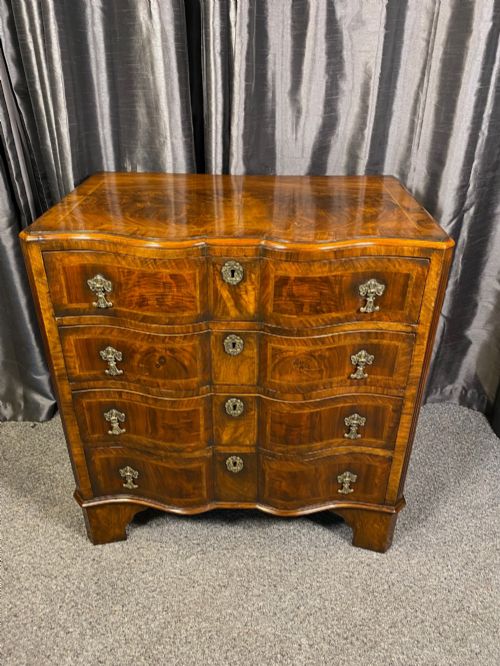
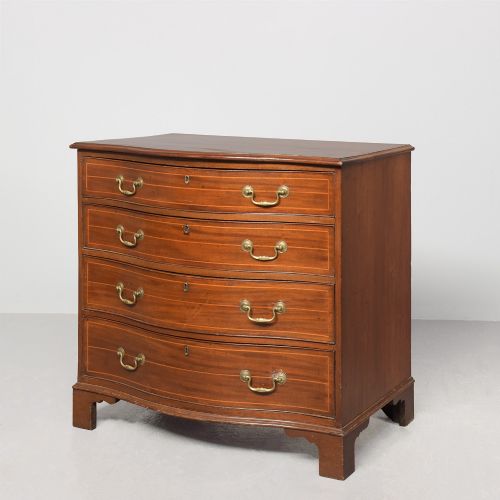
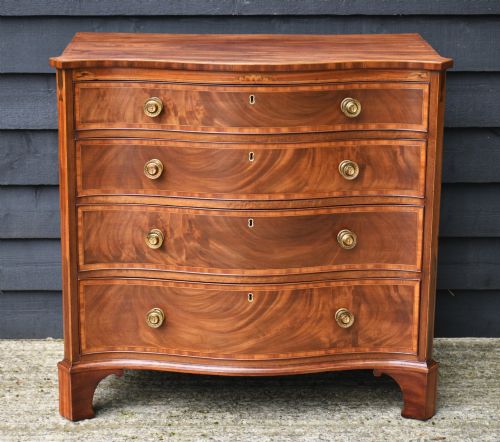
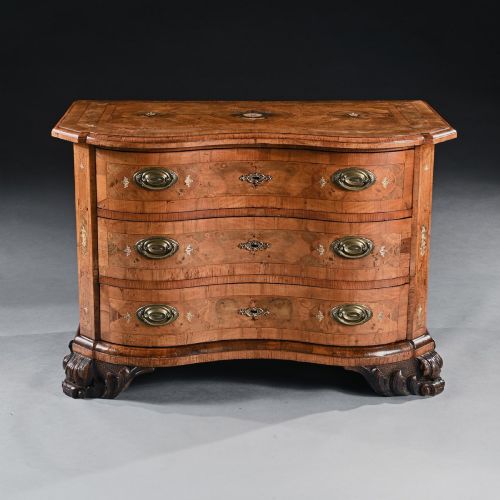




Inlaid Serpentine Chest Drawers
An inlaid serpentine chest of drawers brings undulating curves and contrasting wood details into a room, offering both sculptural presence and practical storage.
Inlaid Serpentine Chest Drawers
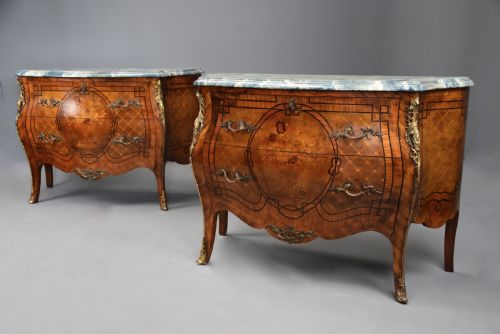
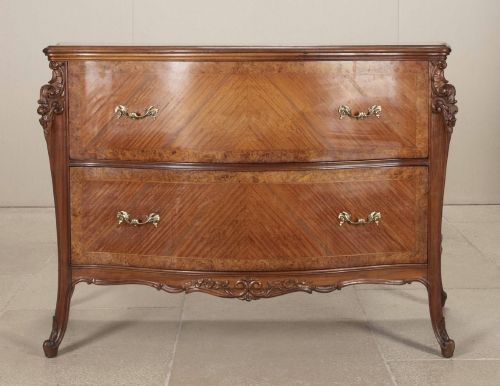
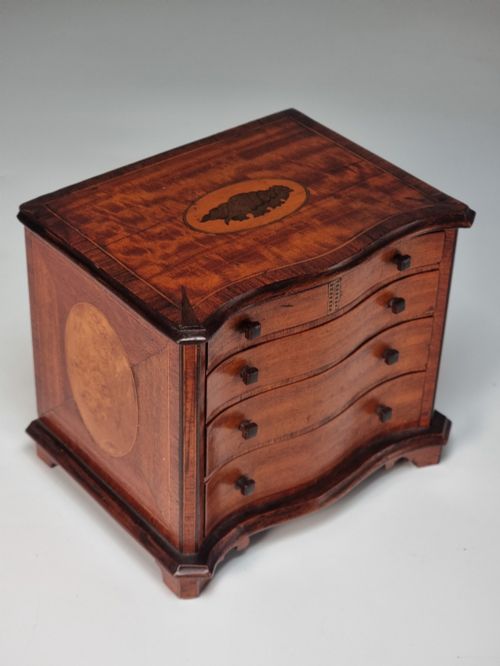
These pieces encompass chests of drawers and commodes built with sweeping, undulating fronts, alongside smaller bedside tables and miniature furniture. They emerge principally from the eighteenth and nineteenth centuries, including Georgian and revival periods.
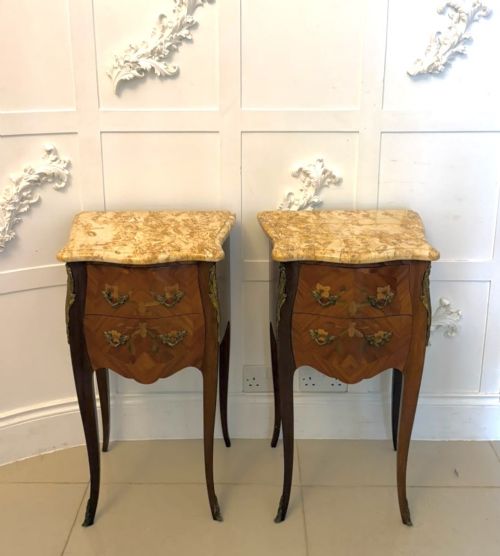
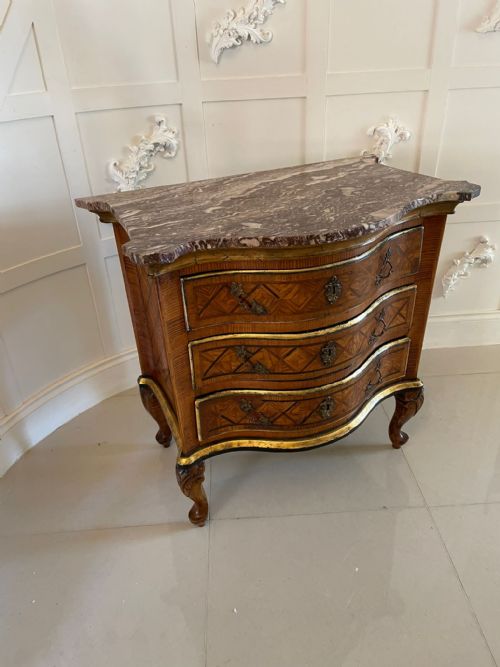
Makers shaped these items in mahogany, walnut, and satinwood, occasionally mounting them with marble tops. The range spans full-size bedroom chests to decorative French bombe commodes and compact bedside cabinets.
Materials and Construction
Cabinetmakers constructed carcass frames from timbers such as mahogany, walnut, kingwood, and rosewood. These primary woods provided a stable foundation for complex curved fronts and shaped drawers.
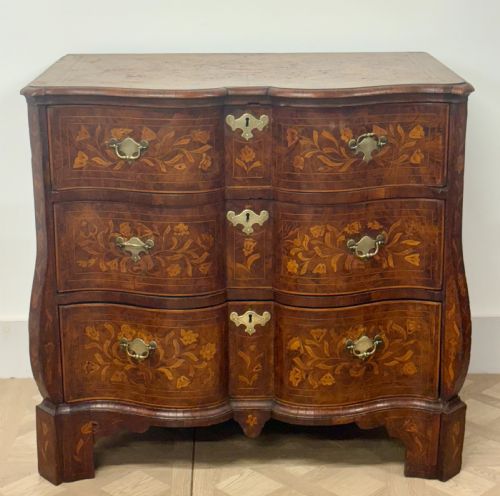
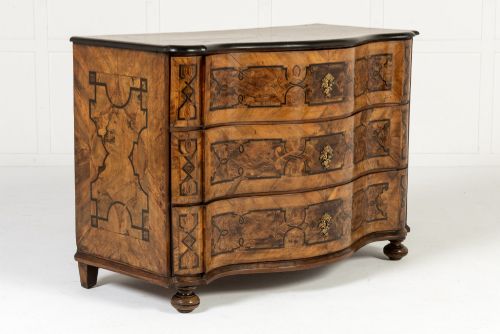
Surfaces received decorative treatment through boxwood, fruitwood, satinwood, and harewood inlay, often incorporating pewter and ivory marquetry or geometric parquetry patterns. Many continental and revival pieces incorporated heavy marble tops above the wooden structure.
Inlaid Serpentine Chest Drawers Retail Price Guide 2026
Typical asking prices for inlaid serpentine chest drawers among the pieces listed under this phrase on Sellingantiques today, from the lower quarter to the upper quarter. They describe what is for sale here now, not the wider market.
Listings span the eighteenth and nineteenth centuries, featuring walnut, mahogany, and satinwood alongside marble tops.
Design and Execution
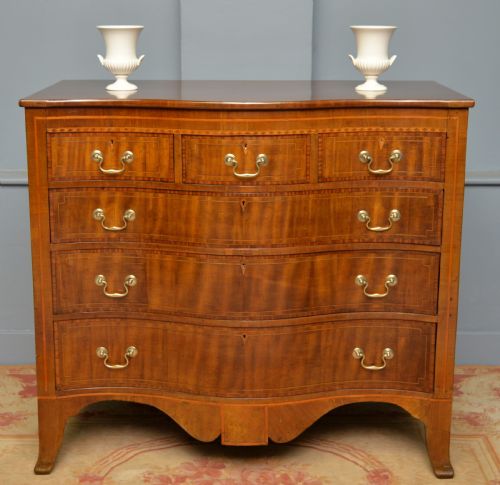
Quality rests in the fluidity of the serpentine curve and the precision of the timber matching across the drawer fronts. Superior examples display crisp, well-defined joinery where the convex and concave sweeps meet.
The sophistication of the marquetry and the choice of secondary woods dictate distinction between standard items and exceptional works. Finer pieces demonstrate careful consideration of grain direction and delicate inlay work that integrates naturally with the carcass.
A. F. Lloyd
The Inlaid Serpentine Chest Drawers Glossary
- Serpentine
- A shape characterised by a central convex curve flanked by two concave curves, creating an undulating front edge. This contour requires advanced cabinetmaking skill to execute successfully.
- Marquetry
- Decorative veneer work arranged in pictorial or floral patterns using various coloured woods, metals, or shells. Artisans assemble these elements to create complex surface designs.
- Parquetry
- Geometric wood mosaic work used for floors and furniture surfaces. Small pieces of timber are fitted together to form repeating patterns like cubes or cheffoniers.
- Bombe
- A swollen or bulging out-curved shape found on the sides and fronts of continental commodes. This rounded profile defines many eighteenth-century and revival pieces.
- Commode
- A low chest of drawers or cabinet, typically originating from French design traditions. The term frequently applies to decorative serpentine and marble-topped pieces.
Inlaid Serpentine Chest Drawers: Frequently Asked Questions
What is a serpentine chest?
A serpentine chest is a set of drawers featuring a front edge curved in a wave-like motion, moving outward in the centre and inward at the sides.
This distinct shaping softens the rigid lines of traditional rectangular furniture, creating a dynamic silhouette popular in Georgian and continental design.
How do I identify a Georgian chest?
Georgian chests of this style often rely on solid mahogany or walnut timbers, understated bracket or shaped feet, and refined boxwood stringing. They prioritise architectural proportion and subtle grain patterns over heavy ornamentation.
Makers of this era focused on clean lines that complemented the undulating serpentine facade without overwhelming the natural wood.
Where were bombe commodes made?
Bombe commodes with pronounced bulging sides were produced across continental Europe, particularly in France, Germany, Italy, and the Netherlands. Makers in these regions favoured exotic woods and elaborate marquetry.
These pieces often featured fitted marble tops and intricate brass mounts, distinguishing them from simpler British furniture.
How should I clean inlaid wood?
Inlaid surfaces require gentle maintenance using a soft, dry cloth to remove dust without disturbing delicate boxwood or fruitwood veneers. Avoid harsh liquid cleaners that might seep into the grain.
Applying a traditional microcrystalline wax occasionally helps protect the timber and preserves the natural lustre of the marquetry work.