




Georgian Inlaid Side Cabinet
A georgian inlaid side cabinet brings subtle geometry and rich timber into a room, offering both display space and concealed storage.
Georgian Inlaid Side Cabinet
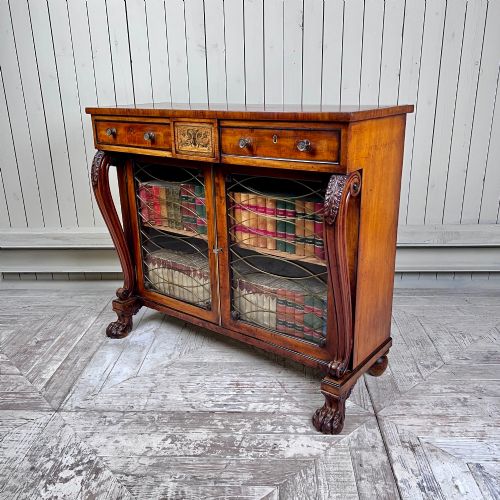
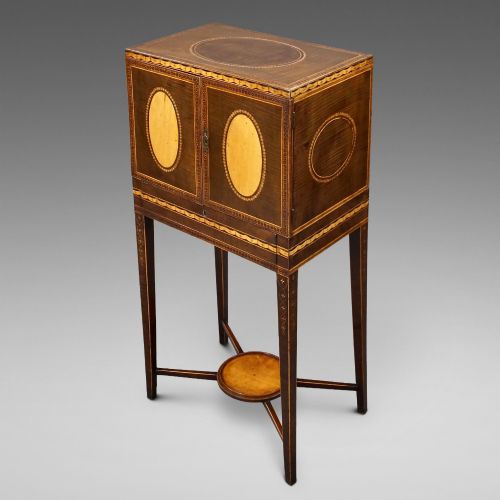
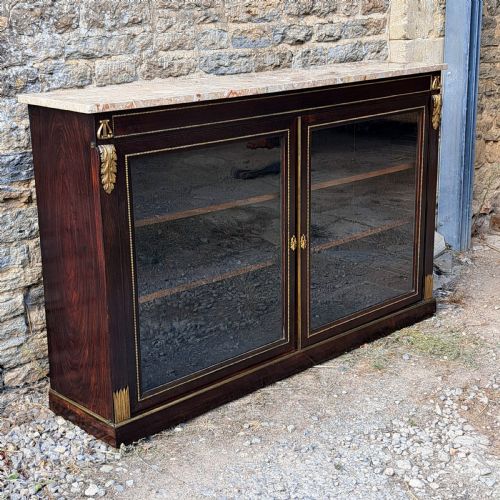
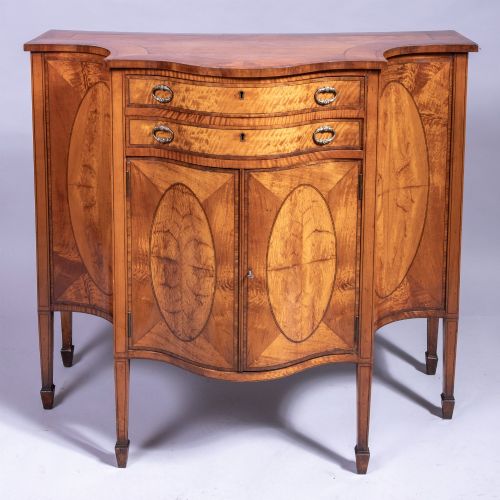
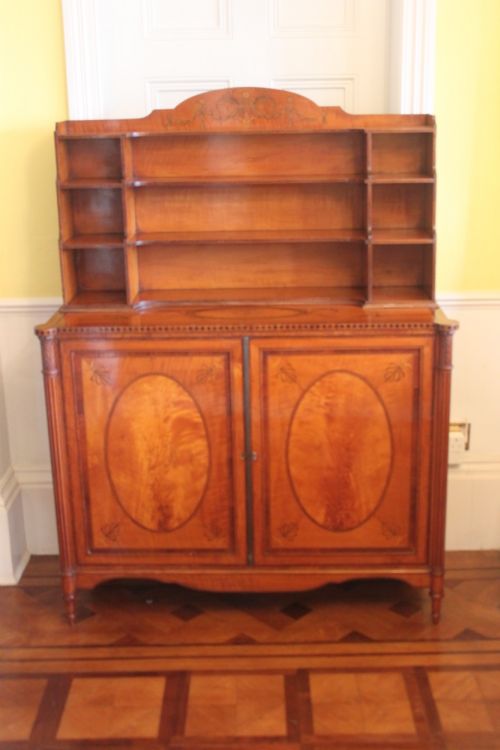
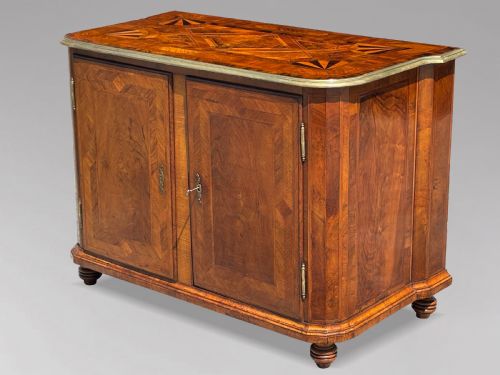
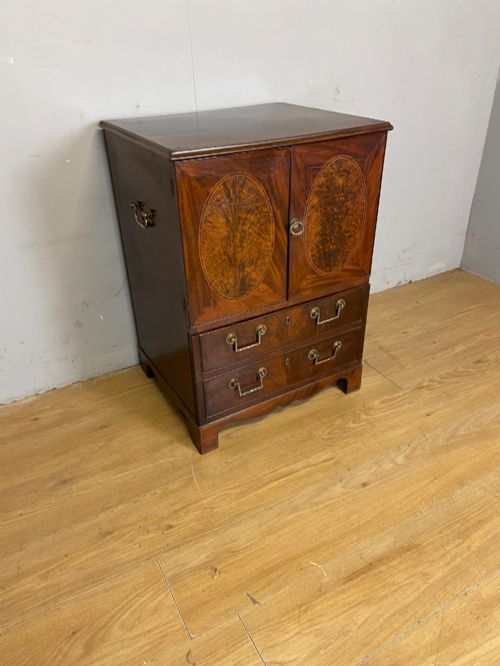
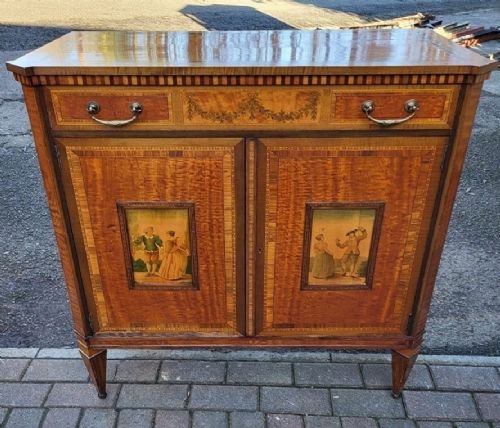
A georgian inlaid side cabinet encompasses a variety of timber furniture forms originating primarily from the eighteenth and nineteenth centuries, including chiffoniers, commodes, bedside cupboards and breakfront cabinets. These pieces often feature precise linear or floral contrasting details set into the primary wood of the facade or top.
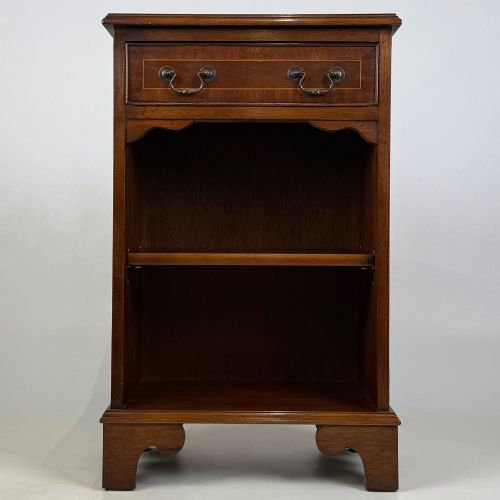
The versions most commonly met on this page span the Georgian and Regency periods, alongside later revival pieces from the Victorian and Edwardian eras. They range from compact bedside tables to larger library bookcases and demi-lune commodes designed to sit flush against a wall.
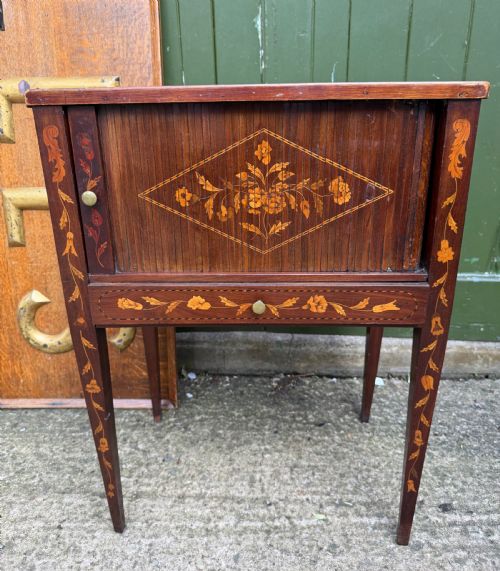
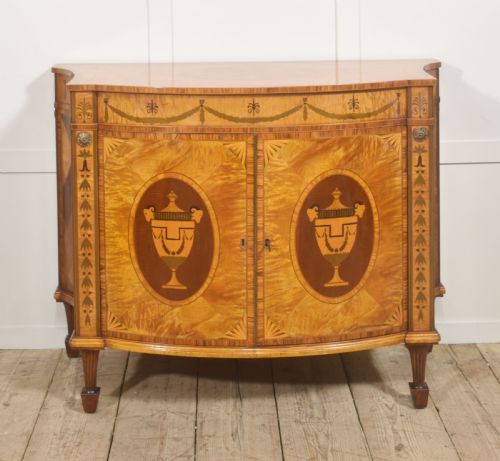
Makers and workshops utilised specific regional vernaculars, producing English mahogany designs alongside continental examples such as Dutch marquetry cupboards and Maltese walnut pieces. The proportions shift from restrained rectangular sideboards to curved serpentine and bowfront shapes.
Materials and technique
Cabinetmakers built the carcass and structure from dense primary timbers like mahogany, rosewood and satinwood, frequently selecting figured grains such as flame mahogany, burr elm and burr yew for the principal visible surfaces. These were paired with contrasting border woods including boxwood and ebony.
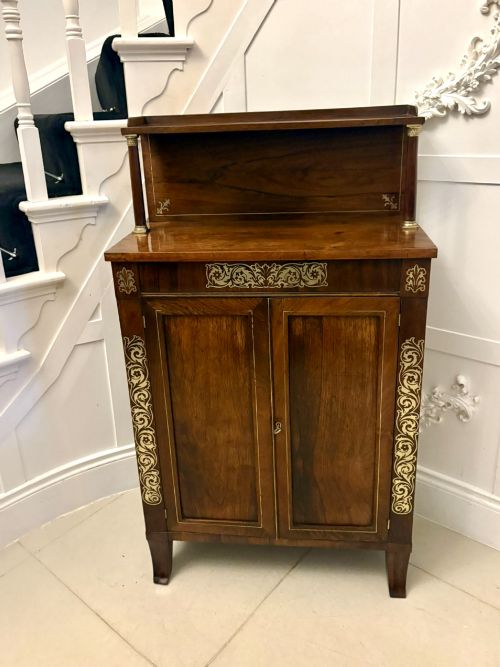
Inlay and marquetry techniques defined the ornamentation, incorporating delicate stringing, geometric banding and floral motifs directly into the timber surface. Metal detailing played a structural and decorative role, with brass grilles, stringing and mounts integrated into Regency and neoclassical designs.
Some nineteenth-century makers concealed pull-out writing surfaces inside compact side cabinets, turning a modest hallway piece into an impromptu desk.
Quality and construction
The standard of a georgian inlaid side cabinet rests on the precision of the timber matching and the crispness of the contrasting inlay work. Superior examples exhibit seamless integration of exotic woods where the grain flows naturally across the doors and drawers without jarring visual interruptions.
Construction methods and hardware elevate certain pieces above standard production, seen in the weight of the brass mounts, the smoothness of drawer linings and the fidelity of revival styles to their eighteenth-century prototypes.
Maple and Co.
The Georgian Inlaid Side Cabinet Glossary
- Marquetry
- A decorative technique applying pieces of veneer to a structure to form elaborate pictorial or geometric designs. It differs from simple inlay by covering the entire surface in a mosaic of contrasting woods.
- Chiffonier
- A small sideboard or cabinet featuring shelves or a shelved superstructure above the main enclosed storage. They gained particular popularity during the Regency period.
- Demi-lune
- A half-moon shape used for the footprint and top of specialised side cabinets and commodes designed to fit closely against a flat wall. These often incorporated satinwood and complex stringing.
- Stringing
- Fine, thin lines of contrasting wood or light-coloured timber inlaid into channels cut into the primary surface. This linear detail defined panels and borders on eighteenth-century case furniture.
- Satinwood
- A durable, lustrous timber with a golden sheen, heavily utilised during the Sheraton and revival periods for contrasting panels and light backgrounds.
Georgian Inlaid Side Cabinet: Frequently Asked Questions
What is the difference between a chiffonier and a side cabinet?
A chiffonier typically includes an elevated tier of shelves supported by columns above the main enclosed cabinet body. Side cabinets generally offer a simpler flat top surface for display without the superstructure.
Both forms served similar functional roles in storing dining accessories or books within principal rooms during the Georgian and Regency eras.
How do I identify a true Georgian piece from a revival copy?
Original pieces display authentic timber shrinkage, hand-cut secondary wood framing, and period-appropriate internal construction methods. Revival items often utilise machine-prepared components and later nineteenth or twentieth-century secondary woods.
Examining the underside, drawer runners and the ageing of the internal carcase provides clear indicators of the true manufacturing date.
Where should I place a demi-lune cabinet in a home?
The curved half-moon footprint makes these cabinets suited for entrance halls, narrow landings, or flat wall spaces where a rectangular piece would protrude awkwardly. They function well beneath mirrors or paintings of a corresponding scale.
The finished back and sides on finer examples also allow them to sit effectively within open-plan settings.
How should I care for antique satinwood and mahogany?
Keep wooden furniture away from direct heat sources and fluctuating humidity to prevent veneer lifting and timber splitting. Dust regularly with a dry cloth and apply occasional high-grade wax to maintain the finish.
Avoid chemical polishes that can degrade the original polish or penetrate old hairline cracks in the timber.