
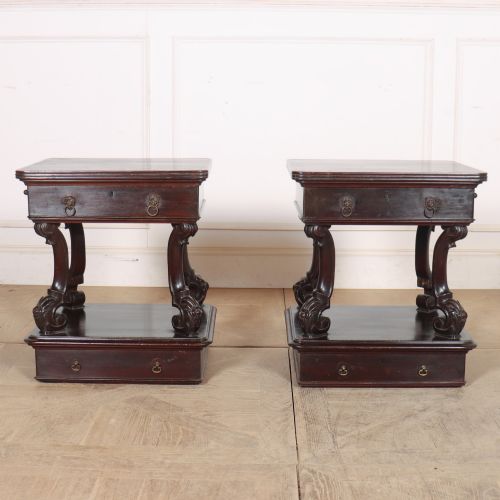


Georgian Bedside Locker
A georgian bedside locker provides discreet bedside storage, uniting practical timber construction with refined period design.
Georgian Bedside Locker
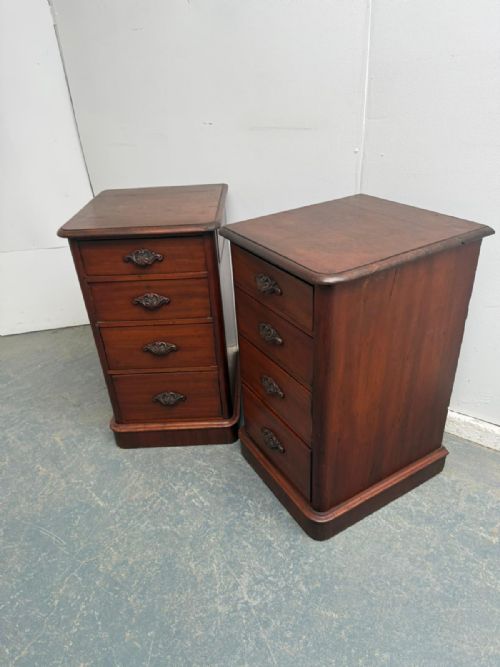
A georgian bedside locker is a compact cabinet designed to hold chamber pots or night essentials, typically standing beside a bed. When searching for a georgian bedside locker, buyers encounter pieces primarily from the Georgian, Regency, and 19th Century periods, alongside later Victorian and Edwardian examples. These items appear under forms such as bedside cabinets, bedside tables, and pot cupboards.
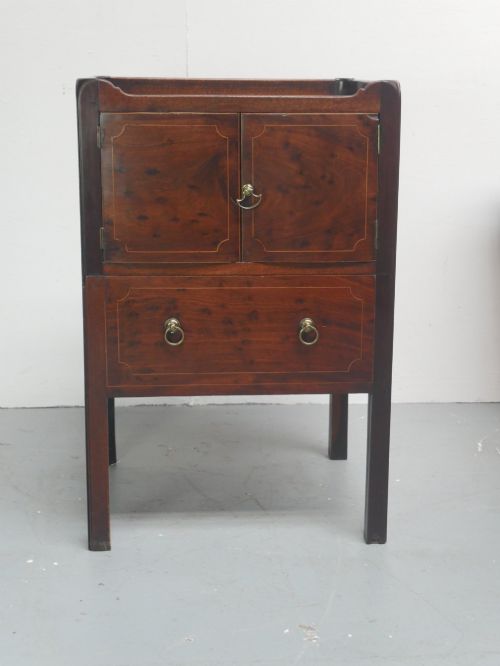
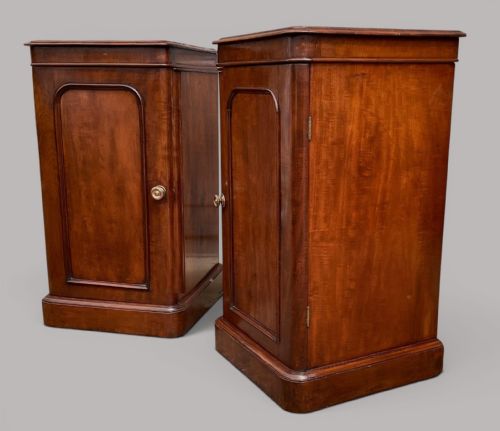
The materials recorded in these listings are predominantly mahogany, supported by walnut, satinwood, and boxwood inlay, with brass hardware. Construction styles range from plain Georgian and George IV to Grand Regency, Gothic Revival, and Irish Regency designs. Many survive as pairs or single cabinets featuring cupboard doors, drawers, and architectural column details.
How they were made
Cabinet makers constructed these lockers using solid timber and decorative veneers, notably mahogany and burr walnut. Workshops applied boxwood inlay and ebony stringing to accent drawer fronts and cabinet doors.
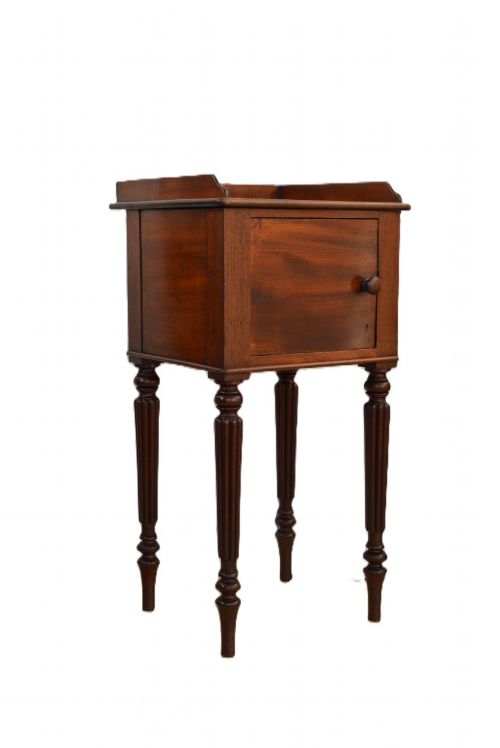
Structural integrity relied on traditional joinery, complemented by turned or reeded legs and brass handles. Individual makers integrated architectural column designs and enclosed storage spaces behind panelled cupboard doors.
Many of these elegant bedside cabinets began life simply hiding nineteenth-century chamber pots out of sight.
What varies in quality
Quality in these lockers rests upon timber selection and the crispness of decorative detailing. Fine examples exhibit carefully matched grain patterns, precise boxwood inlay, and well-executed reeded legs rather than plain, unadorned surfaces.
Hardware choice and internal construction also distinguish finer pieces. Original brass fittings, well-fitted drawers, and sophisticated architectural elements indicate superior craftsmanship compared to simpler utility cupboards.
Holland & Sons·Gillows
The Georgian Bedside Locker Glossary
- Pot cupboard
- A small bedside cabinet originally designed to enclose a chamber pot. These practical items often feature a single door above or beside a small drawer.
- Pedestal cabinet
- A tall, narrow cupboard standing on a single plinth or legs. This form maximises vertical storage space beside a bed.
- Inlay
- A decorative technique where contrasting woods like satinwood or boxwood are inserted into the primary timber surface. This creates geometric or linear patterns across the doors and drawers.
- Reeded legs
- Cylindrical legs carved with parallel convex mouldings running vertically. This decorative turning style frequently appears on Regency and later pieces.
Georgian Bedside Locker: Frequently Asked Questions
What is a georgian bedside locker?
A georgian bedside locker is a small wooden cabinet made to stand beside a bed for night storage. These pieces date principally from the eighteenth and nineteenth centuries.
They often feature enclosed cupboards, drawers, and decorative timber veneers such as mahogany and walnut. Many were built to house chamber pots before modern plumbing became standard.
How do I spot a genuine period piece?
Examine the timber construction, dovetail joints, and secondary woods used inside the drawers. Period lockers show hand-cut joinery and authentic ageing consistent with nineteenth-century methods.
Hardware such as brass pulls and hinges should match the period style of the cabinet. Look for consistency in the polish and timber grain across the entire piece.
Are these lockers sold as pairs?
Some listings offer matched pairs of bedside cabinets, while others provide single lockers. Pairs are especially common in grander Georgian and Regency styles.
Single pieces often turn up as individual pot cupboards or bedside tables. Matching a pair later can prove difficult due to variations in timber grain and height.
How do I care for antique mahogany?
Keep wooden cabinets away from direct sunlight and radiators to prevent the timber and veneer from drying out. Consistent indoor humidity protects the polish and structural joints.
Clean surfaces gently with a soft cloth and avoid harsh chemical sprays. Occasional waxing helps maintain the natural lustre of the mahogany finish.