
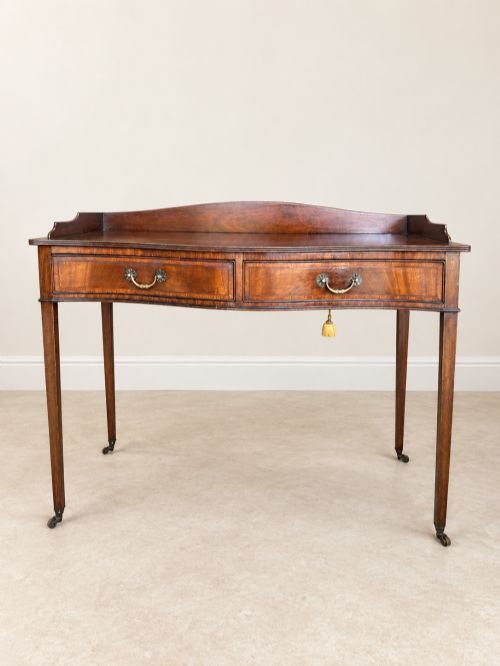
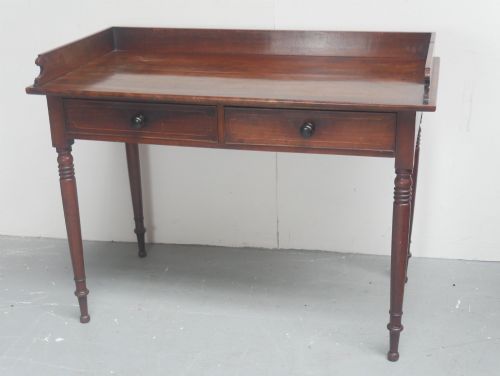
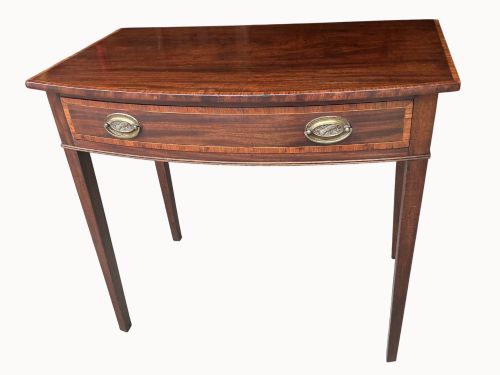
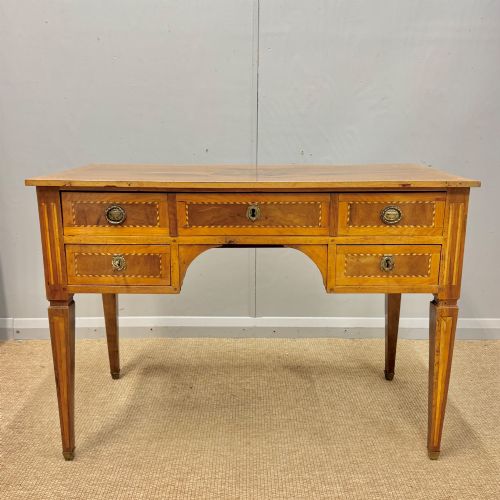


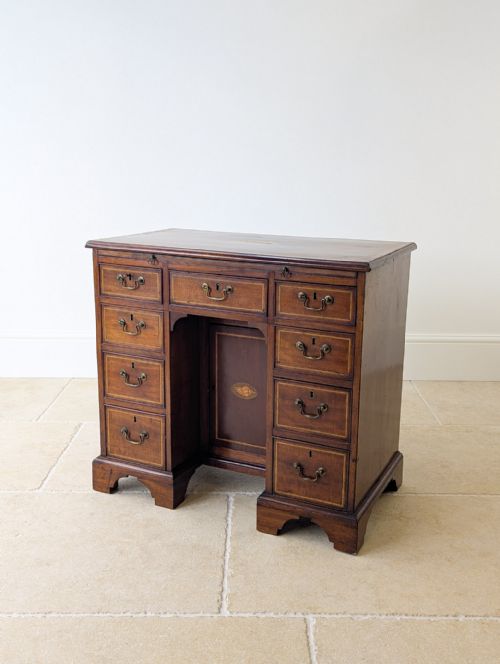

Georgian Inlaid Dressing Table
A georgian inlaid dressing table brings refined cabinet-work and subtle marquetry to a bedroom, offering a functional surface alongside period character.
Georgian Inlaid Dressing Table
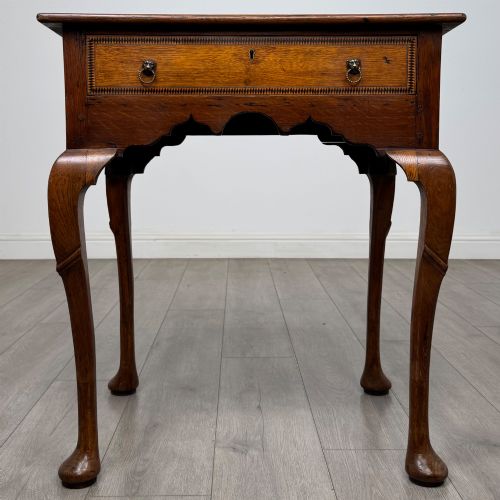
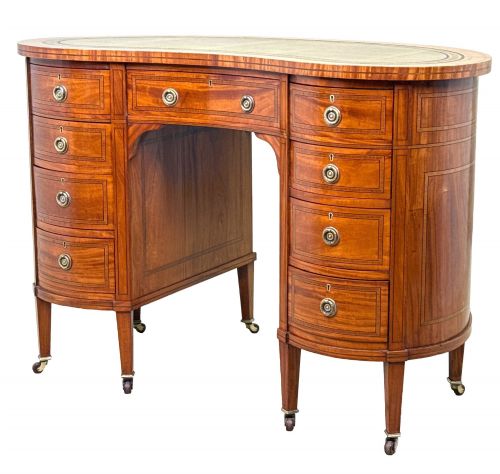
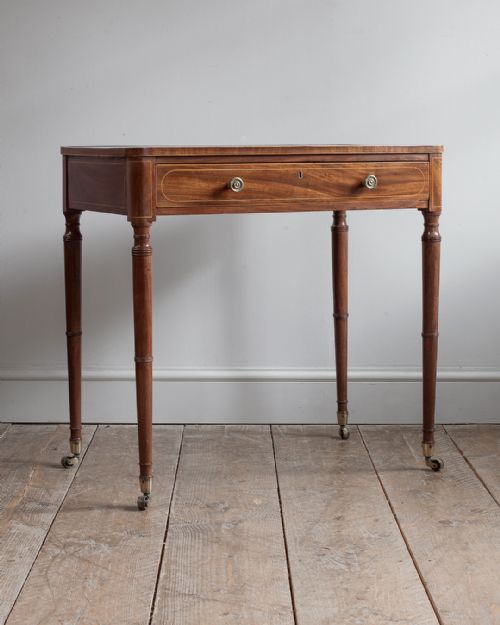
A georgian inlaid dressing table combines the compact proportions of late eighteenth-century case furniture with decorative wood contrast. When searching for this form, buyers encounter dressing chests, kneehole desks, and smaller side tables fitted with drawers.
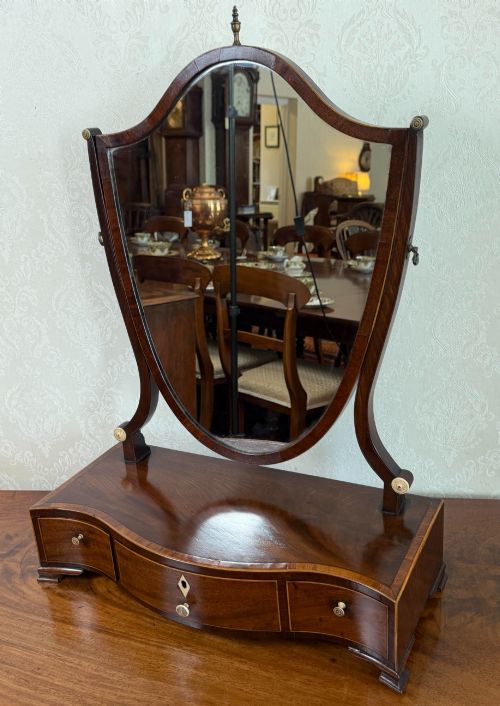
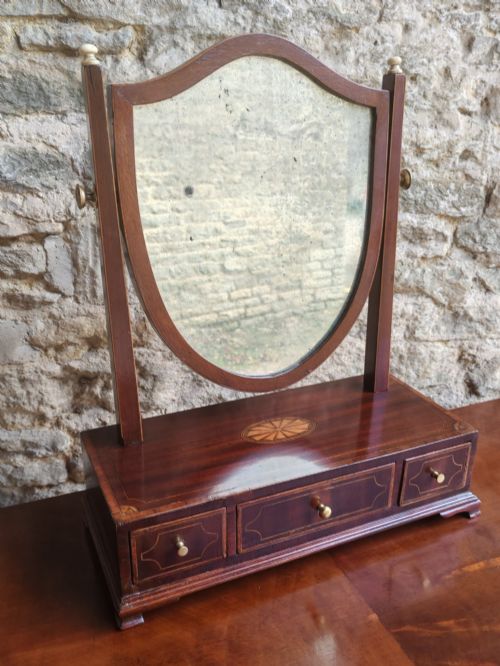
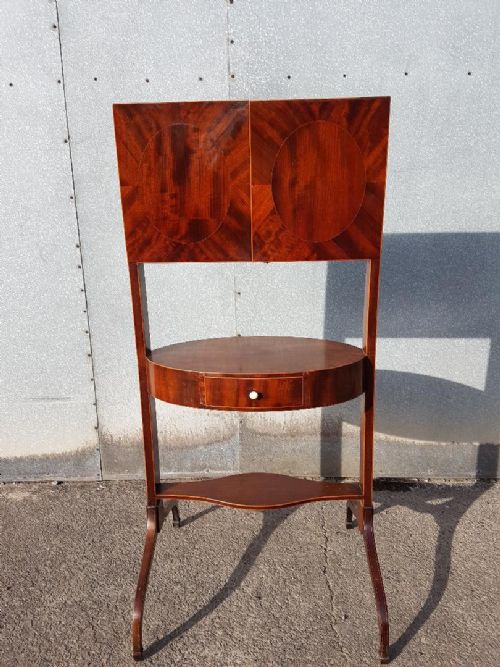
The selection ranges from larger freestanding dressing tables to smaller toilet mirrors and cheval glasses designed to sit atop a surface. Many examples span the Georgian and Regency periods, utilising classical lines and contrasting boxwood stringing.
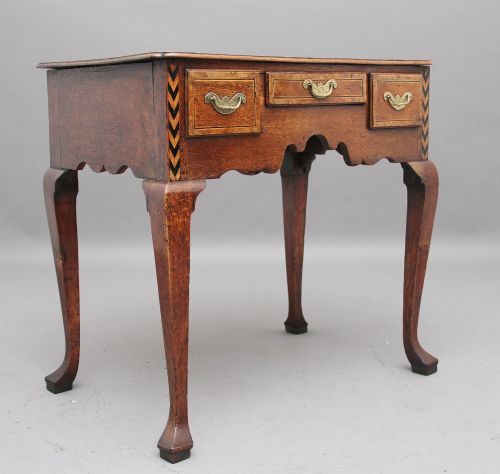
In addition to dedicated dressing tables, related forms such as lowboys and writing desks appear frequently in the evidence. These pieces share similar proportions, timber choices, and inlaid details suited to personal grooming or correspondence.
Materials and Construction
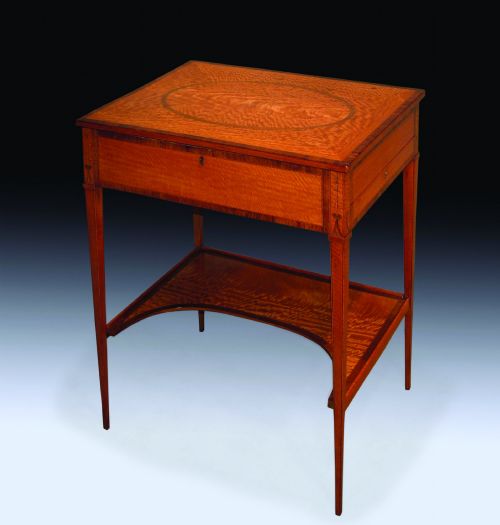
Cabinet-makers relied primarily on rich timbers such as mahogany, walnut, and satinwood, frequently figured with distinctive grains. These primary woods provided a stable canvas for decorative treatments.
Detailing was achieved through contrasting veneers and fine stringing lines in boxwood, alongside intricate marquetry and floral woodwork. Brass hardware, including handles and adjustable pivots on dressing mirrors, completed the construction.
Some dressing mirrors feature hidden compartments behind tiny drawers for stashing secret love letters and small trinkets.
Assessing Quality
The refinement of the inlay work marks the distinction between standard cabinet-making and superior pieces. Crisp, tightly fitted boxwood stringing and balanced marquetry panels demonstrate high skill.
Timber selection governs the visual depth of the surface, with well-figured mahogany or exotic satinwood elevating the piece. Original brasses, smooth drawer linings, and intact mirror frames further distinguish the finest examples.
Edwards & Roberts
The Georgian Inlaid Dressing Table Glossary
- Marquetry
- Decorative woodwork where veneers are arranged in intricate patterns or pictorial designs. Craftsmen used various tinted woods to create contrast.
- Stringing
- Thin inlay lines of a contrasting wood, such as boxwood, set flush into the primary timber. This technique defines edges and drawers on Georgian furniture.
- Cheval glass
- A tall full-length dressing mirror suspended on a vertical frame with side pivots. These allowed the glass to swing freely to adjust the angle.
- Satinwood
- A lustrous, yellowish timber imported from the West Indies and Ceylon, highly prized for fine neoclassical furniture. It provides a bright contrast to darker woods like mahogany.
Georgian Inlaid Dressing Table: Frequently Asked Questions
What is the difference between a lowboy and a dressing table?
A lowboy is a compact side table equipped with drawers that functioned historically for grooming or writing. Dedicated dressing tables often incorporate attached mirrors or specialised compartments.
Both forms share similar Georgian proportions and sit comfortably in modern bedrooms as functional accent pieces.
How do I identify a Georgian inlaid dressing table?
Look for classical proportions, mahogany or satinwood carcases, and contrasting boxwood stringing or floral marquetry. These design markers reflect the neoclassical taste of the late eighteenth century.
Drawer construction with hand-cut dovetails and period brass hardware further confirm the era of manufacture.
Where should I place a dressing table mirror?
Tabletop dressing mirrors sit securely on top of lowboys, sideboards, or chests of drawers. They require a sturdy surface with enough depth to support the weight of the frame.
Position them near a natural light source to make best use of the adjustable swing glass.
Are these tables suitable for daily use?
Period dressing tables and writing desks remain practical for contemporary use, offering useful surface space and drawer storage. Their compact footprints suit bedrooms and hallways alike.
Routine care involves treating the polished wood gently and avoiding excessive moisture on antique surfaces.