
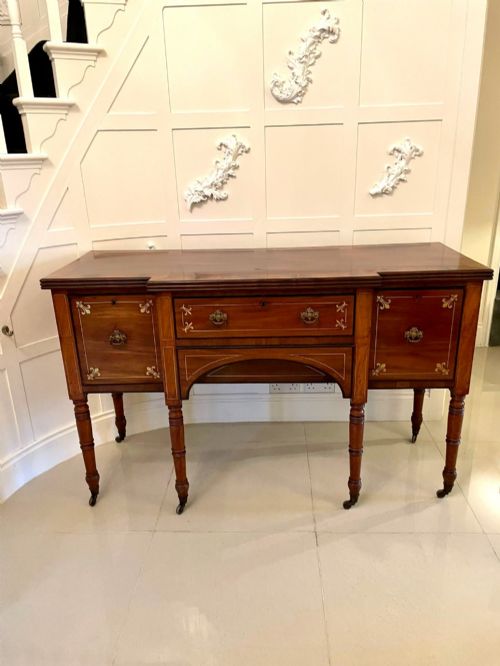
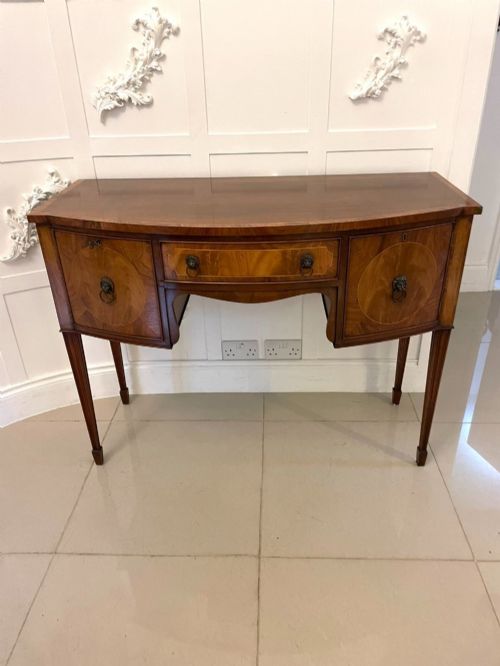
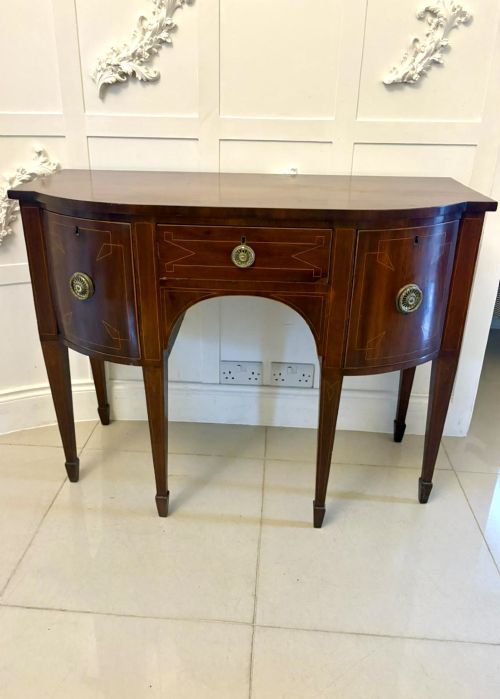
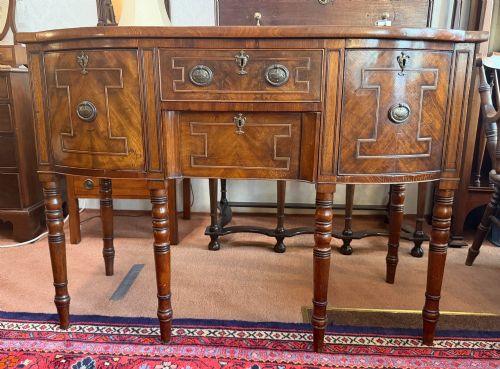
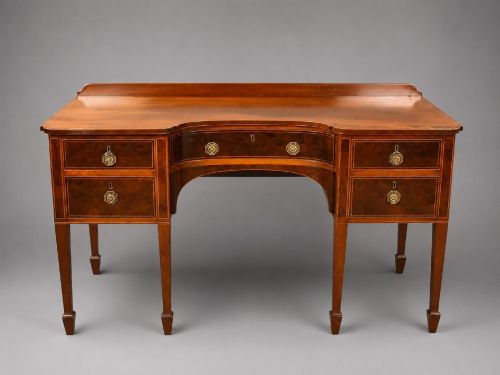
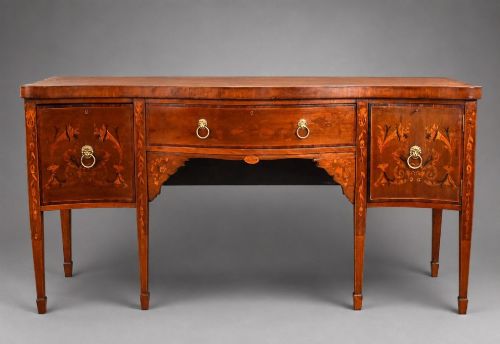
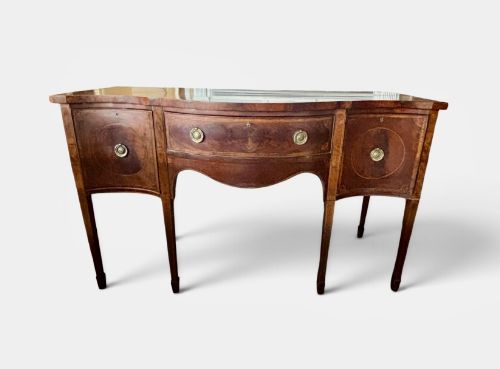
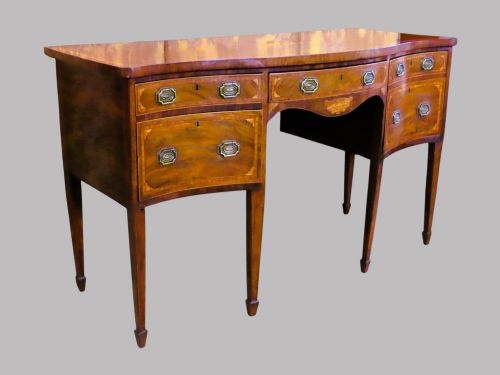
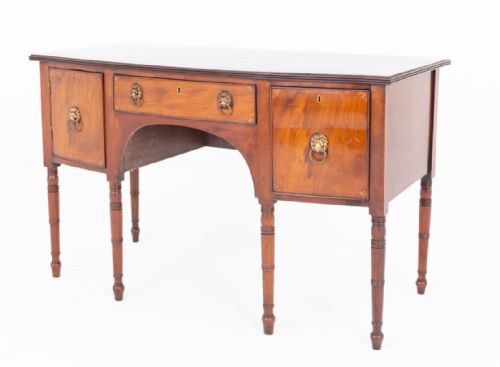
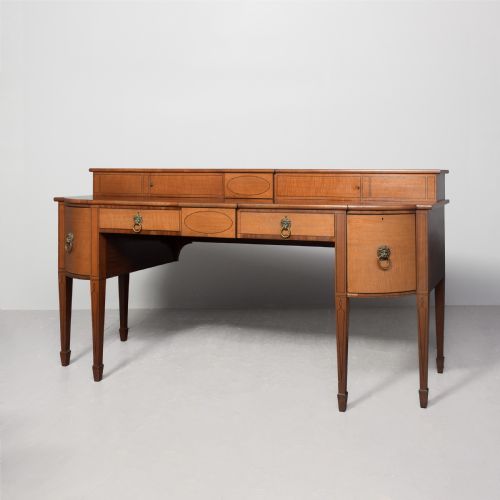
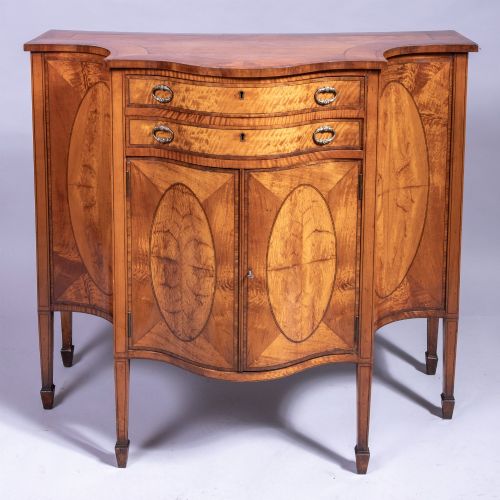
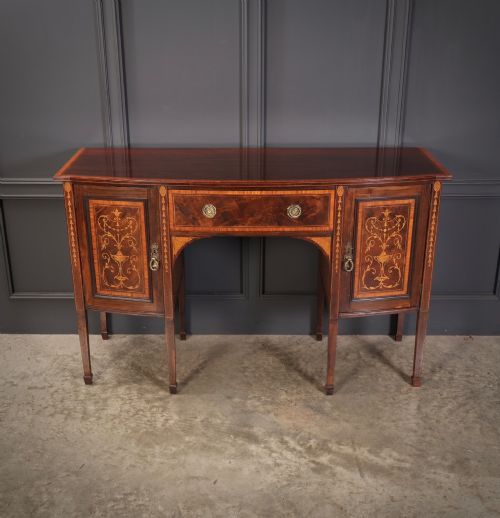
Georgian Inlaid Dining Sideboard
A georgian inlaid dining sideboard brings architectural presence and disciplined timber figures to a room.
Georgian Inlaid Dining Sideboard
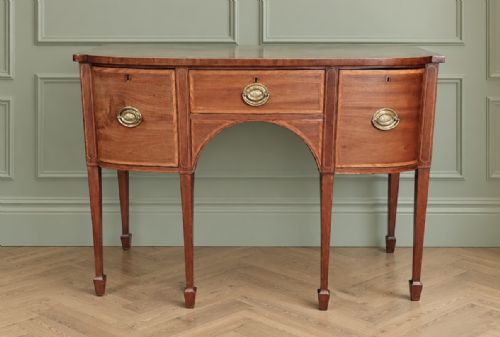
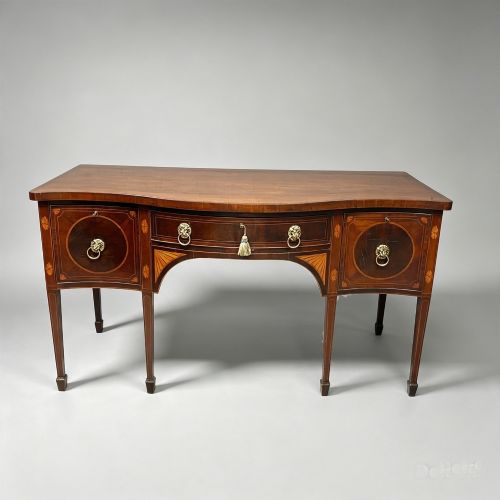
A georgian inlaid dining sideboard provides an anchor for a formal dining space, designed to hold plate, silver and glassware. These case pieces emerged in various forms, including serpentine fronts, bow-fronts, breakfronts and pedestal configurations.
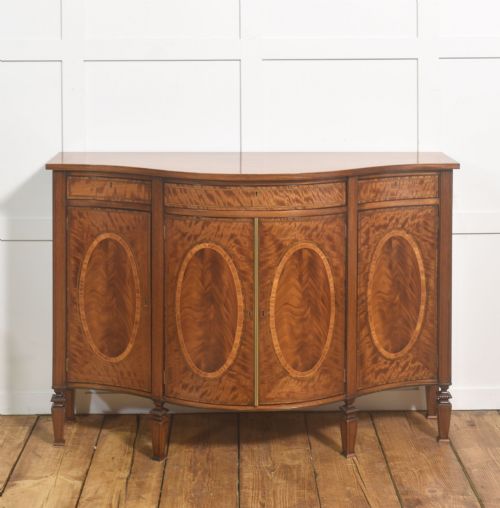
The pieces on this page span the georgian and regency periods, alongside later revival interpretations such as sheraton revival and edwardian iterations. Buyers encounter mahogany structures enriched with contrasting stringing and banding.
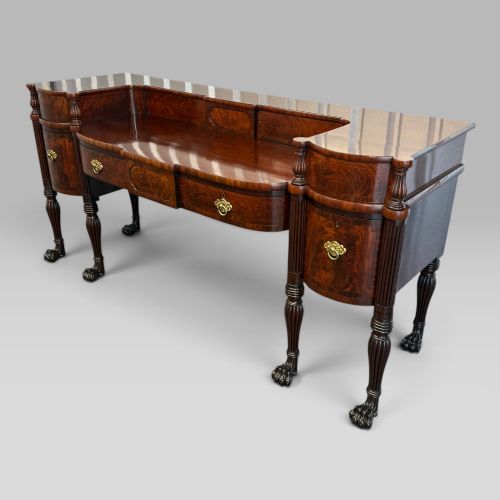
Formats range from compact small sideboards to large stage-back and six-legged examples. The primary function remains the serving of food and the display of dining accessories.
How They Were Made
Makers constructed these carcases primarily in solid and figured mahogany, often selecting flame mahogany for drawer fronts to create lively visual movement. Workshops applied contrasting veneers and stringing using satinwood, boxwood and ebony.
Inlay techniques defined the surface ornament, utilising fine geometric bandings and marquetry motifs. Brass hardware, including handles, gallery rails and lion paw feet, completed the structural composition.
Some regency examples stand proudly on six carved lion paw feet, ready to pounce on the dinner service.
What Varies in Quality
The selection of timber grain sets the visual standard, with highly figured flame mahogany and crisp satinwood banding commanding attention over plain planks. The precision of the inlay work, where contrasting woods meet with exact geometry, separates refined examples from simpler output.
Structural complexity also dictates standing, as serpentine and breakfront profiles require expert joinery to curve timber successfully. Original brass mounts and secondary wood choices within drawer linings further indicate the grade of the workshop.
The Georgian Inlaid Dining Sideboard Glossary
- Serpentine
- A front contour curving inward centrally and outward at the ends, creating a fluid wave shape. This profile demands advanced cabinet-making skill to execute cleanly in solid timber.
- Bow-front
- A convex curved front projecting outward in an arc. This shape softens the room's geometry while maximising internal storage capacity.
- Stringing
- Thin lines of contrasting wood inlaid into channels cut into the primary surface. It outlines drawer fronts and borders panels with geometric precision.
- Flame mahogany
- Timber cut from the fork of the mahogany tree where the branch meets the trunk, producing a rippling flame-like pattern. Makers reserved this veneer for prominent display surfaces.
- Breakfront
- A piece of furniture where the central section projects forward from the flanking wings. This architectural arrangement creates depth and shadow across the facade.
Georgian Inlaid Dining Sideboard: Frequently Asked Questions
Where did they place sideboards?
Dining rooms served as the primary location for these large case pieces during the georgian era. Servants used the top surface to plate dishes before service.
They also functioned as display areas for silver cutlery urns and ceramics when dining was finished.
How do I spot a revival piece?
Revival pieces often date from the edwardian era or late nineteenth century, echoing earlier george iii and sheraton styles. They frequently employ satinwood alongside mahogany with lighter interior framing.
Construction methods and secondary timbers inside the drawers help clarify the actual period of manufacture.
What is a stage-back sideboard?
A stage-back incorporates a raised shelf or superstructure at the rear of the top surface. This addition provided extra display space for serving dishes and prevented items from sliding.
Larger formal dining rooms typically accommodated these substantial pieces.
How do I care for the surface?
Maintain the polished mahogany and veneer by applying traditional beeswax rather than modern silicone sprays. Keep the timber away from direct heat sources and strong sunlight to prevent splitting.
Gentle dusting preserves the contrasting boxwood and satinwood stringing.