
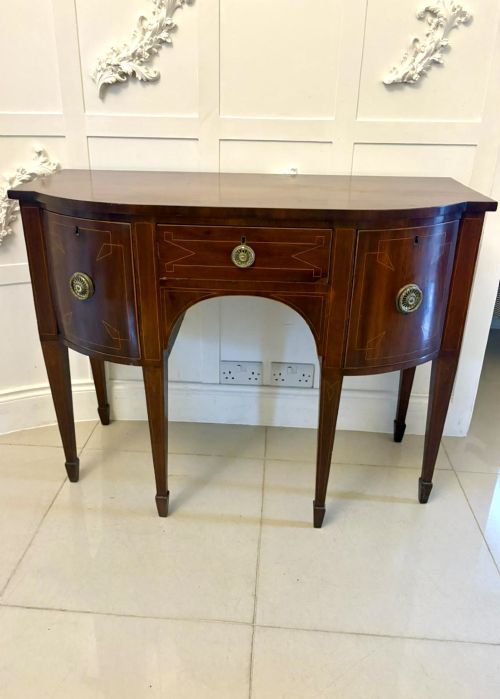
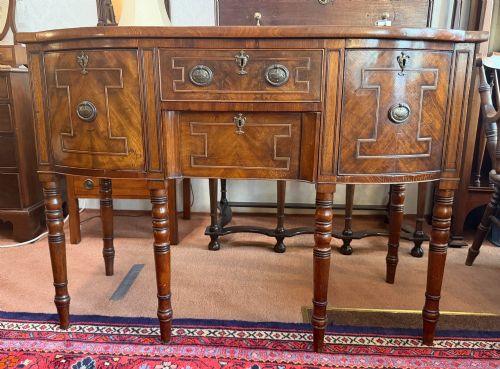
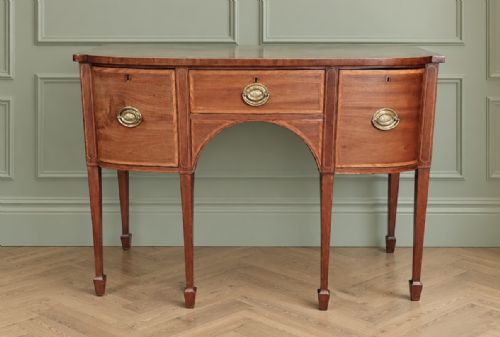
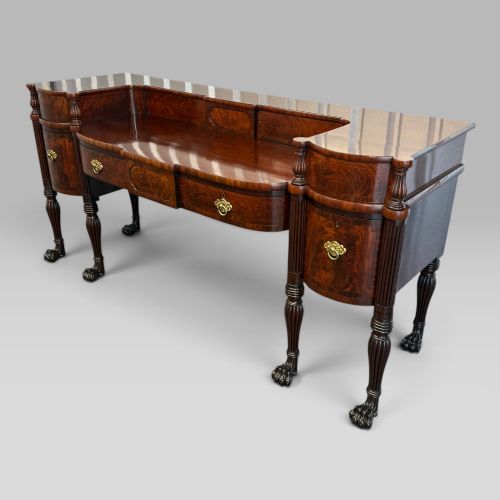
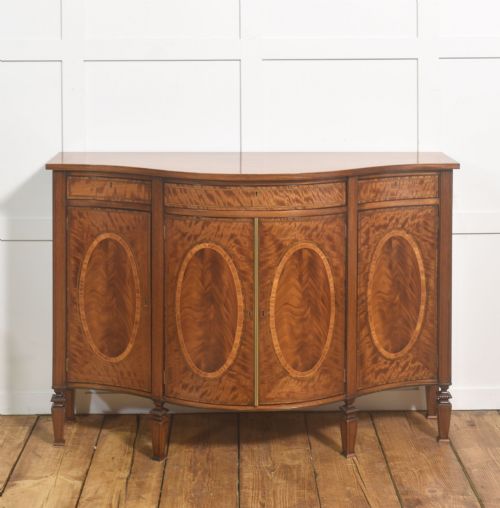
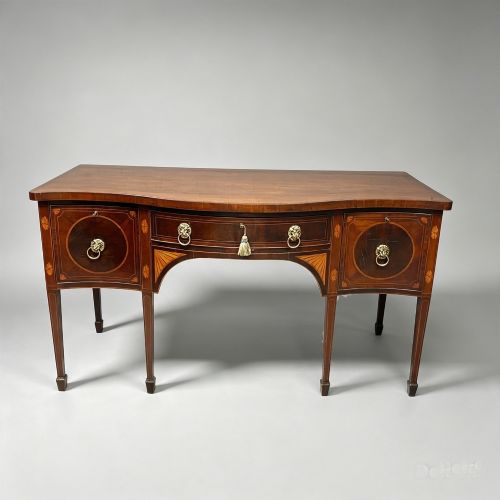
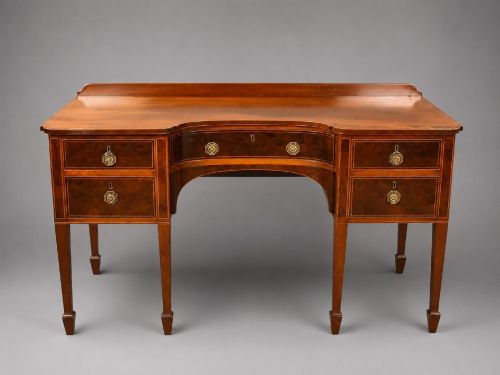
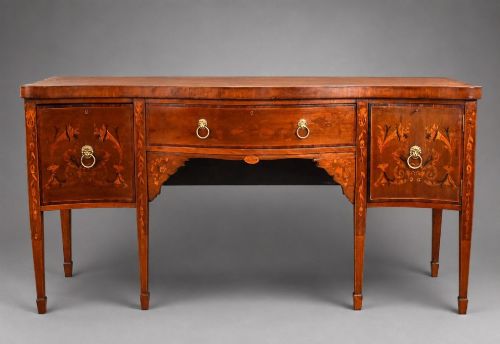
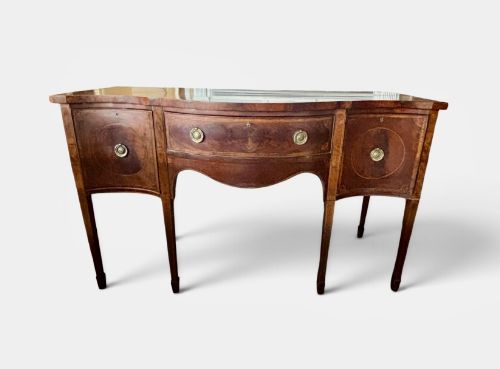
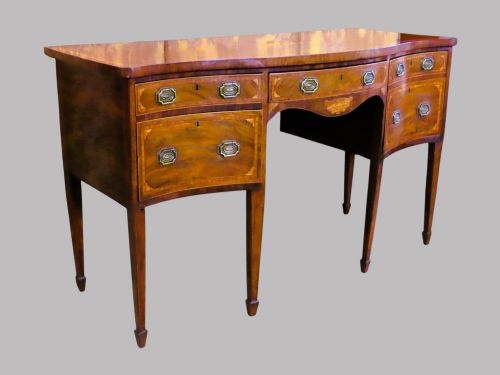
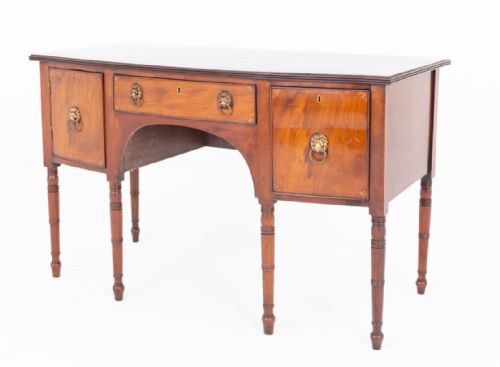
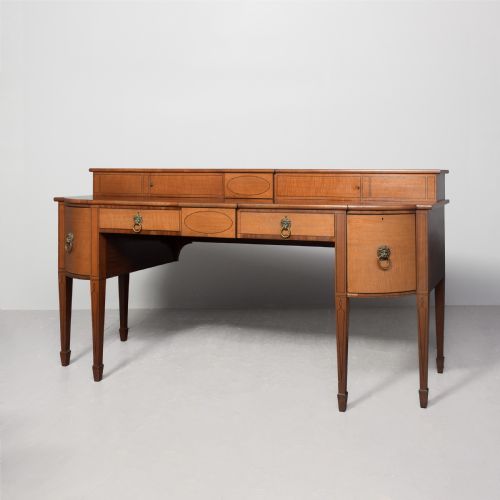
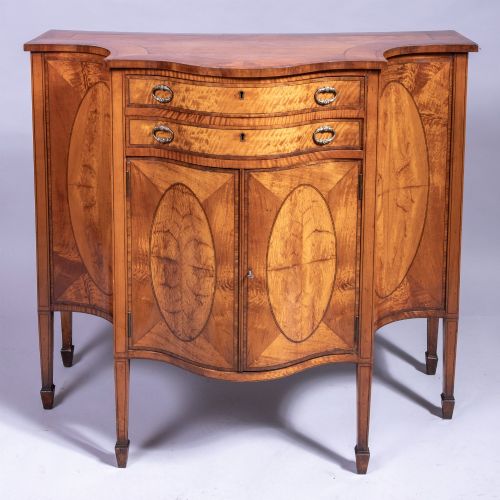
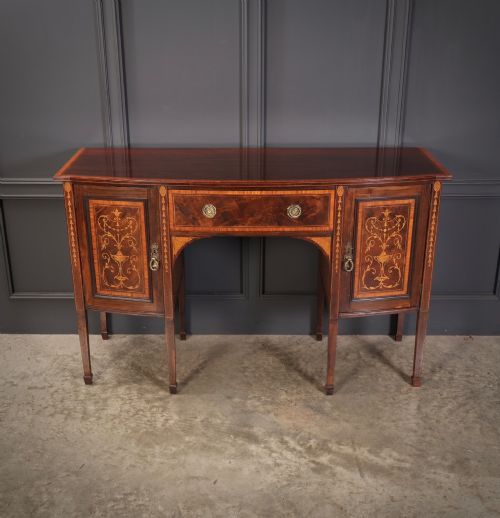
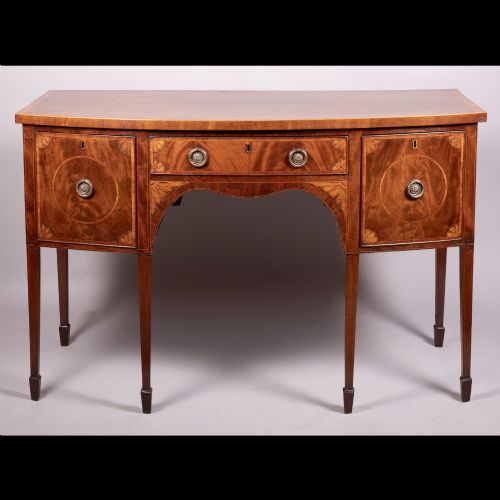
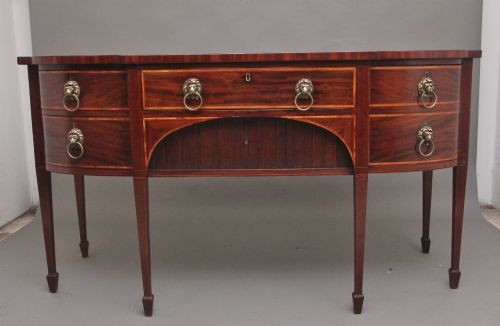
Georgian Inlaid Dining Server
A georgian inlaid dining server combines disciplined proportions with refined timber work, designed to anchor a formal room.
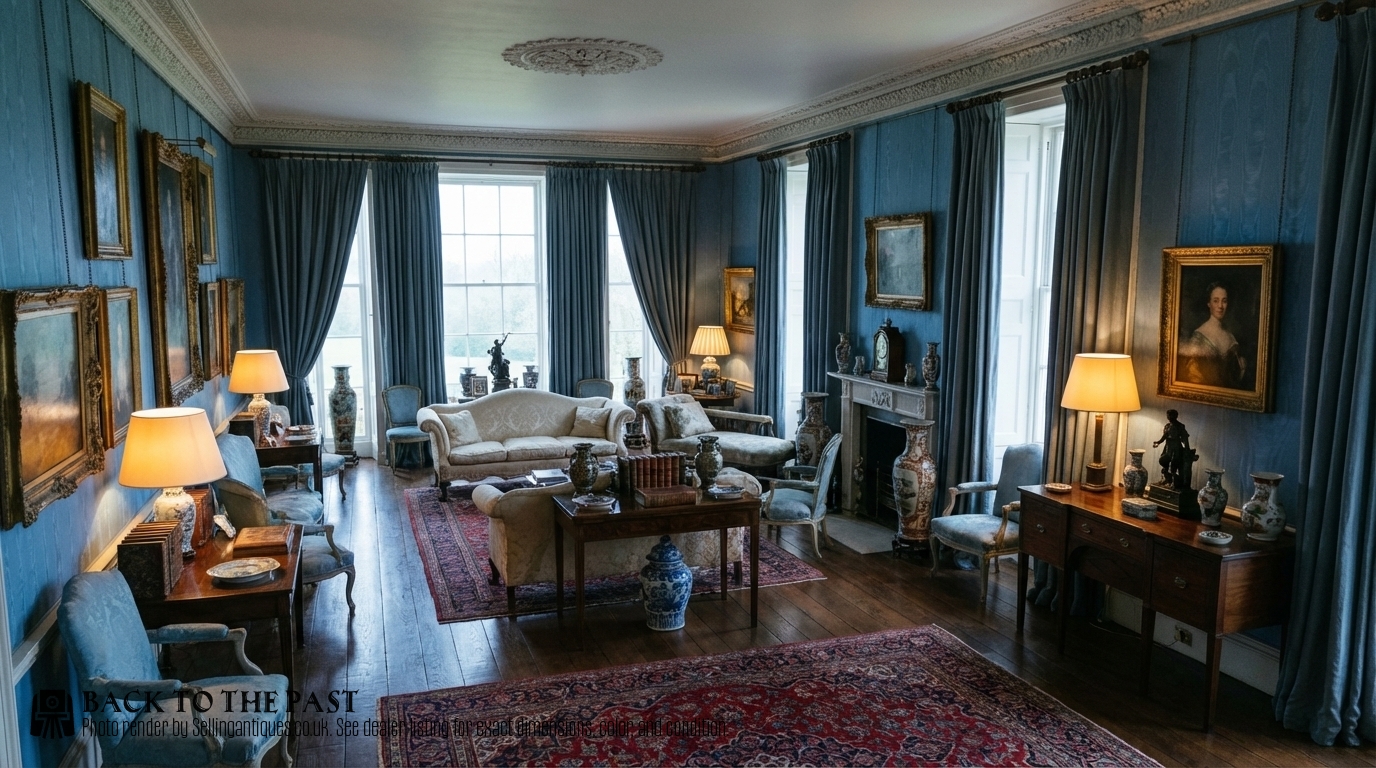
Georgian Inlaid Dining Server
When you search for a georgian inlaid dining server, you encounter formal dining room furniture built to store service items and display silver. The examples on this page span the Georgian period, the Regency era, and later revivals from the Edwardian years.
Most pieces you meet take the form of sideboards, side cabinets, and serving tables. These range from small bow-front designs to large breakfront and stage-back formats.
The predominant origins sit within British cabinet-making traditions, drawing upon George III and Sheraton styles.
Materials and Construction
Makers built these pieces primarily from mahogany, often selecting figured or flame grains to create visual depth across the front surfaces. Brass hardware such as handles and lion paw feet appears frequently as structural and decorative accents.
Inlay work defines the decorative scheme, utilising contrasting timbers like satinwood, boxwood, and ebony. Craftsmen set these fine woods into the primary mahogany ground to trace geometric borders and decorative motifs.
Listings include mahogany, satinwood, boxwood, and ebony, combined with brass hardware across serpentine and bow-front forms.
Distinctions in Quality
The standard of a piece depends heavily on the precision of its timber selection and inlay execution. Superior examples display closely matched flame mahogany veneers paired with crisply fitted boxwood and satinwood stringing.
Proportion and form separate everyday furniture from exceptional work, particularly in serpentine and bow-front profiles where curved drawer fronts demand advanced carpentry skill. Additional detailing, such as brass inlay or specialised foot carving, elevates the design.
The Georgian Inlaid Dining Server Glossary
- Bow-front
- A cabinet front that curves outward in a convex arc. This shape gained popularity in the Georgian period to soften rigid room corners.
- Serpentine
- A front profile shaped with a central convex curve flanked by two concave curves. It requires precise woodworking to execute cleanly.
- Inlay
- A technique where pieces of contrasting wood are inserted into recesses within a solid timber base. Satinwood and boxwood provide light tones against dark mahogany.
- Breakfront
- A piece of furniture where the central section projects forward from the flanking outer sections. This creates depth and architectural presence.
- Stage-back
- A raised tier or superstructure at the rear of a sideboard used for displaying plates and serving dishes. Large dining rooms often utilised this format.
Georgian Inlaid Dining Server: Frequently Asked Questions
What rooms suit a dining server?
These servers fit formal dining rooms and large reception spaces where surface area and storage are practical necessities.
They function well against primary walls, offering deep drawers and cupboards for linens and tableware.
How do I identify a revival piece?
Revival items often date from the Edwardian period or the late nineteenth century, reflecting earlier George III and Sheraton aesthetics.
Examination of the secondary woods, internal construction methods, and hardware helps distinguish these later interpretations from eighteenth-century originals.
What is the difference between a sideboard and a serving table?
Sideboards typically incorporate integrated drawer banks and cupboards enclosed within a single frame for extensive storage.
Serving tables focus more on an open table format with fewer compartments, intended primarily for holding dishes during a meal.
How should I care for mahogany and inlay?
Protect the timber surfaces from direct sunlight and excessive moisture fluctuations to prevent veneer lifting. Regular dusting with a soft cloth maintains the finish without chemical buildup.