



Georgian Horse Painting
A georgian horse painting captures the enduring bond between man and animal through the rich pigments of the period.
Georgian Horse Painting
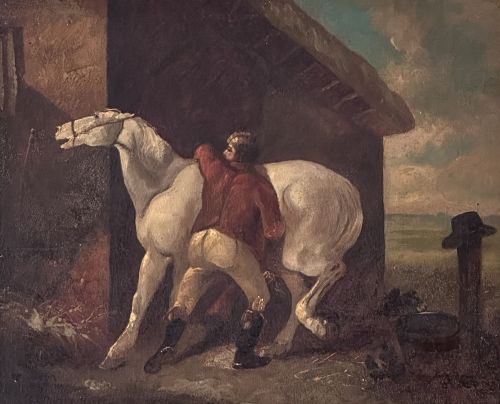
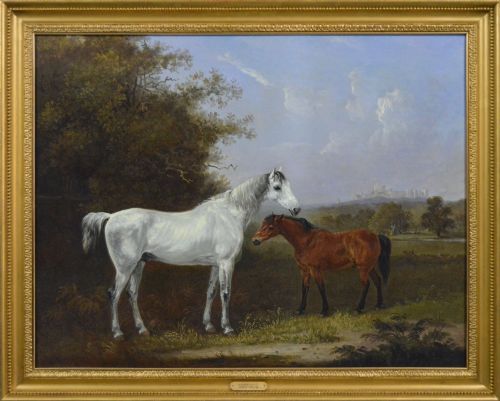
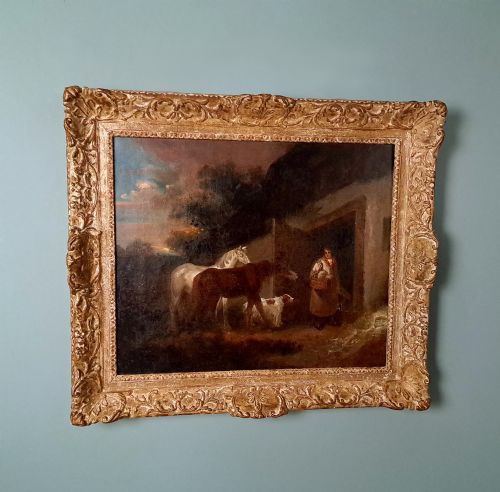
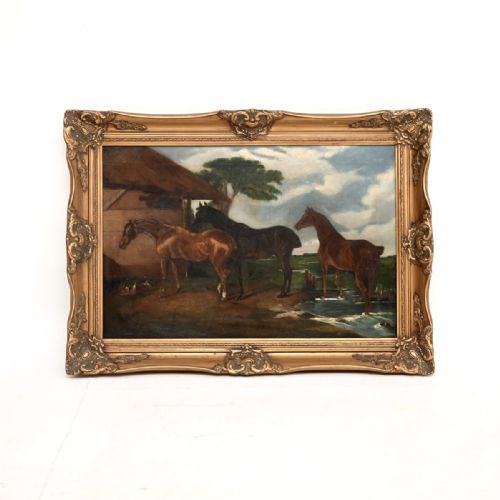
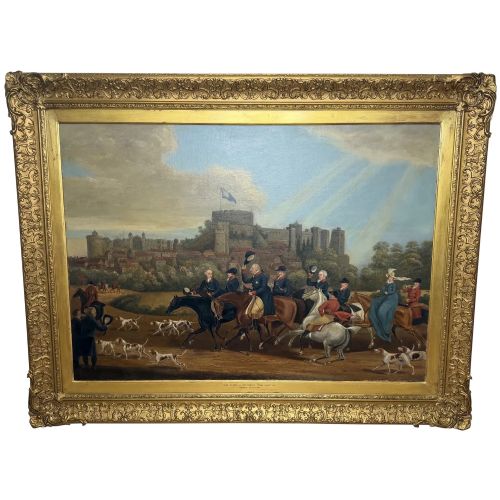
A georgian horse painting brings the atmosphere of the stable, the hunt, and the open coaching road directly onto the wall. These works range from intimate portraits of mares and foals to sweeping hunting scenes and royal coaching stops.
The most common pieces on this page are oil paintings on canvas, alongside works on pine panel and board. Subjects span individual hunters, stable interiors, and dramatic landscapes featuring horses near Windsor Castle or along country routes.
The aesthetic bridges Georgian, Regency, and Victorian sensibilities, often reflecting the rigorous standards of the British School. Collectors encounter both named equine artists and atmospheric pastoral scenes from the wider period.
Materials and Technique
Artists of this era typically applied oil paint to stretched canvas or prepared pine panels, building depth through successive glazes. The medium allowed for subtle shifts in the sheen of a chestnut coat or the turbulent skies of a coaching journey.
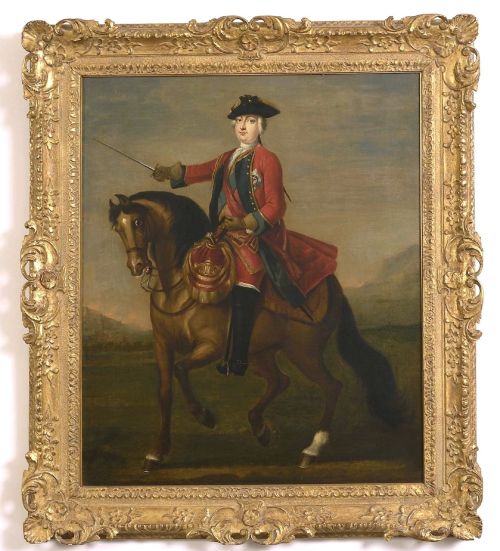
Frames frequently utilise gilt wood and gold leaf, matching the formal presentation expected in country houses and town residences. Watercolour on paper also appears in depictions of rural carts and roadside travel.
Support structures rely on traditional wooden stretchers and joinery, designed to keep heavy canvas taut across decades of changing humidity. Panel works make use of seasoned timber selected to resist warping.
Georgian Horse Painting Retail Price Guide 2026
Typical asking prices for georgian horse painting among the pieces listed under this phrase on Sellingantiques today, from the lower quarter to the upper quarter. They describe what is for sale here now, not the wider market.
The selection includes formal equestrian portraits, hunting scenes, and royal mail coach depictions by both named British masters and anonymous hands.
Assessing Quality
Quality rests upon the artist's anatomical precision in rendering the horse, particularly the musculature of the shoulder and the alert setting of the ear. Lesser works rely on formulaic postures, whereas superior examples capture distinct temperament and individual likeness.
The handling of the surrounding landscape and light elevates a composition, distinguishing a master like James Pollard or Abraham Cooper from a competent provincial hand. Brushwork in the depiction of a groom's coat or the texture of a stable wall reveals the painter's confidence.
Condition plays a vital role, measured by the stability of the original canvas, the presence of stable craquelure, and the integrity of any period gilt frame. Unrestored surfaces with clear pigment retention command greater appreciation.
Edmund Bristow·William Joseph Shayer Senior·John Wootton·Thomas Hudson·George Morland·John Sanderson Wells·William Williams·John Augustus Atkinson·Clifton Tomson·Abraham Cooper·Samuel Henry Alken·John Nost Sartorius·James Barenger·John Charles Maggs·Thomas Rowlandson·James Pollard·Harry Ashby
The Georgian Horse Painting Glossary
- Oil on Canvas
- A traditional painting medium consisting of pigments bound with a drying oil, applied to a woven fabric support stretched across a wooden frame. This combination provided the durability required for large sporting commissions.
- Pine Panel
- A rigid wooden support constructed from pine boards, frequently utilised in the eighteenth century before canvas became universal. It offers a smooth, stable surface for fine brushwork.
- Gilt Wood
- Carved timber finished with a thin layer of gold leaf or metallic powder, creating the characteristic decorative frames associated with period portraiture. It accentuates the warmth of the darker pigments within the scene.
- British School
- A collective term for artists working in Britain from the seventeenth century onwards, encompassing the distinct traditions of sporting art and pastoral landscape. It provides a shared stylistic vocabulary for equestrian portraiture.
- Watercolour
- A painting method where pigment is suspended in a water-based solution, often applied to paper to record rapid studies and rural transport scenes. These works require protective glazing to prevent fading.
Georgian Horse Painting: Frequently Asked Questions
What subjects do these paintings show?
These works focus primarily on equine subjects, including individual hunters, mares with foals, and stable interiors. Many compositions feature coaching scenes, fox hunting, and historical landscapes associated with the British countryside.
Alongside formal animal portraits, collectors find depictions of royal mail coaches in transit and rural workers with carts. The common thread is the central role of the horse in eighteenth and nineteenth-century life.
How do I care for an oil painting on canvas?
Keep the piece away from direct sunlight and steady the room's temperature to prevent the canvas from expanding and contracting excessively. Avoid hanging works near active heat sources or in damp environments.
Dust the surface gently with a soft, dry brush, and leave any deep cleaning or varnish removal to a professional conservator. The original stretcher frame should remain undisturbed behind the canvas.
How can I tell a Georgian piece from a later copy?
Examine the preparation of the canvas or panel, the type of nails or tacks securing the edges, and the natural ageing of the oil paint. Georgian and Regency works often exhibit fine craquelure consistent with the natural drying of lead-based whites and traditional mediums.
Stylistic cues also help establish the date, such as the cut of a rider's coat, the harness design on a coaching horse, or the palette employed in the landscape background. Documentation and signatures provide further context when present.
How were sporting paintings displayed originally?
Landowners and squires hung these works in dining rooms, libraries, and hallways to celebrate prized hunting stock, stable triumphs, and notable mounts. Heavy giltwood frames were chosen to project status and integrate the canvas into the architectural joinery of the room.
Coaching scenes were equally popular in coaching inns and town houses, recording the vital postal and travel networks of the era. They served as both decorative statements and records of personal passion.