


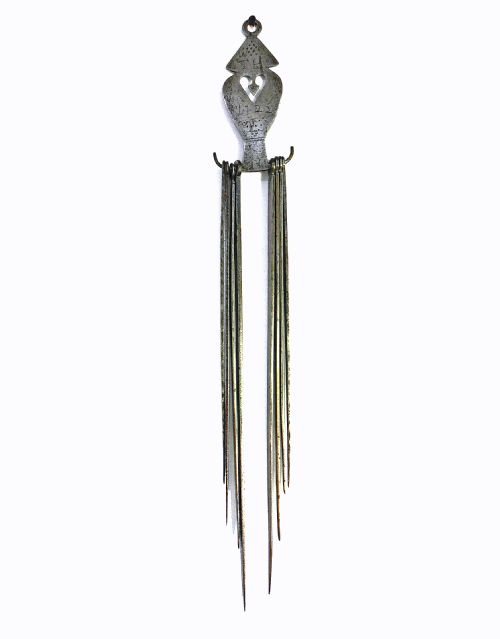


Georgian Hearth Tools
Georgian hearth tools are the functional ironmongery and brassware that tended open coal fires, bought to bring period authenticity and proper utility to a historic fireplace.
Georgian Hearth Tools
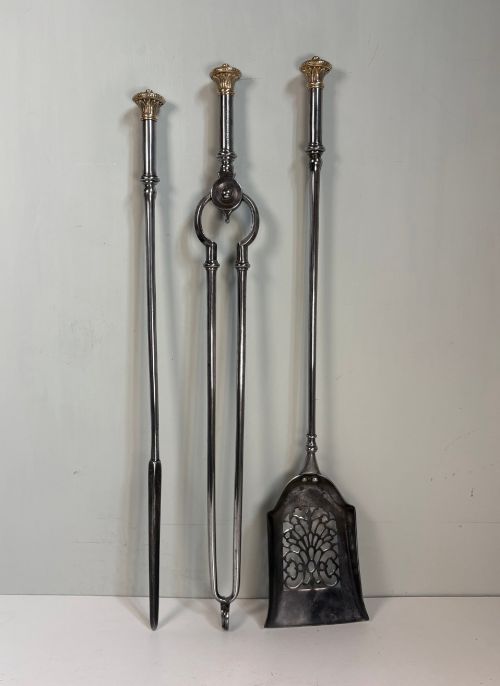
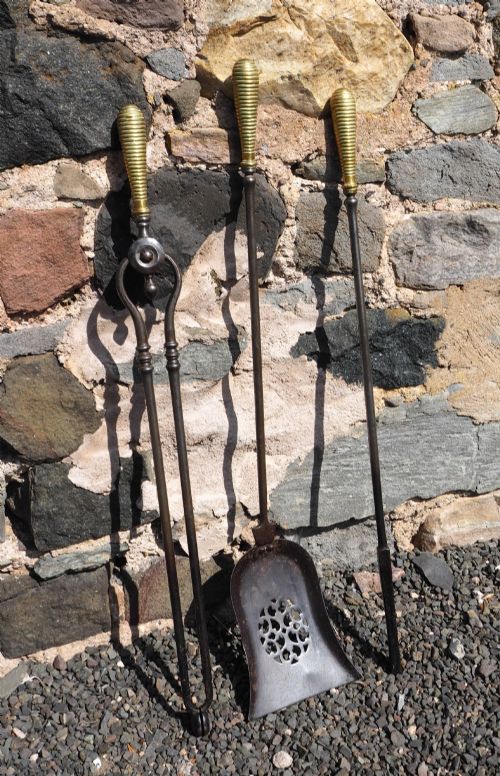
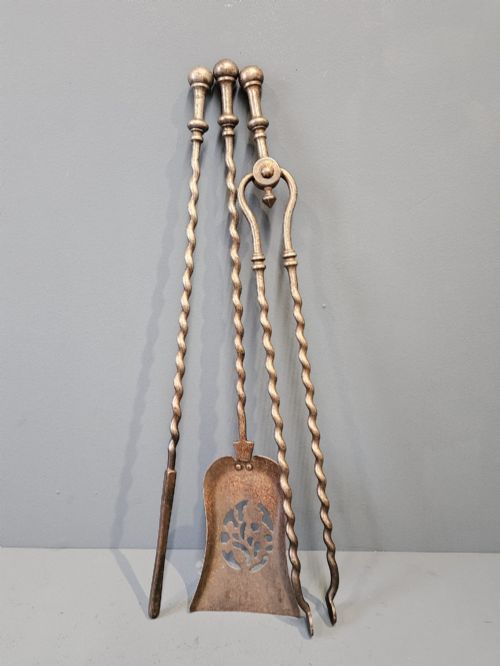
When you search for georgian hearth tools, you encounter the essential implements designed to manage coal and wood fires in eighteenth and nineteenth-century rooms. These pieces include complete sets of fire irons, individual pokers, tongs, shovels, and associated companion pieces.
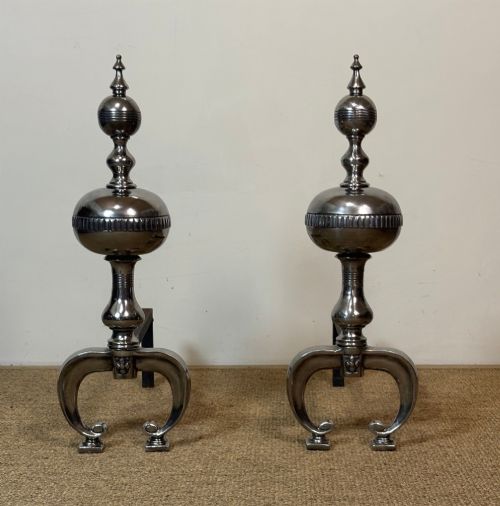
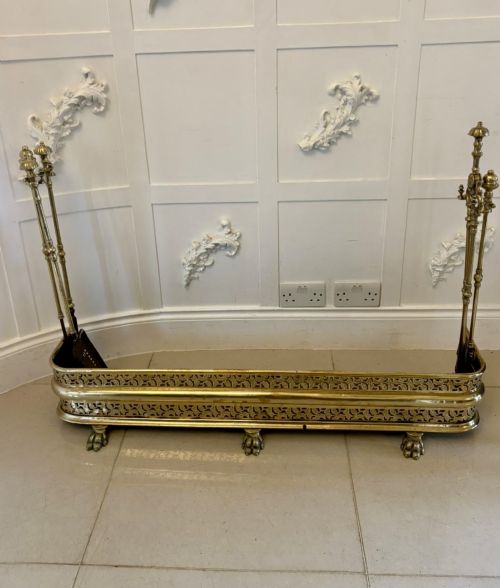
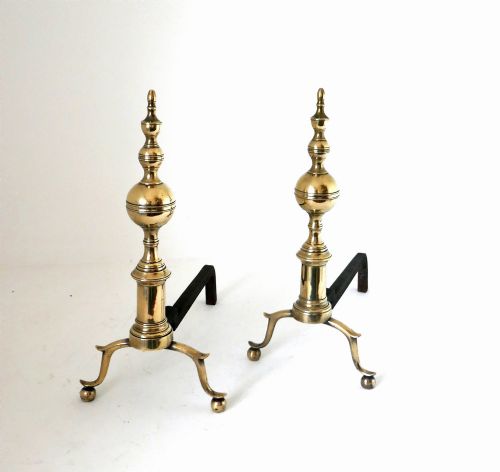
The items on this page span from the Georgian and Regency periods through to later Victorian interpretations. You will find sets fashioned from polished steel, cast iron, and brass, alongside more specific hearth accessories like fenders, andirons, and toasting forks.
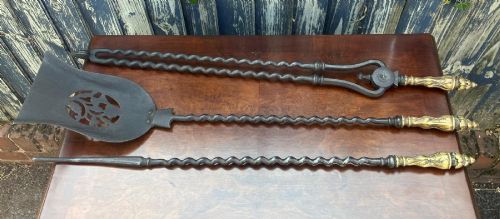
Sets commonly comprise a shovel, tongs, and poker, sometimes paired with a stand or fender. Materials range from bright burnished steel to warmer cast and gilt brass combinations.
How they were made
Blacksmiths and metalworkers shaped these objects primarily using iron, steel, and brass. Wrought iron and steel provided the strength needed for pokers and tongs subjected to intense heat.
Brass elements, including cast handles and fenders, were often shaped using traditional foundry methods before being polished or gilt. Steel components achieved their finish through meticulous burnishing.
Subsidiary materials like mahogany appear in specific items such as bellows and toasting fork handles, combining turned wood with durable metal shafts.
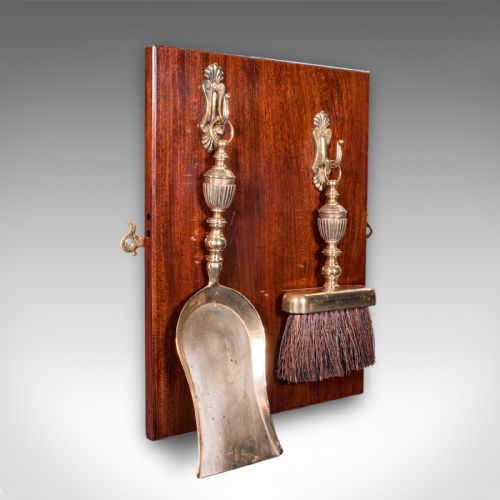
A maid's fireside maintenance set reminds us that polishing grates and tending ash was once a daily dawn ritual.
What varies in quality
Quality in these implements rests upon the crispness of the casting and the original finish of the metal. Superior steel tools show careful burnishing and well-balanced proportions that feel correct in the hand.
The integrity of joints and the retention of matching handles across a full set indicate a higher grade of manufacture. Pieces retaining their original surfaces and uncompromised length demonstrate better preservation over centuries of use.
The Georgian Hearth Tools Glossary
- Fire irons
- The collective term for the poker, tongs, and shovel used to tend an open hearth. They are frequently found as matched sets of three.
- Andirons
- Supports used to hold logs above the hearth floor to allow better airflow beneath the fire. They are also known as fire dogs.
- Fender
- A low metal guard placed around the hearth opening to contain stray embers and ash. They are commonly fashioned from brass or cast iron.
- Bellows
- A device constructed from leather and wood, often with brass or mahogany details, used to pump air into the fire. Mechanical versions utilise internal mechanisms for continuous airflow.
- Toasting fork
- A long-handled metal fork, sometimes featuring wooden elements, designed for holding food near the hearth fire. Examples survive in iron, copper, and steel.
Georgian Hearth Tools: Frequently Asked Questions
What tools come in a standard set?
A standard set typically includes a poker for adjusting fuel, tongs for handling coal or logs, and a shovel for clearing ash.
Many period groupings also incorporate a stand or hang from a dedicated fender.
How do I clean polished steel?
Polished steel requires careful maintenance to prevent corrosion and preserve the historic burnished surface.
Keep them in a dry environment and use appropriate metal care without abrasive compounds.
Are these tools meant for daily use?
While originally built for heavy daily service, many surviving pieces are now appreciated as decorative antiques.
Sturdy iron and steel examples remain robust, though brass and gilt finishes benefit from lighter handling.
How do I date a set of fire irons?
Dating relies on the manufacturing technique, handle design, and the material composition recorded in the pieces.
Georgian and Regency examples often display distinct handle turnings and metal treatments compared to later Victorian revivals.
What is the difference between brass and steel tools?
Steel and wrought iron were chosen for parts requiring high heat resistance and strength, such as the business end of pokers.
Brass was utilised primarily for decorative handles, fenders, and companion pieces where visual warmth was desired.