


Vintage Fireplace Shovel Tongs
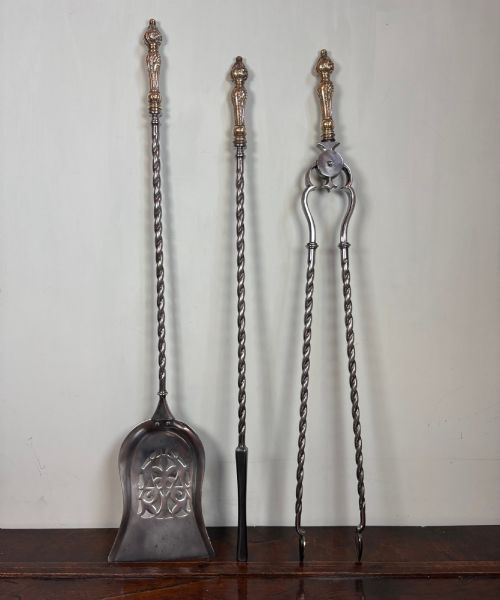
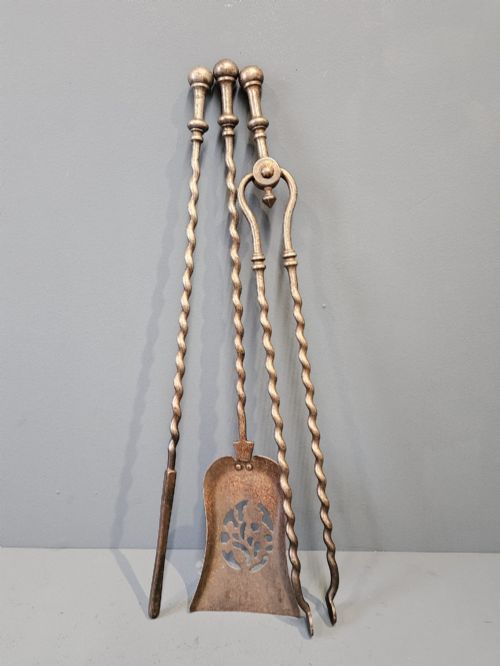
These vintage fireplace shovel tongs and matching companion sets bring functional hearthside utility and period character to the chimney breast.
Vintage Fireplace Shovel Tongs
When you search for vintage fireplace shovel tongs, you encounter functional hearth furniture designed to tend coal and wood fires. These pieces typically arrive as part of grouped fireside tools, companion sets, or paired irons.
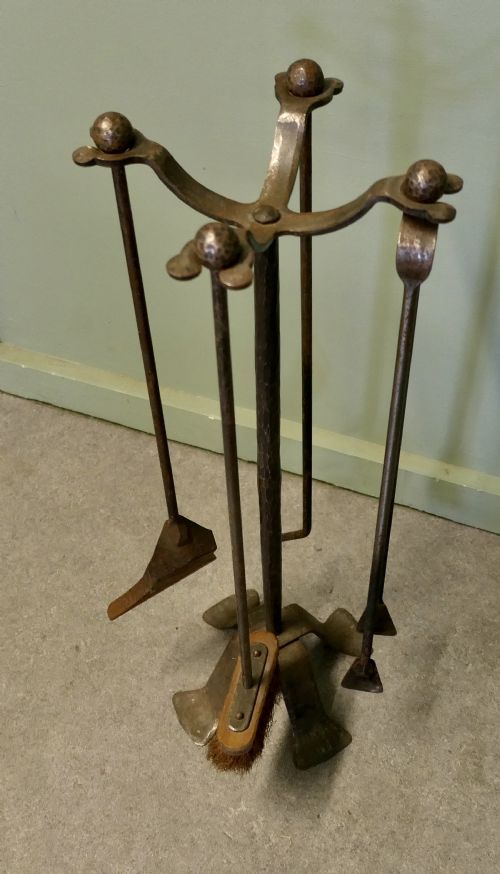
The selections on this page span the eighteenth, nineteenth, and early twentieth centuries, covering Georgian, Victorian, Edwardian, and Arts and Crafts styles. You are most likely to meet brass and steel combinations or heavy iron sets originating from domestic English and French settings.
How they were made
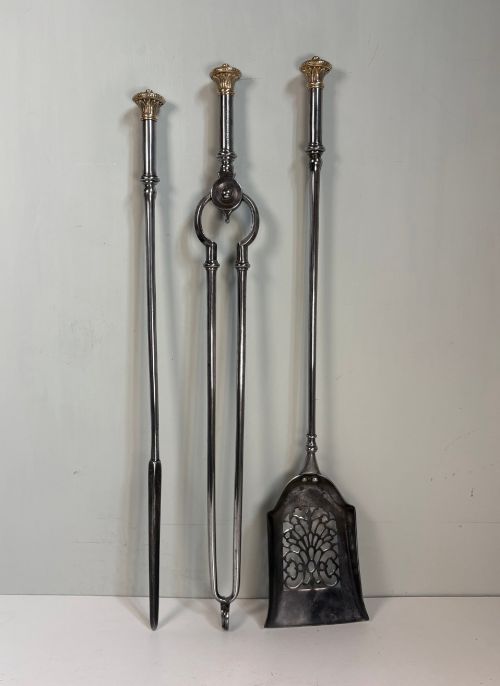
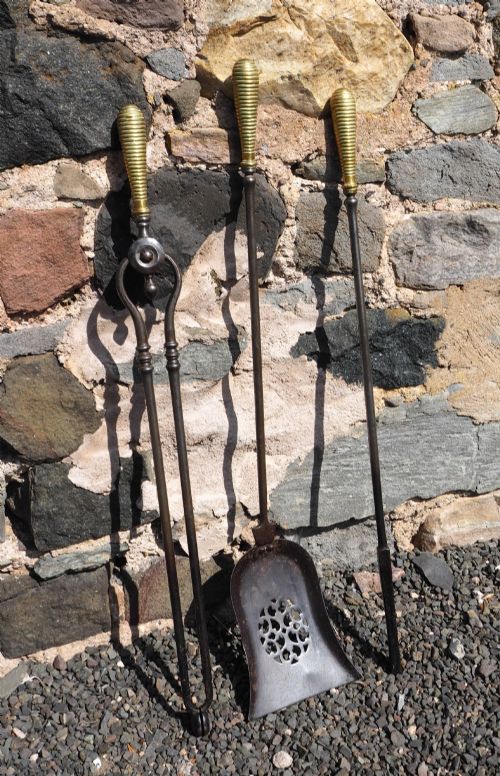
Blacksmiths and metalworkers shaped these utilitarian implements using durable metals like steel, iron, and wrought iron, frequently pairing them with cast or polished brass handles. Gunmetal and gilt metal also appear in select regional examples.
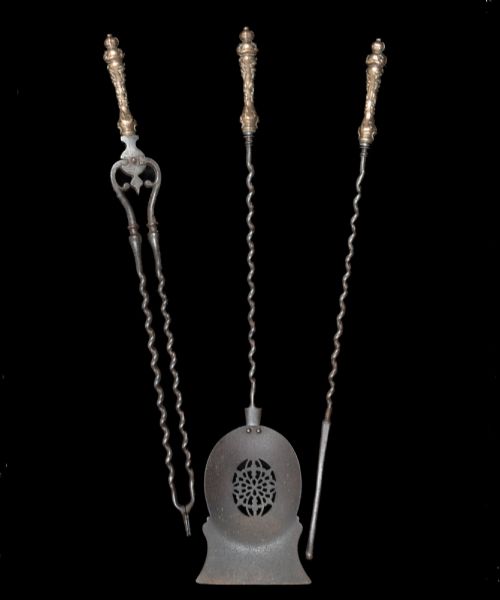
Makers employed techniques such as polishing, burnishing, and forging to finish the metal surfaces. Details like rope twist handles and starburst motifs demonstrate the careful hand of period artisans working at the forge and anvil.
Styles represented across the inventory include Georgian, Victorian, Edwardian, Arts and Crafts, Gothic Revival, French Country, and Rustic Country.
What varies in quality
The grade of a set rests upon the weight of the metal and the integrity of the construction. Heavier gauge steel and substantial brass components indicate superior durability and a more satisfying heft in the hand.
Refinement in the ornamentation also dictates worth, distinguishing plain utility items from those featuring decorative rope twist stems, starburst terminals, or balanced companion stands.
The Vintage Fireplace Shovel Tongs Glossary
- Companion set
- A matched collection of fireplace implements, usually including a shovel, tongs, and poker, often arranged together on a stand or with fire dogs. These suites provided the homeowner with every necessary tool for tending the hearth.
- Fire irons
- The collective term for poker, shovel, and tongs used to manage a coal or wood fire. They form the primary functional equipment of the domestic chimney breast.
- Burnished steel
- Metal polished to a bright, reflective finish through abrasion. This treatment protected the iron core while catching the flickering light of the hearth.
- Wrought iron
- Iron beaten into shape by a blacksmith while hot, identifiable by its fibrous texture. This material offered exceptional strength for heavy hearth use.
- Arts and Crafts
- A design movement prioritising traditional craftsmanship and honest materials over mass production. Pieces from this aesthetic display simpler, robust lines.
Vintage Fireplace Shovel Tongs: Frequently Asked Questions
What tools are in a set?
These collections typically include a shovel for clearing ash, tongs for repositioning fuel, and a poker for breaking up embers. Many listings group these implements with complementary fire dogs or a dedicated companion stand.
Such configurations ensured the hearth remained tidy and fully equipped for daily operation in period homes.
How do I date a set?
Dating relies on stylistic clues and material combinations, such as the polished steel and burnished finishes popular in the eighteenth century versus the heavy brass casting seen in Victorian examples. Edwardian pieces often display lighter proportions and refined turnings.
Examining the manufacturing marks, metal composition, and handle motifs helps place the items within their specific design era.
Are iron or brass better?
Iron and wrought iron offer rugged durability and heavy utility, suiting rustic country settings or large manor house fireplaces. Brass and polished steel bring a brighter, more decorative presence suited to formal reception rooms.
Your choice depends on the visual weight you wish to introduce to the fireplace surround.
How do I maintain the metal?
Maintaining these pieces involves gentle cleaning suited to the specific metal, avoiding harsh abrasives that strip historic finishes. Regular dusting and occasional light polishing preserve the surface character of brass and steel.
Keep the implements dry to prevent oxidation and rust accumulation on the iron components.