
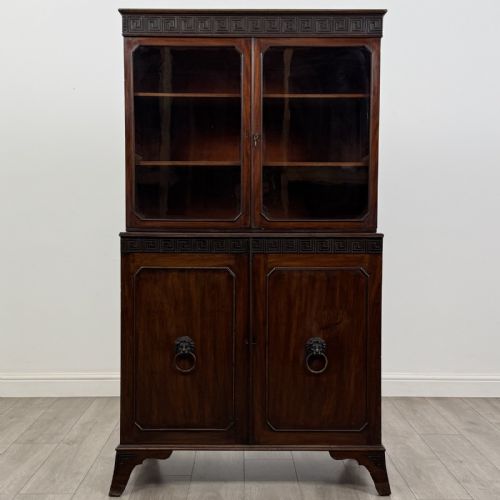
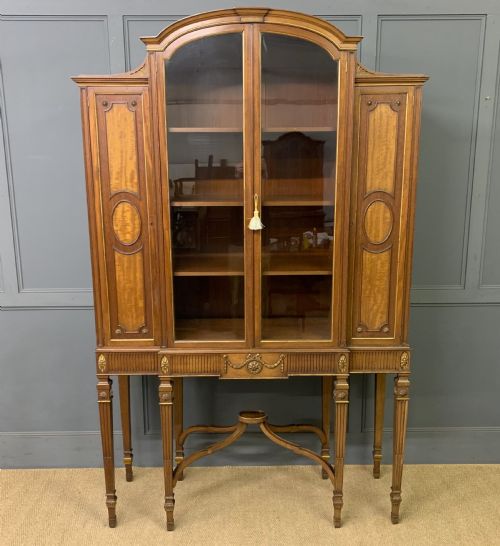
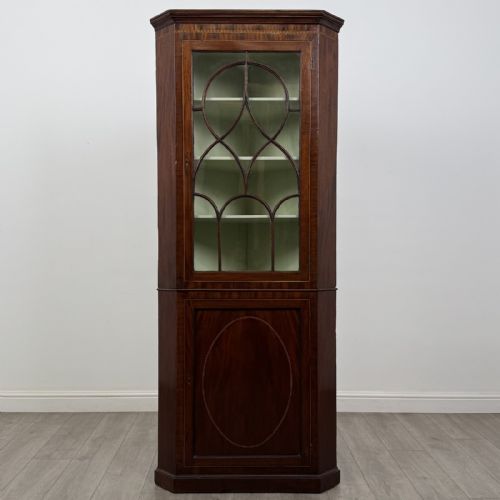
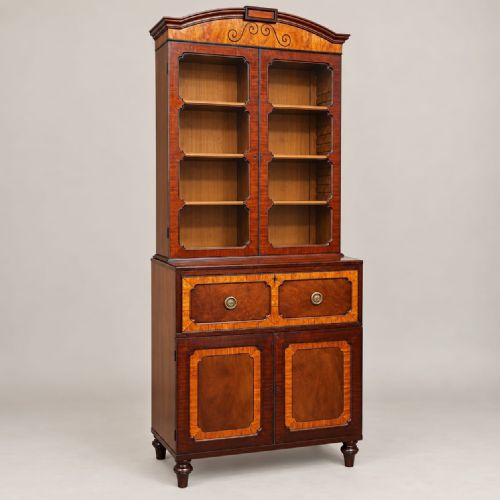
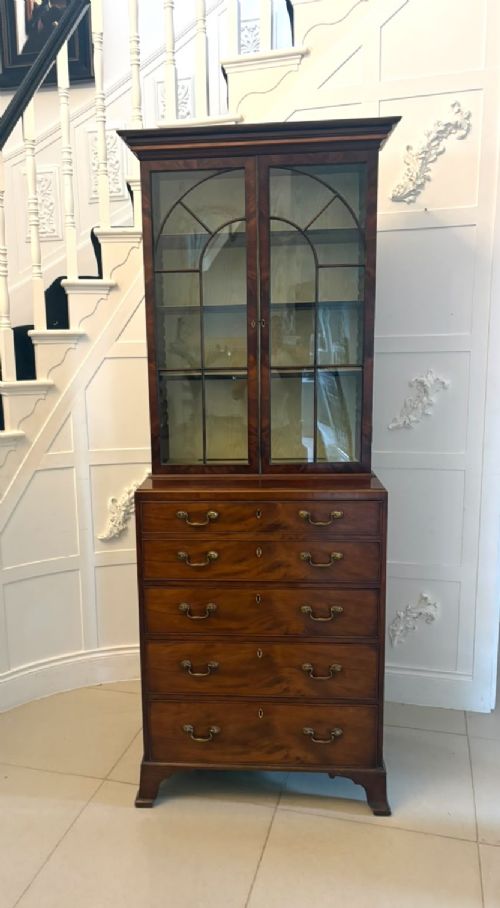
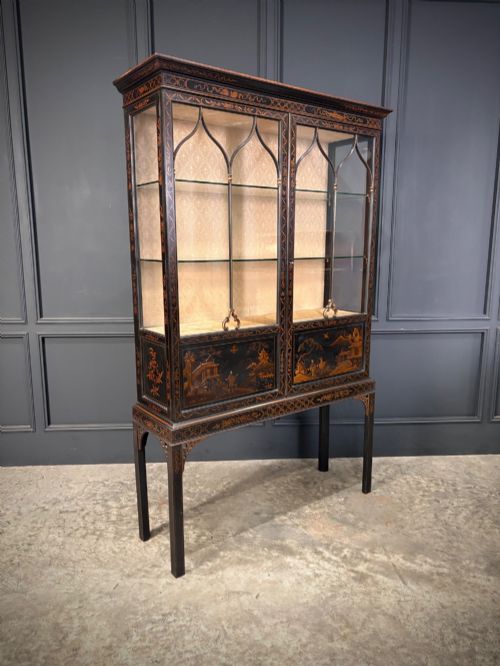
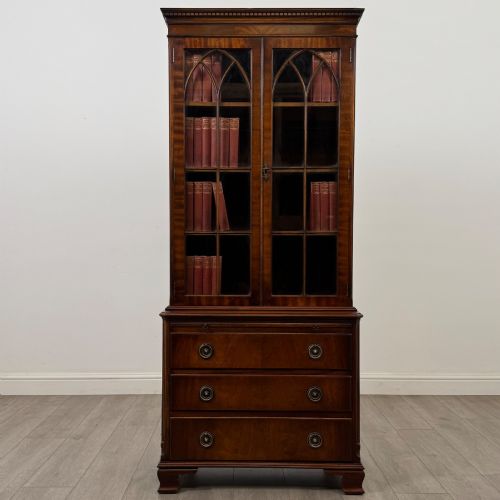
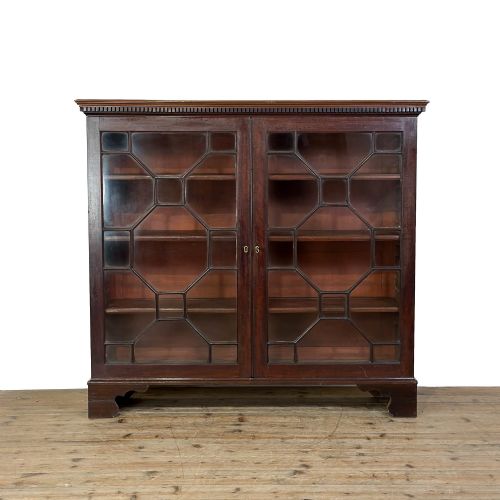
Georgian Glazed Display Bookcase
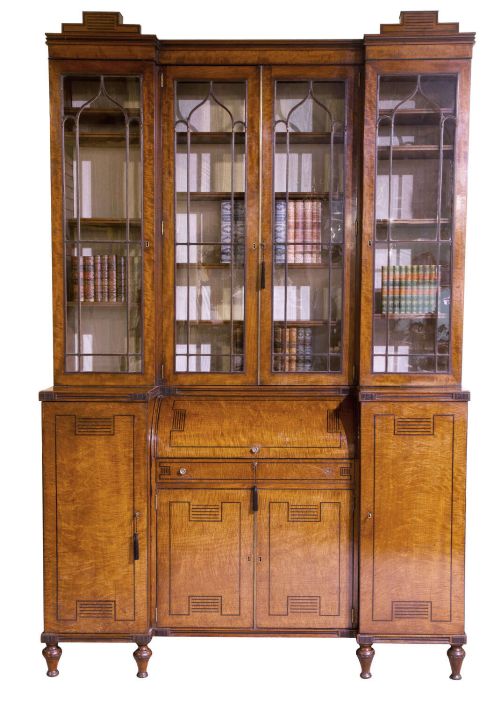
A georgian glazed display bookcase brings together timber and glass to hold a collection with formal balance and utility.
Georgian Glazed Display Bookcase
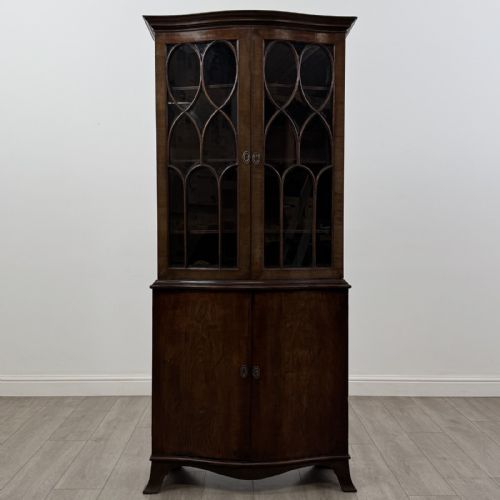
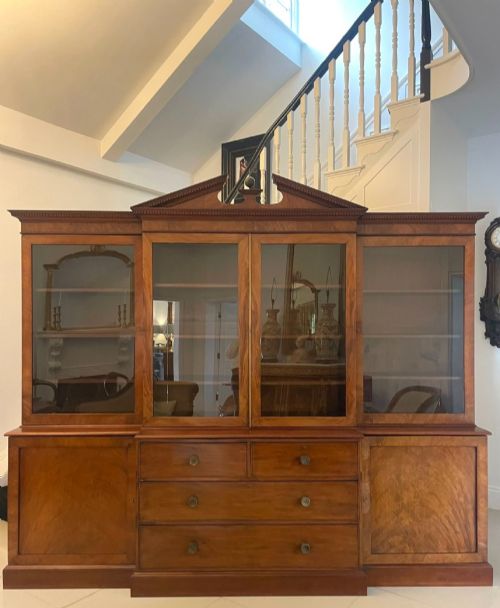
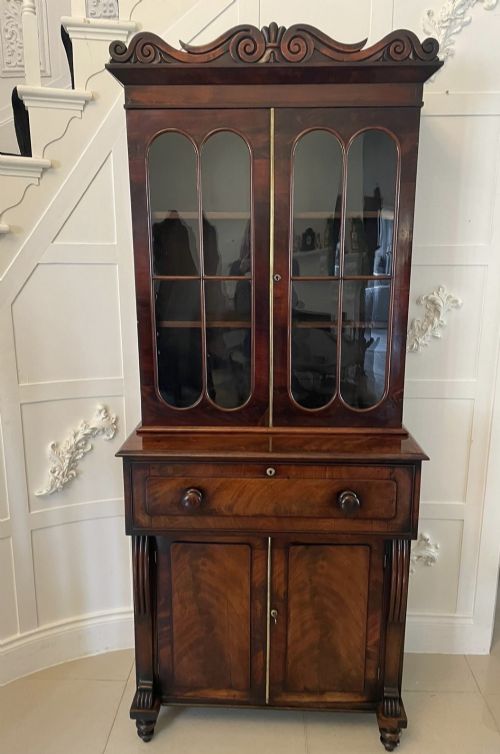
The georgian glazed display bookcase appears across the eighteenth and nineteenth centuries, spanning Georgian, Regency, and Victorian eras alongside later revivals. Buyers encounter breakfront configurations, tall library cabinets, secretaire variants with fitted interiors, and corner cupboards.
Mahogany dominates the forms, supported by rosewood, satinwood, walnut, pine, and yew wood. Pieces range from large breakfront library pieces down to small display cabinets and miniature vitrines.
Materials and construction
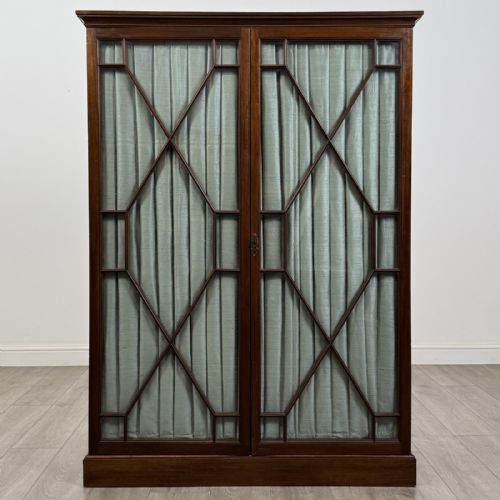
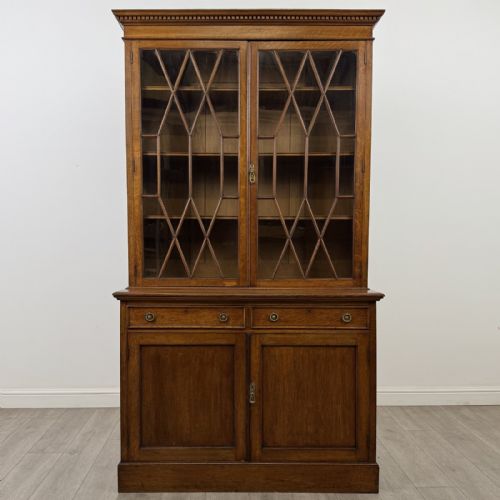
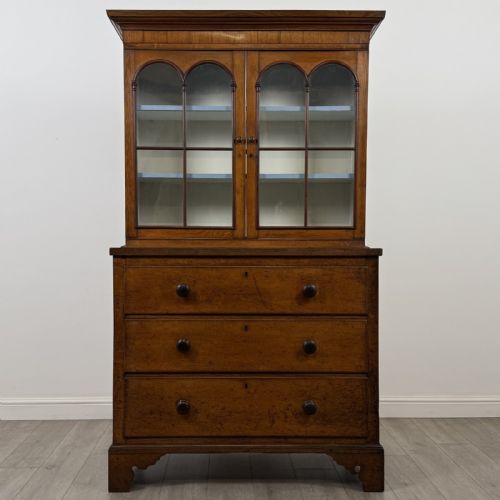
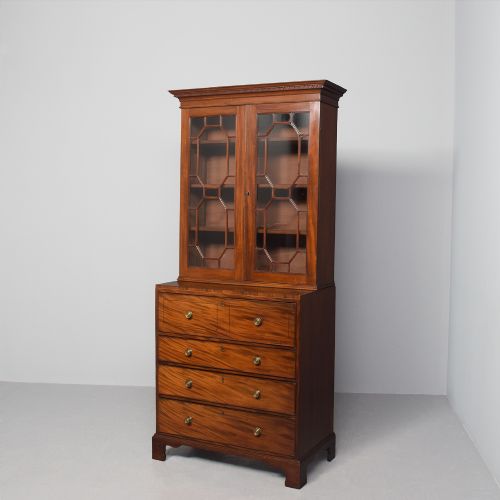
Cabinet makers built these pieces using solid timbers and veneers, deploying flame mahogany, inlaid stringing, and marquetry for surface pattern. Glass panes are held within wooden glazing bars, often arranged in astragal or astral patterns.
Brass hardware secures doors and drawers, while internal fittings often include adjustable shelving, fabric linings, and fitted writing sections within secretaire drawers.
Listings feature periods spanning from the eighteenth century through to the Edwardian era, constructed in mahogany, rosewood, satinwood, and oak.
Judging the work
Quality rests on the selection of timber figures, such as flame mahogany or figured rosewood, and the crispness of inlaid decoration and glazing bars. Proportions remain crucial, separating grand breakfront library pieces from standard side cabinets.
The presence of original painted decoration, fitted writing drawers, and intact glass panes elevates a piece from standard utility to higher craftsmanship.
Thomas Chippendale
The Georgian Glazed Display Bookcase Glossary
- Astragal glazed
- Glass doors divided into smaller panes by narrow wooden mouldings. These bars provide structural support and geometric visual rhythm across the front.
- Breakfront
- A cabinet front where the central section projects forward from the flanking wings. This architectural layout creates depth and shadow.
- Secretaire bookcase
- A tall storage piece containing a pull-down desk drawer with internal pigeon holes and small drawers. It combines a writing desk with upper display shelving.
- Vitrine
- A glass-fronted display cabinet designed for showing porcelain and small objects. It relies on extensive glazing to maximise light penetration.
- Marquetry
- Inlaid wood veneers forming decorative patterns or pictures. Craftsmen slice different coloured timbers to create floral or geometric motifs.
Georgian Glazed Display Bookcase: Frequently Asked Questions
How do I spot a true Georgian piece?
Examine the timber selection, construction methods, and proportion of the cabinet. Genuine pieces from the period often feature dense mahogany with secondary pine or oak timbers.
Look closely at the glazing bars on the doors, as earlier examples use thinner, hand-planed mouldings compared to later revival pieces.
What is a secretaire bookcase used for?
The middle drawer pulls down to reveal a fitted interior with small compartments and a writing surface. This allowed owners to write letters while keeping correspondence and books housed in one item.
When closed, the desk section resembles a standard drawer to maintain the symmetrical facade of the lower cabinet.
Where should I place a breakfront cabinet?
Breakfront bookcases require a large wall space due to their projecting central section and substantial width. Placing them in a library, study, or spacious dining room allows the architectural proportions to remain visible.
Keep the cabinet away from direct sunlight and heat sources to protect fragile wood veneers and antique glass.
How do I care for antique mahogany?
Dust the timber regularly with a dry, soft cloth and avoid commercial silicone polishes that build up a greasy residue. Maintain a stable room temperature to prevent the wood from drying out and cracking.
Apply a traditional beeswax sparingly when the surface appears dull, buffing it gently to maintain a soft sheen.