
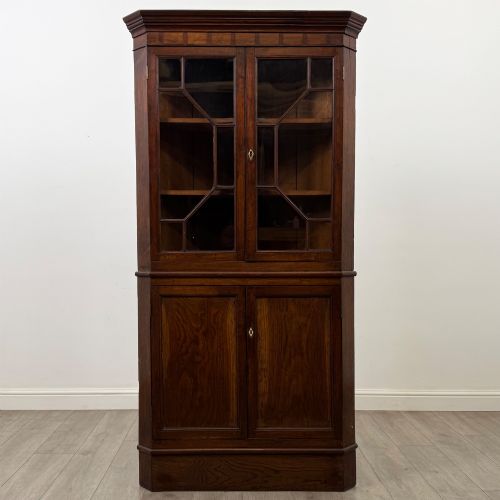
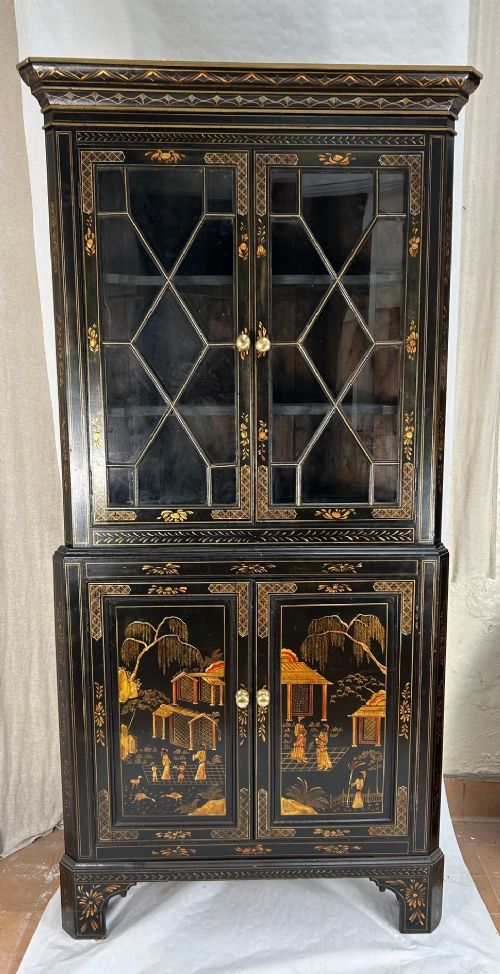
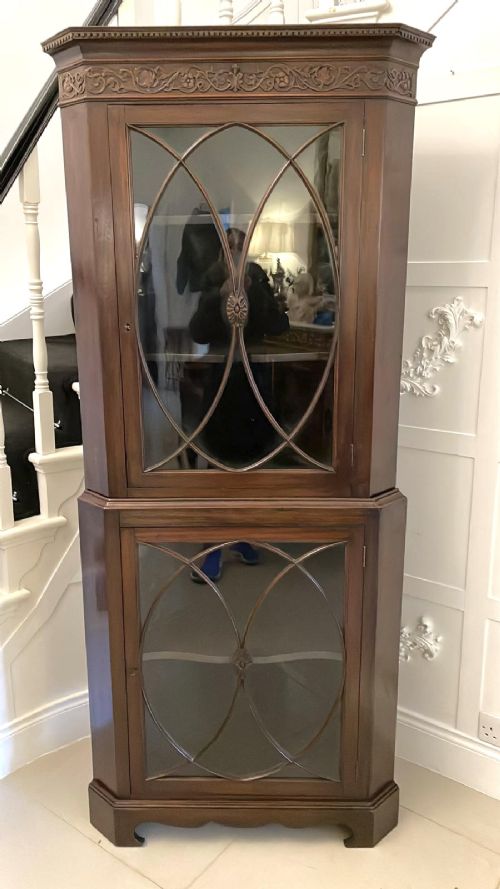
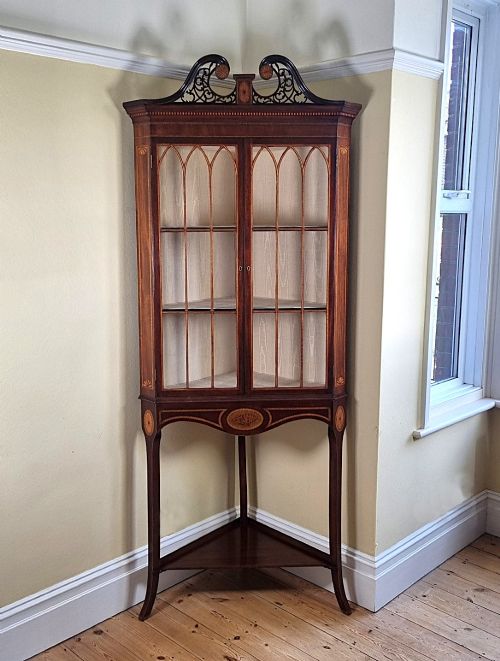




Georgian Glazed Corner Cupboard
A georgian glazed corner cupboard turns dead room space into a focal point by framing silver and china behind glass doors.
Georgian Glazed Corner Cupboard
A georgian glazed corner cupboard is a fitted or freestanding storage unit designed to slot neatly into the right angle of a room. Most examples found here date from the eighteenth and nineteenth centuries, with the georgian period heavily represented alongside later revival iterations.
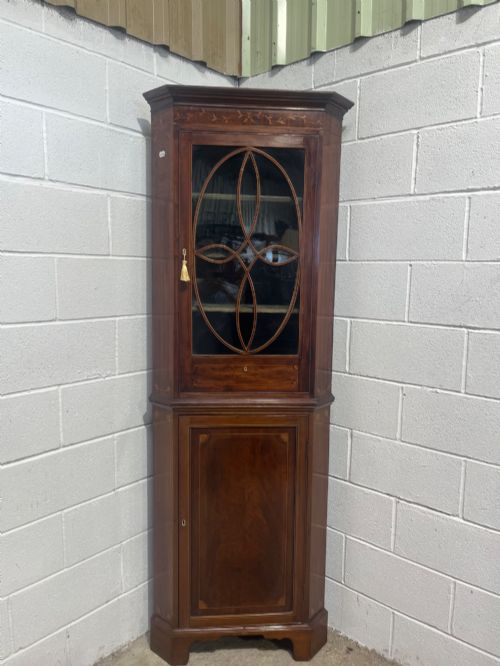
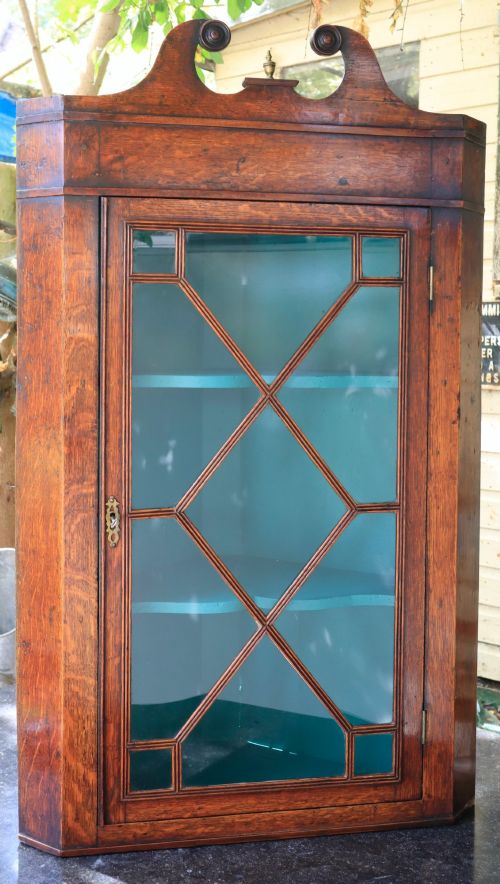
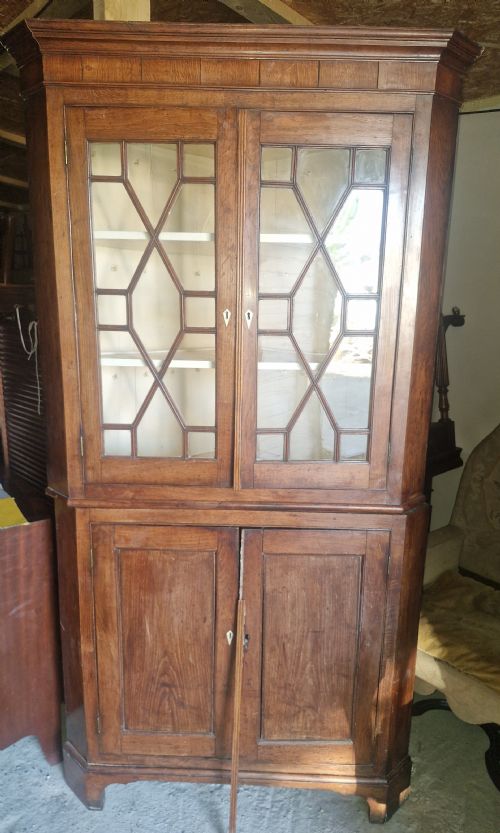
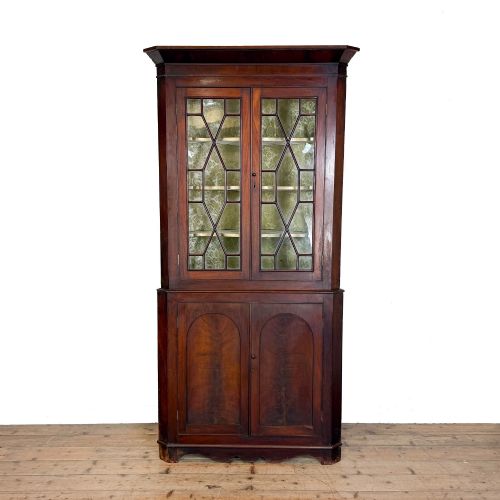
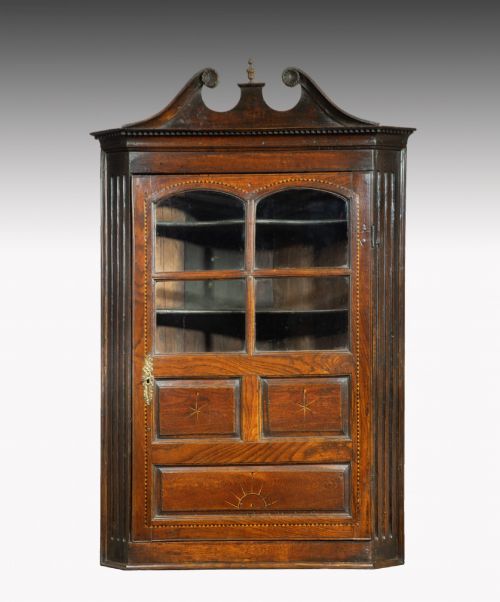
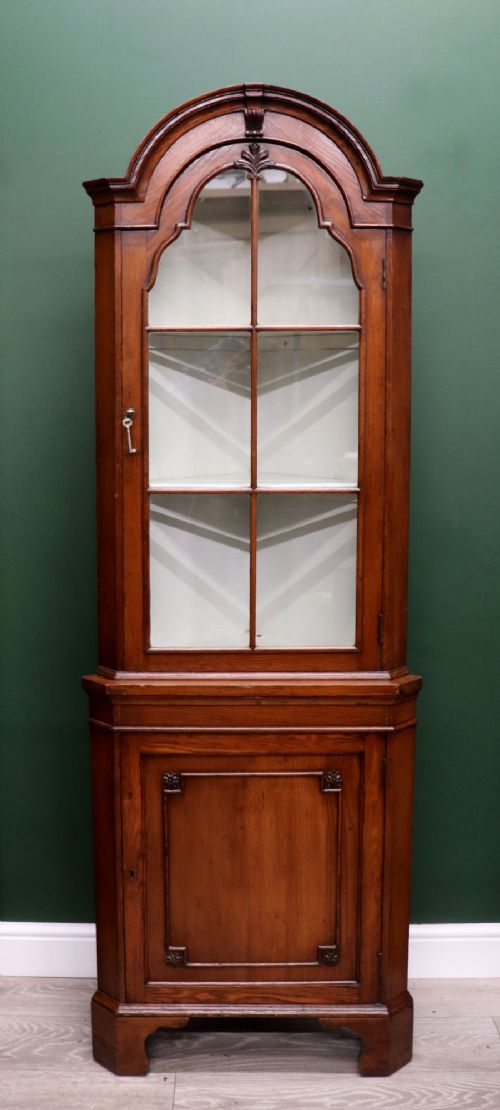
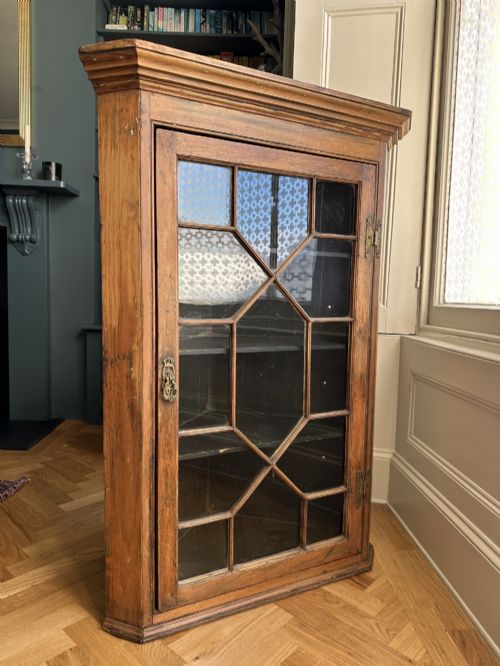
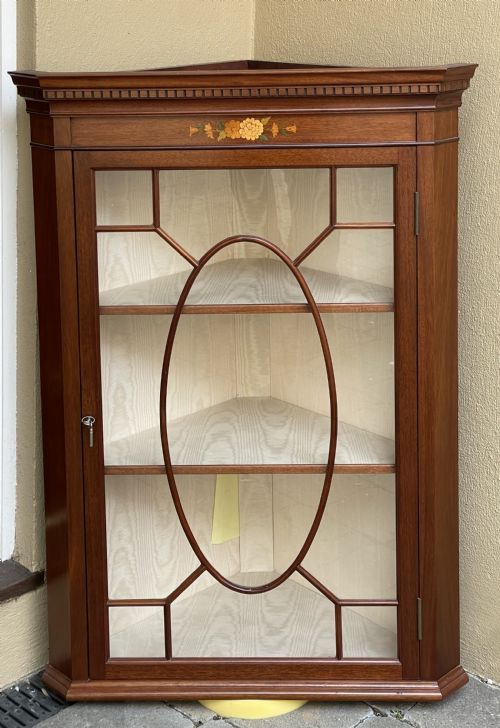
Makers built these pieces in two main formats: wall hanging cabinets for lower ceilings or smaller rooms, and taller floor-standing or two-part models that rise from the floor. Interior shelving typically displays glassware or ceramics through a single glazed door, sometimes flanked by wood panels.
Woods vary by region and status, with sturdy oak and rich mahogany dominating the surviving stock. Occasional variants include walnut, pine, yew wood, and lacquered surfaces from Edwardian interpretations.
How They Were Made
Cabinet makers constructed carcass frames primarily from solid oak and mahogany, often applying decorative veneers such as satinwood inlay, cross-banding, or burr walnut to prominent exterior surfaces. Glazing utilised lead cames or timber astragal bars to divide the glass panes into geometric patterns.
Hardware played both a structural and decorative role, featuring brass hinges, escutcheons, and working locks with keys to secure the contents. Two-part models required precise joinery to stack upper glazed display sections securely upon lower wooden cupboards or bases.
Listings feature oak, mahogany, walnut, and pine, spanning the Georgian, Edwardian, and Regency eras.
What Varies in Quality
Proportion and timber selection dictate the standing of a piece, where dense mahogany with deep figuring or characterful Welsh oak outrank plain utility builds. The delicacy of the astragal glazing bars and the crispness of carved mouldings or marquetry inlay separate standard workshop output from finer examples.
Originality of components preserves historical integrity, meaning pieces retaining old glass panes, intact brass hardware, and painted or shelved interiors command greater appreciation. Floor-standing variants with well-proportioned bracket feet or stands show superior design balance compared to simpler wall-hanging boxes.
The Georgian Glazed Corner Cupboard Glossary
- Astragal
- Timber glazing bars that divide a glass window into smaller panes. They form intricate geometric shapes across the door front.
- Bracket foot
- A simple structural foot shape resembling a bracket, commonly found supporting the corners of floor-standing cabinets.
- Cross-banding
- A narrow strip of veneer laid across the grain of the primary wood to create a decorative border on cabinet doors.
- Escutcheon
- A protective brass plate surrounding the keyhole. It prevents the wood from splitting around the lock.
- Two-part
- A cabinet constructed in separate upper and lower sections that stack together. This facilitated easier transport of tall furniture.
Georgian Glazed Corner Cupboard: Frequently Asked Questions
Where should I place a corner cupboard?
These cabinets suit empty room angles that standard rectangular furniture cannot use effectively. They draw the eye upward and fill awkward junctions between walls without blocking walkways.
Wall-hanging versions fit well above sideboards or desks, while floor-standing models anchor empty corners in dining rooms or hallways.
How do I secure the doors?
Most period pieces rely on brass mortice locks operated by a fitted key. Turning the key engages the mechanism into the frame to keep the door shut.
Keep historical keys with their respective cabinets, as replacement locks alter the interior woodwork and historical fabric.
What is the difference between wall-hanging and floor-standing?
Wall-hanging cabinets mount directly to wall studs using internal brackets, keeping the floor entirely clear beneath them. They tend to be lighter and more compact.
Floor-standing units rest on feet or plinths, offering greater storage capacity and often featuring a lower cupboard beneath the glazed display section.
How do I care for antique wood and glass?
Maintain timber surfaces by applying appropriate wax polish sparingly to nourish the grain without building up heavy residues. Avoid placing furniture in direct sunlight to prevent timber fading.
Clean the glass panes with a mild cloth and standard glass cleaner, taking care not to spray liquid directly onto old wooden astragal bars or painted interiors.