

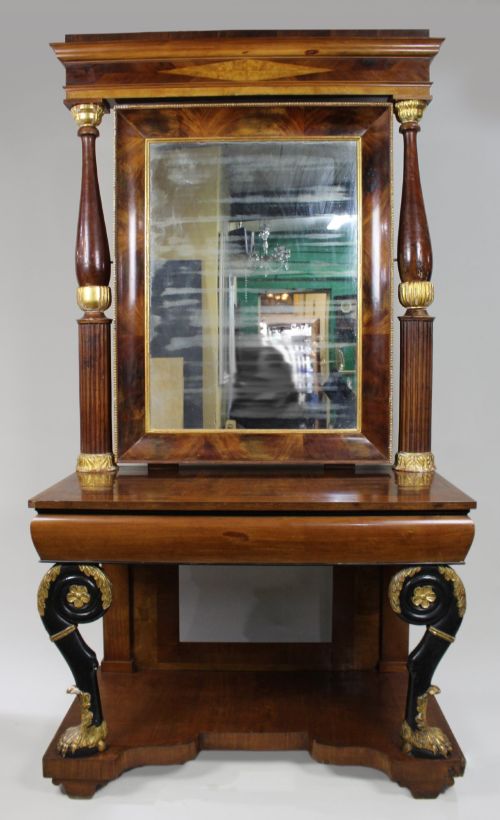


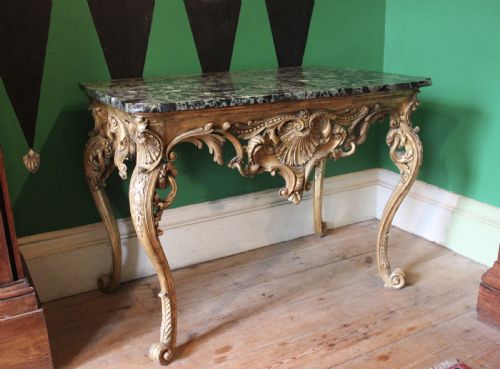


Georgian Giltwood Pier Table
These georgian giltwood pier table pieces bring architectural grandeur to a room, offering gilded surface and stone top that buyers seek for formal interiors.
Georgian Giltwood Pier Table
When you search for a georgian giltwood pier table, you encounter console tables, side tables, and occasional pier mirrors designed to sit against a wall. The pieces span the 18th century, 19th century, and Regency periods, alongside later 1900 and 1920 revivals in Georgian style and Chippendale style.
Forms include demi-lune console tables and paired side tables, frequently incorporating marble tops or painted surfaces. Origins recorded in the evidence encompass English and Italian workshops, reflecting both Neoclassical and Rococo aesthetic traditions.
How they were made
Maker construction relies on wood bases finished with gesso and gold leaf or paint, creating the characteristic giltwood surface. Many examples integrate marble tops, rosewood, pollard oak, or satinwood.
Carved ornament defines the structural framing, while auxiliary elements such as mirror glass appear in taller pier mirror combinations.
Georgian Giltwood Pier Table Retail Price Guide 2026
Typical asking prices for georgian giltwood pier table among the pieces listed under this phrase on Sellingantiques today, from the lower quarter to the upper quarter. They describe what is for sale here now, not the wider market.
Materials recorded span giltwood, marble, wood, gold leaf, paint, gesso, rosewood, and mirror glass.
What varies in quality
Quality rests upon the depth and crispness of the carved woodwork beneath the gold leaf and paint. Substantial proportions and well-executed timber choices, such as pollard oak or rosewood, elevate the standing of a console table.
The integration of decorative stones like rouge marble and the refinement of Neoclassical or Rococo detailing distinguish standard decorative pieces from more ambitious examples.
The Georgian Giltwood Pier Table Glossary
- Giltwood
- Wood carved and coated with gold leaf. This finish defines the reflective surface characteristic of these tables.
- Demi-lune
- Half-moon shape. Such tables fit flush against a wall.
- Console table
- A table supported by wall brackets or console legs. These pieces were traditionally designed for placement beneath a mirror.
- Neoclassical
- A style drawing on classical antiquity. It appears frequently in the proportions and ornament of these frames.
Georgian Giltwood Pier Table: Frequently Asked Questions
Where do you put a pier table?
These tables are traditionally placed against a wall, often between two windows or beneath a pier mirror. Their flat backs allow them to anchor formal reception rooms without protruding too far into the floor space.
In modern rooms, they serve effectively in hallways or living spaces where surface area is needed alongside a strong decorative statement.
How do I identify a Regency table?
Regency pieces often display distinct timber choices like pollard oak and rosewood, paired with giltwood accents. They frequently possess substantial proportions and draw upon classical design motifs.
Comparing the structural weight and wood grains against 18th-century counterparts helps clarify the period.
Are these tables solid marble?
The listings show marble top variations, meaning the stone forms the upper surface while the base is constructed from wood, giltwood, or painted materials. Rouge marble is one notable stone variety found on these surfaces.
The combination provides a heavy, cool top supported by carved wooden framing.