


Georgian Gilt Bronze Clock
A georgian gilt bronze clock brings warmth and precise mechanical artistry to a mantel, combining rich gilded surfaces with reliable fusee movements.
Georgian Gilt Bronze Clock
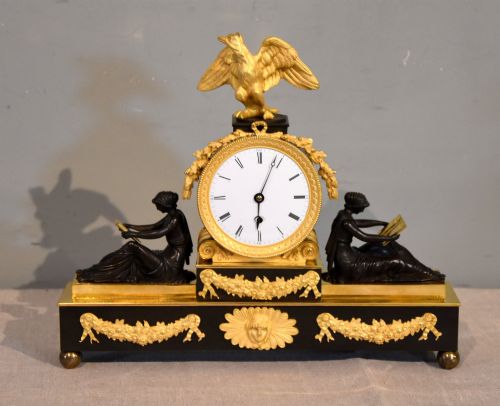
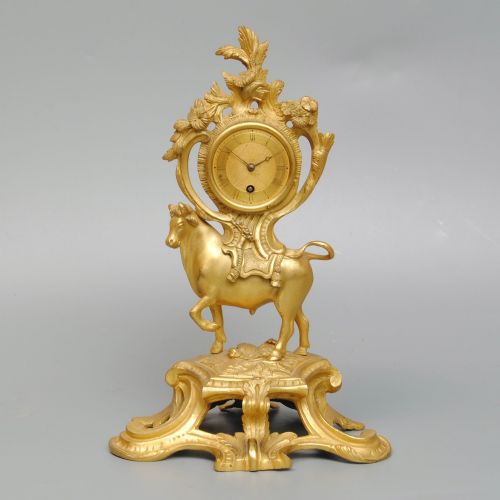
When searching for a georgian gilt bronze clock, collectors encounter sophisticated mantel and bracket timepieces primarily originating from the Regency period and the turn of the nineteenth century. These items typically manifest as freestanding mantel clocks or structural bracket clocks housed in durable metallic and sometimes organic enclosures.
The objects on this page predominantly showcase English Regency styling alongside regional European variations such as Swiss Neuchatel production. Makers encased these sophisticated mechanisms in combinations of brass, ormolu, and patinated bronze, often pairing metallic finishes with contrasting marble or tortoiseshell details.
Most examples function through single chain fusee movements, providing steady power delivery to the gear train for accurate timekeeping. Buyers frequently meet figural compositions, miniature formats, and quarter-striking variations that reflect the technical ambition of period watchmakers.
Materials and construction methods
Craftsmen utilised cast bronze and brass as the foundational structural elements, applying mercury gilding or ormolu techniques to create rich, luminous exterior surfaces. Patinated bronze often provided dark tonal contrast against the bright gilded highlights of the case architecture.
Clockmakers fitted intricate chain fusee movements inside these metallic housings to regulate the pull of the mainspring, ensuring uniform tension across the operational run. Enamel dials served as the standard face for marking hours, whilst secondary materials like red tortoiseshell and marble added texture and weight to select luxury housings.
Listings feature Regency and nineteenth-century timepieces constructed from brass, ormolu, patinated bronze, marble, and tortoiseshell.
Assessing quality and execution
The distinction between standard production and top-tier execution lies in the crispness of the bronze chasing and the depth of the original gilding. Finer pieces exhibit deeply detailed figural work and sharp architectural mouldings rather than soft or rubbed casting edges.
Internal mechanical complexity also dictates standing, as quarter-striking complications and signed movements by notable London watchmakers elevate the horological significance of the piece. The harmonious integration of contrasting materials, such as tortoiseshell panels set within ormolu mounts, demonstrates superior workshop capability.
Baetens London·Viner London·William Hardy London·FB Adams London·Perigal and Duterrau·Bently and Beck London
The Georgian Gilt Bronze Clock Glossary
- Fusee
- A conical pulley designed to equalise the torque of the mainspring as it unwinds. This mechanism ensures consistent power delivery to the gear train for improved accuracy.
- Ormolu
- Finely chopped gold amalgamated with mercury and applied to a bronze base through heat processing. This historical technique produces a rich, durable golden finish.
- Bracket clock
- A portable clock originally designed to sit upon a wall bracket or furniture surface. Many examples feature substantial carrying handles on top of the case.
- Patinated bronze
- Bronze treated chemically or thermally to produce a stable, darkened surface layer. It provides contrast against bright gilding in figural and architectural clock cases.
- Quarter striking
- A complication enabling a clock to chime the intermediate quarters of the hour in addition to the full hour count. This requires an extended gear train and additional hammers.
Georgian Gilt Bronze Clock: Frequently Asked Questions
How do I wind a fusee clock?
Use the appropriate key inserted into the dial arbor, turning it steadily in the direction specified by the movement design until resistance indicates full tension.
Take care not to overwind the mainspring, as this can strain the historic chain and compromise the delicate fusee mechanism inside the brass housing.
Where should I place a bronze clock?
Position the piece on a stable, level surface such as a wooden mantelpiece or a heavy sideboard away from direct sunlight and moisture.
Maintaining a consistent indoor temperature protects the delicate enamel dial and prevents expansion differences between the metal case and decorative marble or tortoiseshell elements.
What is a single chain fusee?
It is a mechanical arrangement where a fine steel chain connects a spring barrel to a conical pulley, maintaining steady power as the spring loses tension.
This system represents a hallmark of quality British horology from the Regency era, ensuring the timepiece maintains a consistent beat until the power reserve depletes.
How do I identify Regency style?
Regency design draws heavily on classical antiquity, featuring clean architectural lines, restrained ornamentation, and contrasting patinated and gilded bronze surfaces.
Clocks from this period often incorporate bold figural bronzes or geometric ormolu mounts that reflect early nineteenth-century aesthetic preferences.