



Georgian Geometric Oak Chest
A georgian geometric oak chest brings architectural line and honest timber into a room, offering robust storage built to last.
Georgian Geometric Oak Chest
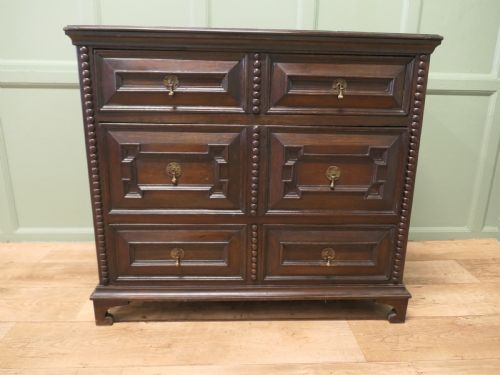
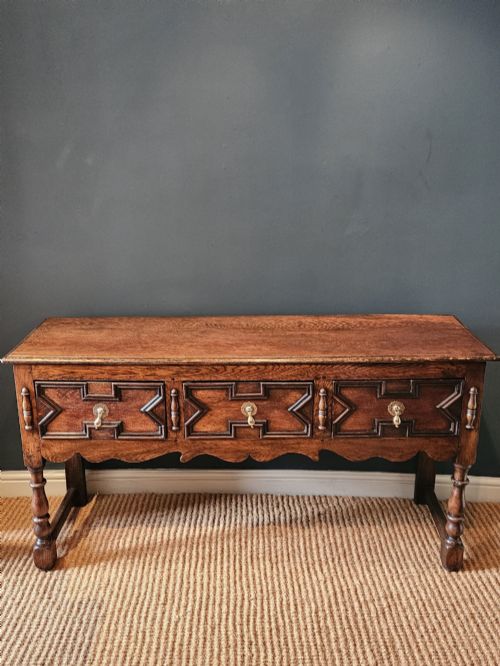
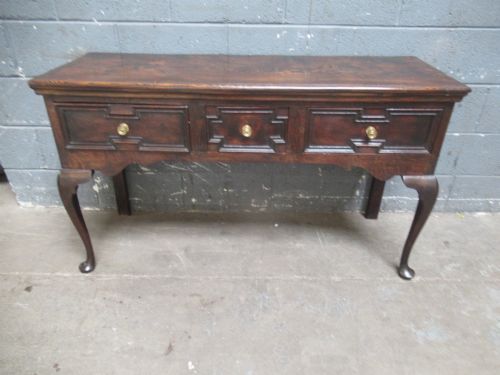
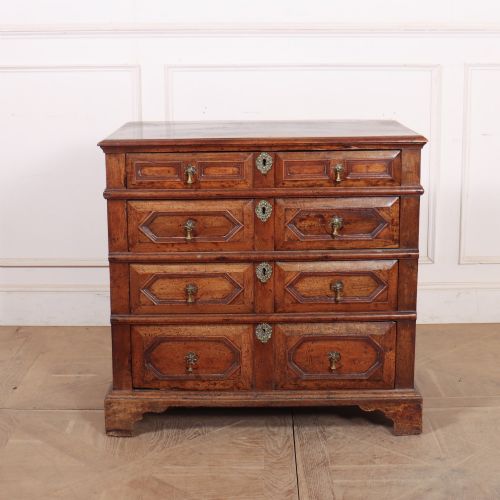
A georgian geometric oak chest combines sturdy British timber with the structured, panelled decoration that defines the period. These pieces span standard chests of drawers, mule chests, dressers, and smaller chests on stands.
Most examples you encounter date from the eighteenth century, featuring the characteristic grain and rich patina of English oak. The form relies on applied mouldings to create panels and geometric patterns across the frontage.
Makers of the era utilised solid oak construction alongside brass and iron hardware such as drop handles and escutcheons. The survival of these forms ranges from early Georgian interpretations back to seventeenth-century Jacobean roots and later revivals.
What varies in quality
The sophistication of the applied geometric mouldings and the crispness of the joinery set finer examples apart from simpler utilitarian pieces. Proportion and the balanced arrangement of drawers dictate visual harmony.
The depth of colour and untouched patina of the oak surfaces reveal how well a piece has survived the centuries. Original brass or iron hardware contributes significantly to the integrity of the whole.
Georgian Geometric Oak Chest Retail Price Guide 2026
Typical asking prices for georgian geometric oak chest among the pieces listed under this phrase on Sellingantiques today, from the lower quarter to the upper quarter. They describe what is for sale here now, not the wider market.
Listings feature oak combined with brass and iron across periods spanning the seventeenth century, the Georgian era, and the nineteenth century.
The Georgian Geometric Oak Chest Glossary
- Geometric moulding
- Applied strips of timber shaped into repetitive patterns on drawer fronts and panels. This technique adds depth and architectural rhythm to the facade.
- Mule chest
- A storage chest fitted with one or more drawers at the base. It bridges the evolution between the traditional blanket box and the modern chest of drawers.
- Chest on stand
- A chest of drawers elevated on a separate framework of legs. This form lifts the storage space and lightens the overall silhouette in a room.
- Patina
- The deep sheen and surface character acquired by oak over decades of handling and polishing. It serves as a visual record of age and use.
- Escutcheon
- A protective plate surrounding the keyhole of a drawer or door. Typically made of brass or iron, it often matches the drop handles.
Georgian Geometric Oak Chest: Frequently Asked Questions
How do I date an oak chest?
Dating relies on examining construction methods, timber preparation, and hardware styles. Early pieces often feature hand- cleft boards and pegged joinery.
Stylistic markers such as geometric mouldings and bracket feet help narrow the period from seventeenth-century Jacobean roots through the Georgian era.
Where should I place an oak chest?
An oak chest suits living spaces, hallways, or bedrooms where its strong grain and architectural lines can anchor the room. Keep timber furniture away from direct heat sources and strong sunlight to protect the finish.
Ensure the floor is level so the frame bears weight evenly across all feet or base corners.
What is the difference between a mule chest and a chest of drawers?
A mule chest combines a lift-lid compartment at the top with one or more functional drawers positioned underneath. A standard chest of drawers consists entirely of stacked drawer tiers.
Both forms utilise solid oak and often share similar geometric detailing on their facades.