
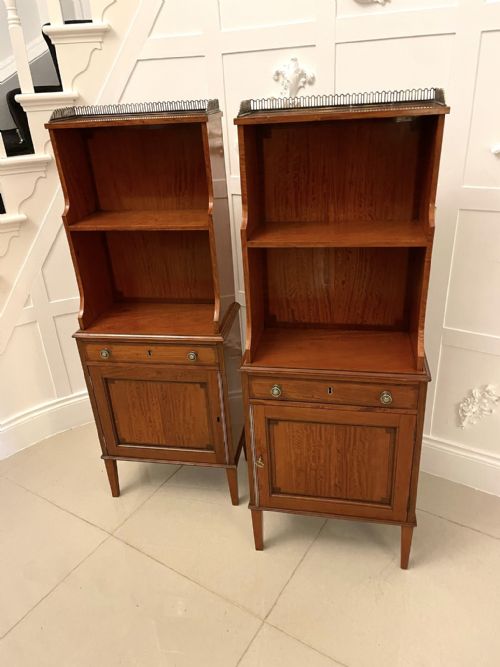

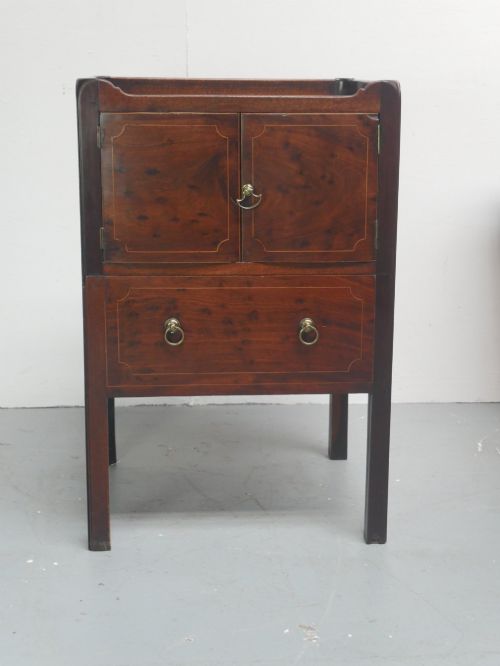
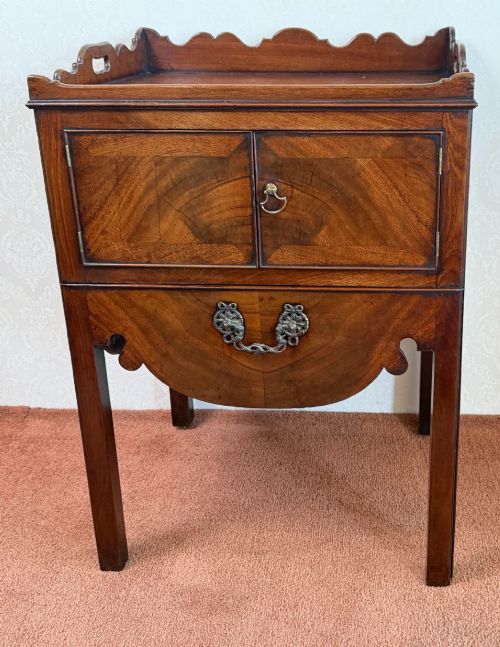
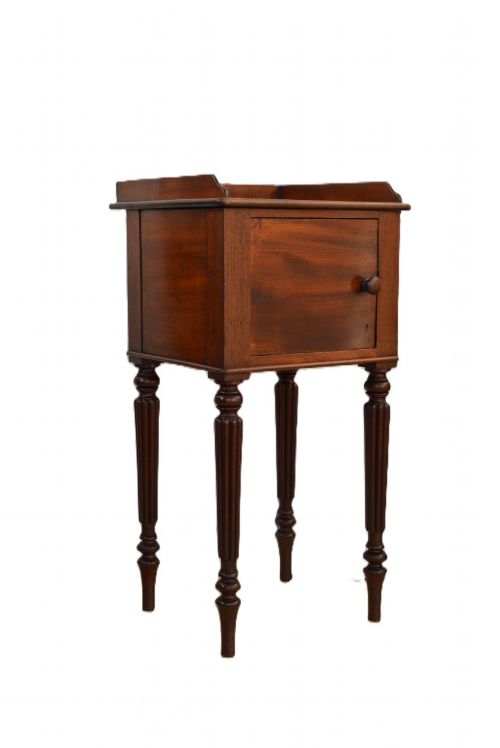


Georgian Gallery Top Cabinet
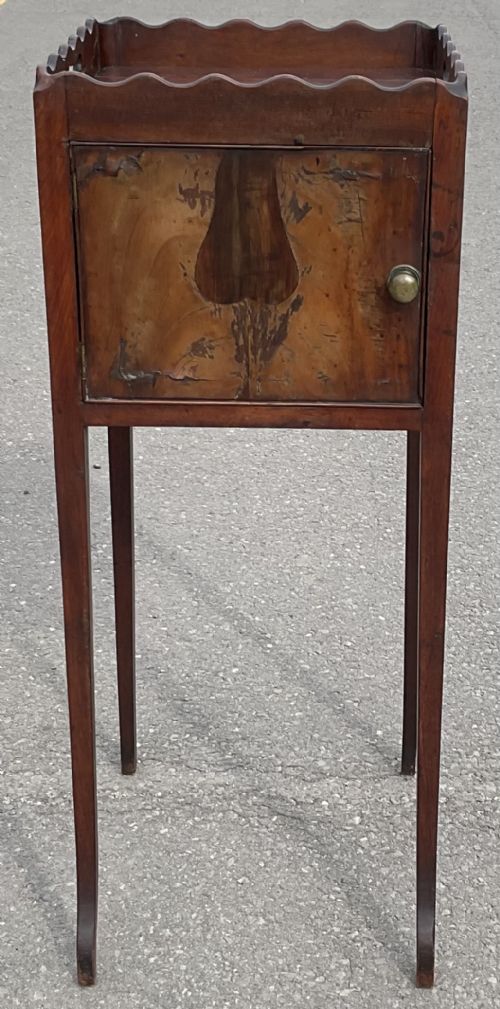
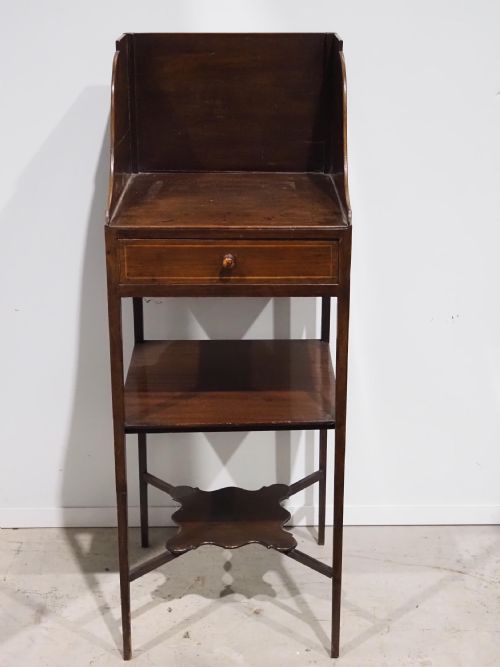
These georgian gallery top cabinet pieces are sturdy mahogany or rosewood companions for the bedroom and study, built to keep bedside necessities neatly concealed.
Georgian Gallery Top Cabinet
A georgian gallery top cabinet represents the practical side of eighteenth and nineteenth-century cabinet making, designed primarily to house chamber utensils or serve as bedside storage. Most examples encountered here date from the eighteenth century or the Georgian period, often taking the form of compact pot cupboards or commodes with raised edges.
Materials and construction
Makers relied heavily on solid mahogany and rosewood as the primary structural woods, frequently embellishing surfaces with satinwood and boxwood inlay. Brass hardware, leather inserts, and marble details added functional durability and visual contrast to desks and cabinets.
Construction techniques prioritized stability and daily utility, utilising fitted trays, sliding tops, and reeded legs to support the heavy timbers. Cabinetmakers selected figured grains to enhance the appearance of modest bedside tables and commodes.
The listings here span the 18th Century, Georgian, Regency, and Edwardian periods, constructed primarily in mahogany, rosewood, and satinwood.
Judging quality and craftsmanship
Superior pieces display careful timber selection, particularly where satinwood and boxwood inlay create sharp, clean geometric patterns across mahogany surfaces. The integration of functional elements, such as sliding tops or well-fitted doors, distinguishes finer workshops from standard production.
Refinement in leg turning, such as crisp reeding or parcel gilding, elevates the presence of a side cabinet or Davenport desk. Conversely, heavy alterations or replacement hardware diminish the integrity of an antique bedside table.
Gillows
The Georgian Gallery Top Cabinet Glossary
- Gallery top
- A raised rim or border around the upper surface of a table or cabinet designed to prevent items from rolling off.
- Pot cupboard
- A small bedside cabinet originally built to enclose a chamber pot.
- Commode
- A low cabinet with doors or drawers, which in earlier periods frequently served as a bedside commode.
- Davenport
- A compact writing desk featuring a sloping desktop and drawers opening to the side.
- Reeded
- Decorated with parallel convex mouldings carved directly into the wood of a leg or column.
Georgian Gallery Top Cabinet: Frequently Asked Questions
How were these cabinets used?
These cabinets served primarily as bedside storage for chamber pots, personal items, and nighttime necessities. Their enclosed cupboards kept bedrooms tidy and contained odours.
Over time, similar forms evolved into small writing desks, side cabinets, and occasional tables suited for various rooms.
How do I identify a Georgian piece?
Georgian pieces typically feature solid mahogany construction, restrained proportions, and classic design motifs associated with the eighteenth century. Cabinetmakers focused on functional utility combined with understated elegance.
Detailing such as boxwood inlay, tray tops, and reeded legs often helps to date these items accurately within the period.
Where should I place one?
These compact cabinets fit naturally beside a bed as functional night tables with enclosed storage. Their modest footprints also suit hallways and small reception rooms as side tables.
Desktop variants and Davenports provide practical writing surfaces for studies without dominating the room.