




Georgian Framed Pencil Portrait
A georgian framed pencil portrait captures a sitter with swift graphic precision, offering an intimate glimpse into eighteenth- and nineteenth-century life.
Georgian Framed Pencil Portrait
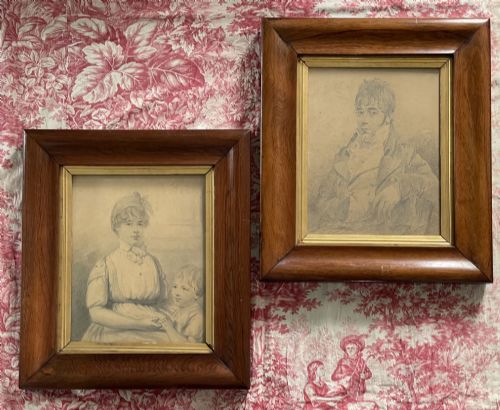
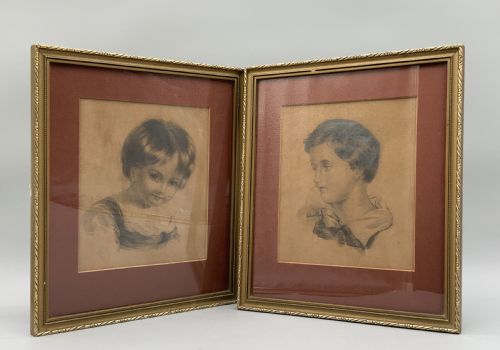
When you search for a georgian framed pencil portrait, you encounter delicate works on paper that capture sitters with sharp graphic immediacy. The selection spans the eighteenth century through the Regency period, featuring individual sketches, paired studies, and larger sets.
You meet both pure graphite drawings and works augmented with subtle touches of watercolour. These pieces take various forms, from oval portrait miniatures to larger framed artwork, often preserved behind glass in period wood and gilt frames.
The subjects range from unnamed children and Regency couples to notable figures such as George IV's mistress Mrs Jordan, recorded by artists working in styles from the Georgian era to later revivals.
How they were made
Artists executed these works using graphite pencil or plumbago on paper, often adding delicate washes of watercolour to tint the cheeks or costume. Plumbago drawings employed finely ground native black lead, applied with meticulous control to achieve miniature-like detail.
Makers housed these fragile works beneath protective glass within wooden frames, frequently finished with gilt or gilt wood mouldings. This traditional framing protects the sensitive paper surface from atmospheric dust and handling while enhancing the tonal contrast of the monochrome drawing.
Georgian Framed Pencil Portrait Retail Price Guide 2026
Typical asking prices for georgian framed pencil portrait among the pieces listed under this phrase on Sellingantiques today, from the lower quarter to the upper quarter. They describe what is for sale here now, not the wider market.
Includes a portrait of Mrs Jordan, who spent her evenings entertaining a future king and her days posing for artists.
What varies in quality
Quality rests primarily on the draughtsmanship and the artist's ability to render expression and bone structure with economy of line. The finest plumbago and pencil works display a confident crispness in the handling of light and shadow, giving the sitter immediate presence.
The distinction between standard works and superior examples also involves the preservation of the paper and the originality of the mounting. Period frames with intact gilding and original glass contribute significantly to the integrity of the piece.
John Taylor·James Ferguson·Ozias Humphry
The Georgian Framed Pencil Portrait Glossary
- Plumbago
- An early form of graphite drawing made from native black lead. These works are prized for their miniature-scale precision and silvery tone.
- Regency
- A stylistic period spanning the early nineteenth century. Works from this era often display clean neo-classical lines and naturalistic portraiture.
- Gilt wood
- Wood coated with a thin layer of gold leaf or gilt gesso. It provides a reflective border that complements the monochrome tones of pencil drawings.
- Miniature portrait
- A small-scale painting or drawing designed for intimate viewing. These pieces frequently feature oval formats and detailed facial renderings.
Georgian Framed Pencil Portrait: Frequently Asked Questions
What is a plumbago portrait?
A plumbago portrait is a detailed drawing executed in graphite or black lead, highly popular during the eighteenth century. Artists used this medium to achieve miniature-scale precision.
These works pre-date modern pencil manufacturing and rely on native lead worked to a fine point.
How should I display a paper portrait?
Keep paper portraits away from direct sunlight to prevent the graphite and any watercolour tints from fading over time. Maintaining stable room humidity protects the paper support.
Ensure the piece remains sealed behind glass in its frame to guard against airborne pollutants.
How do I identify a Regency drawing?
Regency drawings typically date from the early nineteenth century and reflect the fashions and hairstyles of that era. The portrait style is often direct and unpretentious.
Compare the costume and framing details with dated examples from the same period to confirm the era.
Are these drawings signed by the artist?
Some pieces bear artist signatures or contemporary attributions, while many others remain anonymous studio work. Unsigned pieces are often attributed based on technique and stylistic comparison.
Documentation on the reverse or family provenance sometimes records the sitter and maker's identity.