
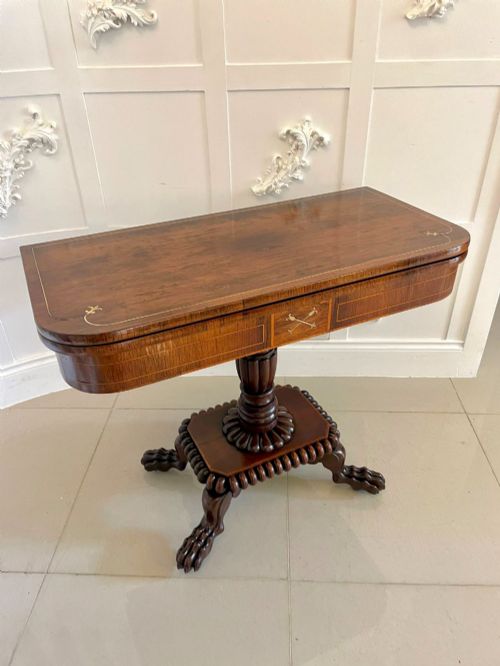
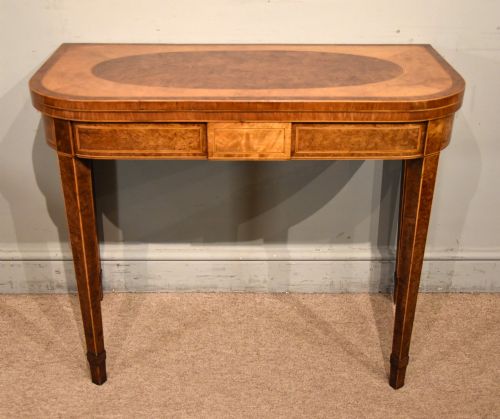
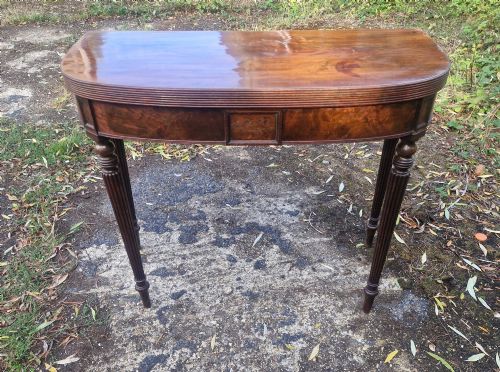
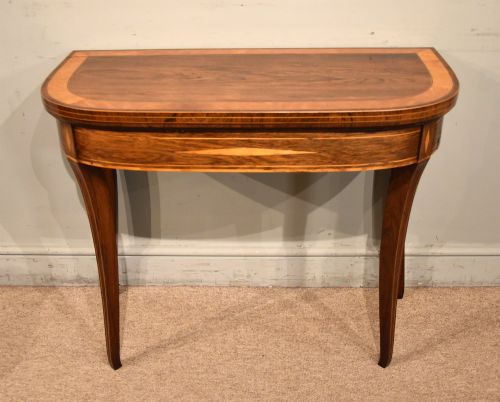

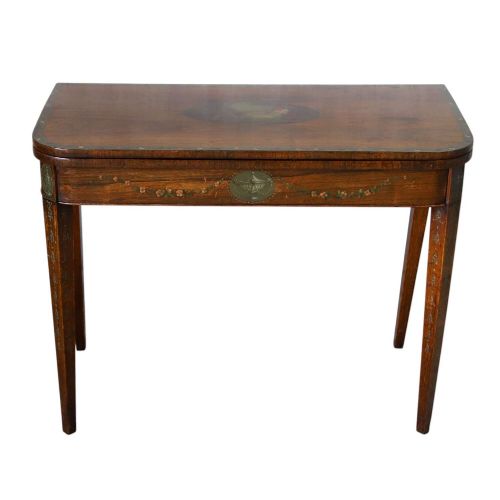
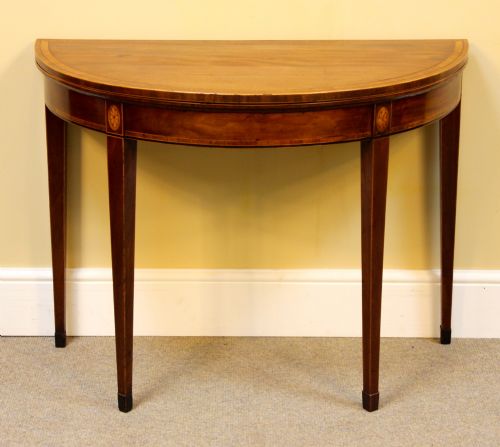
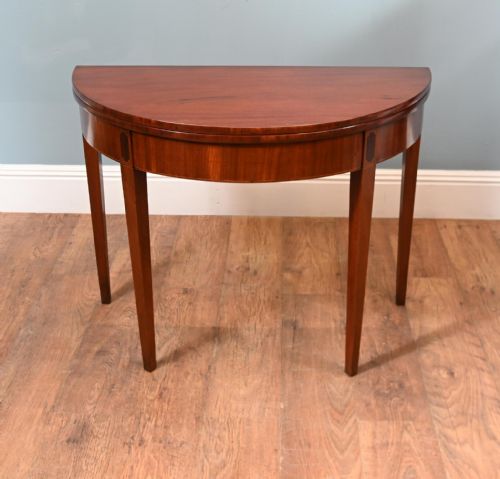
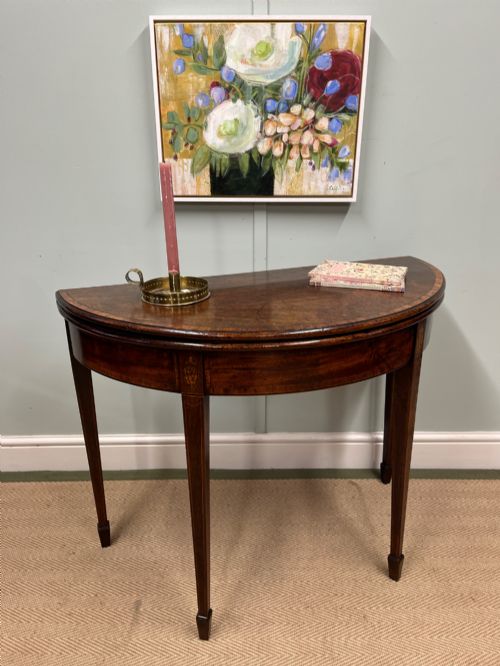
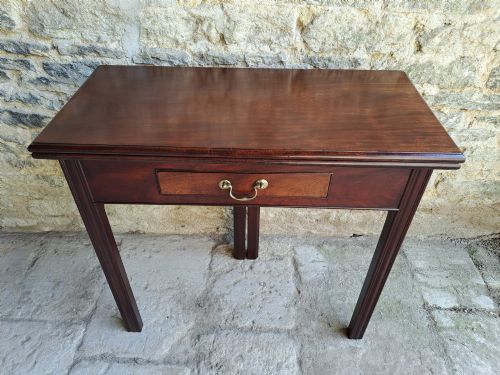
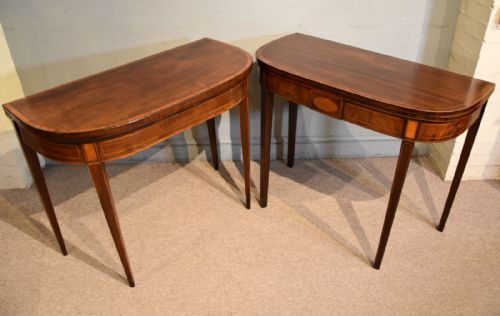
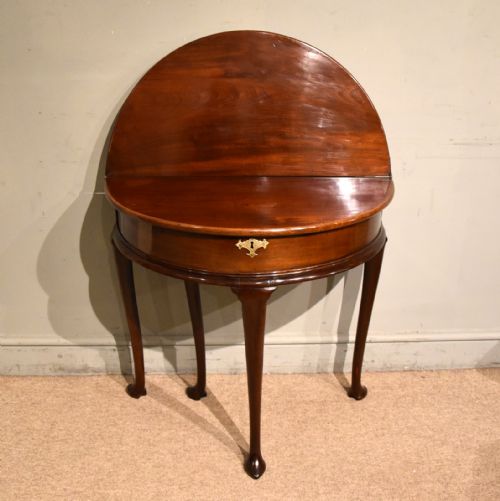
Georgian Foldover Console Table
A georgian foldover console table turns a modest wall piece into a proper card or tea table with a simple swing of its top.
Georgian Foldover Console Table
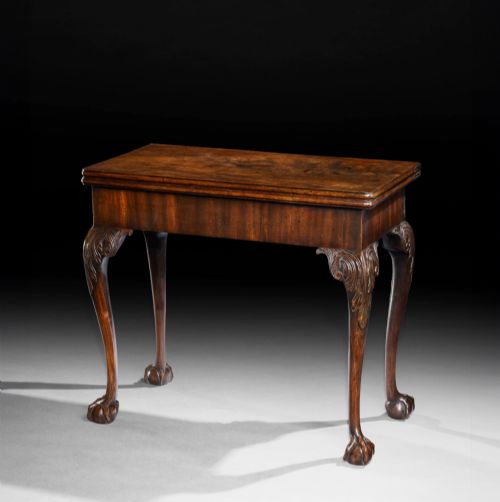
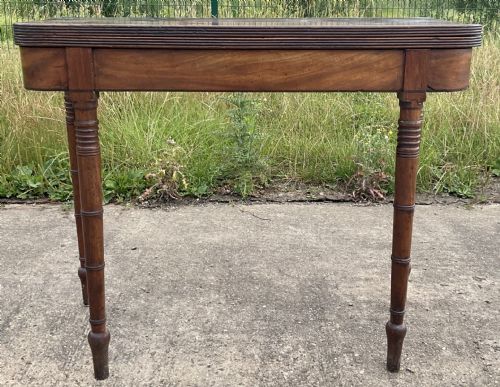
A georgian foldover console table brings eighteenth and early nineteenth century craftsmanship into domestic spaces as dual purpose furniture. You will frequently encounter mahogany and rosewood examples designed to sit flush against a wall before opening for evening entertainment.
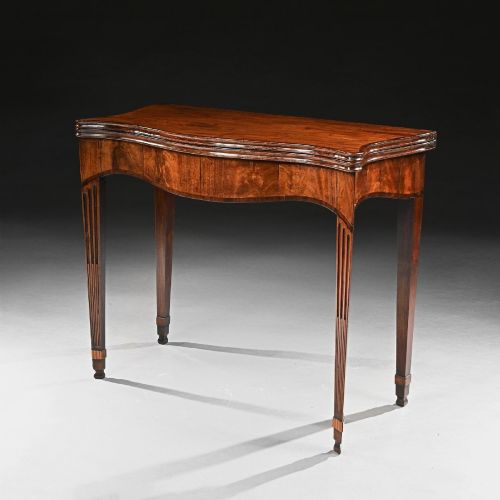
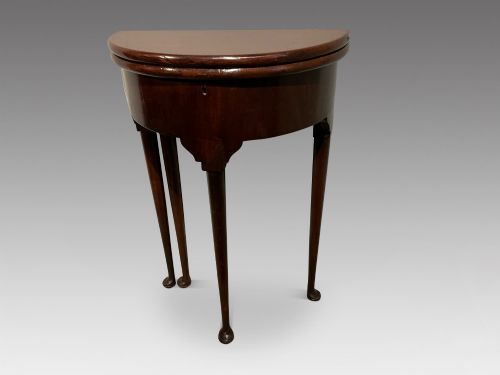
The form spans card tables, tea tables and games tables from the Georgian, George III and Regency periods. Makers adapted the demilune and D shaped formats to fit smaller rooms while retaining sturdy concertina or swing actions.
Many pieces arrive with boxwood, satinwood or brass inlay, alongside serpentine fronts and tapering legs. The selection moves from simple oak and mahogany surfaces up to elaborate marquetry and cross banded borders.
How they were made
Cabinet makers relied on solid mahogany, Cuban mahogany and rosewood, often applying fine wood veneer over secondary timbers. Surfaces frequently incorporated satinwood inlay, boxwood stringing and brass detailing to accentuate the crisp geometric lines.
Construction involved clever pivoting hinges and concertina actions that supported the heavy folding leaves safely. Joinery traditions dictated dovetailed framing and carefully fitted internal wells designed to hold counters and cards.
Mahogany and rosewood dominate the listings, frequently paired with satinwood inlay and brass detailing across eighteenth and nineteenth century forms.
What varies in quality
The distinction rests upon timber selection and the precision of the cabinet work. Superior examples exhibit rich natural patination on the primary mahogany or rosewood surfaces, matched veneers across the foldover leaves, and crisp execution of any satinwood or brass inlay.
Structural integrity also separates standard items from finer works. A top tier table maintains smooth alignment when closed and rigid support from its swing leg or concertina frame when opened, showing minimal looseness in the pivot joints over centuries of use.
The Georgian Foldover Console Table Glossary
- Demilune
- Half moon shape popular for console and card tables designed to stand flat against a wall. This silhouette saved floor space in smaller period rooms.
- Concertina action
- An expanding frame that opens alongside the folding top to provide full four sided support. It requires intricate joinery hidden within the rail.
- Marquetry
- Decorative patterns formed by fitting pieces of coloured wood veneer into a background. Artisans utilised satinwood and tulipwood for floral or geometric motifs.
- Cross banding
- A border of veneer laid with the grain running perpendicular to the main panel. This technique created a neat framed effect around table tops.
- Patination
- The deep lustre and warm surface texture acquired by wood over long periods of time. Hand polishing and natural wear enhance this quality.
Georgian Foldover Console Table: Frequently Asked Questions
How do you use a foldover table?
You pull the hinged top away from the wall and swing it open to double the surface area. The underlying frame pivots out to support the newly exposed leaf.
Historically, owners used this expanded space for serving tea or setting out card games. When the evening ended, the leaf folded back and the piece returned to its compact console position against the wall.
What is the difference between a card table and a tea table?
Card tables often feature lined interiors, sometimes with small wells carved into the corners for gaming counters or candlesticks. Tea tables tend to have plain wooden surfaces designed for porcelain.
In practice, cabinet makers built many examples to serve both functions depending on the day's needs. The mechanics of the foldover top remain identical across both types.
How do I date a Georgian console table?
You look at the timber choice, leg style and inlay techniques used across the frame. Earlier pieces often display pad feet and heavy mahogany, while later Regency versions favour brass inlay and rosewood.
Secondary woods and construction methods inside the drawer rails also help confirm the manufacturing era. Cabinet makers altered their decorative motifs from simple carved mahogany to elaborate satinwood marquetry as fashions shifted.
Where should I place a console table at home?
You position the closed piece against a hallway or living room wall where space is tight. It provides a convenient surface for lamps or ornaments without blocking walkways.
You can pull it into the centre of the room and open the top whenever you need extra table space. The finished back and sides ensure it looks correct from every angle.