
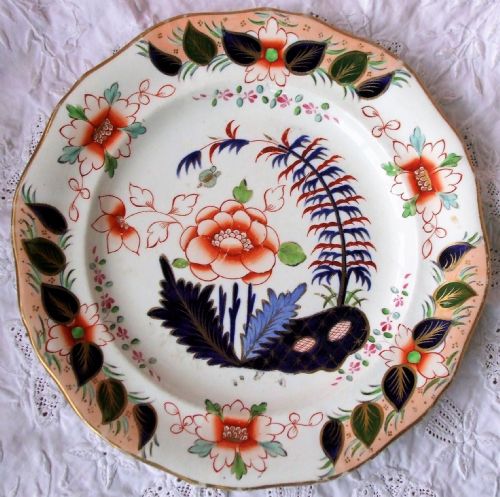


Georgian Floral Ceramic Platter
These Georgian floral ceramic platters and serving dishes bring handpainted botanical artistry and robust earthenware utility straight to the dining table.
Georgian Floral Ceramic Platter
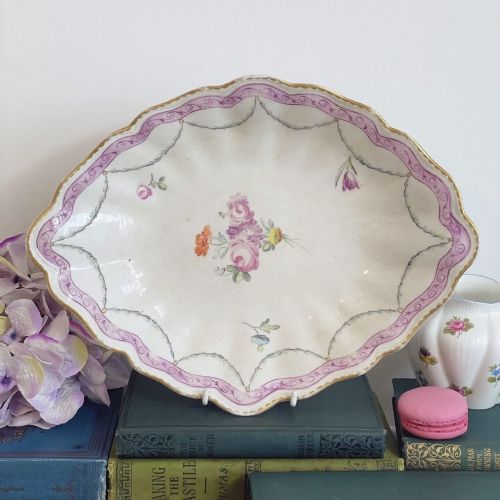
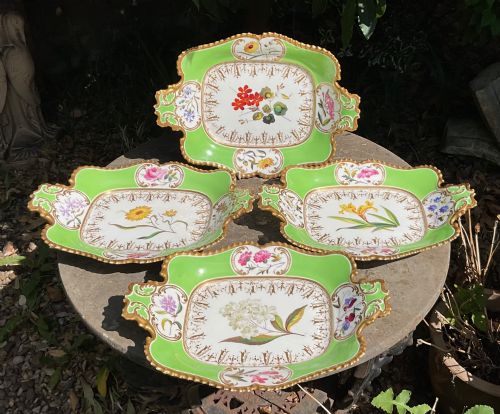
When you search for a georgian floral ceramic platter, you encounter a variety of serving dishes, chargers, and tableware created during the Georgian and Regency periods. The pieces appearing on this page span from the mid-eighteenth century into the early nineteenth century, taking forms such as large platters, botanical serving dishes, and dessert services.
You are most likely to meet earthenware, ironstone, and porcelain examples decorated with handpainted polychrome flowers, blue and white transfer prints, or Imari patterns. These items originate from notable factories and potteries working across England during eras spanning from seventeen-fifty to eighteen-thirty.
How they were made
Potters shaped these vessels using earthenware, ironstone, pearlware, and porcelain, frequently finishing them with a smooth glaze. Many pieces received delicate handpainted polychrome enamel colours or gold leaf accents, while others utilised intricate blue and white transfer printing techniques.
Factories employed specialised moulding methods to create large serving dishes and dessert shapes, followed by careful kiln firing. Artisans applied botanical motifs and intricate patterns directly onto the ceramic body before or after the glaze firing.
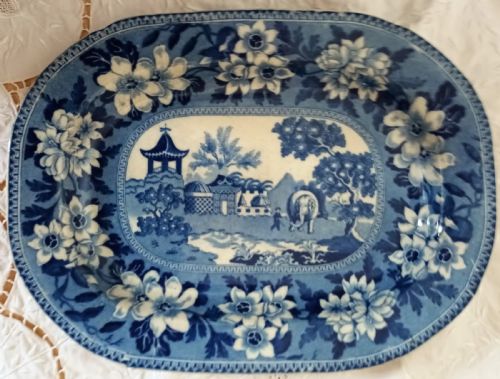
Elephants march across several plates and platters, proving that Georgian botanical designers occasionally welcomed exotic wildlife into the English dining room.
What varies in quality
Quality separates through the crispness of the transfer print and the precision of the handpainted polychrome enamel work. Superior pieces display vibrant, neatly applied floral botanical details and well-balanced ceramic forms without distortion from the kiln.
The sophistication of the paste, whether fine porcelain, heavy ironstone, or early earthenware, influences the desirability of the dish. Makers known for superior porcelain formulas and artistic decoration distinguish the higher end of the range.
John Rogers & Son·John Davenport of Longport·Hicks & Meigh·Elkin Knight & Bridgwood
The Georgian Floral Ceramic Platter Glossary
- Ironstone
- A dense, durable type of earthenware patented in the early nineteenth century. It provided a robust alternative to porcelain for heavy-use tableware and platters.
- Transferware
- Pottery decorated by applying a printed design from an engraved copper plate onto tissue paper, which was then transferred onto the unglazed or bisque ceramic. This technique allowed intricate patterns like the Elephant or London Bridge designs to be produced consistently.
- Pearlware
- A fine earthenware developed in the late eighteenth century featuring a subtle bluish glaze that pooled in recesses. It bridged the gap between creamware and later white earthenwares.
- Polychrome
- Decoration employing multiple distinct colours, typically painted by hand across floral and botanical motifs on porcelain and earthenware surfaces.
- Charger
- A large decorative or serving plate used traditionally for display or communal service during grand dining occasions. Eighteenth-century delft examples frequently served this purpose.
Georgian Floral Ceramic Platter: Frequently Asked Questions
How were these platters used?
These ceramic platters and serving dishes functioned primarily during dining services to present meats, vegetables, and desserts at the table. Larger chargers and trays held substantial courses for communal dining.
Over time, many transitioned from utilitarian kitchenware into display items. Their botanical paintings and transfer prints suited sideboard decoration in period homes.
How do I tell periods apart?
Eighteenth-century pieces often lean toward delftware chargers or handpainted porcelain with soft polychrome floral arrangements. Regency and early nineteenth-century items frequently exhibit crisp blue and white transfer prints or bold Imari ironstone patterns.
Examining the ceramic body helps clarify the date, as dense ironstone and pearlware formulas emerged progressively. Maker marks, where present, anchor the piece to specific decades.
Can I use them for serving food?
Many collectors prefer to exhibit these ceramic platters on walls or dressers rather than risking daily wear. Centuries of use leave historical traces that make gentle handling advisable.
Handwashing in warm water without harsh detergents protects the old glaze and delicate enamel painting. Modern dishwashers and microwaves should be strictly avoided.
What defines an Imari pattern?
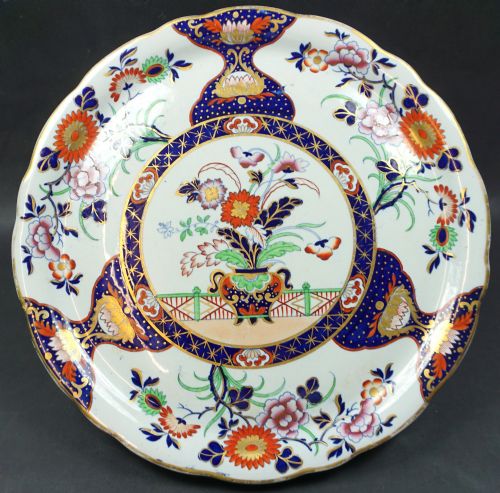
Imari decoration on these ceramics imitates Japanese export porcelain by combining deep underglaze blue with iron red and gold leaf highlights. This striking palette became popular across English factories during the Regency era.
Plates and serving dishes decorated this way offer a rich contrast of colours. The technique required multiple firings to fix the cobalt blue beneath the glaze and the enamel colours above it.