



Georgian Flame Mahogany Cellarette
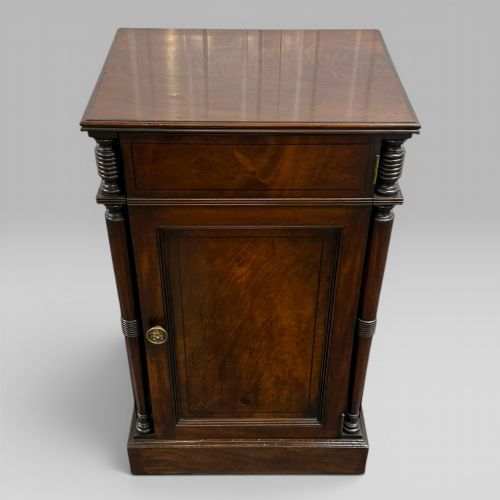
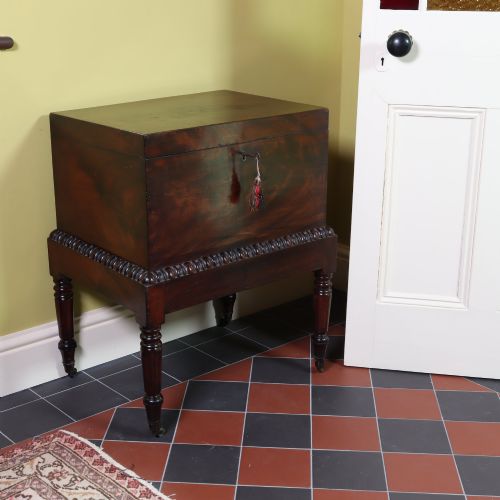
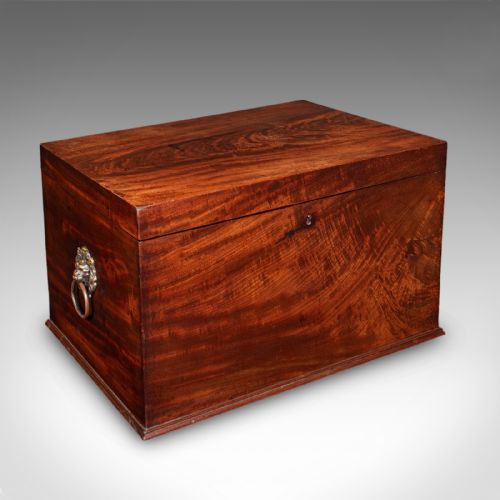
A georgian flame mahogany cellarette holds bottled wine securely while displaying rich timber grain in a dining room.
Georgian Flame Mahogany Cellarette
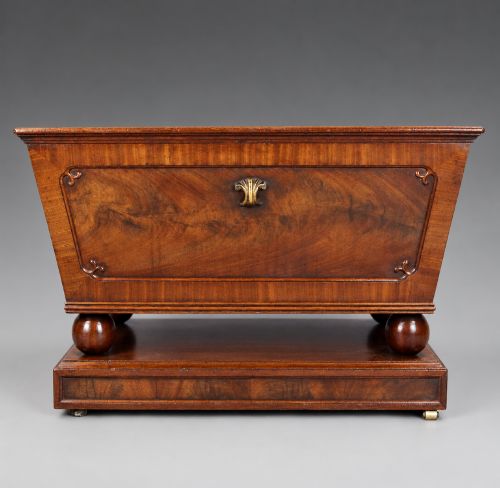
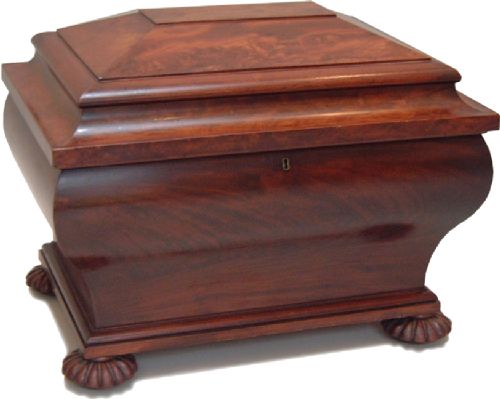
A georgian flame mahogany cellarette is a specialised storage box designed to hold wine bottles near the dining table, originating in the eighteenth and nineteenth centuries. You will most frequently encounter sarcophagus shaped examples from the Regency period, often standing on carved feet.
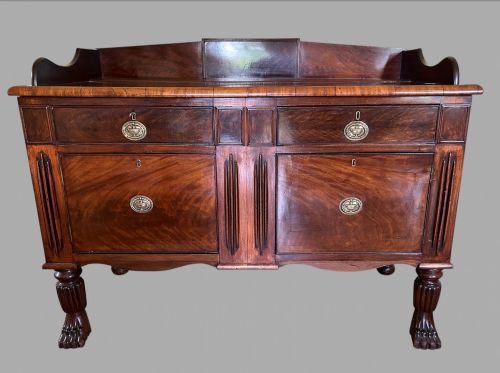
The form appears as standalone boxes or pieces fitted with interior partitions for bottle storage, sometimes incorporating lead linings for ice. Sideboards and buffets occasionally include similar wine storage compartments within their pedestals or central carcasses.
Makers working during the Georgian, Regency, and William IV periods produced these pieces in mahogany and flame mahogany veneers, sometimes enhanced by boxwood inlay. The items span specific dates from around seventeen hundred to eighteen fifty, reflecting shifting formal dining habits.
How they were made
Cabinet makers constructed the carcass primarily from solid mahogany and oak, applying highly figured flame mahogany veneers to exterior surfaces to create dramatic grain patterns. Boxwood inlay provided sharp linear contrast along edges and panels.
The archive demonstrates that converted cellarettes on stands occasionally emerge alongside standard sarcophagus forms.
What varies in quality
Quality rests heavily on the selection and matching of the flame mahogany veneer across the main body and lid. Superior examples display symmetrical figures that catch the light, while lesser pieces rely on plain timber.
The carving of structural details such as paw feet, handles, and applied mouldings distinguishes standard production from exceptional cabinet work. Well executed joinery ensures the heavy lid closes flush without warping the underlying oak and mahogany structure.
Gillows·Gillingtons
The Georgian Flame Mahogany Cellarette Glossary
- Flame mahogany
- A timber veneer sliced from the junction where branches meet the main trunk, producing a rippling flame effect. This decorative grain pattern defines the visual appeal of many Regency pieces.
- Cellarette
- A lockable container used for storing wine bottles in the dining room before widespread bottle storage in cellars. They frequently feature interior divisions and metal linings.
- Sarcophagus
- A monumental tomb-like shape with a steep domed lid and flared sides, popular for large wine coolers during the Regency period. This profile gives the piece an architectural presence.
- Pedestal
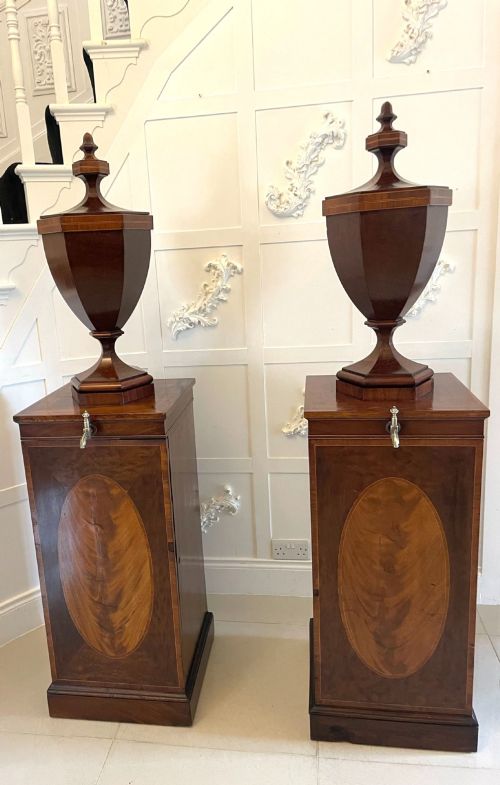
- A supporting base or cupboard structure beneath urns and plate-warmers. These elements elevate the main storage vessel off the floor.
- Boxwood inlay
- Narrow strips of pale boxwood inserted into grooves cut into the darker mahogany surface. This technique creates geometric borders and framing lines.
Georgian Flame Mahogany Cellarette: Frequently Asked Questions
What is a cellarette used for?
A cellarette served as a secure, portable container for holding wine bottles close to the dining table during formal meals. Inside compartments kept bottles separated while metal linings held ice to keep the wine cool.
Today, collectors utilise these boxes as decorative side tables or storage chests in living spaces. Their historic function as wine coolers makes them a practical focal point for modern entertaining.
How do I tell Regency from Georgian?
Georgian pieces generally span the eighteenth century and often display restrained classical proportions, sometimes incorporating boxwood inlay. Regency pieces, dating from the early nineteenth century, frequently adopt bolder sarcophagus shapes with carved paw feet.
Architectural influences shifted during these decades from straight lines to heavier, classical Roman forms. Examining the feet, handles, and overall silhouette helps determine the precise period of manufacture.
Are all cellarettes lined with lead?
Not all cellarettes retain their original interior linings, as lead or zinc inserts were often removed if the box was later adapted for general storage. Many surviving examples show internal wooden dividers rather than metal cooling wells.
The presence of an original lining confirms the piece functioned strictly as a wine cooler. Altered interiors do not diminish the decorative value of the outer flame mahogany case.
Where should I place a cellarette?
A cellarette works best freestanding against a dining room wall or alongside a sideboard where its grain can be appreciated. Because many examples feature detailed carving on all sides, they do not require placement against a flat surface.
Keep timber furniture away from direct heat sources to prevent the mahogany veneer from drying and splitting. Regular polishing maintains the rich lustre of the flame veneer.